Château De Favières
Essertines-Sur-RolleSwitzerland 46° N · 6° E Updated Aug 2026
A 'château' that's really a winegrower's house: the same family since 1675, biodynamic vines, a monumental 1908 chimney, and Mont-Blanc views over Lake Geneva.
Five centuries of family claims rest on a date no archive confirms. Château de Favières, a six-hectare biodynamic wine estate in Essertines-sur-Rolle, Switzerland, invites you to taste the gap between romantic lineage and documented fact — with Lake Geneva and Mont Blanc glinting below the vines.
Sabrina and Vivien Moinat, the current custodians, call the estate 'un acte d'amour' — an act of love. The word amour appears four times in their short self-description. Either a family's deepest truth or very good marketing — the vineyards do not rush to settle the question.
Inside, the 1908 salon chimney twists upward on carved wooden columns, a reminder that this was once an ambassadorial residence, not a farmhouse. Outside, the 1846 barn and stable still stand, older than the current château's diplomatic flourishes.
The real draw is the working cellar: Chasselas Grand Cru from old vines, a rare passerillé made from dried grapes, Pinot Noir, and even a barrique-aged Merlot. You come for the view, but you stay for the argument about what 'since 1675' actually means.
What to see
-
The View from the Vines
The vines at Château de Favières sprawl across 6.2 hectares of the Mont-sur-Rolle appellation, planted to Chasselas, Gamay, Pinot Noir, and the inky Swiss crossings Gamaret and Garanoir. From the upper terraces, Lake Geneva flattens into hammered silver. Mont Blanc hangs on the horizon like a stage backdrop, close enough to read as weather rather than geography. Come late afternoon, when the lake throws light back into the canopy and the smell of warm vine leaves rises from the rows. Ask for the Chasselas Vieilles Vignes; if they've made passerillé that year, don't leave without it. -
The Manor, the Turrets, and the Plane Tree
Forget fairy-tale battlements. The manor that greets you in Bugnaux is a working maison de maître, rebuilt in 1756 and later topped with neo-Gothic turrets—a bit of romantic stagecraft so it reads 'château' from the lane. Step through the covered portal and look up: the turrets are precisely what most people walking to the cellar miss. In the courtyard, a plane tree with flaking, mottled bark shades the gravel, and the adjacent barn and stable, dated 1846, tells the story of an earlier farming economy before the family's diplomatic ascent. The 1908 chimney with twisted wooden columns lies inside the private wing; if you taste with Vivien or Sabrina, ask about it. It's the architectural equivalent of a tucked-away family photograph. -
Walk the Two Worlds of Essertines
The commune's nickname isn't metaphor: upper and lower Essertines each kept their own school, post office, parish, and fire brigade, because the two worlds sit 467 meters apart in altitude—roughly one and a half Eiffel Towers stacked on each other. Start at the château in Bugnaux, then follow the old paths up toward the ruins of Mont-le-Vieux Castle, the medieval seat destroyed by fire in the 15th century and abandoned for the hamlets. Along the way, the lake drops behind you and the air cools; the difference between 429 and 896 meters feels physical, not statistical. At the top, detour to the 48-meter fir known as le vieux Sapin, then circle back down on tired legs for a glass of something from the vines you passed two hours earlier.
Plan your visit
- Getting There
- From Geneva, ride the main line to Rolle (about 25 minutes), then catch the line 840 bus toward Essertines/Bugnaux — the full car-free trip takes roughly 1 hour 9 minutes and costs CHF 13–40. Driving, aim for Rue de Bugnaux 1, 1180 Rolle; the estate hides in the Bugnaux hamlet above the lake. Parking is unsigned and limited, so arrive early on market days.
- Opening Hours
- As of 2026, no official seasonal schedule is published. One wine-producer directory lists 10:00–18:00, but the estate's own site says tastings are 'sur rendez-vous' — by appointment only. Email [email protected] before setting out; the village autumn market on 6–7 November 2026 can snarl the small lanes.
- Time Needed
- Thirty to forty-five minutes covers a quick tasting and bottle purchase. A proper visit — vineyard stroll, cellar chat, tasting the Chasselas Grand Cru and barrel-aged Pinot Noir — runs 1.5 to 2 hours. These are working estimates, not printed timetables.
- Accessibility
- No published accessibility information exists. The property is a sloped vineyard domain in Bugnaux; expect uneven ground, gravel paths, and steps between buildings. Contact the Moinats directly to ask about step-free routes before committing.
- Cost & Tastings
- No admission fee — this is a private wine estate, not a ticketed castle. Tastings are arranged directly with the family; bottle prices start around CHF 28 for a Sauvignon. The Chasselas Grand Cru Vieilles Vignes and the rare passerillé are the bottles worth the conversation.
History
The Love Story and the Burned Castle
Before the Moinats poured a single vintage, this ridge belonged to a different kind of power. The name Essertines comes from cleared woodland, and by 1179 a fortified seat stood at Mont-le-Vieux, held by the lords of Cossonay-Prangins. That castle is gone now — burned in autumn 1475, when Swiss troops swept through the Pays de Vaud during the Burgundian Wars. Its wall fragments remain above the villages of La Côte, a ruin most visitors never see.
What stands at Château de Favières today is a later, humbler house: a maison de maître in the hamlet of Bugnaux, protected as part of a federal inventory of sites of national importance. The estate's own story begins, according to family tradition, in 1675. Independent records have not yet confirmed that date.
The turning point
The Savoyard Stronghold That Burned
In summer 1293, Amédée V of Savoy confiscated the fortress of Mont-le-Vieux from the Cossonay-Prangins family. For him, the ridge was not scenery — it was high ground over the route to Lake Geneva. He handed it to his brother Louis I as part of a Savoyard apanage, pulling the castle into dynastic politics.
Louis II of Savoy doubled down in 1306, creating a hereditary métralie that gave rise to the Mestral family. Then, in autumn 1475, Swiss Confederate troops arrived during the Burgundian Wars. Wooden structures inside the stone walls caught. The surrounding bourg of about twenty houses appears to have been abandoned before the flames reached it.
The castle was never rebuilt. What remains — wall fragments above the villages of La Côte — is a ruin most visitors never see. For the Savoyards, the loss was strategic. Essertines saw power scatter downhill, toward the hamlets where Château de Favières would later stand.
The Fire That Scattered a Village
The 1675 Claim
Tips for visitors
Book ahead
Tastings are strictly by appointment. Email [email protected] — the tourism office and the winegrowers' directory list two different phone numbers, so email avoids the guessing game.Eat at the auberge
L'Auberge de Mont in Mont-sur-Rolle does seasonal terroir cooking with two terraces facing Lake Geneva and Mont-Blanc — mid-range, proudly 'Fait Maison.' For a splurge, Le Resto by Hostellerie du Château in Rolle grills over an open fire. Its wine list is 90% Vaudois.Ask before shooting
This is a private family home and working winery. Ask permission before photographing the salon's 18th-century family portraits, the 1908 chimney with its twisted wooden columns, or the cellar.Time it right
Come on a clear autumn day during harvest (September–October), when the vines are heavy and Mont-Blanc sits sharp on the horizon. Summer 2026 brought water restrictions and fire bans to the commune — check municipal notices in dry spells.Pair with the ruins
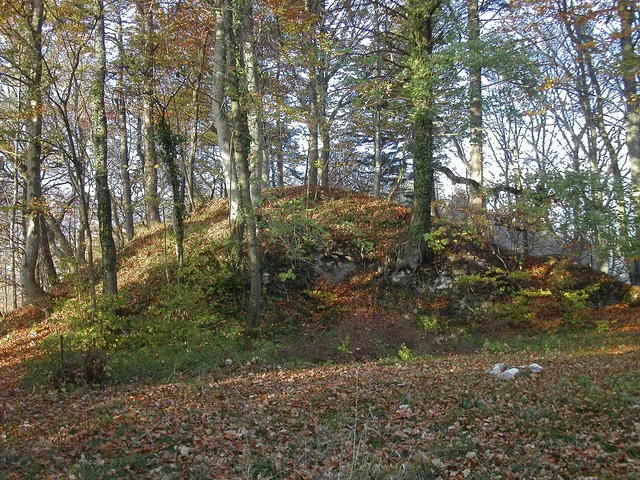
Combine your tasting with the Ruins of Mont-le-Vieux Castle, the burned medieval citadel that gave the commune its name. Charred 15th-century stones above, living vines below — that's the whole story of this hillside.Buy the rare bottles
Ask for the Chasselas Grand Cru Vieilles Vignes or the Chasselas passerillé — a sweet wine from dried grapes that's genuinely rare. The oak-aged Merlot is an oddity in La Côte and worth a taste.Walk the hamlet
Bugnaux is a federal ISOS-protected hamlet of winegrowers' houses — quiet, residential, not a tourist zone. Stroll the lanes before your tasting, but remember people live and work here.Don't confuse the castles
You want Château de Favières in Bugnaux, not Château de Rolle on the lakeside — a different medieval castle entirely. Set navigation for Rue de Bugnaux 1, 1180 Rolle.
Frequently asked
Is Château de Favières worth visiting?
Yes, if you care about Swiss wine and want a real working estate rather than a museum. The 6.2 hectares of biodynamic vines slope toward Lake Geneva with Mont-Blanc on the horizon, and the tasting room pours Chasselas and Pinot Noir that earned Sélection des vins vaudois recognition in 2020. Just know it's a private family domaine — tastings are by appointment, not a drop-in attraction.
How do I get to Château de Favières from Geneva?
Take the train to Rolle, then bus line 840 toward Essertines-sur-Rolle — about 1 hour 9 minutes total, costing roughly CHF 13–40. By car, navigate to Rue de Bugnaux 1, 1180 Rolle, though the château actually sits in the Bugnaux hamlet. Parking is limited and unconfirmed, so call ahead.
Can you visit Château de Favières for free?
There's no admission ticket — the estate is a working winery, not a ticketed attraction. Wine tastings are by appointment only ("sur rendez-vous"), and you'll pay for whatever bottles you take home. A Sauvignon runs about CHF 28.
What is the best time to visit Château de Favières?
Autumn, during harvest, when the cellar smells of fermentation and the vine leaves turn gold. Summer gives you the clearest lake views and long evening light for terrace tastings. Winter is quiet and crisp with snow-covered Alps, but access may be limited — always confirm by email or phone first.
What should I not miss at Château de Favières?
Look up at the neo-Gothic turrets — they're what makes this 1756 manor house earn its "château" title. Then stand in the courtyard under the plane tree, part of the protected ISOS heritage site, and run your hand along its peeling, mottled bark. The covered portal (portail couvert) is easy to walk past but worth a pause.
How long do you need at Château de Favières?
A quick tasting takes 30–45 minutes. A proper visit with vineyard walk and cellar time runs 1.5–2 hours. Since it's by appointment, you control the pace — but the view over Lake Geneva deserves a slow glass, not a rushed pour.
Is Château de Favières a real castle?
Not in the medieval sense — it's a maison de maître (manor house) reconstructed in 1756, dressed up with romantic neo-Gothic turrets. The actual medieval castle in the area, Mont-le-Vieux, was burned by Swiss troops in 1475 and survives only as wall fragments above the Châtel hamlet. The "château" title here comes from local usage and the estate's long family history, not fortifications.
What wines does Château de Favières produce?
The estate grows Chasselas, Auxerrois, Gamay, Pinot Noir, Gamaret, and Garanoir across 6.2 hectares in the Mont-sur-Rolle appellation. Standouts include a Chasselas Grand Cru Vieilles Vignes, a rare Chasselas passerillé (sweet wine from dried grapes), and a barrel-aged Pinot Noir. The 2019 Chasselas Millésime and 2018 Pinot Noir both earned Sélection des vins vaudois recognition in 2020.
Sources & attribution 9
- Château de Favières official website — Estate's own site with wine portfolio, tasting game, and the "un acte d'amour depuis 1675" branding
- Vins Mont-sur-Rolle — Vivien Moinat profile — Winemaker profile with biodynamic philosophy, family history claim, and estate motto
- La Côte Tourisme — Château de Favières — Tourism listing with vineyard size, grape varieties, and the Lake Geneva/Mont-Blanc view description
- ISOS Federal Heritage Inventory — Bugnaux — Swiss federal inventory documenting the 1756 reconstruction, neo-Gothic turrets, covered portal, and courtyard plane tree
- Alphabet des communes Vaudoises — Essertines-sur-Rolle — Commune history including the 1475 burning of Mont-le-Vieux, village fires, local nicknames, and the Moinat family's civic role
- Moneyhouse — Château de Favières - Moinat — Commercial registry showing company registration date (13 September 2022) and registered address
- OVV — Château de Favières producer directory — Vaud winegrowers association directory with opening hours and Sélection des vins vaudois 2020 awards
- Rome2Rio — Geneva to Essertines-sur-Rolle — Transport routing from Geneva with train + bus 840 time and cost estimates
- Historical Dictionary of Switzerland — Essertines-sur-Rolle — Scholarly entry covering the 1315 Moudon franchises, Bernese conquest, and regional administrative history
Built from cited sources · see the method · How we make our guides →
More in Essertines-Sur-Rolle.
1 places to discover — a few worth pairing.
Pick up where you left off
Saved and recently read places — kept on this device only.