An introduction.
Researched by the Audiala editorial team from historical records, architectural archives, and local expertise.
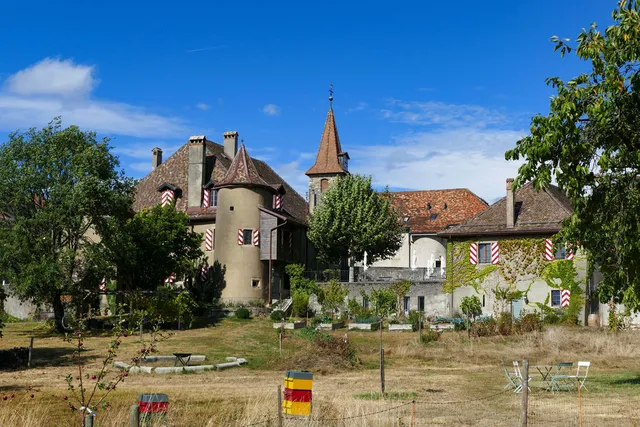
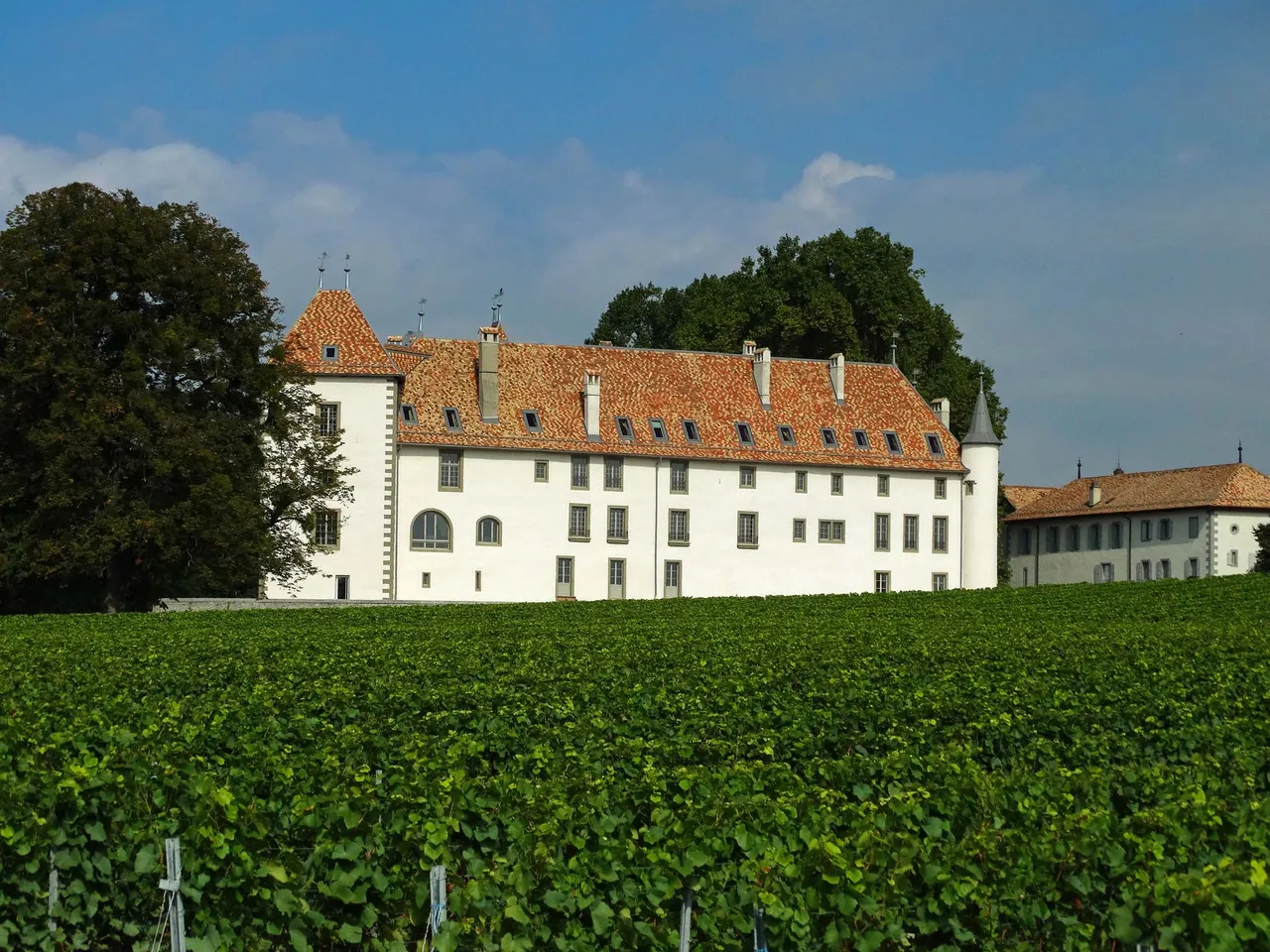
AA luxury watchmaker now owns the château that helped invent European peace activism. Allaman Castle, pressed between the Lausanne–Geneva road and its own Grand Cru vineyard in Allaman, Switzerland, is a collision of fortress, pleasure palace, and unlikely diplomatic salon. Come for the 1291–1292 timber-framed walls and the ghost of a merry widow; stay for the idea that a single lakeside estate could prefigure the League of Nations.
Most visitors arrive expecting a postcard castle and miss the double life: this is a wine estate with a ghost story and a peace activist's labor of love. The original structure was a quadrangular fortress with square towers at each corner, built to control the lake road and the route to Aubonne and the Marchairuz pass. Records show a family named d'Allaman here as early as 1219, and dendrochronology pins the surviving south-east wall to 1291–1292. Bernese troops burned the place to the ground in 1530; villagers then hauled away stones to build their own houses.
What rose from that fire is a shape-shifter. In 1723, Jeanne-Marguerite, Marquise de Langallerie, bought the ruined shell and sealed its breaches, pierced walls with windows, and carved out 32 rooms for parties. A century later, Jean-Jacques de Sellon hosted Franz Liszt, George Sand, Joseph Bonaparte, and Empress Joséphine under the same roof. Today the Franck Muller Group plans weddings and exhibitions among the Chasselas vines.
01 What to see.
The Castle Above the Vines
The Courtyard Gate and the Inscribed Column
Two Castles and the Lakeshore: A Walking Loop
02 In pictures.


Plan and listen to Allaman Castle with Audiala.
Audio guide in your pocket, itinerary in your browser. Built for the way you actually visit.
03 Visitor logistics.
The practical scaffolding for a good visit — kept short.
Getting There
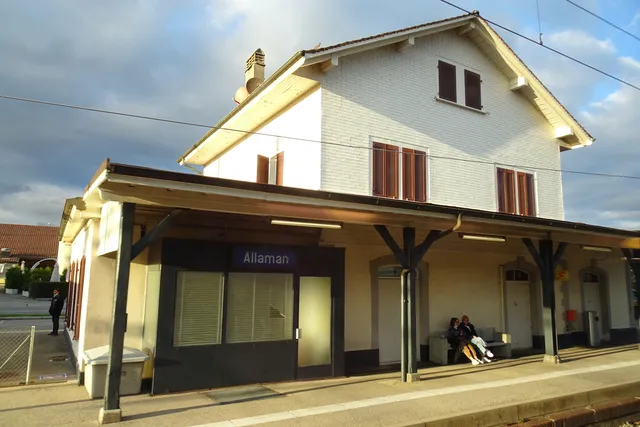
By train, Allaman Railway Station sits on the Lausanne–Geneva main line; the castle is a 10-minute downhill walk toward the lake. By car, it's visible from the lakeside road between Lausanne and Geneva, but there's no dedicated visitor parking—use street parking in the village.
Opening Hours
As of 2026, the castle interior is closed to the public—it's a private residence and event venue with no ticket office or guided tours. The grounds are not formally open; some visitors report an unkempt exterior area, but plan to view from the public road or path. For private renters only, the venue can be booked 7:30 to 4:00 the following morning; verify current rental status by phone before relying on it.
Time Needed
A roadside photo stop takes 5–10 minutes. Walking from the station, circling the exterior, and returning takes 20–30 minutes. Add 30–60 minutes if you arrange a wine tasting in advance; there is no interior exploration.
Cost & Tickets
No admission fee; the exterior view from public land costs nothing. Wine tastings are by appointment only—contact winemaker Caspar Eugster at [email protected] or +41 79 522 90 31; group tastings take place at Domaine du Martheray in Féchy, not in the castle. Private event rental is a different world, roughly CHF 10,000 per day plus setup and taxes.
Accessibility
This is an exterior-only sight. The approach from the village slopes downhill, the grounds are partly unmaintained, and there is no interior access—so no elevators or wheelchair route into the building. The lakeside road gives the least physical-effort view.
04 Tips for visitors.
Small things that change the day.
Respect the privacy
Château d'Allaman is not a public monument. Locals do notice trespassers, so stick to the lakeside road or the public path and don't ring the bell for a peek.
Shoot from the road
Exterior photos from public areas are unrestricted. Drones are effectively off-limits over this protected historic site without FOCA permission, and don't aim cameras through windows.
Eat local perch
In the village, Restaurant du Chasseur serves Lake Geneva filets de perche and pasta dishes; count on CHF 35–50 for a main. For a splurge, Hostellerie du Château in Rolle is about 15 minutes away.
Go at dusk
The castle glows warm on its hill above the vines in late light. Evening also softens the glare off Lake Geneva, and a stop after a day in Lausanne or Geneva works well.
Buy the wine
The estate's Chasselas is sold as Château d'Allaman AOC in regional shops; ask for it in La Côte wine stores. Tastings are by advance email to [email protected] and usually happen at Domaine du Martheray in Féchy.
Pair with Morges
Since you can't enter Allaman, pair the stop with Morges Castle about 6 km east—it's open to the public and faces a lakefront promenade. Allaman's smaller Maison de Rochefort is the other castle locals distinguish.
05 A Phoenix on the Lake Road
Allaman Castle has been burned, looted, remade, and argued over for more than seven centuries. The earliest documented mention is 1375, but the d'Allaman family appears in records as early as 1219, and carbon-14 dating of burned beams found below the courtyard points to a structure around 1110. The standing south-east wall, however, is dendrochronologically dated to 1291–1292 — the most reliable date in the building's early story.
Its position mattered more than its prettiness: it controlled the lake road and the route up to Aubonne and the Marchairuz pass. That made it a prize, and a target.
Jean-Jacques de Sellon's Peace Experiment
In 1810, Jean-Jacques de Sellon inherited Allaman from his banker father. He was already a man with unpopular opinions: he wanted to abolish the death penalty, and he believed peace could be organized rather than merely wished for. For him, Allaman was not a country retreat. It was an instrument. He called it 'the highest treasure among all his possessions.'
The turning point came in 1820, when de Sellon made the château the provisional seat of the Société de la Paix — the Society of Peace, a direct ancestor of the League of Nations and the United Nations. By 1830, he was convening Europe's first international peace summit in these rooms. The stakes were personal: his politics had made him suspect to the old regime, and his guests ranged from Napoleon's exiled brother Joseph to Camillo Cavour, his own grandson. Allaman gave him a stage large enough to be heard.
He had a description of the 'Spirit of Geneva' engraved on a column; it was rediscovered only during 2000s-era renovations by Markus Jerger. That single column is easy to miss, but it marks the moment a private castle became an argument about how Europe might end war.
The Merry Widow's Party Palace
Grapes on Medieval Stone
Listen to the full story in the app
The whole Allaman Castle,
told well.
Audio guides for 1,100+ cities across 96 countries. History, stories, and local insight — offline ready.
06 Frequently asked.
The questions travellers send us most about Allaman Castle.
Is Allaman Castle worth visiting?
Only if you treat it as a drive-by photo stop or a wine errand, not an attraction: the castle is private and you cannot go inside. The exterior rises over 15 hectares of La Côte vines with Lake Geneva behind, which is lovely from the road. For an actual castle interior, nearby Morges or Rolle are better bets.
Can you visit Allaman Castle for free?
Yes, viewing the exterior is free because you do it from the public road or the Lausanne–Geneva lakeside route; the castle itself sells no tickets. The grounds are described by one recent visitor as open but neglected, though they remain private. Do not ring the bell expecting a tour.
How long do you need at Allaman Castle?
Budget five to ten minutes to view it from the road, or thirty minutes if you walk from Allaman station and linger over the vineyard views. No interior is open to explore, so unless you have arranged a wine tasting with the vigneron, nothing else fills the time.
How do I get to Allaman Castle from Geneva?
Take a mainline SBB train from Geneva to Allaman Railway Station, about 30 minutes, then walk 10 minutes downhill toward the village and lake. By car, you will see it from the lakeside road between Lausanne and Geneva, though parking is scarce and unofficial.
What is the best time to visit Allaman Castle?
Come in late September or October for harvest season, when the vines turn gold and the air smells of ripe grapes, or on a clear winter day when Mont Blanc appears behind the lake. Since the castle is exterior-only, clear weather matters more than any festival calendar.
What should I not miss at Allaman Castle?
The one thing not to miss is the castle's silhouette rising above the vines from the lakeside road or Chanivaz delta. If you can glimpse the courtyard, the baroque arcades are lovely, and the Armary canal cuts through the park. Wine drinkers should email winemaker Caspar Eugster at [email protected] about a tasting.
Verified, and shown.
Researched and written by the Audiala editorial team from historical records, architectural archives, and local expertise.
Confirms the castle is private, not open to the public, and produces wine.
Details on architectural evolution, the Armary canal, the 1830s English garden, and the 1959 vineyard reconstitution.
Winemaker contact for tastings and the statement that rooms are not rented to the public.
Recent visitor notes on external access, neglected grounds, and walking from the station.
Train timetable reference for the Geneva–Allaman route.
Wine heritage, the Marquise de Langallerie's transformation of the castle, and the 1959 vineyard replanting.
Event capacity, the 978 m² courtyard, 50,000 m² parkland, and venue description.
Researched from Wikidata, Wikipedia & official sources · fact-checked · How we make our guides →