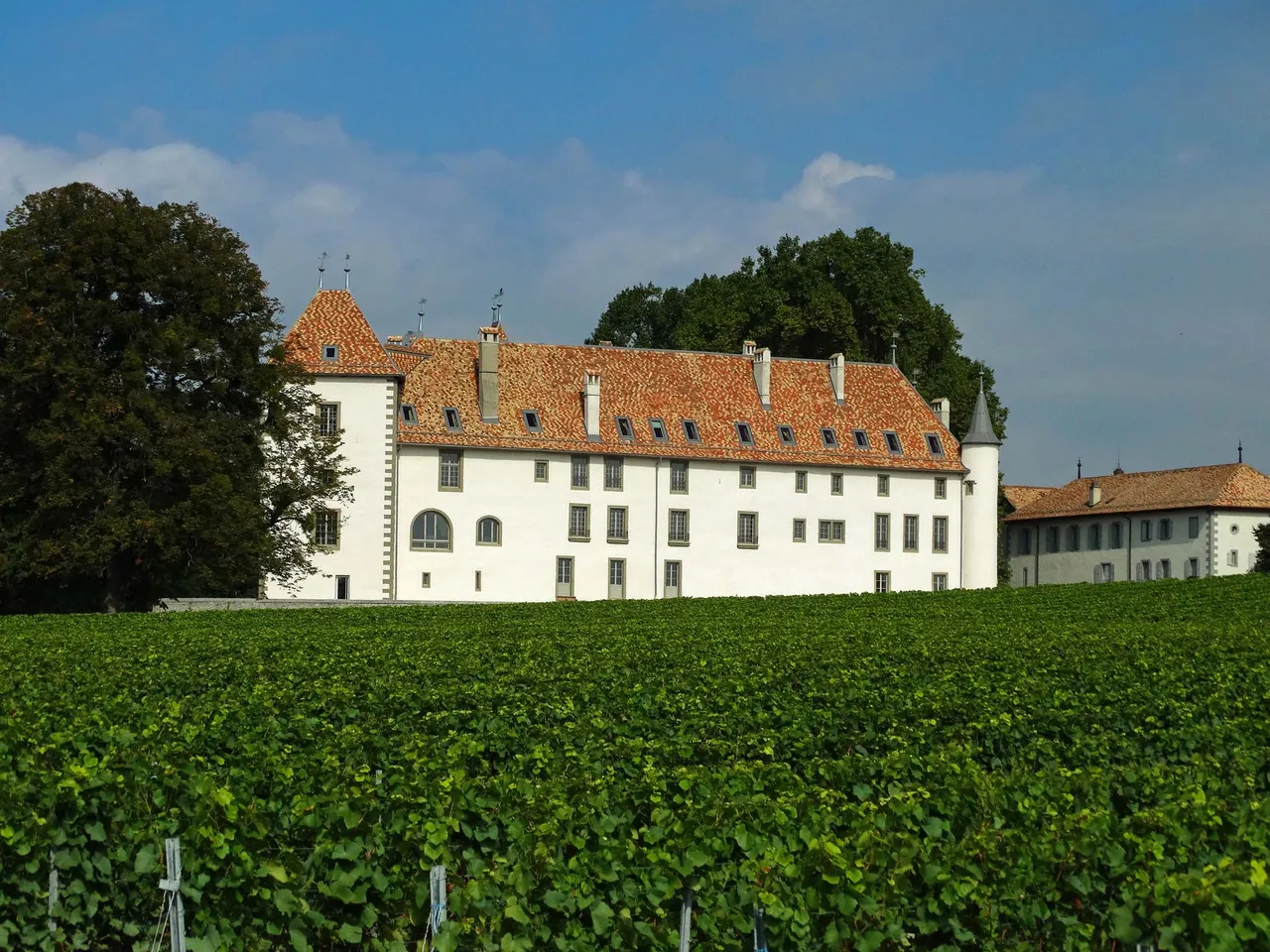
Château d'Allaman
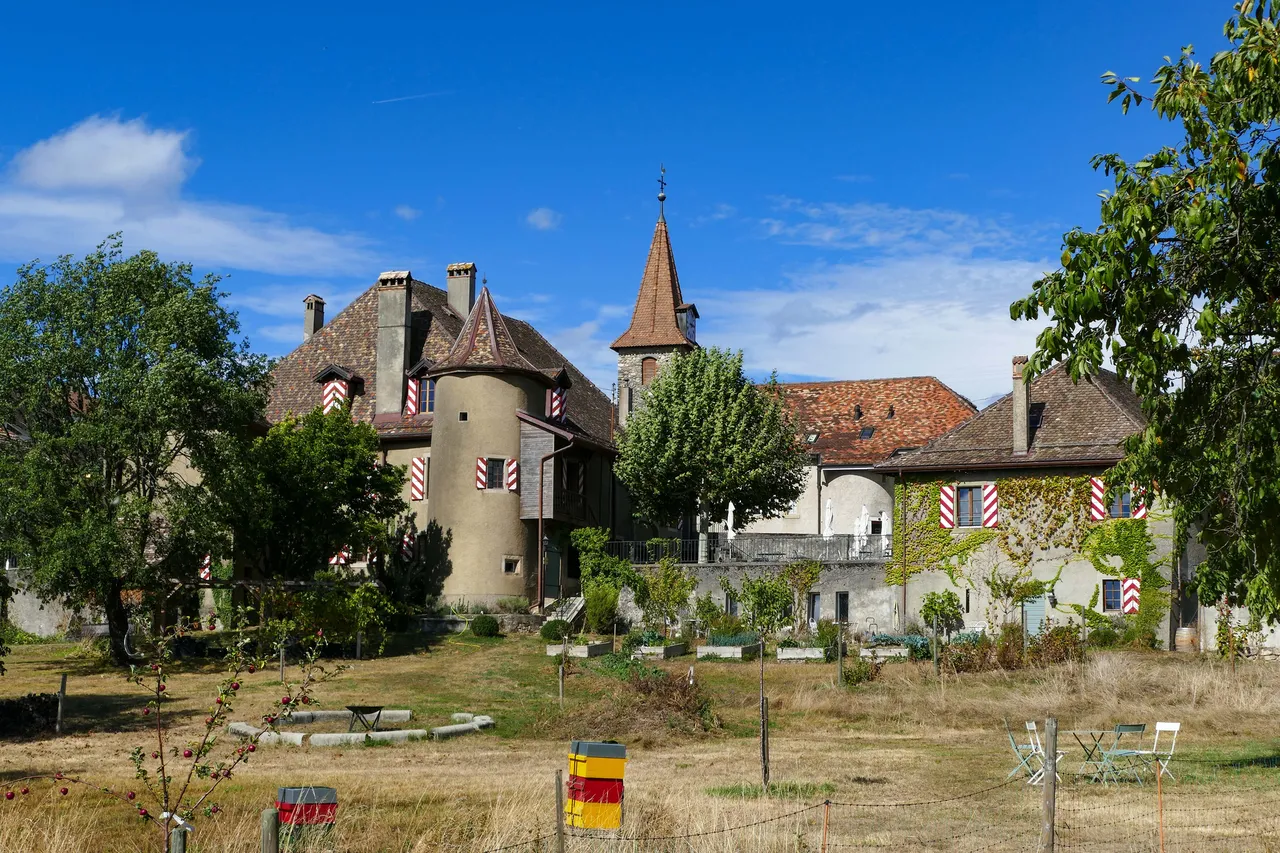
A privately owned 13th-century estate with its own wine label sits at the heart of the village. Interior access is limited; European Heritage Days in September occasionally open the doors.
Lake water and sun-warmed Chasselas grapes give Allaman, Switzerland, an aroma that Geneva and Lausanne can't offer without a lakefront crowd. Roughly 400 people live in this Vaud canton village on Lake Geneva's northern shore, between Lausanne and Geneva, beneath a 13th-century castle that still makes wine. Most travelers pass through by train. They miss what Allaman does best: leaving you alone with the water and the vines.
Researched from Wikidata, Wikipedia & official sources · fact-checked · How we make our guides →
ALake water and sun-warmed Chasselas grapes give Allaman, Switzerland, an aroma that Geneva and Lausanne can't offer without a lakefront crowd. Roughly 400 people live in this Vaud canton village on Lake Geneva's northern shore, between Lausanne and Geneva, beneath a 13th-century castle that still makes wine. Most travelers pass through by train. They miss what Allaman does best: leaving you alone with the water and the vines.
Château d'Allaman anchors the village, a palimpsest of 13th-century stone and later rebuilding set inside a park. The castle remains privately owned, so interiors stay mostly closed; the most dependable chance to step inside is European Heritage Days in September. The rest of the year, the estate introduces itself through its wine label, made from grapes grown on the grounds.
Below the village, the lakefront is the quiet alternative to Rolle's more polished promenade, five kilometers east. A small port and a shoreline path face the French Alps, and on clear afternoons the water takes on the color of tin. Walk the shore, then climb back through the terraced vines of La Côte, where the same sun that ripens the slopes toward Nyon gives Allaman's Chasselas its structure.
What makes this place worth slowing down for.
A privately owned 13th-century estate with its own wine label sits at the heart of the village. Interior access is limited; European Heritage Days in September occasionally open the doors.
The village holds a small harbour and an uncommercialized promenade where you hear more birdsong than boat engines in the morning. Views run across the water toward the Savoy Alps.
Allaman lies inside Vaud's La Côte AOC, where Chasselas dominates south-facing slopes between the railway and the lake. The castle's own label is the local pour.
Trains stop at Allaman station on the Geneva–Lausanne main line, putting both cities roughly 22 to 27 minutes away. That makes the village's calm feel deliberate, not remote.
Not every monument, just the ones we'd walk you past ourselves.
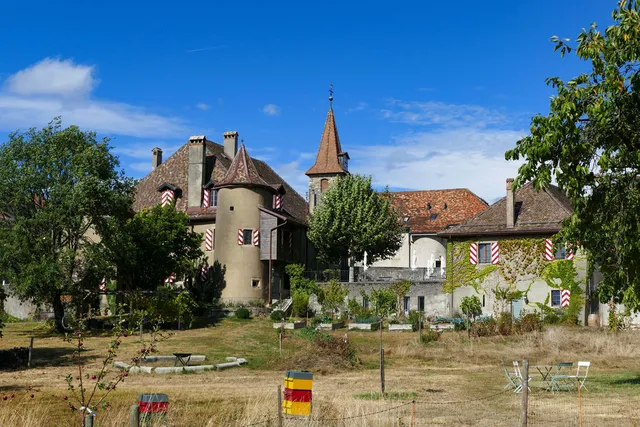
In 1820 this lakeside fortress became the seat of the Society of Peace, ancestor of the League of Nations and the UN—and is now a private events castle.
Maison de Rochefort doubled as Allaman's post office until 1915; today it anchors a Lausanne-owned vineyard estate with a William Tell weathervane above it.
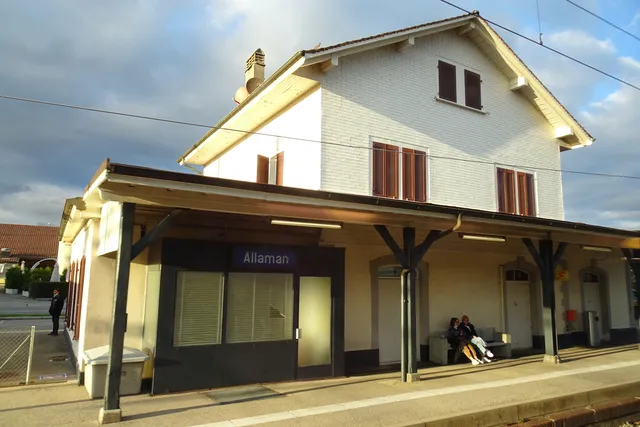
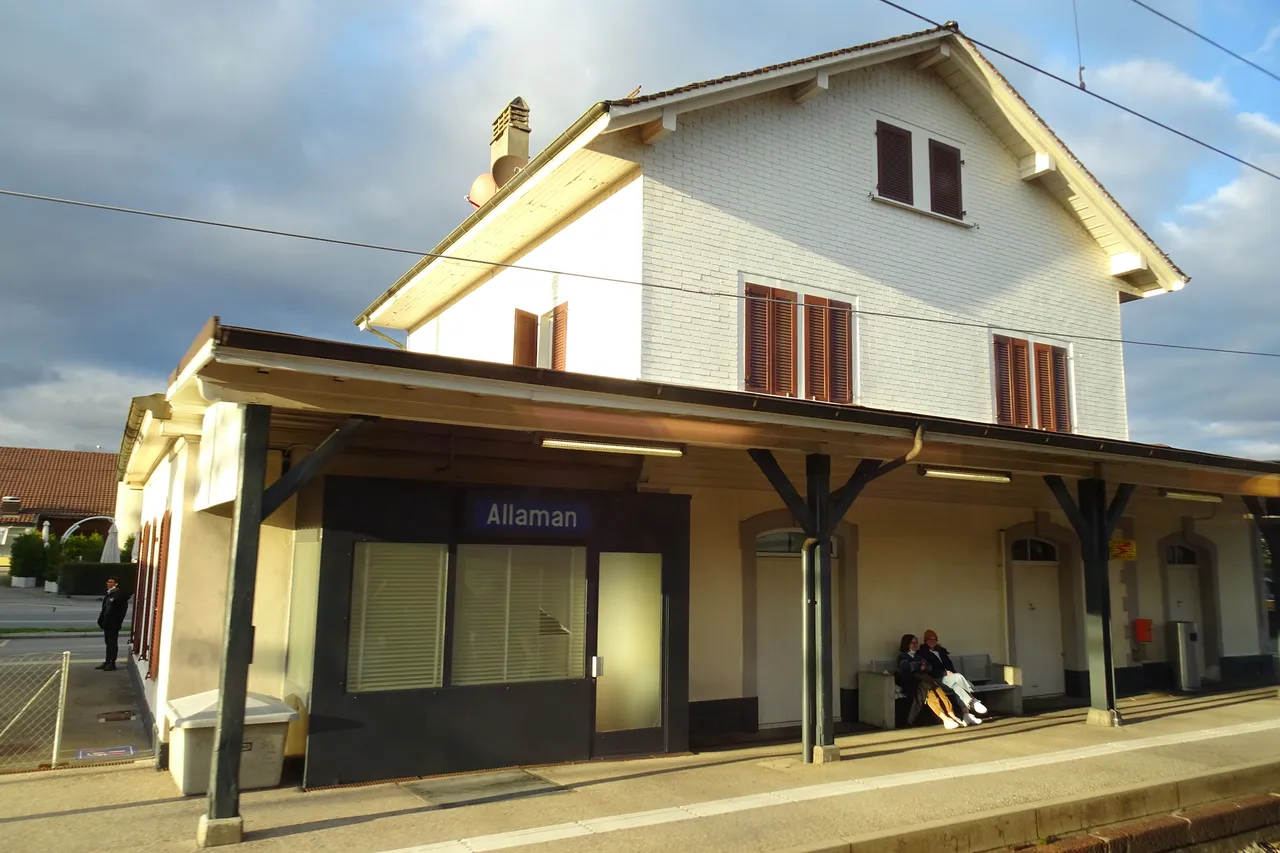
Allaman's small station once had a tram line to Aubonne and Gimel, and today its Sicilian pizzeria is a local institution.
Allaman's church has a bell tower predating 1412, a Gothic choir rebuilt after 1481, and a clumsy 1539 engraving that misleads visitors about its true age.
Where to wander, by quarter — each with its own rhythm.
The village core clusters around Château d'Allaman, with a handful of stone houses and narrow lanes that dead-end into vineyards. It is quiet in a way that makes your own footsteps feel intrusive. Services are thin, and that is the point—this is a place to slow down, not to shop.
Below the village, a small port and shoreline promenade run along Lake Geneva, facing the Savoy Alps across the water. Late afternoon light turns the lake to hammered metal, with only the occasional train passing on the line above. It is an uncommercialized strip of shore, better for an hour of sitting than a full beach day.
The castle's park and vines form the green transition between the village and the lake. The estate produces Château d'Allaman wines, and the surrounding La Côte slopes are planted with Chasselas grapes that define this stretch of Vaud. Castle interiors are rarely open, but the vineyards stay visible year-round and, at harvest, audible.
Where locals actually book dinner — not the tourist menus.
Delicate perch fillets from Lake Geneva, dusted in flour and pan-fried in butter, then finished with lemon. It is the lake's default lunch, usually served with chips or seasonal vegetables.
Leeks and potatoes cooked slowly until soft, topped with a fat Saucisson vaudois. This is the cold-weather dish of the canton, best eaten in a village auberge between October and March.
Half Gruyère and half Vacherin Fribourgeois melted with white wine and garlic, scraped from the pot with bread. Local restaurants in La Côte bring it out with the first real cold snap.
Crisp, brittle meringues sit over double cream so thick it barely moves. It is a Vaud dessert that rewards slowing down, and no one here limits it to summer.
The region's defining white grape: dry, flinty, and floral, often surprisingly low in alcohol. Try it at a caveau, where the pour usually comes with a view of the vines that produced it.
The castle estate bottles under its own label, mostly Chasselas and Pinot Noir from its park-side vines. Since the château itself is private, tasting often happens through regional caveaux and wine events.
Small things that change how the city treats you.
Allaman sits directly on the Geneva–Lausanne line; regional trains stop at least hourly, putting Geneva around 30 minutes away.
Château d'Allaman works as a wine estate even though you can't get inside. Look for its label in local caveaux and bottle shops, especially the white wines from La Côte.
The château interior is private; your best chance is European Heritage Days in September. Otherwise, the view from the park edge is still the postcard shot.
Lake Geneva's shoreline at Allaman is pebbly and undeveloped. Pack water shoes if you plan to wade or swim from the small port.
The village has almost no shops or restaurants. Stock up at Rolle or Morges and eat by the lakeside promenade instead.
Late afternoon light over the lake from the vine paths below the castle is better than anything you'll get from the road.
The city, as it actually looks.
A detailed historic map of Allaman beside Lake Geneva. It traces the village, the Aubonne River, vineyards and surrounding hamlets.
Arkelin
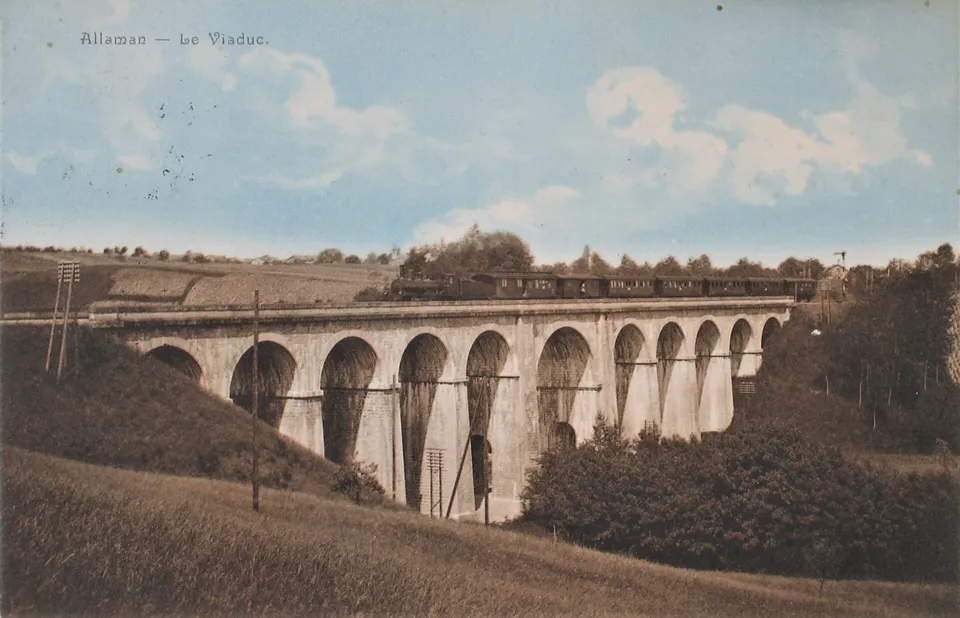
A steam train crosses Allaman’s stone railway viaduct on this historic postcard. The arches span a wooded valley beneath a bright, cloud-dappled sky.
Bildcode: Fel_015119-RE Fotograf: Unbekannt Titel: Allaman, Le Viaduc Beschreibung: Poststempel 9.5.1919 Datierung: vor 9.5.1919 Bildnachweis: ETH-Bibliothek Zürich, Bildarchiv / Fotograf: Unbekannt / Fel_015119-RE / Public Domain Mark
A narrow footbridge crosses a fast-flowing stream in leafy Allaman. Warm afternoon light catches the water, railings, and modest riverside house.
Jag9889
Allaman’s historic village and manor sit beside orderly vineyards and farmland on the Vaud countryside.
Bildcode: LBS_L1-737160 Fotograf: Swissair Photo AG Titel: Allaman Datierung: 3.9.1973 Bildnachweis: ETH-Bibliothek Zürich, Bildarchiv/Stiftung Luftbild Schweiz / Fotograf: Swissair Photo AG / LBS_L1-737160 / CC BY-SA 4.0
Map of Allaman in the canton of Vaud, positioned on Lake Geneva between Rolle and Aubonne.
Tschubby
The green and white wavy shield is the heraldic emblem of Allaman, Switzerland.
Domaine de Vérex stands beside its vineyard slopes in Allaman. Winter sunlight picks out the shuttered farmhouse and towering cedar.
Alain Rouiller
Map locating Allaman on the northern shore of Lake Geneva, between Rolle and Morges.
Tschubby
A detailed historic map of Allaman showing its village streets, surrounding fields and the Aubonne River.
Siegfried Atlas 1895
A quiet road bridge crosses a leafy stretch of Allaman beneath a softly clouded sky. A marked cycle lane follows the roadside.
Jag9889
Map of the Morges district in Vaud, showing Allaman highlighted beside Lake Geneva.
Tschubby
A quiet estate sits beside winter vineyards in Allaman, Switzerland. Bare branches frame the sunlit rural scene.
Alain Rouiller
Only if you want a quiet, uncommercialized slice of Lake Geneva. The 13th-century castle, lakeside promenade, and surrounding vineyards make a worthwhile half-day or a peaceful overnight stop, but don't expect museums or nightlife.
Half a day to one night is enough for Allaman itself. It is a village of about 400 people, so most travelers use it as a scenic lunch stop, a short walk, or a calm base for trips to Lausanne and Geneva.
Take a direct regional train from Geneva toward Lausanne; Allaman is on the same line, about 30 minutes from Geneva. Trains generally run hourly, but check the SBB timetable for evening gaps.
Not usually. The castle is privately owned and interior access is limited to occasional open days, often during the European Heritage Days in September. You can still see the building from its park edges and buy wine produced on the estate.
For travelers who prefer quiet and train access over nightlife, yes. The station makes Geneva and Lausanne easy, and the lake is a short walk away, but nearby Rolle or Morges offer more dining and services.
Allaman is known for its 13th-century castle, its wine-growing position in the La Côte region, and a remarkably quiet Lake Geneva shoreline between Lausanne and Geneva.
Ready to book?
Fly in via Geneva Airport (GVA), about 31 km away, then take a direct SBB train from Geneva-Cornavin to Allaman in roughly 27 minutes. The village station also has regional trains from Lausanne in about 22 minutes. By car, exit the A1 autoroute at Rolle or Aubonne and follow signs south toward the lake.
No metro here: Allaman is small enough to cross on foot, but SBB regional rail and CarPostal buses connect the surrounding La Côte villages. The lakeside cycling route along Lac Léman passes through the area. Mobilis Vaud day passes cover train and bus travel, and the Swiss Travel Pass covers arrival and travel days.
Spring runs 8–16°C with April showers; summer averages 20–26°C, warm enough for lake swimming by July. Autumn drops from about 18°C in September to 8°C by November, while winter hovers around 0–6°C. July and August draw the most visitors; May–June and September–October offer quieter lake walks and clearer vineyard light.
French is the local language, though many people in tourism-facing roles switch to English. Prices are in Swiss francs (CHF), not euros — cards are widely accepted, but small caveaux may prefer cash or Twint.
Violent crime is rare in Allaman; routine precautions around train stations and lake swimming are enough. In summer, use marked lido or harbour areas if you are not a strong swimmer, and keep an eye on water conditions.
4 places to discover