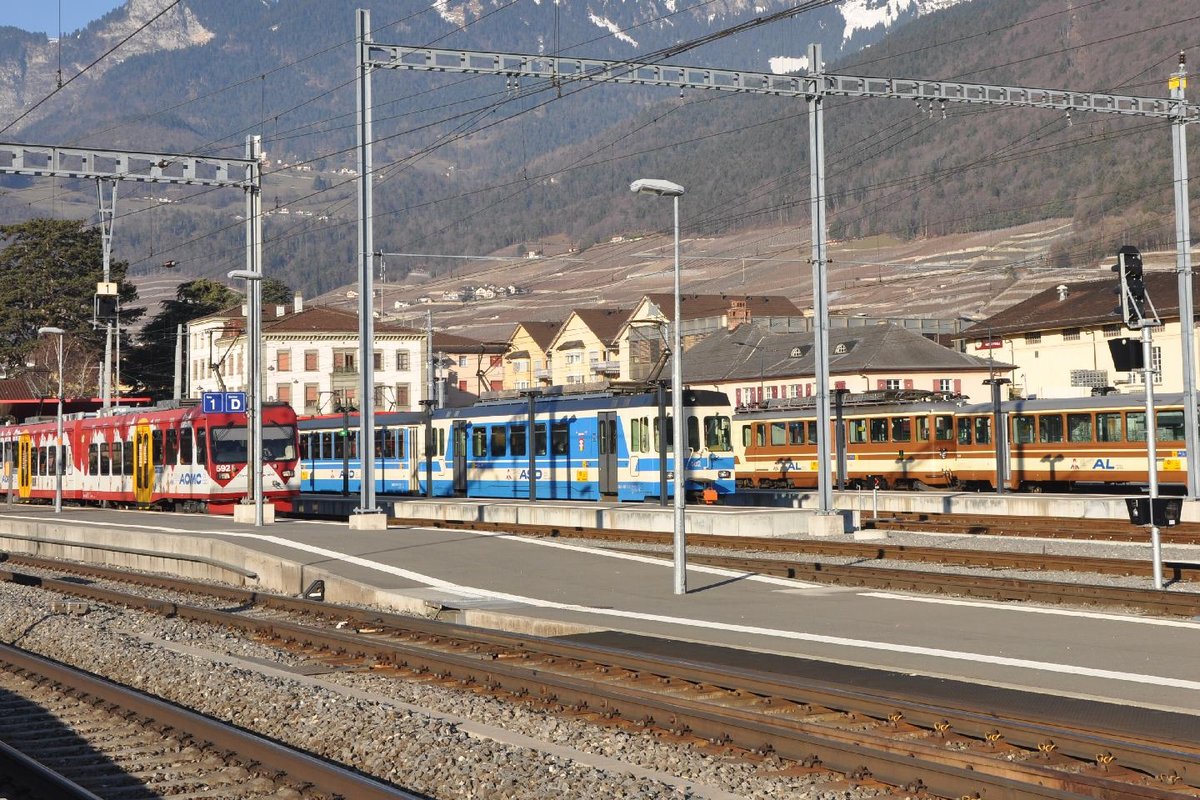
Plan and listen to Aigle Railway Station with Audiala.
Audio guide in your pocket, itinerary in your browser. Built for the way you actually visit.
Introduction
Aigle Railway Station, located in the heart of Switzerland’s Vaud canton, stands as a vital gateway to the Vaud Alps, steeped in both history and modern convenience. From its 19th-century origins on the Lausanne–Simplon line to its current role as a bustling transport hub serving millions annually, Aigle Station connects travelers to alpine resorts, cultural landmarks, and the picturesque vineyards that define the region (Wikipedia: Aigle). Whether you are arriving for outdoor adventures, wine-tasting, or cultural festivals, this comprehensive guide details everything you need to know—from visiting hours and ticket options, to accessibility, top attractions, and travel tips.
- Historical Overview
- Station Layout and Facilities
- Visitor Information
- Regional Rail Connections
- Top Attractions Near Aigle
- Events, Heritage, and Culture
- Frequently Asked Questions (FAQ)
- Future Developments
- Conclusion
- References
Aigle Railway Station was inaugurated in 1857 as part of the Lausanne–Simplon railway, transforming local and transalpine travel for the Chablais region (Wikipedia: Aigle). The arrival of the railway replaced older road and stagecoach routes, catalyzing economic and cultural growth.
Aigle’s significance grew with the addition of three iconic narrow-gauge mountain lines:
- Aigle–Leysin Railway (AL): Opened in 1900, this cogwheel line ascends steeply from Aigle to Leysin, utilizing advanced rack-and-pinion technology (Wikipedia: Aigle–Leysin railway line).
- Aigle–Sépey–Diablerets Railway (ASD): Operational by 1914, connecting Aigle to Les Diablerets via Le Sépey (Wikipedia: Aigle–Sépey–Diablerets railway line).
- Aigle–Ollon–Monthey–Champéry Railway (AOMC): Linking Aigle with Champéry and the Rhône valley (Wikipedia: Aigle).
These lines merged under Transports Publics du Chablais (TPC) in 1975, enabling coordinated schedules and modernized infrastructure (Wikipedia: Transports Publics du Chablais). A major station redevelopment in 2007 ensured barrier-free access and enhanced passenger facilities (Wikipedia: Aigle railway station).

Station Layout and Facilities
Location: Place de la Gare 5, 1860 Aigle
The station features a unique arrangement of standard-gauge SBB platforms and adjacent narrow-gauge TPC platforms (alpesvaudoises.ch). All platforms are built to Swiss P55 standards for level boarding and easy access (regiondentsdumidi.ch).
Key Facilities:
- Heated indoor waiting rooms and outdoor platform shelters
- Clean, wheelchair-accessible restrooms (Eurokey required)
- Ticket counters and multilingual self-service machines
- Luggage lockers and lost-and-found services
- Free Wi-Fi, device charging stations
- Cafés, kiosks, and nearby restaurants (omio.com)
- Secure bicycle parking, car and disabled parking spaces
Visitor Information
Visiting Hours
- Station building: Open daily from approximately 5:00 AM to midnight
- Ticket office: 6:00 AM – 8:00 PM (Mon–Fri); 7:00 AM – 7:00 PM (Sat–Sun/holidays)
- Ticket machines: 24/7
Ticketing Options & Purchase
- At the station: Staffed counters and self-service machines (multilingual)
- Online: Swiss Federal Railways (SBB) and TPC websites & mobile apps
- Ticket types: Standard tickets, day passes, regional travelcards, and combined mountain railway tickets
- Discounts: Swiss Travel Pass, children, seniors, and groups
- Mountain railway tickets: For AL, ASD, and AOMC lines, available at the station and online (alpesvaudoises.ch)
Accessibility
The station is fully barrier-free:
- Step-free access via ramps and elevators
- Tactile guidance for visually impaired travelers
- Wheelchair-accessible ticket offices and restrooms
- Assistance services available on request
Travel Tips
- Arrive 15 minutes early to navigate the platforms, especially when connecting to narrow-gauge lines
- Use the SBB mobile app for real-time schedules and ticketing
- Consider purchasing regional passes for savings on multiple trips
- Check seasonal schedules for mountain railways and local events
Regional Rail Connections
Mainline SBB Connections
- Lausanne: ~30 min direct
- Geneva: ~1 hr 10 min direct
- Brig: ~1 hr via the Simplon line
- Interlaken/Bern: Via Spiez and Zweisimmen, including GoldenPass Express connections (glacier3000.ch)
Narrow-Gauge Mountain Railways
- Aigle–Leysin (AL): 35 min to Leysin (1,263 m); panoramic views and access to the Kuklos revolving restaurant (alpesvaudoises.ch)
- Aigle–Sépey–Diablerets (ASD): 50 min to Les Diablerets; gateway to Glacier 3000 (glacier3000.ch)
- Aigle–Ollon–Monthey–Champéry (AOMC): Links to Champéry, part of the Portes du Soleil ski area (regiondentsdumidi.ch)
Local Transport and International Links
- Regular bus connections from the station forecourt to villages, resorts, and tourist sites
- Easy access to Villars-sur-Ollon via bus or via Bex (alpesvaudoises.ch)
- International links via Lausanne and Geneva for broader European travel
Top Attractions Near Aigle
Château d’Aigle and Vineyards
A 15-minute walk from the station brings you to the stunning Château d’Aigle, surrounded by UNESCO-listed vineyards. The castle houses the Vine and Wine Museum (Musée de la Vigne et du Vin), offering interactive exhibits and panoramic views.
- Opening hours: 10:00–18:00 (seasonal variations)
- Admission: CHF 12 adults, CHF 4 children (2025)
- Accessibility: Flat walk from station; accessible for most visitors
Old Town and Heritage Sites
Wander Aigle’s charming old town, with cobbled streets, the Church of Saint-Maurice, De la Dîme House, and the lively Place du Marché. Weekly markets and cultural festivals are held throughout the year.
Outdoor and Adventure Activities
- Mountain railways: Direct access to Leysin, Les Diablerets, Champéry
- Parc Aventure Aigle: Treetop adventure park near the castle, open spring to autumn
- Hiking & cycling: Trails through the vineyards, alpine meadows, and to Lake Lioson or Pic Chaussy
- World Cycling Centre: Home to the UCI, offers tours and events
Events, Heritage, and Culture
Aigle Railway Station is a launch-point for local and regional festivals:
- Wine festivals: Late summer and autumn, with vineyard tours and tastings
- Cycling events: Amateur and professional races at the World Cycling Centre
- Jazz and cultural festivals: Easy train access to the Montreux Jazz Festival and Fête des Vignerons in Vevey
The station building features public art and displays celebrating the region’s heritage. Nearby cafés and wine bars offer Chasselas tastings and Vaudois specialties (MySwitzerland: Aigle).
Frequently Asked Questions (FAQ)
Q: What are the opening hours of Aigle Railway Station?
A: Daily from 5:00 AM to midnight; ticket office typically 6:00 AM–8:00 PM (weekends 7:00 AM–7:00 PM).
Q: Where can I buy tickets?
A: At station counters, self-service machines, online via the SBB or TPC websites, or through mobile apps.
Q: Is the station accessible for persons with disabilities?
A: Yes, with step-free access, elevators, tactile guidance, and assistance on request.
Q: Which mountain railways depart from Aigle?
A: The AL (Leysin), ASD (Les Diablerets), and AOMC (Champéry) lines.
Q: Are lockers and luggage storage available?
A: Yes, luggage lockers are available at the station.
Q: Can I visit Château d’Aigle year-round?
A: The castle is open most of the year; check seasonal hours for details.
Future Developments
Ongoing upgrades under Switzerland’s STEP ES 2035 program will increase service frequency, accessibility, and digitalization at Aigle Railway Station (Wikipedia: Aigle railway station). Sustainability initiatives include expanded bicycle facilities, e-mobility infrastructure, and integration with hiking and cycling routes. Heritage rail preservation and digital information kiosks are also planned.
Listen to the full story in the app
The whole Aigle Railway Station,
told well.
Audio guides for 1,100+ cities across 96 countries. History, stories, and local insight — offline ready.
Verified, and shown.
Researched and written by the Audiala editorial team from historical records, architectural archives, and local expertise.
Researched from Wikidata, Wikipedia & official sources · fact-checked · How we make our guides →
