train
Railways With A View
Switzerland turns transport into part of the trip. Routes linking Zürich, Lucerne, Interlaken and Zermatt pass lakes, tunnels, and mountain walls with a level of precision that makes car travel feel clumsy.
Switzerland makes its case through contrast: four languages, one timetable, and a landscape that shifts from diplomatic city streets to glacier country in a single train ride.
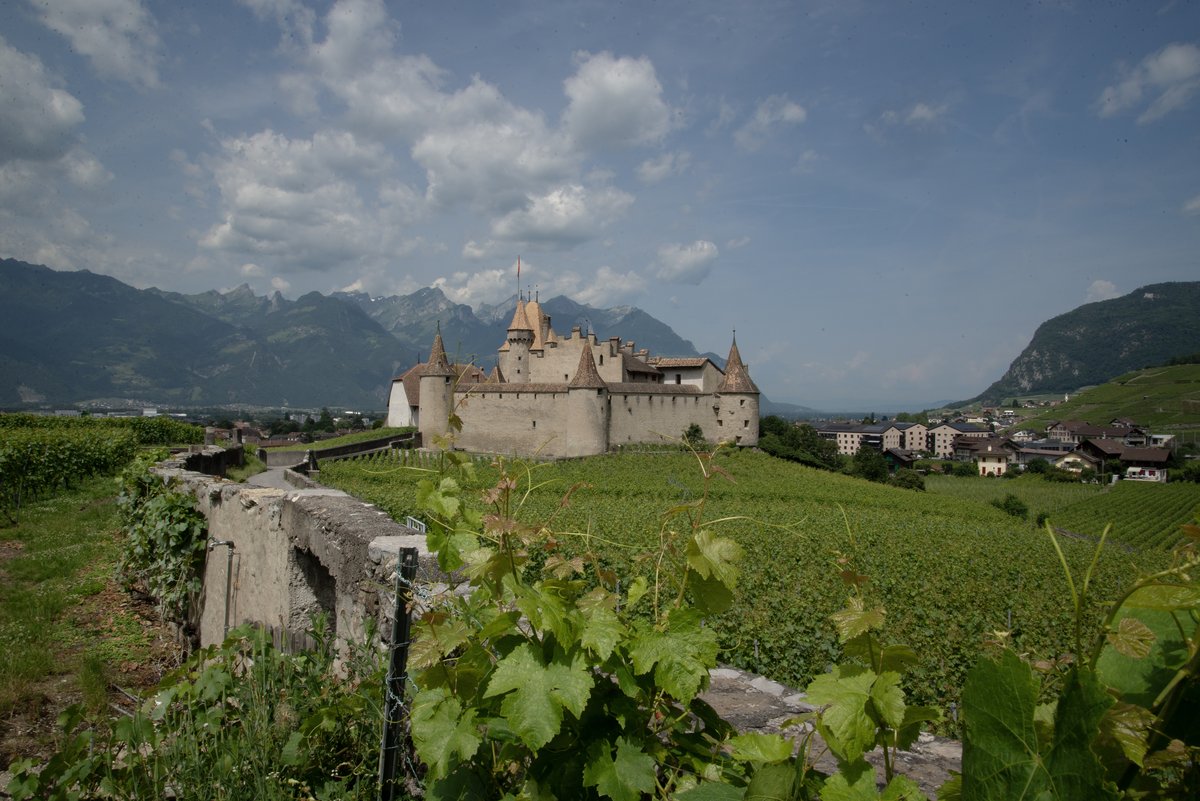 Switzerland
EntrySchengen area; many visitors get 90 days visa-free
SA Switzerland travel guide starts with a surprise: this small country holds four languages, 1,800 lakes, and rail journeys that beat most road trips.
Switzerland works best when you stop treating it as one postcard and read it canton by canton. In Zürich, breakfast can mean Birchermuesli, first mixed here in the early 1900s, before a tram ride past guild houses and sharp-edged contemporary design. Geneva faces the lake and the world at once, with diplomats, watchmaking history, and the Rhône leaving Lac Léman in a ribbon of blue-green water. Bern, the federal city, keeps arcades, fountains, and a medieval street plan that still makes sense on foot. Even the quiet facts stay dramatic: 41,285 square kilometers, 26 cantons, and mountain walls close enough that city light often ends with snow on the horizon.
Then the country tilts upward. Lucerne opens toward Vierwaldstättersee and old Confederation myths; Interlaken sits between Lake Thun and Lake Brienz like a launch platform for the Bernese Oberland; Zermatt keeps cars out so the Matterhorn can dominate the skyline without engine noise. Scenic rail is not a side activity here but part of the plot, whether you are threading viaducts, climbing toward Jungfraujoch, or crossing old trade corridors under the Alps. And south of the passes, Lugano changes the mood completely: palms, Italian cadence, and air that smells less of cold stone than espresso and warm pavement.
Lake Villages and Rome, c. 4000 BCE-400 CE
A winter drought in 1853 pulled Lake Zürich back from its shore at Obermeilen and left a scatter of wooden stakes sticking out of the mud. Schoolteachers, antiquarians, then archaeologists bent over them in disbelief. What emerged was not a primitive fringe life but whole lakeside communities: bread loaves, woven cloth, apple cores, dogs buried beside their owners, the ordinary tenderness of prehistory kept cold under water for millennia.
Ce que l'on ignore souvent, c'est que Switzerland first revealed itself through preservation rather than conquest. The lake dwellers built on piles not for romance but for survival, and those drowned timbers now tell us more about Neolithic Europe than many grander ruins on dry land. The secret sits close to modern Zürich, where trams pass and office workers hurry on, while beneath the story of the banking republic lies the story of wet wood and smoke.
Then came the Helvetii, proud Celtic peoples of the plateau, and with them the first truly theatrical Swiss political scandal. In 61 BCE, their nobleman Orgetorix tried to engineer a mass migration westward, complete with marriage alliances and a plan grand enough to impress any Bourbon intriguer. Summoned to trial, he arrived with thousands of retainers; before judgment fell, he died, and Caesar dryly remarked that many believed he had killed himself.
Rome, of course, saw an opportunity. After the Helvetii were beaten at Bibracte in 58 BCE, the survivors were pushed back to their lands because the frontier needed a buffer. Aventicum, near modern-day Lausanne and Bern's orbit, flourished under Rome with temples, baths, and an amphitheater, while routes through the Alps tied what is now Basel, Geneva, and the Rhône corridor to imperial traffic. The roads stayed. So did the habit of living between larger powers and making that position count.
Orgetorix enters Swiss history like a tragic conspirator: ambitious, theatrical, and dead before the verdict.
At one prehistoric Swiss lake site, archaeologists found children's shoes and preserved bread, as if the family had just stepped out for the afternoon.
Confederate Beginnings, 1291-1515
The famous oath on the Rütli meadow is a beautiful story, but the real beginning is more austere: a sheet of vellum from 1291, written in Latin, promising mutual aid among Uri, Schwyz, and Unterwalden. No thunderclap. No stage lighting. Just men in mountain valleys deciding that Habsburg pressure was easier to resist together than alone.
That quiet document soon acquired blood, legend, and a cast worthy of a dynastic drama. At Morgarten in 1315, then Sempach in 1386, confederate infantry broke forces that looked stronger on paper and more aristocratic in armor. Arnold von Winkelried, if he existed as the chronicles later claim, hurled himself onto enemy lances to open a path. One can almost see the scene: wet grass, splintered shafts, the kind of courage that becomes national scripture because it is too useful not to remember.
Ce que l'on ignore souvent, c'est that Switzerland's early fame was not chocolate, clocks, or discretion. It was violence delivered at close range by disciplined infantry who ruined the plans of princes. No one learned that lesson more painfully than Charles the Bold, Duke of Burgundy, who invaded the Confederates in 1476 with magnificence, tents of cloth-of-gold, artillery, and the certainty of a man accustomed to being obeyed.
At Grandson and then Murten, his armies collapsed with astonishing speed. Swiss soldiers wandered through the abandoned Burgundian camp staring at gold plate, jewels, silks, and luxury so extravagant that some mistook precious stones for colored glass. One great diamond, probably the Sancy, was sold for a pittance because a Bernese buyer did not yet know what he held. By the time Charles was found frozen and mutilated outside Nancy in 1477, the Confederation had acquired something more durable than treasure: a reputation that made Europe very careful around mountain peasants with pikes.
Niklaus von Flüe, the hermit-statesman, gave the young Confederation a moral language just as victory threatened to make it reckless.
After Grandson, Swiss soldiers reportedly used Burgundian jewels as gaming counters because they valued hard cash more than courtly glitter.
Reformation, Mercenaries, and Fragile Balance, 1515-1815
The defeat at Marignano in 1515 did not end Swiss importance; it changed its style. The Confederates remained feared soldiers, but more and more they fought in other rulers' wars as mercenaries, sending their young men abroad while keeping a careful eye on cantonal liberties at home. Gold flowed back. So did grief. In this period, Switzerland learned a habit that would later be called prudence and sometimes looked a lot like exhaustion.
Then religion tore the country open. In Zürich, Ulrich Zwingli stripped churches of images and insisted that scripture, not habit, should rule Christian life; in Geneva, Jean Calvin built a republic of discipline severe enough to make even sympathizers glance over their shoulder. Ce que l'on ignore souvent, c'est that Zwingli did not die in his bed like a scholar. He died in battle at Kappel in 1531, chaplain and ideologue together, and the victors quartered and burned his body with dung so no relic cult could begin.
Geneva offered a different sort of spectacle: moral rigor sharpened into judicial power. In 1553, the Spanish theologian Michael Servetus was burned there for heresy, and Calvin's city showed Europe that the Reformation could punish as fiercely as the old Church. Anyone who strolls through Geneva today, admiring the lake light and diplomatic polish, should remember the smell of smoke and green wood from Champel. Every virtuous city has its scaffold.
Yet Switzerland did not break. Catholic and Protestant cantons learned, grudgingly, to coexist because no side could finish the other without ruining itself. The Peace of Westphalia in 1648 recognized Swiss independence from the Holy Roman Empire, and after Napoleon smashed the old order in 1798 with the Helvetic Republic, the Congress of Vienna in 1815 formalized permanent neutrality. Neutrality was never saintliness. It was a hard-won political arrangement in a country that had seen exactly what ideological certainty costs.
Anna Göldi, executed in 1782 in Glarus, stands for the victims crushed by a society that liked to think of itself as orderly and just.
Zwingli went into battle carrying both a Bible and a sword, an image so Swiss in its contradictions that one almost suspects posterity staged it.
Federal Switzerland, 1848-present
In 1848, after a brief civil war known as the Sonderbund War, Switzerland did something remarkably modern: it turned compromise into a constitution. The new federal state took a loose alliance of cantons and gave it institutions sturdy enough to survive language differences, religious rivalry, and the jealous pride of local elites. Bern became the federal city, not because it was the loudest claimant, but because Swiss politics often prefers the workable choice to the theatrical one.
What followed was one of Europe's quieter transformations. Rail tunnels drilled through mountains that had once dictated the terms of movement; the country made itself, quite literally, passable. The Gotthard line and later the great base tunnels turned the Alps from barrier into infrastructure, while cities such as Zürich, Basel, Lausanne, and Geneva acquired the self-confidence of places connected to everything. Switzerland's genius was not only engineering. It was the art of making engineering look inevitable.
Then came the moral complications of modern fame. In Geneva, Henri Dunant helped create the Red Cross after being horrified by Solferino; the city became a capital of humanitarian law and later international diplomacy. But the same country that sheltered refugees also closed doors to many, traded with difficult neighbors, and wrapped itself in the language of neutrality while the twentieth century asked harder questions. Ce que l'on ignore souvent, c'est that Swiss self-respect has often advanced one referendum, one scandal, one reluctant reform at a time.
Women's federal suffrage arrived only in 1971, astonishingly late for a state so proud of civic participation. Appenzell Innerrhoden had to be forced by court order in 1990 to grant women cantonal voting rights. That is the Switzerland worth knowing: inventive and conservative, humane and procedural, capable of building CERN's world of particle physics near Geneva while arguing for decades over who counts as a full political citizen. And from that tension came the country visitors meet now, from Lucerne to Lugano, from Zermatt to Morges and Rolle: composed on the surface, endlessly alive underneath.
Henri Dunant turned one unbearable battlefield into a global humanitarian idea, then spent years in ruin and neglect before the world caught up with him.
When women finally won the federal vote in 1971, Swiss men had been deciding the timing of female citizenship by referendum.
Switzerland speaks the way a watch reveals its gears: not all at once, and never by accident. In Zürich, you read High German and hear Swiss German, which is not one dialect but a clan argument conducted with excellent manners. A tram door opens, someone says "Grüezi," and the whole carriage accepts that greeting as a civic duty rather than a social gamble.
Cross into Lausanne or Geneva and the vowels loosen their collar. French in Romandy has less perfume than Parisian French and more bone. Then Lugano changes the temperature of the sentence itself: Italian arrives with coffee, shade, and a tiny willingness to delay lunch by twenty minutes, which in Switzerland already counts as opera.
What moves me is not the variety but the obedience to variety. Train announcements slide from German to French to Italian with the calm of a butler changing crystal. A country is a table set for strangers, and Switzerland has laid four sets of cutlery, then labeled the drawers.
Politeness here is not decoration. It is architecture. You enter a bakery in Bern without greeting the room and you feel, at once, that you have walked in wearing muddy boots on a clean carpet. A simple "Grüezi," "bonjour," or "buongiorno" restores the balance. The ritual is tiny. The effect is immense.
Punctuality in Switzerland is often described as a national virtue. That is too moral for what it is. It is an aesthetic preference. If dinner is at 19:00, then 19:00 is the correct frame for appetite, candles, conversation, and the first pour of Chasselas in Vaud. Arriving late does not make you wicked. It makes you clumsy.
Even silence has etiquette. In Zürich, cups meet saucers with surgical restraint. In Geneva, talk spreads farther across the table, but voices still stop short of conquest. Switzerland has understood something many countries refuse to learn: consideration is sensual.
Swiss cuisine begins with winter and ends with appetite. Preservation, altitude, cattle, smoke, root vegetables, apples, rye: the pantry reads like a mountain weather report. Yet the result is never mere survival food. It is ceremony disguised as peasant logic.
Take raclette in Valais. Half a wheel faces the heat; the molten layer is scraped over potatoes, pickles, onions, then scraped again, and again, until the table falls into the trance known only to people who understand repetition as pleasure. Fondue in Fribourg asks for another form of discipline: the communal pot, the slow turning of bread, the brief panic if a cube slips into the cheese and someone invents a penalty. Civilizations reveal themselves in what they consider amusing.
Then the cantons begin their vanity, which is the best part. Zürich gives you Zürcher Geschnetzeltes with rösti so crisp it sounds like thin ice breaking. Geneva has longeole, fennel-scented and stubborn. Around Morges and Rolle, malakoffs arrive hot enough to erase your better judgment. Switzerland does not flatter the palate. It persuades it.
Swiss buildings rarely shout. They know shouting is what mountains are for. In Bern, arcades run for kilometers with the composure of a thought completed centuries ago; commerce and rain protection were married there so successfully that one suspects theology. In Basel, guild houses and clean lines stand near each other without jealousy. Lucerne, with its painted facades and lake light, understands that beauty can remain practical if nobody makes a speech about it.
The chalet has been sentimentalized by foreigners into a postcard disease. Real alpine timber houses are less cute and more intelligent. Deep eaves, heavy roofs, balconies for drying, stone below, wood above: this is weather turned into grammar. Form follows snowfall.
And then modern Switzerland enters like a well-cut coat. Herzog & de Meuron in Basel, the bath architecture at Vals, the stations, bridges, tunnels, retaining walls that nobody photographs enough. A nation that drills through mountains for punctuality will not treat architecture as backdrop.
Swiss design has the reputation of being clean. That is like saying the Matterhorn is pointed. The deeper truth is severity with hospitality. Typefaces, signage, packaging, ticket machines, pharmacy crosses, chocolate boxes at Sprüngli in Zürich, watch displays in Geneva: each object seems to ask, with perfect restraint, why confusion should exist at all.
This did not happen by accident. The Swiss Style, with its grids and sans-serif discipline, came from an almost erotic faith in alignment. Josef Müller-Brockmann turned the poster into a moral proposition. Max Bill treated form as a philosophical problem that could still be useful on a desk. One sees the legacy everywhere, even in things too humble to be called design by countries with less self-respect.
What I admire is the refusal of fuss. Switzerland understands that elegance is often subtraction performed by a fanatic. A train timetable can be beautiful. A chocolate wrapper can possess dignity. Even the national flag, square and unblinking, behaves like a logo that predates modernity by several centuries.
Religion in Switzerland is visible before it is audible, then audible before it is believed. Church towers punctuate villages with such regularity that the landscape seems measured by bells. In Protestant Zürich, memory still carries Zwingli's severity, even if the cafés now serve oat milk without doctrinal struggle. Geneva keeps Calvin in its basement like an inherited piece of iron: heavy, formative, impossible to ignore.
Catholic Switzerland offers another texture. In Valais and central cantons, chapels cling to slopes, onion domes rise from green valleys, processions and feast days leave traces in calendars and pastry counters alike. The faith may have thinned, but ritual remains lodged in the body. People still know when to lower the voice.
What interests me is the Swiss talent for storing conviction inside order. This is not religion of ecstasy. It is religion of bells arriving on time, pew wood polished by generations, mountain villages where transcendence smells faintly of candle wax, wool coats, and wet stone. Even doubt here has good posture.
Switzerland turns transport into part of the trip. Routes linking Zürich, Lucerne, Interlaken and Zermatt pass lakes, tunnels, and mountain walls with a level of precision that makes car travel feel clumsy.
The Alps are not a distant backdrop here. From Bern to Lausanne, peaks frame daily life, and from bases such as Interlaken or Zermatt you can reach glaciers, cogwheel railways, and high passes without heroic planning.
German, French, Italian, and Romansh divide the map into distinct cultural moods. Geneva, Zürich, and Lugano do not speak with the same voice, which is exactly what keeps a cross-country trip from flattening into sameness.
Swiss food comes from altitude, dairy, and long winters, then sharpens into regional pride. Think raclette in Valais, papet vaudois near Lausanne, longeole in Geneva, and Zürcher Geschnetzeltes with rösti in Zürich.
You can photograph lake steamers, Romanesque old towns, vineyard terraces, and the Matterhorn in the same trip. Few countries pack this much visual range into train rides measured in hours, not days.
Behind the clean surfaces sit Reformation battles, Burgundian wars, medieval pacts, and 19th-century restoration politics. Bern, Geneva, Basel, and Lucerne reward travelers who want more than pretty facades.
14 cities — start with the ones we'd send you to first.
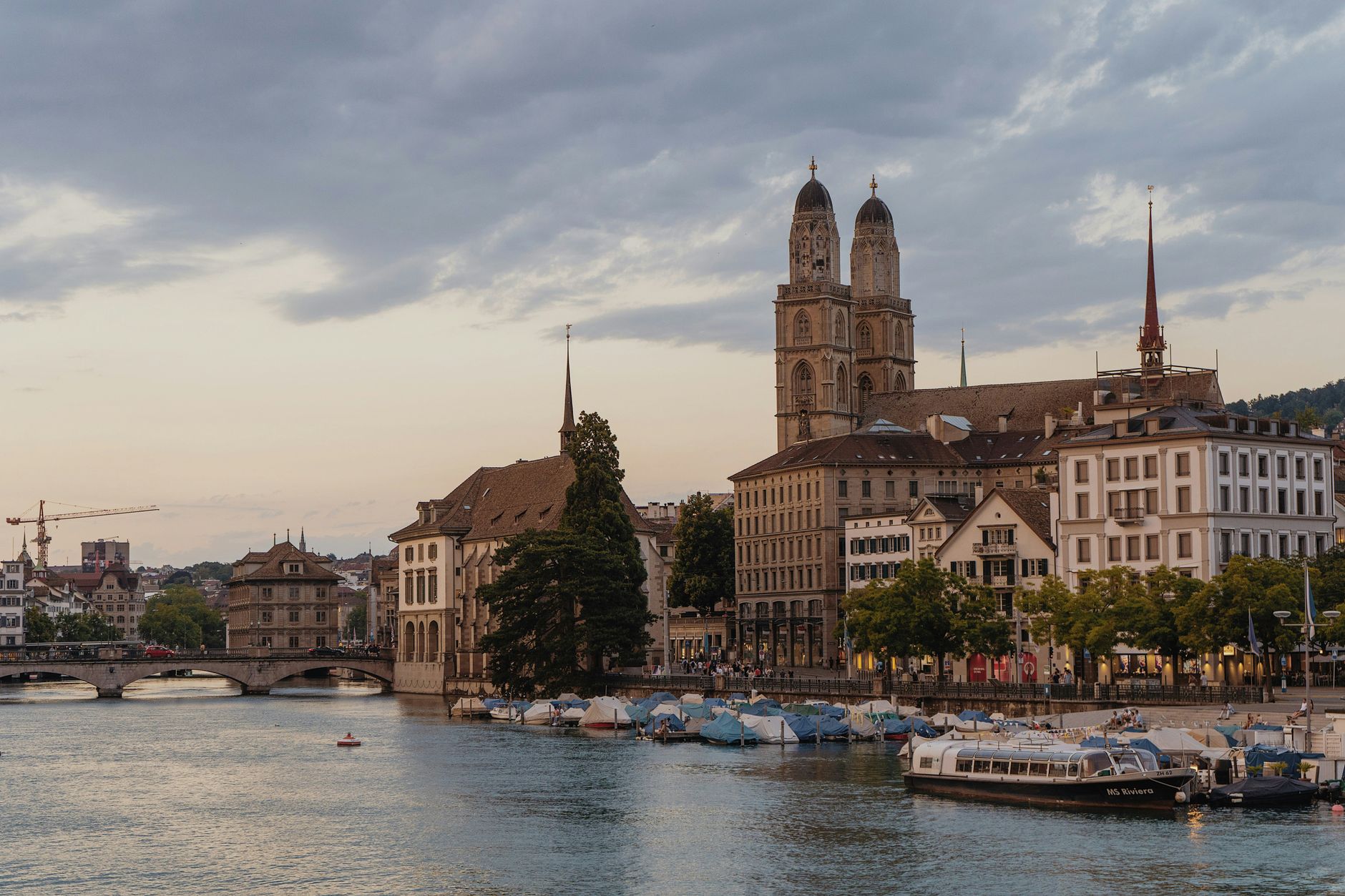
Zürich is the only city I know where medieval guild houses look across the river at a radical art movement that still refuses to die. The light hits the Limmat just right at dusk, and suddenly you understand why so many …
Geneva hides a free 80-meter fountain, a 300 AD basement under its cathedral, and the web's birthplace inside a Swiss-French tunnel—all in one tram ride.
A castle built to guard the lake now guards five museums, a tulip park, and the quiet conviction that the best way to see a town is slowly.
A 13th-century castle sits in the lake like it always meant to be there, the vines climb the hillside above the rooftops, and on a clear October morning Mont Blanc floats above the horizon — Rolle has the quietly persuas…
Switzerland's largest city wears its wealth quietly — Bahnhofstrasse's vault-lined banks sit ten minutes' walk from the Langstrasse bars where the night runs until 6 a.m.
The federal capital that most visitors skip is a medieval sandstone arcade city built on a peninsula in the Aare, where bears have been kept since 1513 and the clock tower has been striking the hour since 1191.
The Chapel Bridge — a 14th-century covered wooden footbridge with plague-era paintings in its rafters — crosses the Reuss River in a city that perfected the art of being surrounded by water and mountains simultaneously.
Wedged between Lake Thun and Lake Brienz with the Jungfrau massif filling the southern sky, this is the staging post where you decide whether to go up — and how far.
Car-free since 1930 and sitting at 1,620 metres, this village exists in the shadow of the Matterhorn so completely that the pyramid appears on the breakfast menu, the hotel wallpaper, and the actual horizon all at once.
Western Switzerland runs on lake light, wine slopes, and a more talkative rhythm than the German-speaking cantons. geneva feels international and sharp-edged, while Lausanne, Morges, and Rolle turn the same shoreline into something slower, more domestic, and much better suited to long lunches.
This is the political and urban spine of the country, where trains run tight to schedule and the biggest museums, stations, and business districts sit between rivers and low hills rather than high peaks. Bern keeps the federal calm, Basel leans into art and Rhine life, and Zürich moves faster than the rest of the country without ever looking rushed.
Central Switzerland is where postcard Switzerland starts making sense in three dimensions: steep water, sudden mountains, and historic routes that once carried trade across the Alps. Lucerne is the obvious base, but the real pleasure is how easily boats, cog railways, and mountain lifts connect to it.
Interlaken is not subtle, but the geography around it is spectacular enough that subtlety would be wasted. This is the region for glacier views, cliffside trains, lake steamers, and villages built under walls of rock that look physically unreasonable.
Valais is the dry, high, serious side of Alpine Switzerland, built around vineyards in the valley and 4,000-meter peaks above. Zermatt is the headline because of the Matterhorn, but the region's deeper character comes from old mountain routes, irrigation channels, and a culture shaped by altitude rather than prettiness.
Eastern Switzerland is often skipped by first-timers, which is their loss. St. Gallen brings baroque libraries and textile history, Stein am Rhein delivers one of the country's most intact small-town fronts, and Chur is the practical gate to the mountain rail lines that drop south into Lugano and the Italian-speaking canton of Ticino.
Zurich once had an abbess who could mint coins here; now Fraumünster draws people for Chagall windows, a crypt museum, and quiet power on Münsterhof.
Football's power center sits beside a public beach that looks private.
Built in 1771 as a lakeside goods depot, Casino Théâtre de Rolle is now an intimate Italian-style stage facing Lake Geneva and the ferry quay.
A 13th-century Savoyard fortress housing one of Switzerland's largest toy soldier collections, a WWII general's museum, and 120,000 tulips in bloom next door each spring.
A Swiss timeline of myths, mercenaries, reformers, and late-blooming democracy
Settlements rise on wooden piles along Swiss lakes, leaving behind some of Europe's best-preserved prehistoric evidence. The everyday objects found there make ancient Switzerland feel disarmingly domestic.
After the Helvetii attempt a vast migration, Julius Caesar defeats them at Bibracte and sends survivors back to the plateau. Switzerland enters written history as a frontier too important to leave empty.
Roman power secures the Alpine passes and folds Swiss territories into imperial administration. Roads, towns, and military routes begin shaping the geography that later states will inherit.
Uri, Schwyz, and Unterwalden pledge mutual assistance in the document later celebrated as Switzerland's foundation. The text is practical, almost dry, which is part of its charm.
Confederate fighters defeat Habsburg forces in a narrow pass, proving that terrain and discipline can humble aristocratic warfare. The victory feeds a political myth far larger than the battlefield itself.
The Swiss defeat Duke Leopold III of Habsburg at Sempach, and later chronicles attach the sacrifice of Arnold von Winkelried to the moment. History and legend begin marching together.
Burgundy's glittering war machine collapses, leaving treasure, artillery, and prestige in Swiss hands. Europe learns that the Confederates are not a provincial nuisance but a military force.
Swiss forces are beaten near Milan in a battle that marks the end of major confederate expansion. The country turns gradually from conquest toward caution, contracts, and mercenary service abroad.
The Zürich reformer falls in battle during conflict between Protestant and Catholic cantons. His death makes plain that Swiss religion in the sixteenth century is a matter of blood as much as doctrine.
Michael Servetus is executed for heresy in Calvin's Geneva. The event reminds posterity that the Reformation could be as merciless in power as the order it condemned.
The Peace of Westphalia formally acknowledges the Confederation's independence from the Holy Roman Empire. What had long been practical autonomy becomes international fact.
French revolutionary armies invade and sweep away much of the old confederal order. Switzerland becomes a laboratory for centralization, reform, and resentment.
At the Congress of Vienna, the powers guarantee Swiss neutrality and its frontiers. A survival tactic acquires diplomatic prestige and becomes part of national identity.
After the Sonderbund War, the cantons agree on a federal constitution that balances local autonomy with national institutions. Bern becomes the federal city, and a modern republic begins.
Henri Dunant and his allies create what becomes the International Committee of the Red Cross. Geneva strengthens its vocation as a city where moral outrage is turned into institutions.
The great tunnel through the Alps changes trade, travel, and the idea of distance inside Switzerland. Engineering begins to rival geography as the country's ruling force.
War pressures, inequality, and political frustration erupt into a nationwide strike. Neutral Switzerland is not untouched by Europe's upheaval; it simply experiences it in its own register.
In a tense European moment, Switzerland recognizes Romansh as a national language. The gesture is cultural, political, and quietly defiant: small languages count here too.
Swiss women finally gain the federal vote after a referendum decided by men. The achievement is historic, but the date also exposes how slowly a self-described democracy can move.
The Federal Supreme Court orders the canton to grant women cantonal voting rights. Swiss democracy, for once, needs to be dragged forward by law rather than persuasion.
After decades of hesitation, Swiss voters approve UN membership. The country keeps neutrality, but accepts that standing apart is not always the same as standing above.
Lake Villages and Rome
Orgetorix enters Swiss history like a tragic conspirator: ambitious, theatrical, and dead before the verdict.
A winter drought in 1853 pulled Lake Zürich back from its shore at Obermeilen and left a scatter of wooden stakes sticking out of the mud. Schoolteachers, antiquarians, then archaeologists bent over them in disbelief. What emerged was not a primitive fringe life but whole lakeside communities: bread loaves, woven cloth, apple cores, dogs buried beside their owners, the ordinary tenderness of prehistory kept cold under water for millennia.
Ce que l'on ignore souvent, c'est que Switzerland first revealed itself through preservation rather than conquest. The lake dwellers built on piles not for romance but for survival, and those drowned timbers now tell us more about Neolithic Europe than many grander ruins on dry land. The secret sits close to modern Zürich, where trams pass and office workers hurry on, while beneath the story of the banking republic lies the story of wet wood and smoke.
Then came the Helvetii, proud Celtic peoples of the plateau, and with them the first truly theatrical Swiss political scandal. In 61 BCE, their nobleman Orgetorix tried to engineer a mass migration westward, complete with marriage alliances and a plan grand enough to impress any Bourbon intriguer. Summoned to trial, he arrived with thousands of retainers; before judgment fell, he died, and Caesar dryly remarked that many believed he had killed himself.
Rome, of course, saw an opportunity. After the Helvetii were beaten at Bibracte in 58 BCE, the survivors were pushed back to their lands because the frontier needed a buffer. Aventicum, near modern-day Lausanne and Bern's orbit, flourished under Rome with temples, baths, and an amphitheater, while routes through the Alps tied what is now Basel, Geneva, and the Rhône corridor to imperial traffic. The roads stayed. So did the habit of living between larger powers and making that position count.
At one prehistoric Swiss lake site, archaeologists found children's shoes and preserved bread, as if the family had just stepped out for the afternoon.
Confederate Beginnings
Niklaus von Flüe, the hermit-statesman, gave the young Confederation a moral language just as victory threatened to make it reckless.
The famous oath on the Rütli meadow is a beautiful story, but the real beginning is more austere: a sheet of vellum from 1291, written in Latin, promising mutual aid among Uri, Schwyz, and Unterwalden. No thunderclap. No stage lighting. Just men in mountain valleys deciding that Habsburg pressure was easier to resist together than alone.
That quiet document soon acquired blood, legend, and a cast worthy of a dynastic drama. At Morgarten in 1315, then Sempach in 1386, confederate infantry broke forces that looked stronger on paper and more aristocratic in armor. Arnold von Winkelried, if he existed as the chronicles later claim, hurled himself onto enemy lances to open a path. One can almost see the scene: wet grass, splintered shafts, the kind of courage that becomes national scripture because it is too useful not to remember.
Ce que l'on ignore souvent, c'est that Switzerland's early fame was not chocolate, clocks, or discretion. It was violence delivered at close range by disciplined infantry who ruined the plans of princes. No one learned that lesson more painfully than Charles the Bold, Duke of Burgundy, who invaded the Confederates in 1476 with magnificence, tents of cloth-of-gold, artillery, and the certainty of a man accustomed to being obeyed.
At Grandson and then Murten, his armies collapsed with astonishing speed. Swiss soldiers wandered through the abandoned Burgundian camp staring at gold plate, jewels, silks, and luxury so extravagant that some mistook precious stones for colored glass. One great diamond, probably the Sancy, was sold for a pittance because a Bernese buyer did not yet know what he held. By the time Charles was found frozen and mutilated outside Nancy in 1477, the Confederation had acquired something more durable than treasure: a reputation that made Europe very careful around mountain peasants with pikes.
After Grandson, Swiss soldiers reportedly used Burgundian jewels as gaming counters because they valued hard cash more than courtly glitter.
Reformation, Mercenaries, and Fragile Balance
Anna Göldi, executed in 1782 in Glarus, stands for the victims crushed by a society that liked to think of itself as orderly and just.
The defeat at Marignano in 1515 did not end Swiss importance; it changed its style. The Confederates remained feared soldiers, but more and more they fought in other rulers' wars as mercenaries, sending their young men abroad while keeping a careful eye on cantonal liberties at home. Gold flowed back. So did grief. In this period, Switzerland learned a habit that would later be called prudence and sometimes looked a lot like exhaustion.
Then religion tore the country open. In Zürich, Ulrich Zwingli stripped churches of images and insisted that scripture, not habit, should rule Christian life; in Geneva, Jean Calvin built a republic of discipline severe enough to make even sympathizers glance over their shoulder. Ce que l'on ignore souvent, c'est that Zwingli did not die in his bed like a scholar. He died in battle at Kappel in 1531, chaplain and ideologue together, and the victors quartered and burned his body with dung so no relic cult could begin.
Geneva offered a different sort of spectacle: moral rigor sharpened into judicial power. In 1553, the Spanish theologian Michael Servetus was burned there for heresy, and Calvin's city showed Europe that the Reformation could punish as fiercely as the old Church. Anyone who strolls through Geneva today, admiring the lake light and diplomatic polish, should remember the smell of smoke and green wood from Champel. Every virtuous city has its scaffold.
Yet Switzerland did not break. Catholic and Protestant cantons learned, grudgingly, to coexist because no side could finish the other without ruining itself. The Peace of Westphalia in 1648 recognized Swiss independence from the Holy Roman Empire, and after Napoleon smashed the old order in 1798 with the Helvetic Republic, the Congress of Vienna in 1815 formalized permanent neutrality. Neutrality was never saintliness. It was a hard-won political arrangement in a country that had seen exactly what ideological certainty costs.
Zwingli went into battle carrying both a Bible and a sword, an image so Swiss in its contradictions that one almost suspects posterity staged it.
Federal Switzerland
Henri Dunant turned one unbearable battlefield into a global humanitarian idea, then spent years in ruin and neglect before the world caught up with him.
In 1848, after a brief civil war known as the Sonderbund War, Switzerland did something remarkably modern: it turned compromise into a constitution. The new federal state took a loose alliance of cantons and gave it institutions sturdy enough to survive language differences, religious rivalry, and the jealous pride of local elites. Bern became the federal city, not because it was the loudest claimant, but because Swiss politics often prefers the workable choice to the theatrical one.
What followed was one of Europe's quieter transformations. Rail tunnels drilled through mountains that had once dictated the terms of movement; the country made itself, quite literally, passable. The Gotthard line and later the great base tunnels turned the Alps from barrier into infrastructure, while cities such as Zürich, Basel, Lausanne, and Geneva acquired the self-confidence of places connected to everything. Switzerland's genius was not only engineering. It was the art of making engineering look inevitable.
Then came the moral complications of modern fame. In Geneva, Henri Dunant helped create the Red Cross after being horrified by Solferino; the city became a capital of humanitarian law and later international diplomacy. But the same country that sheltered refugees also closed doors to many, traded with difficult neighbors, and wrapped itself in the language of neutrality while the twentieth century asked harder questions. Ce que l'on ignore souvent, c'est that Swiss self-respect has often advanced one referendum, one scandal, one reluctant reform at a time.
Women's federal suffrage arrived only in 1971, astonishingly late for a state so proud of civic participation. Appenzell Innerrhoden had to be forced by court order in 1990 to grant women cantonal voting rights. That is the Switzerland worth knowing: inventive and conservative, humane and procedural, capable of building CERN's world of particle physics near Geneva while arguing for decades over who counts as a full political citizen. And from that tension came the country visitors meet now, from Lucerne to Lugano, from Zermatt to Morges and Rolle: composed on the surface, endlessly alive underneath.
When women finally won the federal vote in 1971, Swiss men had been deciding the timing of female citizenship by referendum.
Switzerland speaks the way a watch reveals its gears: not all at once, and never by accident. In Zürich, you read High German and hear Swiss German, which is not one dialect but a clan argument conducted with excellent manners. A tram door opens, someone says "Grüezi," and the whole carriage accepts that greeting as a civic duty rather than a social gamble.
Cross into Lausanne or Geneva and the vowels loosen their collar. French in Romandy has less perfume than Parisian French and more bone. Then Lugano changes the temperature of the sentence itself: Italian arrives with coffee, shade, and a tiny willingness to delay lunch by twenty minutes, which in Switzerland already counts as opera.
What moves me is not the variety but the obedience to variety. Train announcements slide from German to French to Italian with the calm of a butler changing crystal. A country is a table set for strangers, and Switzerland has laid four sets of cutlery, then labeled the drawers.
Politeness here is not decoration. It is architecture. You enter a bakery in Bern without greeting the room and you feel, at once, that you have walked in wearing muddy boots on a clean carpet. A simple "Grüezi," "bonjour," or "buongiorno" restores the balance. The ritual is tiny. The effect is immense.
Punctuality in Switzerland is often described as a national virtue. That is too moral for what it is. It is an aesthetic preference. If dinner is at 19:00, then 19:00 is the correct frame for appetite, candles, conversation, and the first pour of Chasselas in Vaud. Arriving late does not make you wicked. It makes you clumsy.
Even silence has etiquette. In Zürich, cups meet saucers with surgical restraint. In Geneva, talk spreads farther across the table, but voices still stop short of conquest. Switzerland has understood something many countries refuse to learn: consideration is sensual.
Swiss cuisine begins with winter and ends with appetite. Preservation, altitude, cattle, smoke, root vegetables, apples, rye: the pantry reads like a mountain weather report. Yet the result is never mere survival food. It is ceremony disguised as peasant logic.
Take raclette in Valais. Half a wheel faces the heat; the molten layer is scraped over potatoes, pickles, onions, then scraped again, and again, until the table falls into the trance known only to people who understand repetition as pleasure. Fondue in Fribourg asks for another form of discipline: the communal pot, the slow turning of bread, the brief panic if a cube slips into the cheese and someone invents a penalty. Civilizations reveal themselves in what they consider amusing.
Then the cantons begin their vanity, which is the best part. Zürich gives you Zürcher Geschnetzeltes with rösti so crisp it sounds like thin ice breaking. Geneva has longeole, fennel-scented and stubborn. Around Morges and Rolle, malakoffs arrive hot enough to erase your better judgment. Switzerland does not flatter the palate. It persuades it.
Swiss buildings rarely shout. They know shouting is what mountains are for. In Bern, arcades run for kilometers with the composure of a thought completed centuries ago; commerce and rain protection were married there so successfully that one suspects theology. In Basel, guild houses and clean lines stand near each other without jealousy. Lucerne, with its painted facades and lake light, understands that beauty can remain practical if nobody makes a speech about it.
The chalet has been sentimentalized by foreigners into a postcard disease. Real alpine timber houses are less cute and more intelligent. Deep eaves, heavy roofs, balconies for drying, stone below, wood above: this is weather turned into grammar. Form follows snowfall.
And then modern Switzerland enters like a well-cut coat. Herzog & de Meuron in Basel, the bath architecture at Vals, the stations, bridges, tunnels, retaining walls that nobody photographs enough. A nation that drills through mountains for punctuality will not treat architecture as backdrop.
Swiss design has the reputation of being clean. That is like saying the Matterhorn is pointed. The deeper truth is severity with hospitality. Typefaces, signage, packaging, ticket machines, pharmacy crosses, chocolate boxes at Sprüngli in Zürich, watch displays in Geneva: each object seems to ask, with perfect restraint, why confusion should exist at all.
This did not happen by accident. The Swiss Style, with its grids and sans-serif discipline, came from an almost erotic faith in alignment. Josef Müller-Brockmann turned the poster into a moral proposition. Max Bill treated form as a philosophical problem that could still be useful on a desk. One sees the legacy everywhere, even in things too humble to be called design by countries with less self-respect.
What I admire is the refusal of fuss. Switzerland understands that elegance is often subtraction performed by a fanatic. A train timetable can be beautiful. A chocolate wrapper can possess dignity. Even the national flag, square and unblinking, behaves like a logo that predates modernity by several centuries.
Religion in Switzerland is visible before it is audible, then audible before it is believed. Church towers punctuate villages with such regularity that the landscape seems measured by bells. In Protestant Zürich, memory still carries Zwingli's severity, even if the cafés now serve oat milk without doctrinal struggle. Geneva keeps Calvin in its basement like an inherited piece of iron: heavy, formative, impossible to ignore.
Catholic Switzerland offers another texture. In Valais and central cantons, chapels cling to slopes, onion domes rise from green valleys, processions and feast days leave traces in calendars and pastry counters alike. The faith may have thinned, but ritual remains lodged in the body. People still know when to lower the voice.
What interests me is the Swiss talent for storing conviction inside order. This is not religion of ecstasy. It is religion of bells arriving on time, pew wood polished by generations, mountain villages where transcendence smells faintly of candle wax, wool coats, and wet stone. Even doubt here has good posture.
Long before Switzerland had a charter, it had a plotter. Orgetorix tried to persuade the Helvetii to burn their settlements and leave en masse for western Gaul, a scheme so large that Caesar used it as his excuse to intervene. He died before the verdict, which only sharpened his legend.
Brother Klaus left public life for the solitude of the Ranft, yet princes and envoys still came to ask his advice. Swiss memory loves him because he embodies a rare national fantasy: the mystic who prevents civil war by speaking less, not more.
Zwingli made Zürich one of the engines of Protestant Europe, but he was no library recluse. He preached reform, abolished images, argued fiercely over scripture, then died on the battlefield at Kappel. Few founders of religious movements end as soldiers in mud.
In Geneva, Calvin built a city where theology entered the streets, the household, and the courtroom. Visitors see diplomatic calm now; Calvin's Geneva was a furnace of discipline, ambition, and watchfulness, a place determined to save souls whether they liked it or not.
Anna Göldi is often called Europe's last witch, though the authorities hid the charge behind legal maneuvers to make the sentence look respectable. Her death exposes the hard underside of tidy Swiss order: panic, class power, and the ability to commit cruelty with paperwork.
Dufour won the 1847 civil war quickly and, by nineteenth-century standards, with striking restraint. He then helped map the country with scientific precision, which feels appropriate: the man who held Switzerland together also drew it.
Dunant saw the wounded abandoned after Solferino and refused to treat massacre as ordinary bookkeeping. From Geneva he helped launch the Red Cross and the Geneva Conventions, then spent years in poverty. A country famous for order produced one of the modern world's great moral agitators.
Spyri gave Switzerland one of its most exportable myths: the mountain child whose moral clarity embarrasses adults. Heidi softened the image of the Confederation abroad, but the books also understand loneliness, class tension, and the stern dignity of alpine life.
Before he redrew the modern city, Charles-Edouard Jeanneret learned precision in a Swiss watchmaking town. La Chaux-de-Fonds gave him geometry, discipline, and the habit of thinking in systems; the rest of the world got concrete manifestos and houses that still start arguments.
This is the western Switzerland route for travelers who want city culture, vineyards, and lake steamers without crossing the whole country. Start in geneva for museums and international history, then move northeast along the shore through Lausanne, Morges, and Rolle where the light, the wine terraces, and the pace all soften.
This route stitches together urban Switzerland and the first real Alpine drama. Begin in Basel for architecture and museums, continue through Bern and Lucerne, then end in Interlaken where boats, mountain trains, and hard-edged peaks take over.
This is the rail-romantic itinerary: old towns, lakefront cities, and one of the country's cleanest north-to-south transitions. Zürich gives you the urban start, St. Gallen and Stein am Rhein add texture and history, Chur opens the Alpine corridor, and Lugano finishes with palm trees, arcades, and a different language.
Bread cubes. Long forks. Shared caquelon. Fribourg white wine. Winter table. Friends who forgive dropped bread only after mock judgment.
Melted wheel. Scrape after scrape. Potatoes, cornichons, pickled onions. Family table, ski evening, talk slowed by heat and repetition.
Veal strips, cream, white wine, mushrooms, crisp potato disk. Sunday lunch in Zürich. Fork work, sauce mopped to the last streak.
Leeks and potatoes cooked down with saucisson vaudois or boutefas. Cold-weather lunch near Lausanne, Morges, or Rolle. Wine first, nap later.
Fennel-scented pork sausage, long simmer, potatoes or lentils. Geneva table in late autumn. Knife, fork, patience.
Fried cheese fritters with mustard and pickles. Best near Lake Geneva after a walk and before any noble intention. Eat fast, while the center still runs.
Pasta, potatoes, cheese, cream, fried onions, applesauce. Hut meal after hiking above Lucerne or Interlaken. Spoon, then silence.



Switzerland is in Schengen but not in the EU. EU and EFTA travelers enter visa-free, and US, Canadian, UK, and Australian passport holders can usually stay up to 90 days in any 180-day Schengen period without a visa; ETIAS is not live yet as of April 20, 2026, though Switzerland says it is planned for late 2026.
Switzerland uses the Swiss franc, not the euro. Many tourist businesses will take euros, but the rate is usually poor and change often comes back in CHF, so card payments or francs make more sense; service is included, and locals usually just round up the bill.
Most visitors arrive through Zürich Airport or geneva Airport, both wired directly into the rail network. Zürich Airport reaches Zürich HB in about 15 minutes, geneva Airport reaches Genève-Cornavin in about 7 minutes, while EuroAirport Basel-Mulhouse-Freiburg usually means Bus 50 to Basel SBB because the airport has no rail station.
The default move is train, then local tram, bus, or boat. SBB links the big cities fast and often, mountain valleys rely on buses and lifts, and rental cars make more sense in Jura back roads or wine country than in Zürich, Bern, Lucerne, or car-free Zermatt.
June to September is best for lakes, hiking, and long daylight, though July and August bring the highest prices. December to March is ski season, April to May and October are the value months, and mountain weather changes fast enough that a sunny morning can turn cold and wet by lunch.
Switzerland has excellent mobile coverage and fast public transport Wi-Fi is improving, but roaming rules are not the same as in the EU because Switzerland is outside the bloc. Check your plan before you land, and use SBB Mobile plus MeteoSwiss for live platforms, delays, and mountain weather alerts.
Switzerland is one of Europe's easier countries for day-to-day safety, with low violent crime and very orderly transport. The real risks are practical ones: pickpockets in busy stations, expensive mistakes with mountain lifts and weather, and longer border-control waits for some non-EU travelers because the Entry/Exit System has been rolling out since October 12, 2025.
Choose CHF whenever a card terminal offers euros. Dynamic currency conversion nearly always gives you a worse rate than your own bank.
Switzerland does not need advance booking for every train, but it does reward planning on costly days. Scenic trains, mountain lifts, and saver fares are where early decisions actually save money.
Take intercity trains before 9 am if you want quieter carriages and cleaner connections onward to mountain lines. By late morning, day-trippers have filled the same routes.
Zermatt, Interlaken, and big lake towns can tighten up fast on summer weekends and ski weeks. Book beds before you book the pretty detours.
A weekday lunch menu often gives you the same kitchen for far less money than dinner. In cities like Zürich, Lausanne, and Basel, that difference can cover your museum ticket.
Say hello when you enter a shop, bakery, lift lobby, or small waiting room. A simple Grüezi, bonjour, or buongiorno matters more here than visitors expect.
Switzerland is outside the EU roaming regime, so your 'Europe plan' may not include it. Fix that before arrival or buy a local eSIM; discovering the gap at Zürich Airport is an expensive way to learn geography.
Explore Switzerland with a personal guide in your pocket
Listen to sourced travel stories with local history and practical context — ready offline.

Usually no for a short tourist trip. US passport holders can generally visit Switzerland visa-free for up to 90 days in any 180-day period across the Schengen area, and ETIAS is still not live as of April 20, 2026.
Switzerland is in Schengen but not in the EU. That means border and visa rules often align with Schengen, while roaming, customs, and some consumer rules do not.
You can use euros in some tourist businesses, but Swiss francs are the better choice. Change usually comes back in CHF and the exchange rate offered at the till is rarely generous.
Often yes if you are moving between multiple cities and adding boats, museums, and mountain transport. If you are staying mostly in one region or making only one or two long train rides, point-to-point tickets or saver day passes can come out cheaper.
Usually no on regular domestic trains. Reservations matter more on a few panoramic tourist services and busy international routes than on ordinary SBB intercity trains.
Use trains and local transport, but buy selectively rather than blindly. Saver day passes, supersaver tickets, supermarket lunches, and fewer mountain lifts will cut costs far faster than switching to a rental car.
Yes, and pretending otherwise wastes your planning time. A realistic daily budget starts around CHF 120 to 180 for budget travel, rises to roughly CHF 220 to 350 for a comfortable mid-range trip, and climbs quickly once you add mountain excursions or high-season hotels.
Card works in most places and is the cleanest default. Keep a small amount of cash for market stalls, rural kiosks, or tiny purchases, but this is not a country where you need to arrive with a thick wallet.
Yes, generally very safe for solo travel. The bigger problems are weather, missed mountain connections, and petty theft in crowded stations rather than street crime.
Last reviewed