c. 4000 BCE-400 CE
Wooden Piles in the Mud, Then Caesar at the Gate
A winter drought in 1853 pulled Lake Zürich back from its shore at Obermeilen and left a scatter of wooden stakes sticking out of the mud. Schoolteachers, antiquarians, then archaeologists bent over them in disbelief. What emerged was not a primitive fringe life but whole lakeside communities: bread loaves, woven cloth, apple cores, dogs buried beside their owners, the ordinary tenderness of prehistory kept cold under water for millennia.
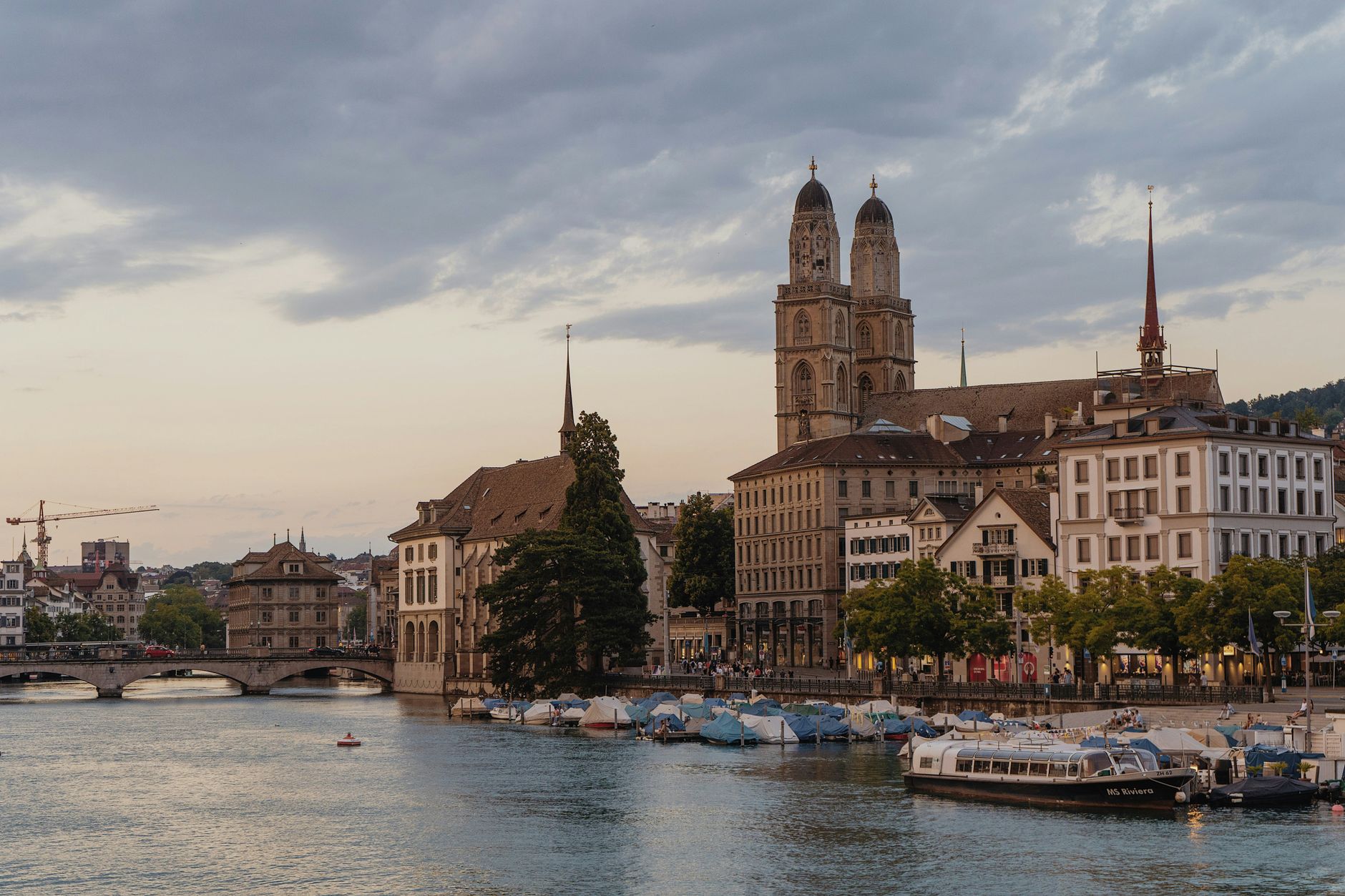
Ce que l'on ignore souvent, c'est que Switzerland first revealed itself through preservation rather than conquest. The lake dwellers built on piles not for romance but for survival, and those drowned timbers now tell us more about Neolithic Europe than many grander ruins on dry land. The secret sits close to modern Zürich, where trams pass and office workers hurry on, while beneath the story of the banking republic lies the story of wet wood and smoke.
Then came the Helvetii, proud Celtic peoples of the plateau, and with them the first truly theatrical Swiss political scandal. In 61 BCE, their nobleman Orgetorix tried to engineer a mass migration westward, complete with marriage alliances and a plan grand enough to impress any Bourbon intriguer. Summoned to trial, he arrived with thousands of retainers; before judgment fell, he died, and Caesar dryly remarked that many believed he had killed himself.
Rome, of course, saw an opportunity. After the Helvetii were beaten at Bibracte in 58 BCE, the survivors were pushed back to their lands because the frontier needed a buffer. Aventicum, near modern-day Lausanne and Bern's orbit, flourished under Rome with temples, baths, and an amphitheater, while routes through the Alps tied what is now Basel, Geneva, and the Rhône corridor to imperial traffic. The roads stayed. So did the habit of living between larger powers and making that position count.