Introduction: A Monument to Swedish Governance
The Statue of Axel Oxenstierna stands as a commanding presence at Riddarhustorget, in the heart of Stockholm’s Gamla Stan (Old Town). Erected in 1890 and sculpted by John Börjeson, this bronze monument honors the legacy of Sweden’s preeminent 17th-century statesman—architect of the nation’s administrative reforms and a key figure in Sweden’s rise as a European power. This comprehensive guide details the statue’s history and significance, provides essential visitor information, and highlights nearby attractions, ensuring you gain a deeper appreciation of one of Stockholm’s most important historical landmarks (Riddarhuset Official Website; Wikimedia Commons).
Photo Gallery
Explore Statue of Axel Oxenstierna, Riddarhustorget in Pictures

Statue of Axel Oxenstierna, a prominent Swedish statesman, located at Riddarhuset in Stockholm, captured in March 2007.

Historical portrait of Axel Oxenstierna depicted in traditional Swedish noble attire, highlighting 17th-century aristocratic fashion.

Axel Oxenstierna statue as seen from Vasabron bridge in Stockholm, showcasing the historic monument in an urban setting.

Photograph of the Axel Oxenstierna statue seen from Vasabron bridge showcasing the historical monument in Stockholm, Sweden.
Origins and Placement of the Statue
The statue of Axel Oxenstierna is strategically located in the northern garden of the House of Nobility (Riddarhuset), facing the serene Riddarfjärden waterfront. Its placement is deliberate, emphasizing Oxenstierna’s pivotal role in founding the Riddarhuset and shaping Sweden’s noble estate. Flanked by 19th-century pavilion wings and surrounded by a tranquil garden designed by Isak Gustaf Clason, the statue’s dignified setting contrasts with the vibrant activity of Riddarhustorget (A View On Cities).
Sculptor John Börjeson’s depiction captures Oxenstierna in a contemplative stance, holding documents symbolizing his legislative achievements. The monument’s unveiling in 1890 reflected a renewed national interest in Sweden’s “Age of Greatness,” celebrating figures who shaped the country’s political and architectural landscape (Riddarhuset Official Website).
Axel Oxenstierna: Architect of Modern Sweden
Axel Gustafsson Oxenstierna (1583–1654) was Sweden’s Lord High Chancellor from 1612 until his death. As a trusted advisor to King Gustavus Adolphus and regent for Queen Christina, Oxenstierna revolutionized Sweden’s administration by introducing the county (län) system, reforming the judiciary, and establishing efficient regional governance. His vision was instrumental in Sweden’s ascension as a major European power, especially during the Thirty Years’ War (Encyclopedia.com; Wikipedia).
Oxenstierna also shaped Sweden’s foreign policy, managed Baltic territories, and ensured governmental stability during periods of royal transition. The administrative boundaries he created largely persist to this day, testament to his enduring influence on Swedish governance.
Riddarhuset and the Swedish Nobility
The House of Nobility (Riddarhuset) is inextricably linked to Oxenstierna’s legacy. Established in 1625, the Riddarhuset functioned as both a political institution and a meeting place for the Swedish nobility. Its construction began in 1641 under the guidance of Simon de la Vallée and was later completed by Jean de la Vallée. The red-brick façade and ornate Baroque design make it one of Stockholm’s most architecturally distinguished buildings (Kulturbilder; A View On Cities).
The statue’s presence in the Riddarhuset garden underscores Oxenstierna’s foundational role within the institution and the broader noble estate. The garden itself provides a peaceful retreat, highlighting the contrast between the serenity of the rear grounds and the bustling activity of the square.
Artistic Features and Symbolism
Börjeson’s bronze statue portrays Oxenstierna in state regalia, holding a scroll—representing his legislative and administrative reforms. The tall pedestal, inscribed with his name and titles, elevates the monument both physically and symbolically, reinforcing his stature in Swedish history (Wikimedia Commons). The statue’s placement, surrounded by pavilion wings and bounded by stone balustrades, further ties it to the historical context of the Riddarhuset.
Artistically, the monument blends Baroque dynamism with Neoclassical restraint, echoing both the 17th-century origins of Oxenstierna’s era and 19th-century commemorative trends. Its detailed features and posture communicate wisdom and authority, reflecting Oxenstierna’s historical gravitas (Google Arts & Culture).
Historical Context: Sweden’s “Age of Greatness” and Noble Decline
The statue’s erection in 1890 was not only a tribute to Oxenstierna’s era—the “Age of Greatness” (Stormaktstiden)—but also a reflection on the changing fortunes of the nobility. While the Riddarhuset was once the nucleus of Swedish political life, by the late 19th century, the nobility’s influence had waned, culminating in the abolishment of royal ennoblement in 1974. The monument thus serves as both a celebration of past glories and a symbol of societal change (Kulturbilder).
The Statue in Stockholm’s Urban Landscape
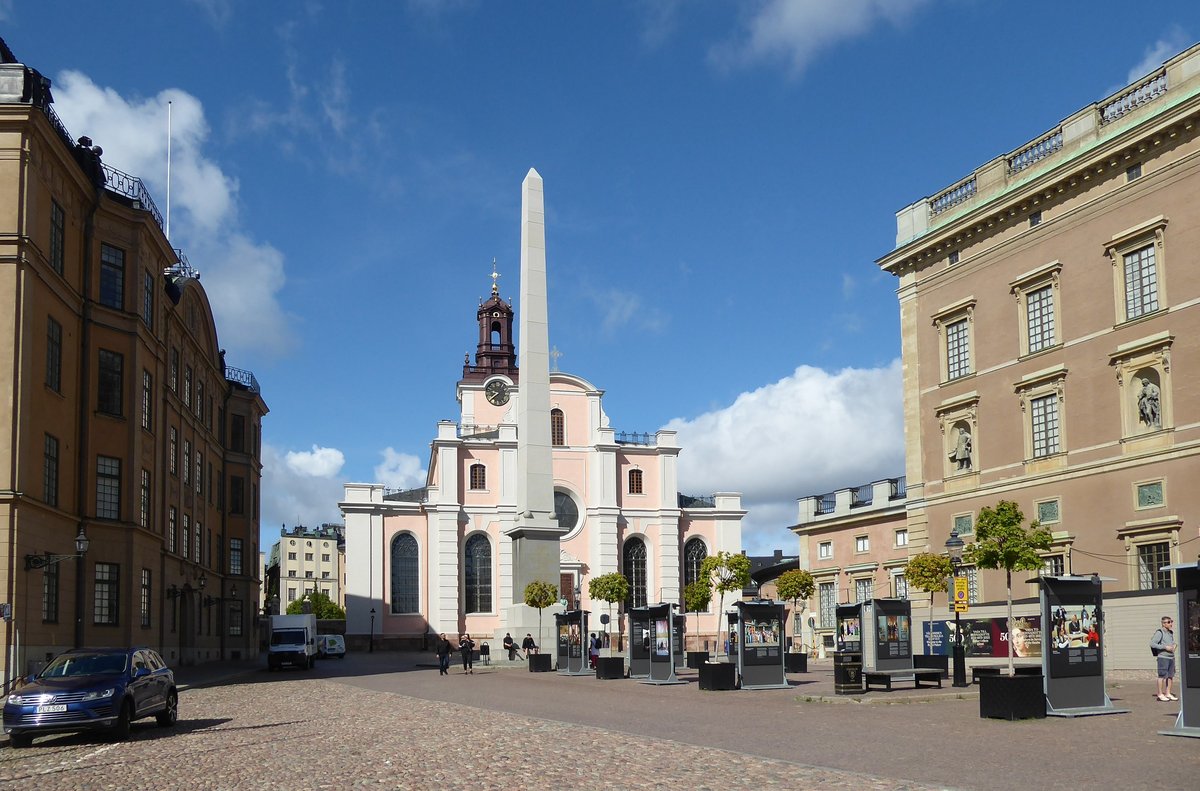
Riddarhustorget is a central node in Stockholm’s historic core, surrounded by architectural landmarks such as the Bonde Palace, Axel Oxenstierna Palace, and Stockholm Cathedral. While the Gustav Vasa statue at the square’s front garners attention, Oxenstierna’s monument in the rear offers a quieter, reflective experience. Its location makes it an ideal stop on historical walking tours of Gamla Stan (Trek Zone; Spotting History).
Visitor Information
Location and Access
- Address: Riddarhustorget, 111 28 Stockholm, Sweden
- Transport: Closest metro station—Gamla stan (Green/Red lines). Multiple bus lines serve the area; Stockholm Central Station is a 10-minute walk away (View Stockholm).
Visiting Hours
- Statue and Square: Open 24/7 as an outdoor public monument.
- Riddarhuset (House of Nobility): Guided tours Tuesday–Sunday, 10:00 AM–4:00 PM (check Riddarhuset Official for updates).
Tickets and Admission
- Statue: Free public access; no tickets required.
- Riddarhuset Tours: Approximately SEK 120 for adults, with discounts for students and seniors. Tickets available online or at the entrance.
Accessibility
- The statue and square are wheelchair accessible, with smooth paving and ramps. Some cobblestone areas may require assistance.
- Riddarhuset interior may present accessibility challenges due to historic architecture; contact the venue for details (Visit Sweden).
Guided Tours and Special Events
- Historical walking tours of Gamla Stan and Stockholm often include the statue and Riddarhuset.
- Special events and commemorations are occasionally held at Riddarhustorget—check local calendars for details.
Nearby Attractions
Enhance your visit by exploring:
- Swedish House of Nobility (Riddarhuset): Guided tours available (Riddarhuset Official).
- Axel Oxenstierna Palace: Striking 17th-century architecture (Spotting History).
- Stockholm Cathedral (Storkyrkan): Stockholm’s oldest church, home to the St. George and the Dragon statue (Nomad Epicureans).
- Royal Palace: Over 600 rooms and royal apartments.
- Riddarholmskyrkan: Burial site of Swedish monarchs (Lonely Planet).
- Nobel Prize Museum: Explore the legacy of Nobel laureates.
- Stortorget: The city’s oldest square.
- Evert Taubes Terrass: Lakeside viewpoint.
Practical Tips for Visitors
- Best Times: Early morning or late afternoon offer optimal photography conditions and fewer crowds.
- Weather: Dress appropriately for the season; comfortable shoes recommended for cobblestones.
- Payments: Stockholm is largely cashless—use credit/debit cards.
- Language: Most signage is in Swedish and English; visitor centers have multilingual staff.
- Safety: Stockholm is generally safe; standard precautions apply.
Frequently Asked Questions (FAQ)
Q: What are the visiting hours for the Statue of Axel Oxenstierna?
A: The statue is accessible at all times as it is outdoors in a public square.
Q: Do I need a ticket to see the statue?
A: No, visiting the statue is free and requires no ticket.
Q: Is the area wheelchair accessible?
A: Yes, Riddarhustorget and the statue area are accessible, though some cobblestone streets may be uneven.
Q: Are guided tours available?
A: Yes, many walking tours of Gamla Stan include the statue and Riddarhuset.
Q: What else should I see nearby?
A: The House of Nobility, Axel Oxenstierna Palace, Stockholm Cathedral, Royal Palace, and Riddarholmskyrkan are all within walking distance.
Visuals and Media
For photographs and virtual tours, visit Wikimedia Commons and the Riddarhuset official website. Use alt tags such as “Statue of Axel Oxenstierna at Riddarhustorget, Stockholm” for accessibility.
Listen to the full story in the app
Your Personal Curator, in Your Pocket.
Audio guides for 1,100+ cities across 96 countries. History, stories, and local insight — offline ready.
Audiala App
Available on iOS & Android
Join 50k+ Curators
Sources
-
verified
Historical Background and Visiting Information for the Axel Oxenstierna Statue at Riddarhustorget, Stockholm, 2023, Riddarhuset Official Website [https://www.riddarhuset.se/oversikt/]
-
verified
Axel Oxenstierna Biography and Legacy, 2024, Encyclopedia.com [https://www.encyclopedia.com/history/encyclopedias-almanacs-transcripts-and-maps/oxenstierna-axel-1583-1654]
-
verified
Axel Oxenstierna - Wikipedia, 2024 [https://en.wikipedia.org/wiki/Axel_Oxenstierna]
-
verified
Riddarhuset and Stockholm Historical Architecture, A View On Cities, 2023 [https://aviewoncities.com/stockholm/riddarhuset]
-
verified
Visiting the Statue of Axel Oxenstierna in Stockholm: Hours, Tickets, and Historical Significance, 2024, Google Arts & Culture [https://artsandculture.google.com/asset/chancellor-of-the-realm-count-axel-oxenstierna-david-beck/oAHWKm7K4_Hp3A?hl=en]
-
verified
Stockholm Tourist Information and Accessibility, 2024, View Stockholm [https://viewstockholm.com/stockholm-tourist-information/]
-
verified
Must-Visit Attractions in Stockholm, 2024, Food and Travel Utsav [https://foodandtravelutsav.com/must-visit-attractions-stockholm/]
-
verified
Riddarhustorget and Surrounding Historical Sites, 2024, Lonely Planet [https://www.lonelyplanet.com/sweden/stockholm/gamla-stan/attractions/riddarhuset/a/poi-sig/1590563/1341998]
-
verified
Stockholm Public Transport and Accessibility, 2024, Visit Sweden [https://visitsweden.com/about-sweden/accessible-travel/]
Last reviewed: