Introduction
Schering Rosenhanes Palats, perched on the historic island of Riddarholmen in central Stockholm, is a striking example of Sweden’s 17th-century aristocratic architecture. Embodying centuries of political, cultural, and judicial history, the palace stands as a testament to the nation’s Age of Greatness and ongoing commitment to preserving its heritage. This comprehensive guide covers the palace’s origins, architectural evolution, historical significance, practical visiting information, and nearby attractions—offering everything travelers and history enthusiasts need to fully appreciate this exceptional site.
For authoritative updates and deeper insights, consult resources such as the Svea Court of Appeal official website, Visit Stockholm, the Swedish National Property Board (SFV), and Stockholmskällan.
Origins and Construction
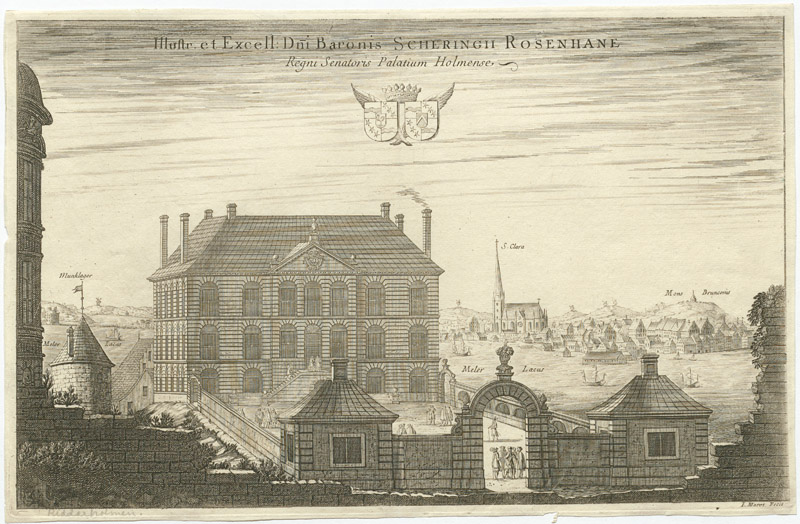
Commissioned by Schering Rosenhane (1609–1663), a prominent Swedish statesman, the palace was constructed between 1652 and 1656 on the then fashionable Riddarholmen island. The site, acquired in 1648, previously contained a medieval mill. Renowned architect Nicodemus Tessin the Elder brought to life Rosenhane’s vision using French classical ideals, resulting in a refined Baroque structure that reflected both power and taste (SFV; Stockholmskällan).
The palace’s waterfront façade and original walled garden underscored its status and offered scenic views over Riddarfjärden bay. Its placement among other grand residences reflected the era’s aristocratic dominance of Riddarholmen (Visit Sweden).
Architectural Evolution
17th-Century Baroque Origins
- Symmetrical Facade: The palace’s main frontage features classical proportions, decorative pilasters, and an ornate entrance, all characteristic of the Baroque style (SFV).
- Walled Garden: Once a symbol of privacy and prestige, remnants of the original garden still exist, making it a rare survivor among Stockholm’s urban palaces.
18th–19th Century Modifications
- New Wings: The addition of eastern and western wings around 1800 and 1850 expanded the palace, integrating neoclassical details while preserving the original Baroque core (Wikipedia).
- Interior Alterations: Spaces were adapted to suit new functions, yet key historical features such as decorative friezes and ceiling paintings have been preserved.
Conservation
The palace is now a listed historic monument, protected by strict regulations that ensure the conservation of both its exterior and surviving interior elements (SFV).
Historical Roles and Functions
Noble Residence
For over a century, the palace was the Rosenhane family’s private home and social hub—hosting political gatherings, diplomatic meetings, and cultural events (Learning4Sharing).
Freemasons’ Headquarters (1776–1876)
From 1776, the palace served as the headquarters of the Swedish Order of Freemasons. Ceremonial halls and new wings were built, reflecting the secretive order’s growing influence (Wikipedia).
Government and Judicial Use
After 1876, the palace was repurposed for government offices, notably housing Sweden’s General Staff and later the Svea Court of Appeal, a role it retains today. In 1886, the building was the site for establishing Sweden’s national height datum (Wikipedia).
Visiting Information: Hours, Tickets, and Accessibility
Visiting Hours
- General Access: The palace is an operational court and not open for regular public tours.
- Special Access: Interior tours may occasionally be offered during select cultural events or heritage days. Check with the Svea Court of Appeal or Visit Stockholm for announcements.
Tickets
- Exterior Viewing: Free and accessible at any time when walking around Riddarholmen.
- Guided Tours: When available, tickets are issued by official channels or tour operators (Metro Tour Stockholm).
Accessibility
- Getting There: Located at Birger Jarls torg 10, Riddarholmen; nearest metro station is Gamla stan (red and green lines).
- Mobility: The surrounding area is largely pedestrian and wheelchair accessible, though some cobblestone streets may pose challenges.
- Photography: The exterior, especially the waterfront façade, is accessible for photography at any time.
Nearby Attractions and Photographic Spots
Riddarholmen and its surroundings are rich in historical sites:
- Riddarholm Church: Medieval royal burial site.
- Wrangel Palace: Another grand Baroque residence, now also housing the Svea Court of Appeal.
- Gamla Stan: Stockholm’s Old Town, brimming with palaces, museums, shops, and restaurants.
- Lake Mälaren: The palace’s waterside setting provides some of Stockholm’s most photogenic vistas (Mapcarta).
Architectural and Artistic Highlights
- Facade: French classicism, balanced proportions, and decorative stonework.
- Historic Frieze: 17th-century wall paintings inspired by Rosenhane’s treatise “Hortus Regius.”
- Ceiling Art: Restorations have uncovered historical ceiling paintings, adding to the palace’s artistic legacy.
- Garden Remnants: A rare example of a preserved urban palace garden in Stockholm.
Visitor Tips and Amenities
- Best Time to Visit: June is ideal for long daylight hours, mild weather, and local festivities.
- Walking Tours: Free guided tours of Riddarholmen and Gamla Stan frequently include the palace (Free Tours by Foot).
- Footwear: Wear comfortable shoes to navigate cobblestoned areas.
- Nearby Facilities: Cafés, restrooms, and shops are plentiful in Gamla Stan.
Events and Seasonal Activities
While Schering Rosenhanes Palats does not host public events, the Riddarholmen district is lively during June with National Day and Midsummer festivities, open-air concerts, and folk dancing. The area is beautifully decorated and offers a festive atmosphere (Visit Stockholm).
Frequently Asked Questions (FAQ)
Q: Can I visit the interior of Schering Rosenhanes Palats?
A: The palace is not open for regular tours, but interior access may be possible during special events.
Q: Are tickets required?
A: No tickets are needed for exterior viewing; tickets for special tours are available through official channels.
Q: Is the palace wheelchair accessible?
A: The exterior is accessible, though cobblestones may pose minor challenges.
Q: What are the best nearby sites?
A: Riddarholm Church, Wrangel Palace, and Gamla Stan’s Royal Palace are all within walking distance.
Q: Are guided tours available?
A: Yes, several walking tours feature Riddarholmen and Schering Rosenhanes Palats.
Listen to the full story in the app
Your Personal Curator, in Your Pocket.
Audio guides for 1,100+ cities across 96 countries. History, stories, and local insight — offline ready.
Audiala App
Available on iOS & Android
Join 50k+ Curators
Sources
- verified
- verified
- verified
- verified
- verified
- verified
- verified
- verified
- verified
- verified
Last reviewed: