Introduction
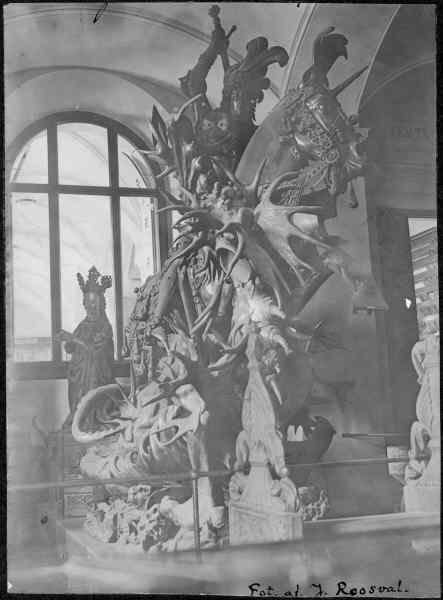
The Saint George and the Dragon sculpture, housed in Stockholm Cathedral (Storkyrkan) at the heart of Gamla Stan, is both a masterpiece of late medieval art and a powerful emblem of Swedish national identity. Crafted in 1489 and attributed to German artist Bernt Notke, this monumental polychrome wood sculpture captures the legendary tale of Saint George—an archetypal Christian hero—slaying a dragon to rescue a princess. Beyond its religious narrative, the sculpture stands as a potent symbol linked to Sweden’s historic 1471 victory at the Battle of Brunkeberg, an event that shaped the nation’s destiny for centuries (Smarthistory; publicartaroundtheworld.com; Wikipedia).
This guide offers a comprehensive look at the monument’s history, artistic features, visitor information, and practical tips for exploring Stockholm’s rich medieval heritage.
Photo Gallery
Explore Saint George and the Dragon in Pictures
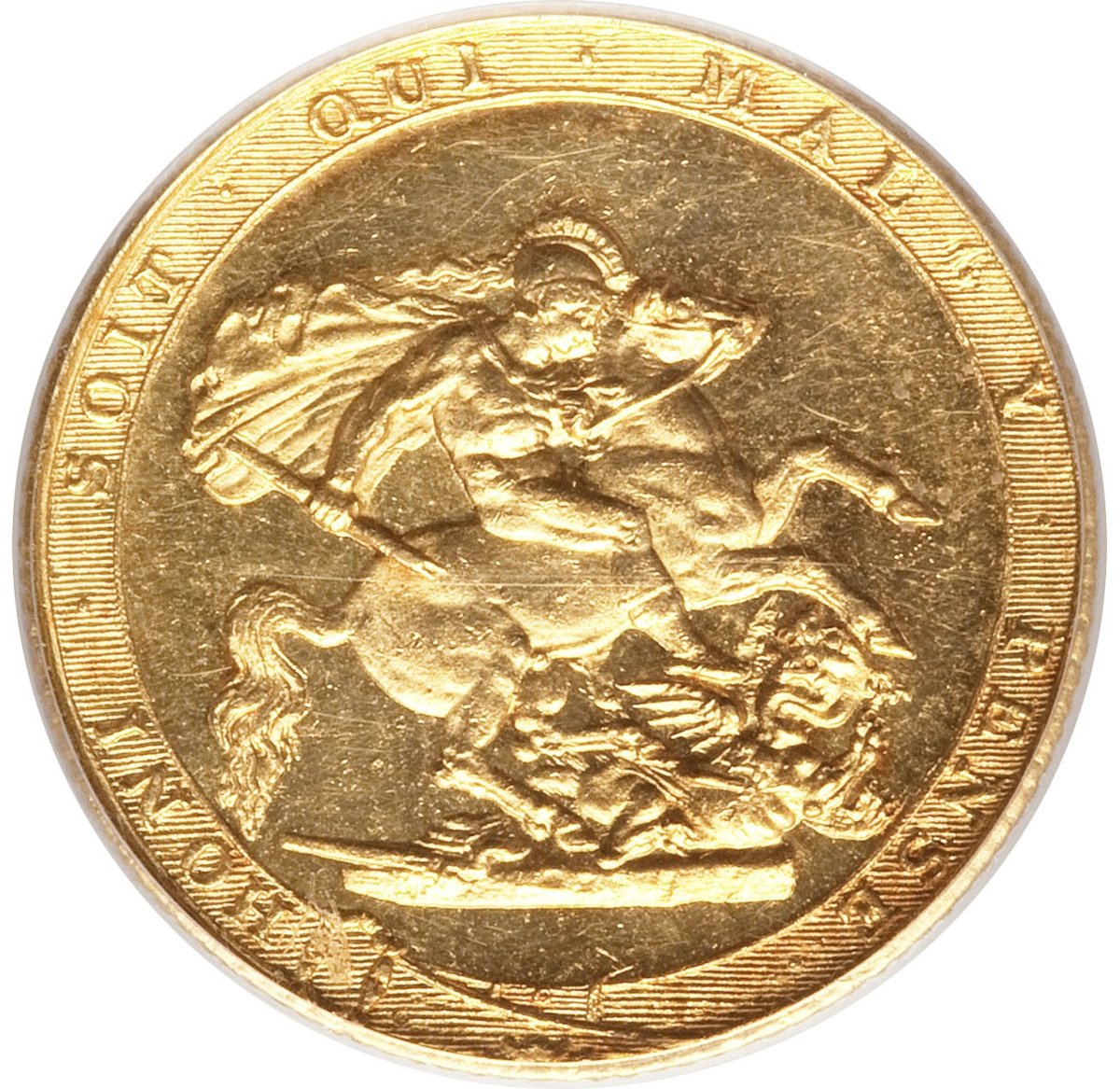
Reverse side of 1817 British gold sovereign coin depicting Saint George slaying the dragon, catalogued as ID 3785 in the Standard Catalogue of British Coins.

Arthur Szyk's 1943 World War II poster illustrating Poland fighting a Nazi dragon for Polish war relief, an anti-Nazi drawing from the Library of Congress

World War II propaganda poster created in 1943 by Arthur Szyk showing Poland battling a Nazi dragon, representing Polish war relief during US involvement, public domain image from Library of Congress
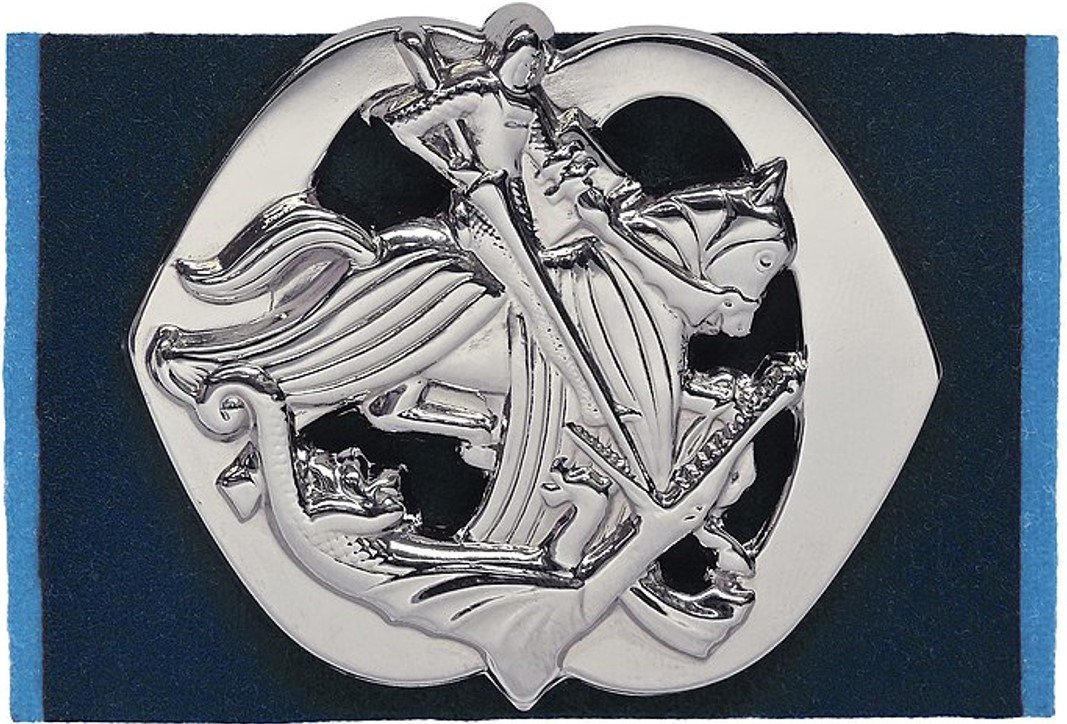
Detailed view of the Baretembleem emblem of Regiment Huzaren Prinses Catharina-Amalia, featuring military heraldic symbols.
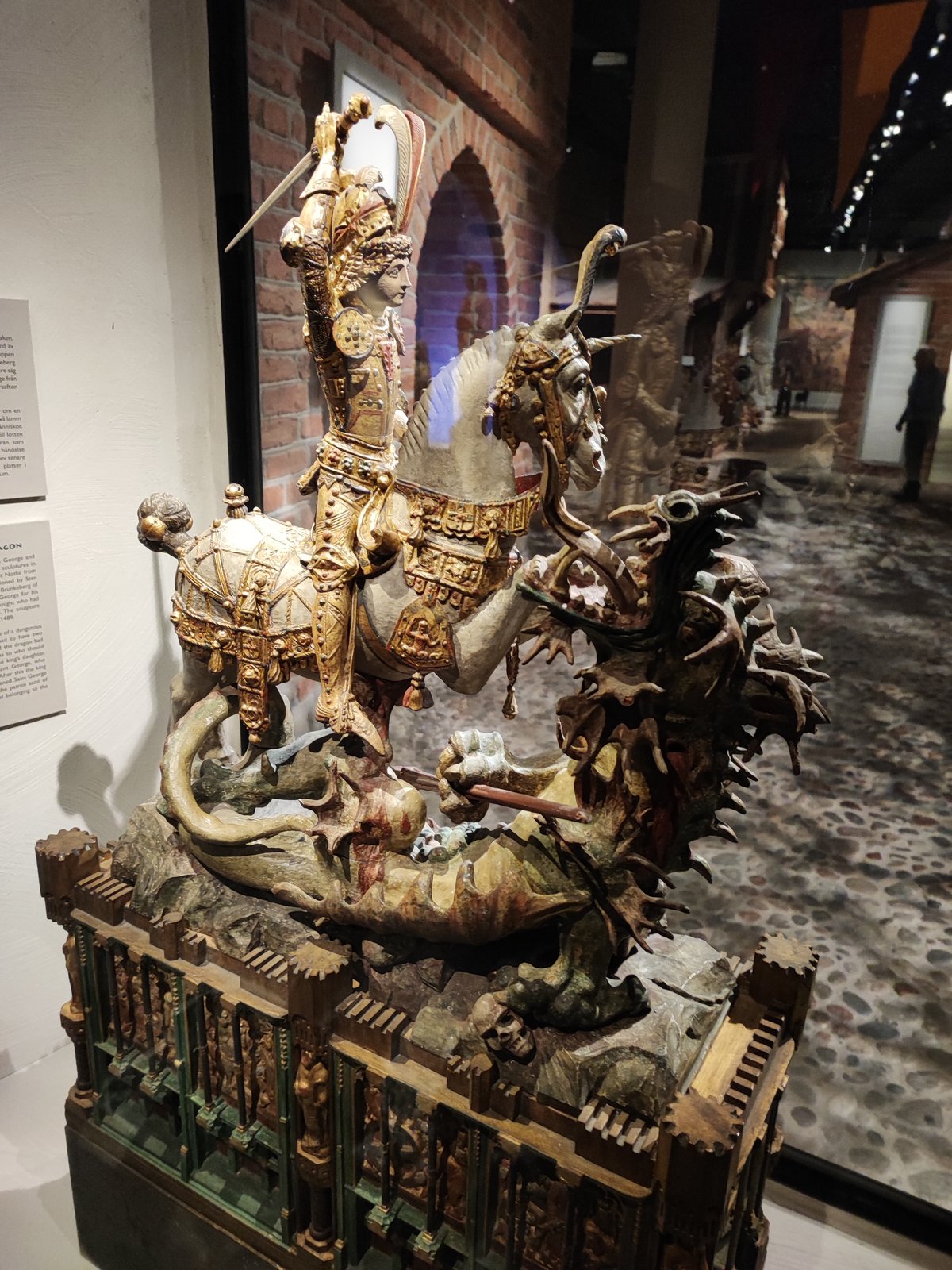
Detailed image of a sculpture at Medelhavsmuseet showing a human figure interacting with a dragon, highlighting medieval artistic style.

Cartoon showing politician and economist Henry George on a free trade horse, defeating landlordism dragon using a taxation of land-values spear, referencing Saint George and the Dragon imagery
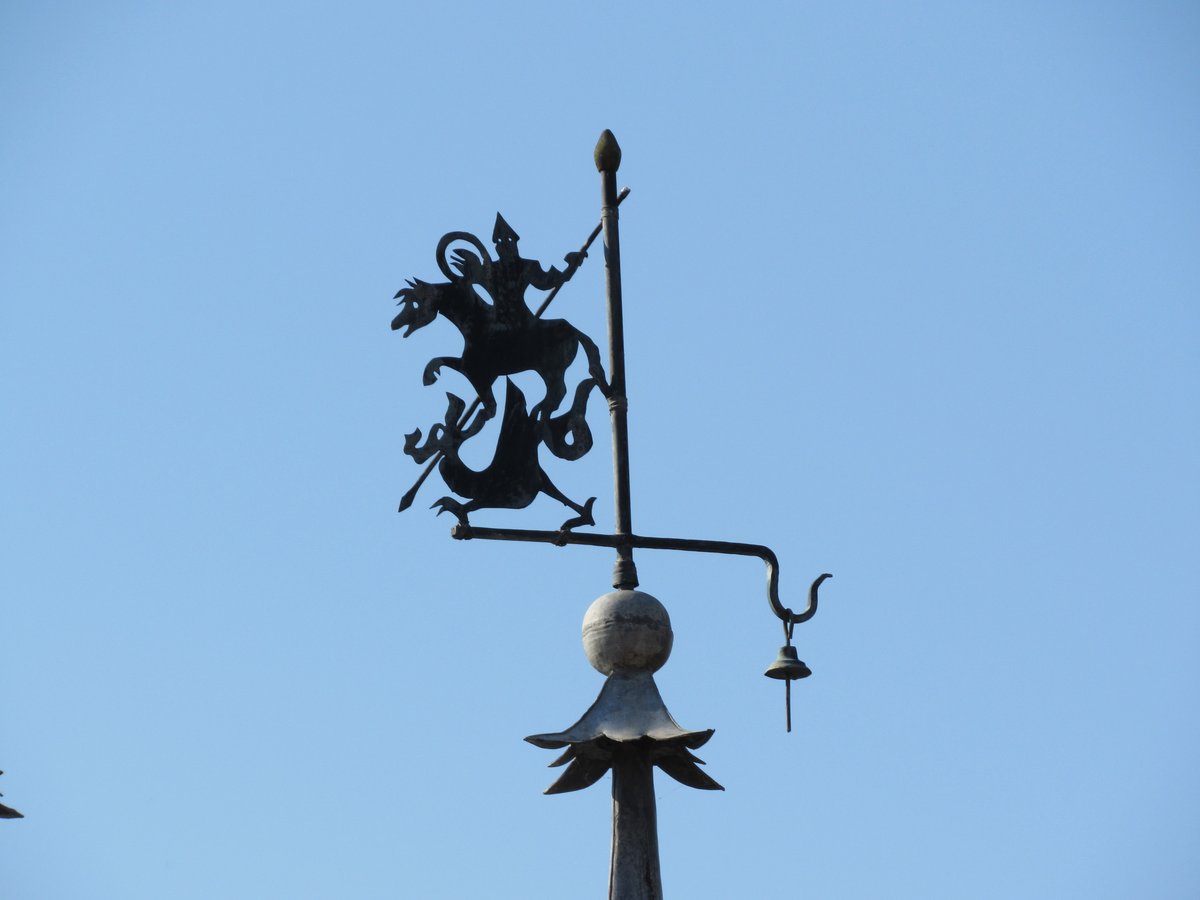
Weather vane depicting Saint George slaying the dragon in the gardens of the Saint-Georges de Boscherville Abbey, showcasing religious and historical art in Normandy, France.
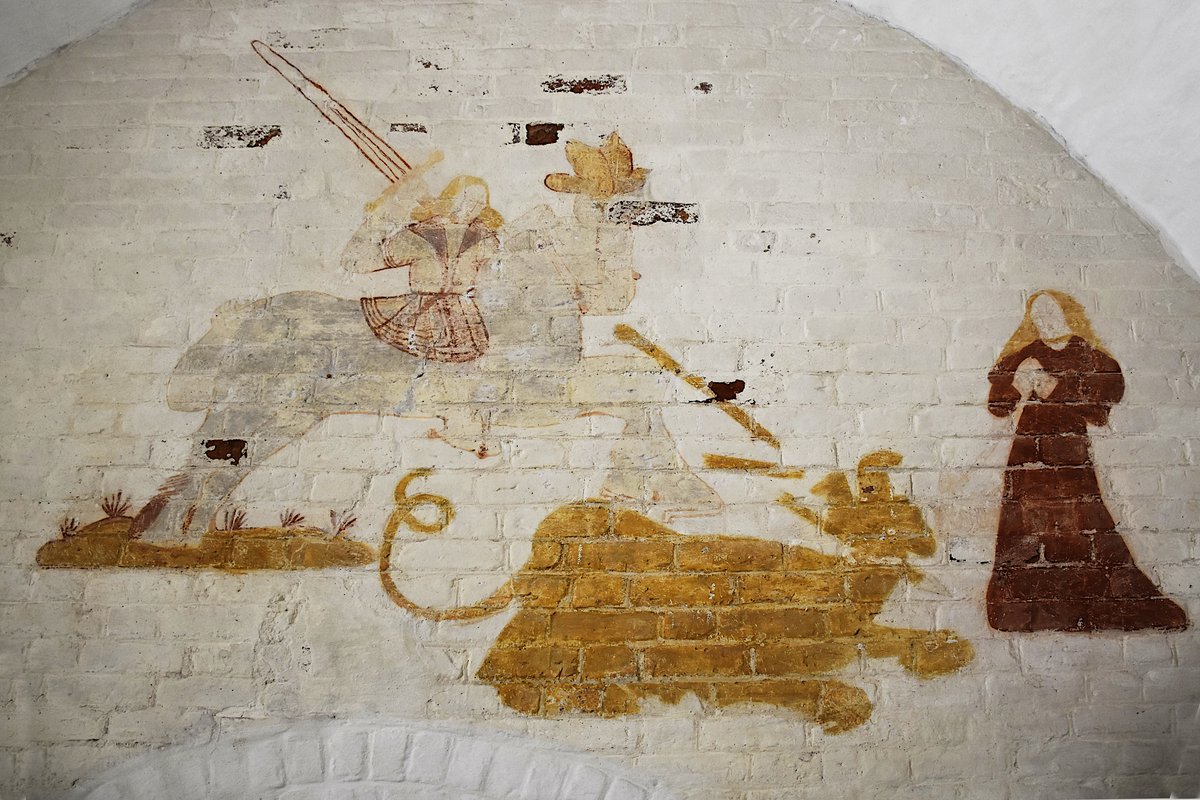
Detailed frescos depicting Saint George slaying the dragon inside Kolby Kirke, a historic church known for its medieval artwork.
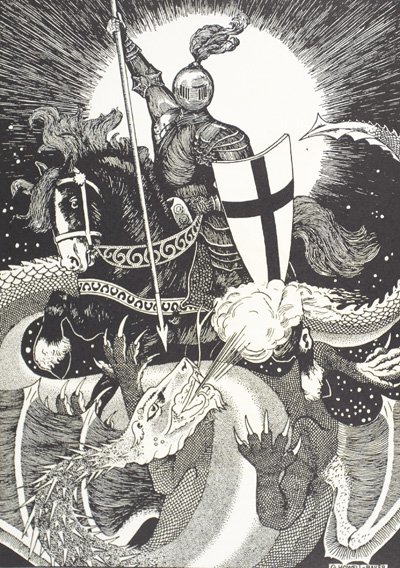
Cleaned and cropped scan of page 7 from Penholm by G. Howell-Baker featuring the illustration of St. George and the Dragon
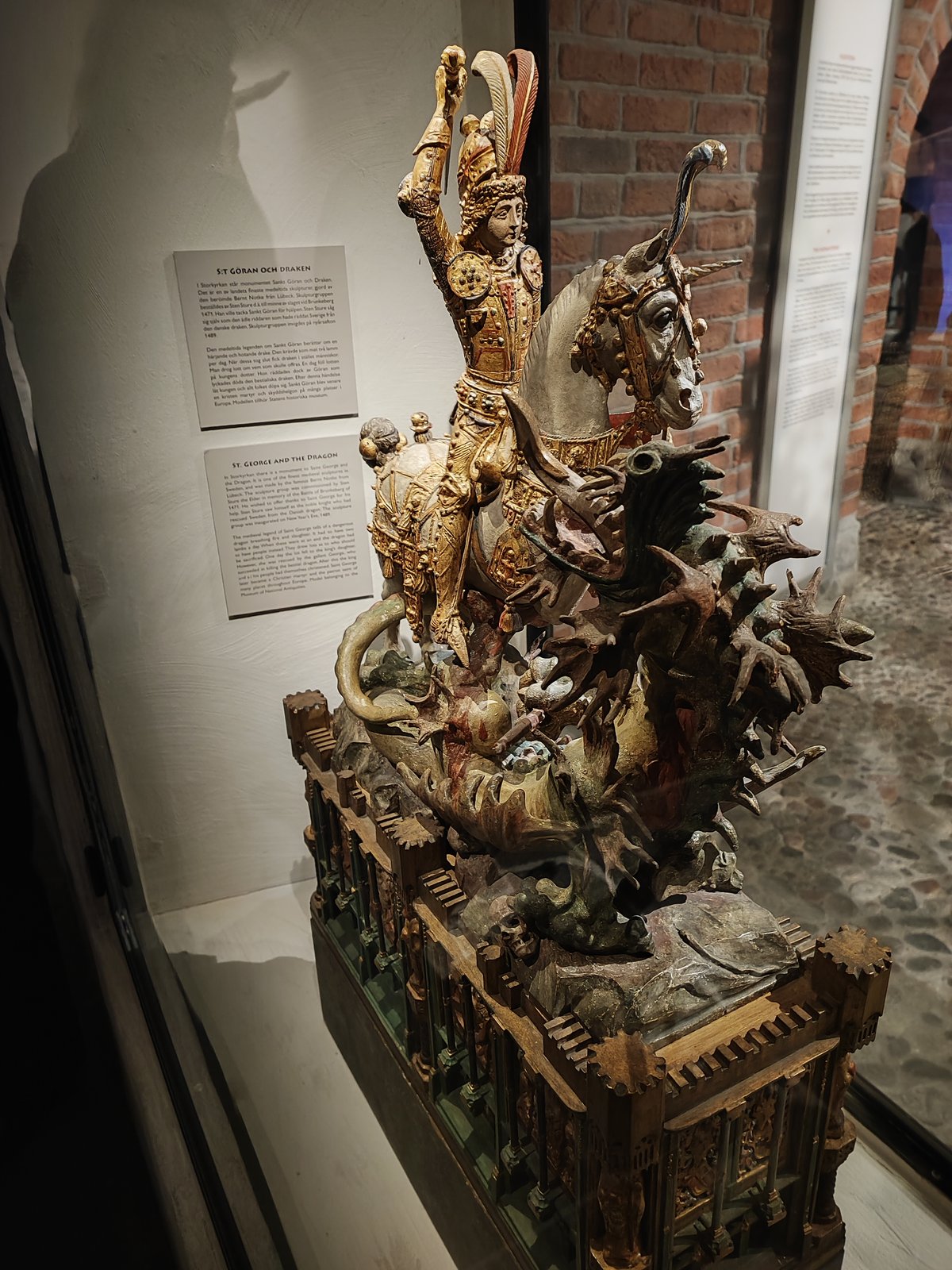
Detailed sculpture depicting Saint George slaying the dragon, located at Medelhavsmuseet museum.
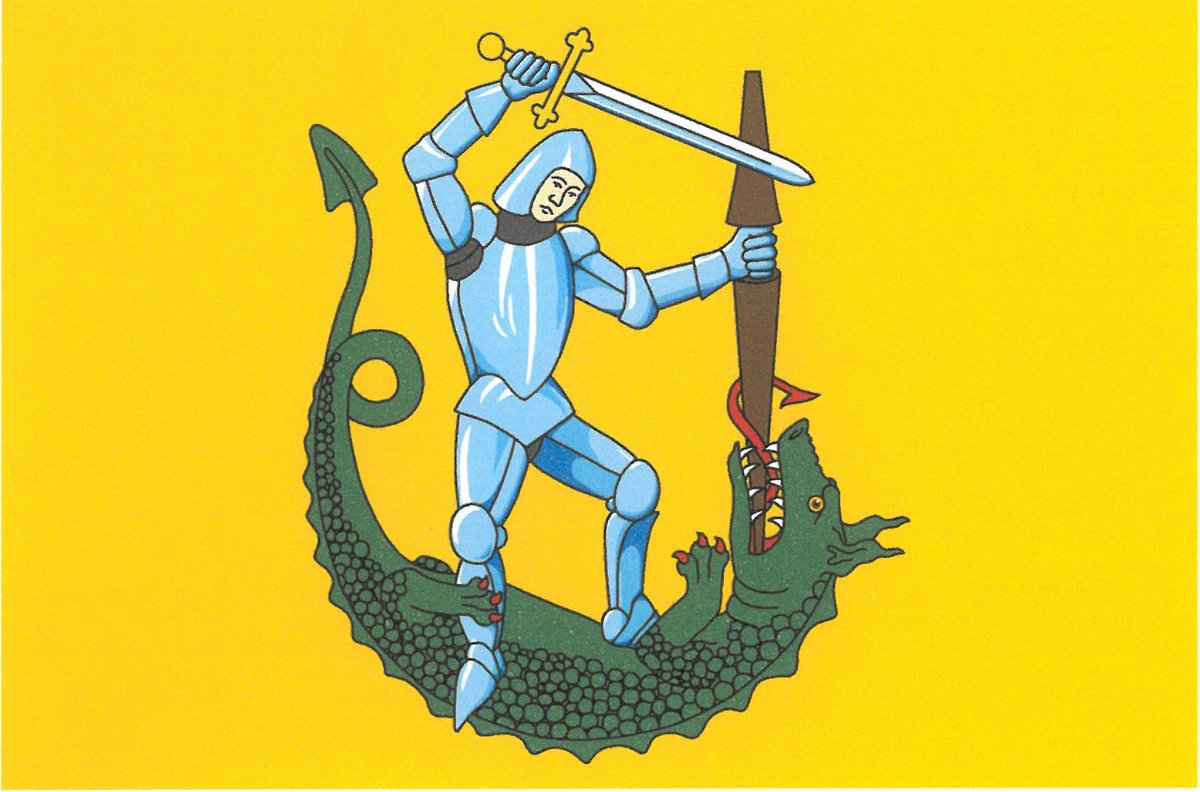
Official flag representing the city of Třebenice located in the Litoměřice District
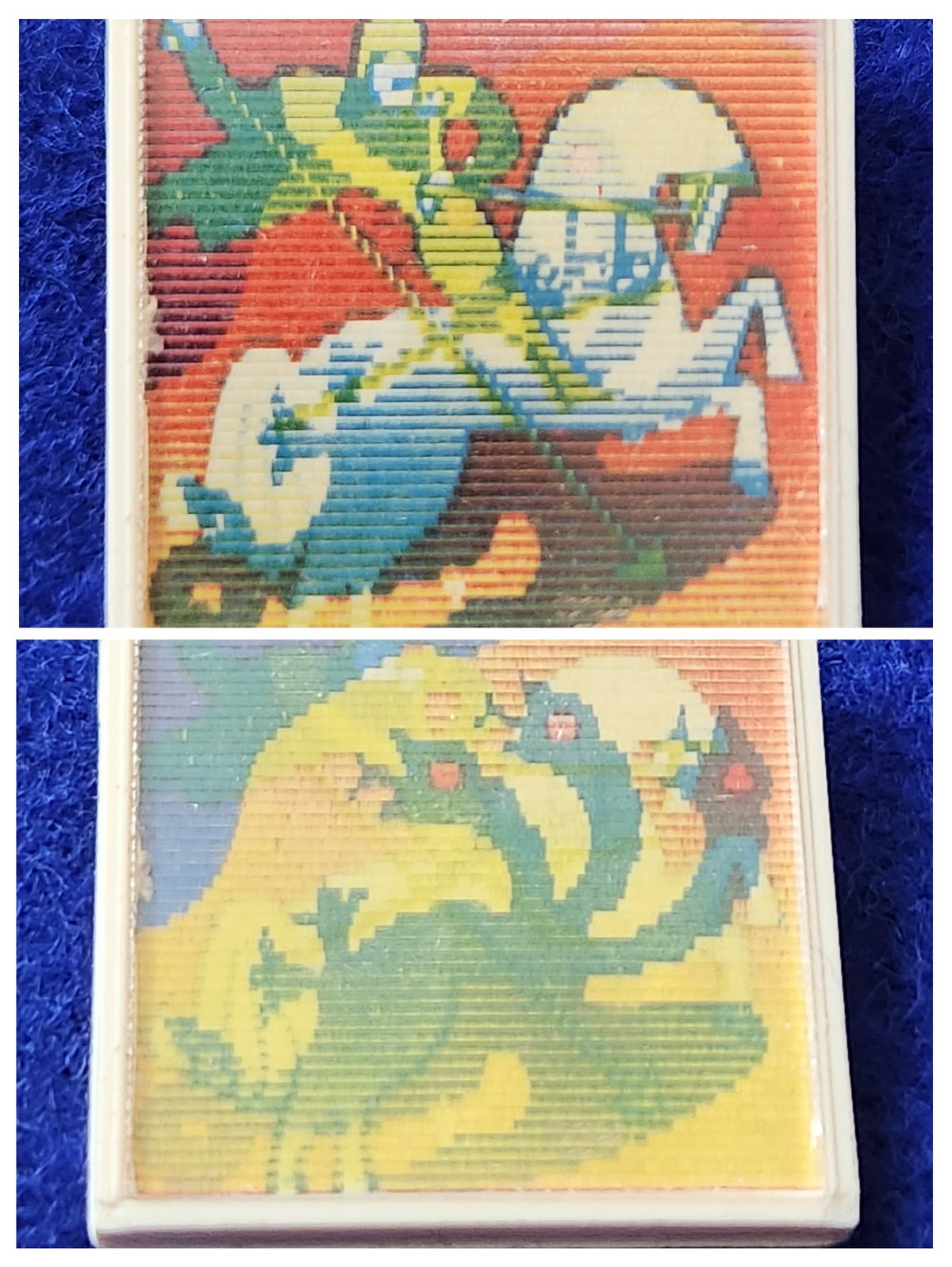
Lenticular badge showing two images of Dobrynya the knight and Zmey Gorynych the dragon from the Russian animated movie Dobrynya and the Dragon
Origins of the Saint George Legend
The legend of Saint George and the Dragon originated in early Christian tradition and gained widespread popularity in medieval Europe through the Golden Legend (Legenda aurea) (Smarthistory). The tale centers on George, a 3rd-century Roman officer who slays a dragon terrorizing a city, saving a princess and inspiring mass conversions to Christianity (Medium). The motif, originally associated with St. Theodore Tiro, became entwined with George by the 11th century. The Crusades further spread his veneration, making him an enduring symbol of the victory of good over evil (Medium).
The Legend’s Arrival and Significance in Sweden
In Sweden, the legend took on special meaning during the late Middle Ages. Regent Sten Sture the Elder invoked Saint George’s protection at the 1471 Battle of Brunkeberg, where Swedish forces defeated Denmark’s King Christian I (Wikipedia; Stockholm Museum). The victory, attributed to Saint George’s intervention, elevated the tale as a symbol of Swedish resistance and independence.
The Sculpture: History and Artistic Features
Commissioned by Sten Sture to commemorate Brunkeberg, the wooden sculpture was installed in Storkyrkan in 1489 (Wikipedia; Smarthistory). Traditionally credited to Bernt Notke, the piece stands over 3.75 meters tall, depicting Saint George in gilded armor atop a rearing horse, poised to strike the dragon beneath. The dragon’s design, a composite of menacing animal traits—including both male and female genitalia—carries layered allegorical meanings (Dodedans). The composition includes the princess, a symbolic lamb, and a base with reliefs of Saint George’s martyrdom.
Polychromy and gilding (some faded today) once made the group even more visually striking. The knight’s armor and the horse’s harness feature biblical and heraldic motifs, and a relic box is suspended from the chain mail, believed to contain fragments associated with Saint George.
Visiting Hours, Tickets, and Accessibility
Location: Stockholm Cathedral (Storkyrkan), Trångsund 1, Gamla Stan, Stockholm
Opening Hours:
- Generally open daily from 9:00 AM to 4:00 PM (extended to 5:00 PM in summer; hours may vary for special events).
- Verify current hours on the official Stockholm Cathedral website.
Admission:
- Adult: ~120 SEK
- Seniors: ~90 SEK
- Free for children under 18
- Tickets may be purchased at the entrance or online (Stockholm Cathedral)
Accessibility:
- The cathedral is wheelchair accessible, with ramps and elevators. Some areas have uneven flooring, but assistance is available.
- For specific needs, contact the cathedral in advance.
Guided Tours and Special Events
- Regular guided tours are offered in Swedish and English, focusing on the sculpture’s history and artistic symbolism.
- Audio guides (including family-friendly versions) are available for an additional fee.
- Each year on October 10th (Battle of Brunkeberg anniversary), a procession honors Saint George’s role in Swedish history.
- The cathedral also hosts concerts and services (History Hit).
Nearby Attractions
Gamla Stan is a treasure trove of historic sites within walking distance of Storkyrkan:
| Attraction | Distance from Storkyrkan | Highlights |
|---|---|---|
| Royal Palace | 126 m | Royal apartments, museums, Changing of the Guard |
| Nobel Prize Museum | 56 m | Interactive exhibits on Nobel laureates |
| Stortorget (Grand Square) | ~200 m | Historic square, Christmas market |
| Swedish Parliament | 239 m | Guided tours, neoclassical architecture |
| Riddarholmen Church | 343 m | Royal tombs, medieval architecture |
| Köpmantorget (Bronze Replica) | 400 m | Outdoor bronze copy of the sculpture |
| Gamla Stan (Old Town) | 379 m | Medieval streets, shops, cafés |
Other notable stops include the Vasa Museum, National Museum of Fine Arts, Wrangel Palace, and the Iron Boy Statue (Minube; City Guide Stockholm).
Artistic and Political Symbolism
The sculpture is not just an artistic marvel but also a political and national statement. Sten Sture’s heraldic insignia and Sweden’s blue-and-yellow colors are integrated into the design, emphasizing the allegory of Swedish victory over foreign rule (Smarthistory). While 19th-century nationalists popularized the identification of Sten Sture as Saint George and Denmark as the dragon, the sculpture’s symbolism continues to resonate in Swedish culture (publicartaroundtheworld.com).
Replicas and Enduring Legacy
The Stockholm sculpture inspired numerous later works:
- A bronze replica was installed at Köpmantorget in 1912 (Wikipedia).
- Over fifty wooden groups in Sweden and Finland echo the original’s composition (Dodedans).
- A full-size plaster copy is found in St. Catherine’s Church, Lübeck. The motif’s continued reinterpretation in art and literature underlines its lasting significance (plasticekphrastic.com).
FAQ
Q: What are the visiting hours for Saint George and the Dragon?
A: Usually 9:00 AM to 4:00 PM, with possible extensions in summer. Always check the official website for updates.
Q: How much are tickets?
A: Approximately 120 SEK for adults, 90 SEK for seniors, and free for children under 18. Guided tours and audio guides may have additional fees.
Q: Are guided tours available?
A: Yes, in Swedish and English, focusing on the cathedral and the sculpture.
Q: Is the cathedral accessible?
A: Largely accessible, with ramps and elevators. Some areas may have uneven floors—request assistance as needed.
Q: Is photography allowed?
A: Photography is generally permitted, but flash and photography during services may be restricted.
Q: What are the best nearby attractions?
A: The Royal Palace, Nobel Prize Museum, Stortorget, Swedish Parliament, Riddarholmen Church, and the bronze replica at Köpmantorget are all close by.
Listen to the full story in the app
Your Personal Curator, in Your Pocket.
Audio guides for 1,100+ cities across 96 countries. History, stories, and local insight — offline ready.
Audiala App
Available on iOS & Android
Join 50k+ Curators
Sources
-
verified
Discover the St
George and the Dragon Sculpture in Stockholm: History, Tickets, and Tips, 2025, Smarthistory
- verified
- verified
- verified
-
verified
Wikipedia contributors
Saint George and the Dragon (Notke). Wikipedia. )
- verified
Last reviewed: