Plan and listen to Museum Of Far Eastern Antiquities with Audiala.
Audio guide in your pocket, itinerary in your browser. Built for the way you actually visit.
Introduction
The Museum of Far Eastern Antiquities (Östasiatiska museet) in Stockholm is a cornerstone for the appreciation and study of East and Southeast Asian art and archaeology in Europe. Located on the culturally vibrant island of Skeppsholmen, the museum invites visitors to explore more than 7,000 years of Asian history, from Neolithic cultures to contemporary art. Established in 1929, its foundation is closely linked to the groundbreaking archaeological expeditions of Johan Gunnar Andersson in China, which introduced an impressive range of artifacts and knowledge to Sweden. Over the years, the museum's collection has grown to include significant works from China, Japan, Korea, India, and Southeast Asia, making it an essential destination for both scholars and the general public interested in Asian cultural heritage.
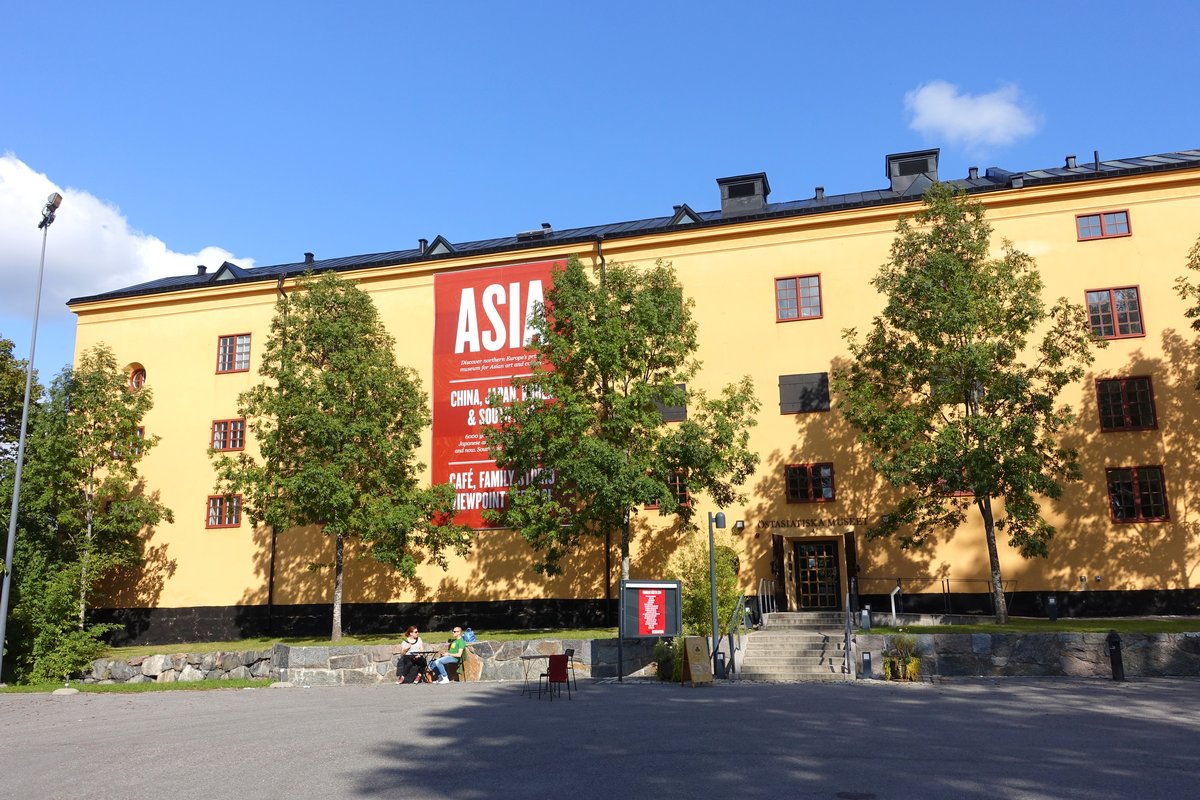
The museum is housed in a historic building originally designed by Nicodemus Tessin the Younger, formerly serving as royal stables and a naval arsenal. Its location near other prominent sites, like Moderna Museet and the Vasa Museum, enhances the overall visitor experience and places it at the heart of Stockholm’s cultural landscape. While currently closed for renovations—expected to be completed in 2026—the museum remains accessible through its digital platforms, offering virtual tours and educational resources.
For the latest updates, visit the official website of the Museum of Far Eastern Antiquities and consult specialized guides like Slow Travel Stockholm and Visit Stockholm.

Historical Background and Evolution
Founding and Early Development
The museum’s origins trace back to Johan Gunnar Andersson’s pioneering archaeological work in China between 1921 and 1926. Supported by Swedish royalty, notably Crown Prince Gustaf VI Adolf, and in collaboration with Chinese archaeologists like Yuan Fuli, Andersson’s expeditions brought back a vast array of artifacts, particularly from the Yangshao and Longshan cultures. This collection laid the foundation for the museum and established its reputation as a center for East Asian antiquities (Slow Travel Stockholm).
The Building: From Royal Stables to Cultural Landmark
Situated on Skeppsholmen, the museum occupies a historic structure designed by Nicodemus Tessin the Younger between 1699 and 1704. Originally constructed as royal stables for Charles XII’s bodyguards, the building has also served as a ropewalk and naval arsenal before its transformation into a museum. This adaptive reuse underscores the layers of Stockholm’s architectural and cultural history (Ostasiatiska Museet).
Growth of Collections and Research
While the initial focus was on Chinese antiquities, the museum quickly expanded its scope to include works from Japan, Korea, India, and Southeast Asia. Through donations, acquisitions, and further research, the collection now boasts over 100,000 objects, making it one of the most comprehensive repositories of East Asian artifacts in Europe (Slow Travel Stockholm).
Academic and Cultural Significance
The museum is a leading hub for Asian cultural studies, supporting scholars and enthusiasts through its public library, research resources, and academic programs. It regularly hosts lectures, seminars, and collaborative research with institutions worldwide, contributing to the advancement of Asian studies in Europe (City Guide Stockholm).
Role in Sweden’s Museum Landscape
As a part of Sweden’s National Museums of World Culture, the museum collaborates with institutions such as the Museum of World Culture in Gothenburg and the Museum of Ethnography. Its proximity to other cultural landmarks on Skeppsholmen, such as Moderna Museet and ArkDes, creates a vibrant hub for visitors (Ostasiatiska Museet).
Renovations and Milestones
Admission has traditionally been free, ensuring public access to cultural heritage (Slow Travel Stockholm). The museum is currently undergoing extensive renovations, with a planned reopening in 2026 that promises improved exhibition spaces and visitor amenities (Visit Stockholm).
Visiting Information
Opening Hours
- Currently Closed for Renovation: Reopening is scheduled for 2026.
- Usual Hours (when open): Tuesday to Sunday, 10:00 AM – 5:00 PM. Closed on Mondays and public holidays.
Tickets and Admission
- Admission: Free, unless otherwise stated for special exhibitions.
- Guided Tours: Available by appointment; check the official website for the latest details.
Accessibility
- The museum is fully wheelchair accessible, with elevators and ramps.
- Assistance is available upon request; service animals are welcome.
Location and Directions
- Address: Tyghusplan 4, Skeppsholmen, Stockholm, Sweden.
- Getting There: Accessible by public transport (bus 65, ferry, or a short walk from Kungsträdgården metro station). Parking is limited; public transport or cycling is recommended (Stockholm Museum Guide).
Nearby Attractions
- Moderna Museet: Modern and contemporary art.
- ArkDes: Architecture and design.
- Vasa Museum: Maritime heritage.
- Royal Palace & Gamla Stan: Stockholm’s old town and royal residence.
Permanent Collections: Highlights
Chinese Antiquities
- Ceramics: Neolithic pottery, Tang sancai-glazed wares, Song celadons, Ming/Qing porcelain.
- Bronzes: Shang and Zhou ritual vessels.
- Jade: Artifacts from Liangzhu culture through Imperial China.
- Painting and Calligraphy: Scrolls and albums from distinguished Chinese artists.
Japanese Art
- Samurai Armor and Swords: Edo-period examples.
- Ceramics/Lacquerware: Imari, Kutani, and fine lacquer pieces.
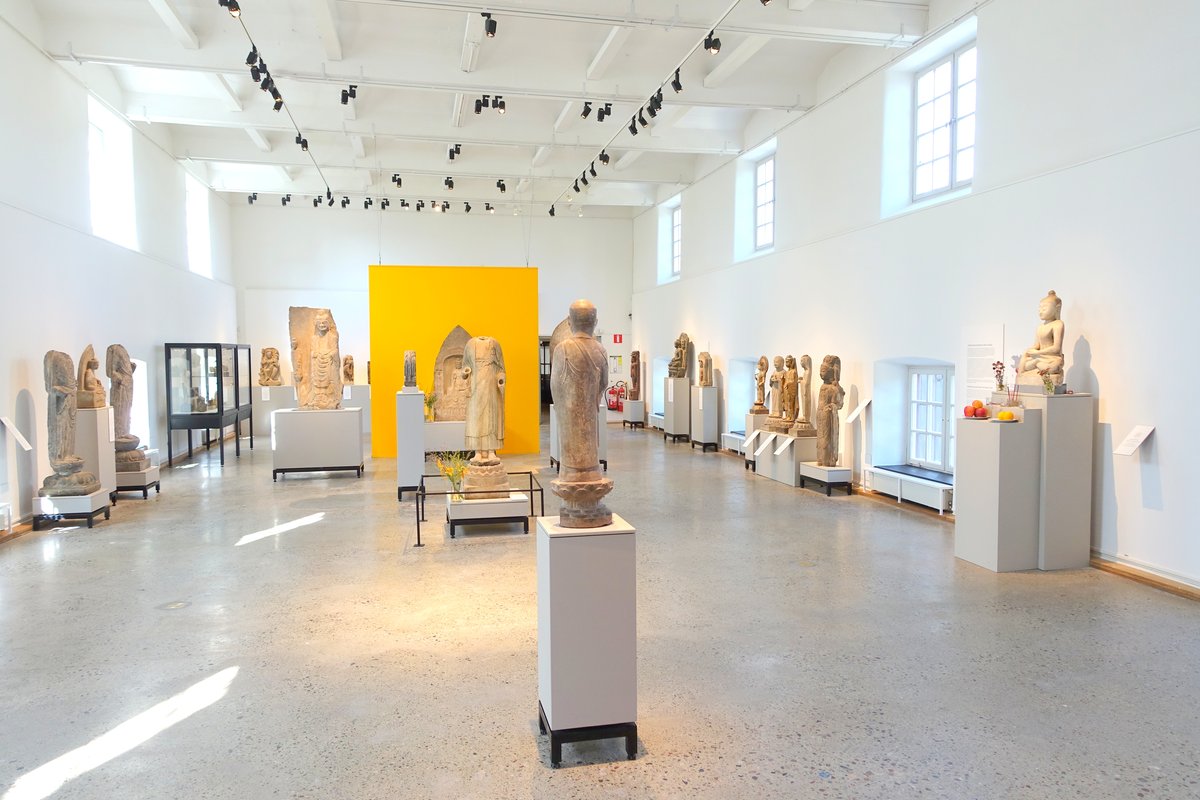
- Buddhist Sculpture: Statues and ritual objects.
- Ukiyo-e Prints: Works by Hokusai, Hiroshige, and others.
Korean Art
- Ceramics: Goryeo celadon, Joseon buncheong wares.
- Buddhist Art: Gilt-bronze statues, ritual implements.
- Textiles: Hanbok and embroidered works.
South and Southeast Asian Art
- Sculpture: Hindu/Buddhist deities from India, Thailand, Vietnam.
- Textiles/Decorative Arts: Batik, jewelry, lacquerware.
Temporary and Special Exhibitions
The museum regularly hosts temporary exhibitions focusing on specific themes, periods, or artistic movements, often with international loans. Previous themes have included “Contemporary Asian Art,” “The Silk Road,” “Women in East Asian Art,” and “Tea Culture.” For current and upcoming shows, refer to the museum’s exhibition page.
Visitor Amenities
- Accessibility: Step-free entry, accessible restrooms, and guide dog policies.
- Family-Friendly: Stroller parking, baby-changing facilities, and children’s activities.
- Café and Shop: On-site options for refreshments and unique gifts.
- Wi-Fi: Free for all visitors.
Frequently Asked Questions (FAQ)
Q: Is the museum open?
A: The museum is closed for renovations until 2026. Check the official website for updates.
Q: Is admission free?
A: General admission is free except for certain special exhibitions.
Q: Are guided tours available?
A: Yes, when open. Booking in advance is advised.
Q: Is the museum accessible?
A: Yes, the building is wheelchair accessible and provides assistance on request.
Q: Is there a family program?
A: Yes, including the Dragon Family Studio and workshops.
Q: Where can I park?
A: Skeppsholmen has limited parking; public transport is recommended.
Visuals and Interactive Media
Experience the museum’s highlights through virtual tours and digital exhibitions. High-resolution images and interactive features are available online, offering a digital gateway to the collections.
Discover More
The Museum of Far Eastern Antiquities offers in-depth engagement with Asian art and culture in a unique Stockholm setting. While renovations are underway, the museum continues to connect with audiences digitally and through educational outreach. Whether planning a future visit or exploring virtually, this institution remains a vital link to Asian civilizations.
Plan your visit:
- Check the official website for reopening details and exhibition updates.
- Explore virtual resources and download the Audiala app for audio guides and interactive tours.
- Combine your visit with nearby attractions on Skeppsholmen for a full cultural experience.
Contact Information
- Address: Tyghusplan 4, Skeppsholmen, Stockholm, Sweden
- Phone: +46 (0)10-456 12 00
- Email: [email protected]
- Website: www.ostasiatiskamuseet.se/en
For digital resources and updates, follow the museum on Google Arts & Culture or subscribe via the official website.
Listen to the full story in the app
The whole Museum Of Far Eastern Antiquities,
told well.
Audio guides for 1,100+ cities across 96 countries. History, stories, and local insight — offline ready.
Verified, and shown.
Researched and written by the Audiala editorial team from historical records, architectural archives, and local expertise.
Researched from Wikidata, Wikipedia & official sources · fact-checked · How we make our guides →