Introduction
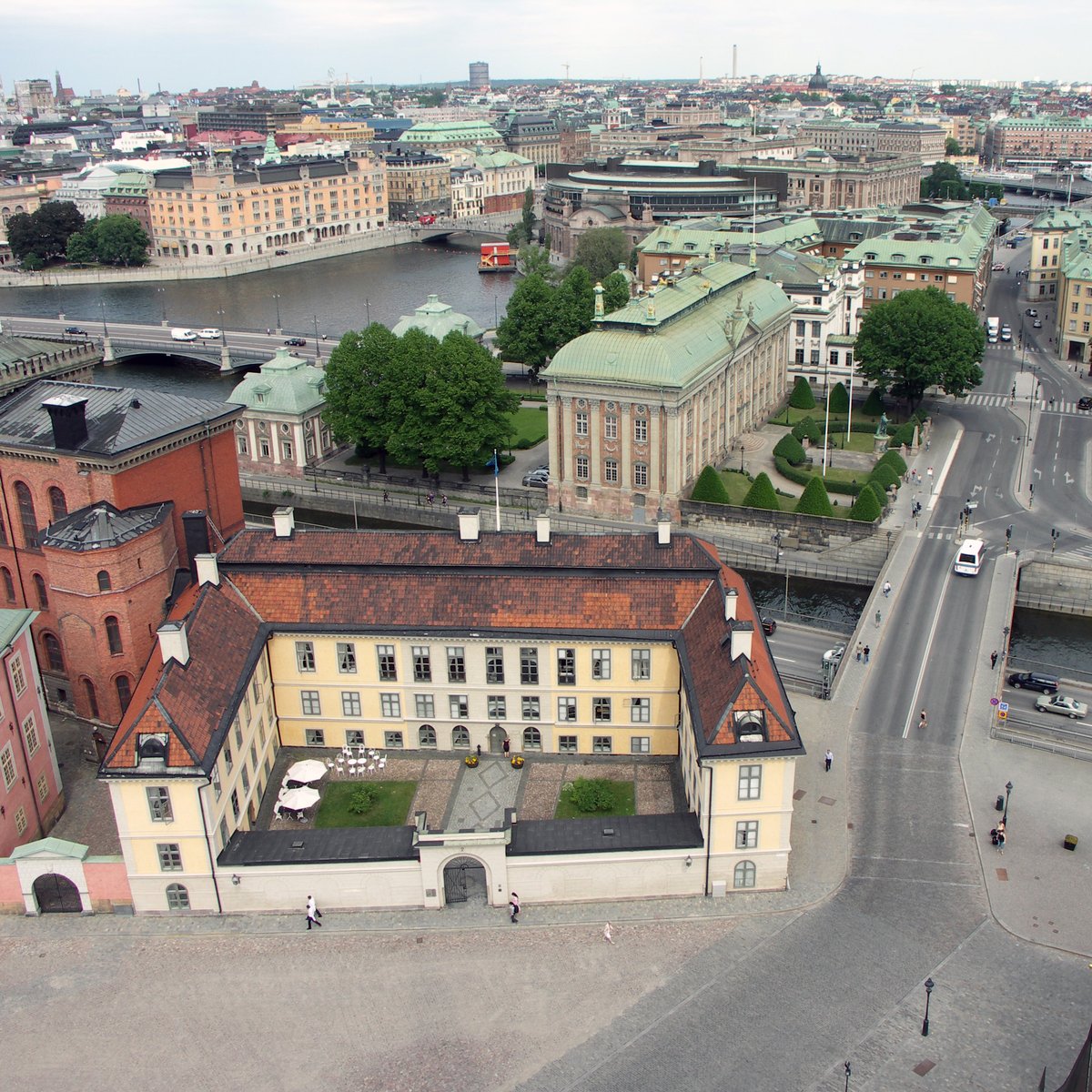
Located at the heart of Stockholm in Gustav Adolfs torg, the Gustav II Adolf Statue is a remarkable monument dedicated to King Gustav II Adolf, one of Sweden’s most influential monarchs. Known as the “Lion of the North,” Gustav II Adolf’s reign in the early 17th century transformed Sweden into a major European power and laid the foundations for modern Swedish identity. The statue—an exquisite example of late 18th-century neoclassical artistry—serves as a potent symbol of Swedish national pride and historical legacy. Its central location, surrounded by important government buildings and cultural institutions, underscores its significance as both an artistic and civic landmark (Wikipedia; Swedish History Museum; Visit Stockholm; Stockholm City Museum).
This comprehensive guide offers detailed visitor information—including location, accessibility, hours, guided tour options, and travel tips—alongside insights into the statue’s artistic craftsmanship, symbolism, and the vibrant cultural atmosphere of its surroundings.
- Historical Background
- Artistic and Historical Context
- Visiting Information
- Nearby Attractions
- Travel Tips and Practical Information
- Frequently Asked Questions (FAQ)
- Visuals and Media
- Conclusion
- References
Photo Gallery
Explore Gustav Ii Adolf Statue, Stockholm in Pictures

Photograph featuring Emil Eikner and Fred Kallaste standing by the statue of King Gustav Adolph the Great at Gustav Adolfs torg in Stockholm, Sweden.

The statue of King Gustav II Adolph of Sweden sculpted by Pierre Hubert L'Archevêque and dedicated in 1796, located at Gustav Adolfs torg in Stockholm, Sweden.

Statue of King Gustav II Adolph of Sweden sculpted by Pierre Hubert L'Archevêque, dedicated in 1796, located in Gustav Adolfs torg, Stockholm, Sweden

Watercolor artwork titled 'Norrmalms Torg i Stockholm med Utsigt af K. Slottet K. Gust. Adolphs Staue, H.K.H. Prinsessans Palais och Opera Huset' by Johan Fredrik Martin (1755-1816) from 'Svenska vuer', depicting historical landmarks of Stockholm's Norrmalms Torg, on decorated support paper, size 45

Historic albumen print from the 1880s showing the Royal Palace of Stockholm in the Old Town with Norrbro Bridge visible, viewed from Gustav Adolf Square.

Photograph by Eugène Trutat showing a view of the equestrian statue of Gustav II Adolf, Norrbro bridge, and the Royal Palace in Stockholm as seen from Gustav Adolfs torg.
Historical Background
Gustav II Adolf: Monarch and Military Innovator
Gustav II Adolf (1594–1632), also known as Gustavus Adolphus, ascended the Swedish throne at just sixteen. During his reign, he elevated Sweden to a dominant European power, notably through his leadership in the Thirty Years’ War and his innovative military tactics (Wikipedia; Equestrian Statue).
His domestic reforms modernized Sweden’s administration, economy, and military, while promoting education and religious tolerance. Gustav II Adolf died in battle in 1632, and his daughter Christina succeeded him.
Artistic and Historical Context
Creation and Design
Commissioned in the late 18th century, the Gustav II Adolf Statue was initiated by French sculptor Pierre Hubert L’Archevêque and completed posthumously by Johan Tobias Sergel. Inaugurated in 1796, the bronze statue stands approximately 5 meters tall atop a granite pedestal, depicting the king in military regalia with his right arm outstretched, symbolizing leadership and vision (Wikimedia Commons; Wikipedia).
The monument’s neoclassical style blends idealized heroism with realism, and the detailed craftsmanship—from the king’s attire to the dynamic pose of the horse—reflects both artistic and engineering mastery.
Symbolism and National Identity
The statue is more than a commemorative piece; it’s a powerful emblem of Swedish unity and resilience. Its central placement in Gustav Adolfs torg, surrounded by institutions like the Royal Opera House and the Ministry for Foreign Affairs, highlights its civic importance. Annual ceremonies, such as Gustavus Adolphus Day (November 6), reinforce its role in national memory (Nordiska Museet).
Visiting Information
Location and Accessibility
- Address: Gustav Adolfs torg, Norrmalm, Stockholm
- Public Transport:
- Metro: T-Centralen (600m), Kungsträdgården (400m)
- Bus: Lines 2, 53, and 65 (SL Journey Planner)
- Parking: Public parking garages nearby (e.g., Gallerian, NK Parkaden), but street parking is limited (Stockholm Parking Guide)
- On Foot/Bicycle: Easily accessible from Gamla Stan and Kungsträdgården via pedestrian and bike paths.
Visiting Hours and Tickets
- Hours: Open 24 hours a day, year-round.
- Tickets: No tickets or entry fees required. The statue is freely accessible at all times.
Accessibility
- The square is flat and paved, providing easy access for wheelchairs and strollers (Stockholm Accessibility Guide).
Guided Tours
- Several walking tours of Stockholm include the statue; prices typically range from 150–350 SEK (Free Tour Stockholm; GetYourGuide).
- Audio guide apps, like Stockholm Audio Guide, offer self-guided commentary.
Facilities and Amenities
- Restrooms: Available in nearby venues such as the Royal Opera House and shopping centers.
- Dining: Numerous cafes and restaurants, including the Michelin-starred Operakällaren, are within walking distance.
- Shops: NK department store and Gallerian mall offer souvenirs and Swedish gifts.
Nearby Attractions
- Royal Opera House: Renowned venue for opera and ballet, adjacent to the square.
- Kungsträdgården: Historic park popular for strolls and seasonal events.
- Gamla Stan (Old Town): Cobblestoned medieval quarter just a short walk away.
- Nationalmuseum: Sweden’s premier art museum, located across the Norrbro bridge (Nationalmuseum).
Travel Tips and Practical Information
- Best Time to Visit: Daylight hours (9:00 AM–6:00 PM) for optimal viewing and photography. Early mornings and late afternoons are less crowded.
- Weather: Dress for the season—summers are long and mild, winters are cold with shorter days.
- Language: Most signage is in Swedish, but English is widely spoken.
- Currency: Swedish krona (SEK); many places are cashless.
- Wi-Fi: Free public Wi-Fi is available in central Stockholm (Stockholm Wi-Fi).
- Sustainability: Use public transport and recycle; Stockholm is a leader in green tourism (Sustainable Stockholm).
Frequently Asked Questions (FAQ)
Q: Do I need to buy tickets to visit the Gustav II Adolf Statue?
A: No, the statue is outdoors and free to access.
Q: What are the best hours to visit the statue?
A: Daylight hours are ideal, but the statue is accessible 24/7.
Q: Is the statue accessible for wheelchair users?
A: Yes, the square is flat and paved.
Q: Are guided tours available?
A: Yes, guided walking tours and audio guides are available.
Q: Can I take photos or use a drone?
A: Personal photography is encouraged. Drone use is regulated; check local rules (Stockholm Drone Rules).
Q: What events are held at the statue?
A: The statue is a focal point for ceremonies such as Gustavus Adolphus Day and public gatherings (Swedish Holidays).
Visuals and Media
High-quality images of the Gustav II Adolf Statue are available online and on Stockholm’s tourism platforms, with alt text such as “Gustav II Adolf Statue at Gustav Adolfs torg, Stockholm.” Interactive maps and virtual tours further enrich the visitor experience.

The Gustav II Adolf Statue, showcasing detailed bronze craftsmanship (Wikimedia Commons)
Listen to the full story in the app
Your Personal Curator, in Your Pocket.
Audio guides for 1,100+ cities across 96 countries. History, stories, and local insight — offline ready.
Audiala App
Available on iOS & Android
Join 50k+ Curators
Sources
- verified
- verified
- verified
- verified
- verified
- verified
- verified
- verified
- verified
- verified
- verified
- verified
- verified
- verified
- verified
- verified
- verified
- verified
- verified
- verified
- verified
- verified
- verified
Last reviewed: