Introduction
Granen 14 is a distinguished property that exemplifies Stockholm’s multifaceted history and architectural evolution. Situated in both the medieval heart of Gamla Stan and the elegant Villastaden district of Östermalm, Granen 14 provides visitors with a unique vantage point from which to explore the city’s development—from its 13th-century origins to its ornate 19th-century urban expansion. Whether you’re a history buff, architecture enthusiast, or first-time traveler, this comprehensive guide will equip you with essential information on Granen 14’s significance, architectural highlights, practical visiting tips, and its place within Stockholm’s wider cultural landscape (all-things-nordic.com; sv.wikipedia.org).
Gamla Stan: Stockholm’s Birthplace
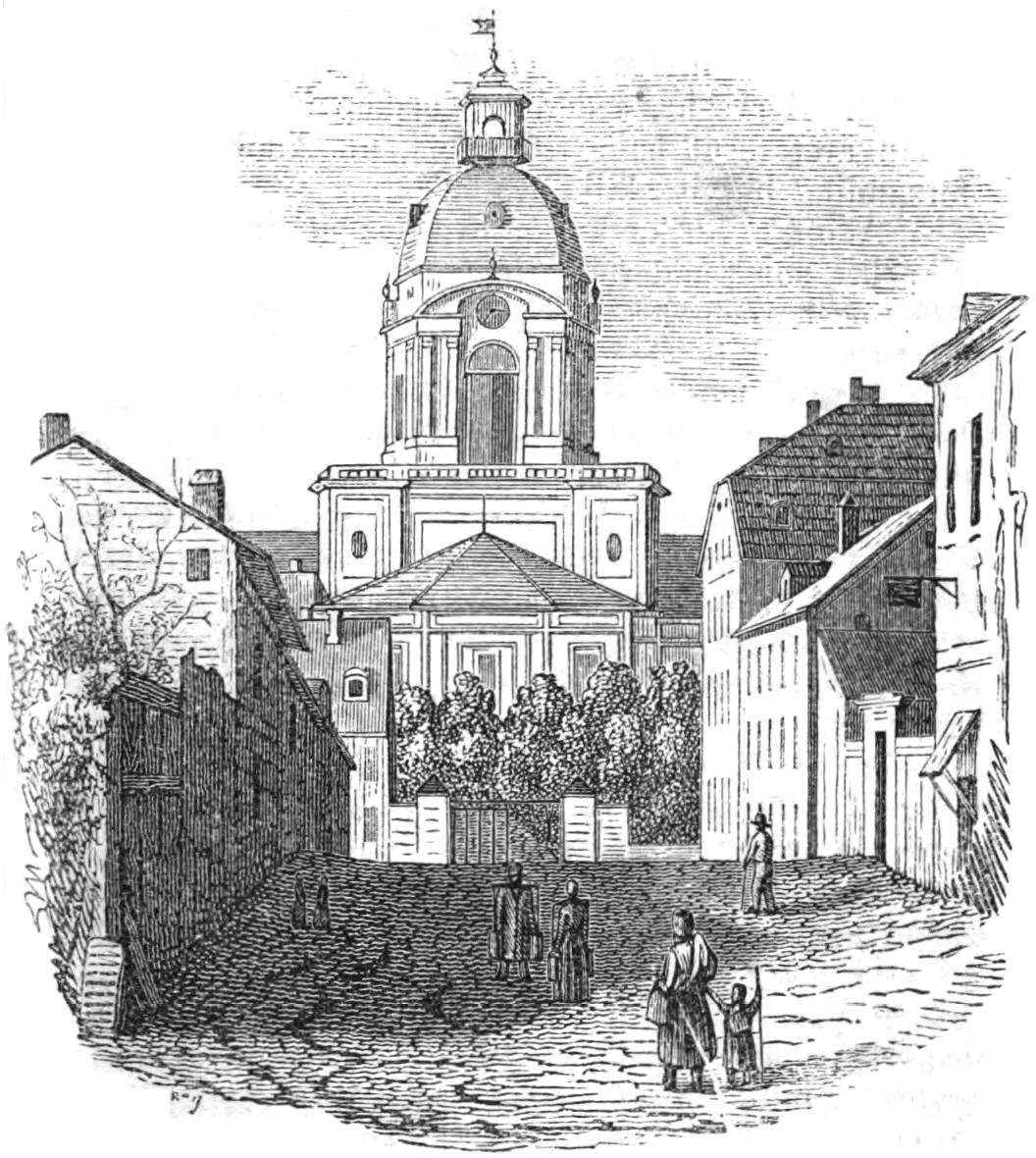
Granen 14 is rooted in the historical core of Stockholm, Gamla Stan, established in 1252 by King Birger Jarl. The district’s medieval street grid, narrow alleys, and ancient buildings testify to Stockholm’s earliest urban planning. Over time, it evolved from a Viking trading hub to a pivotal center within the Hanseatic League, driving economic and cultural exchange (stockholm.net). Repeated fires in the 17th century led to stricter building codes, transitioning construction from wood to brick and stone, much of which defines the area’s character today (thehiddennorth.com).
Villastaden, Östermalm: Urban Expansion and Prestige
By the late 19th century, Stockholm’s urban sprawl brought forth exclusive neighborhoods like Villastaden in Östermalm. Here, Granen 14—at the intersection of Valhallavägen and Floragatan—mirrors the city’s economic and social ascent, embodying architectural grandeur and the aspirations of the era’s elite (sv.wikipedia.org).
Architectural Significance and Preservation
Gamla Stan’s Enduring Fabric
Post-17th-century fires, authorities mandated fireproof construction, resulting in grand merchant houses and palaces along Skeppsbron and neighboring streets. The Stock Exchange building, now home to the Nobel Prize Museum, exemplifies the neoclassical style that flourished during the 18th century (thehiddennorth.com).
Granen 14 in Villastaden: Historicism and Eclecticism
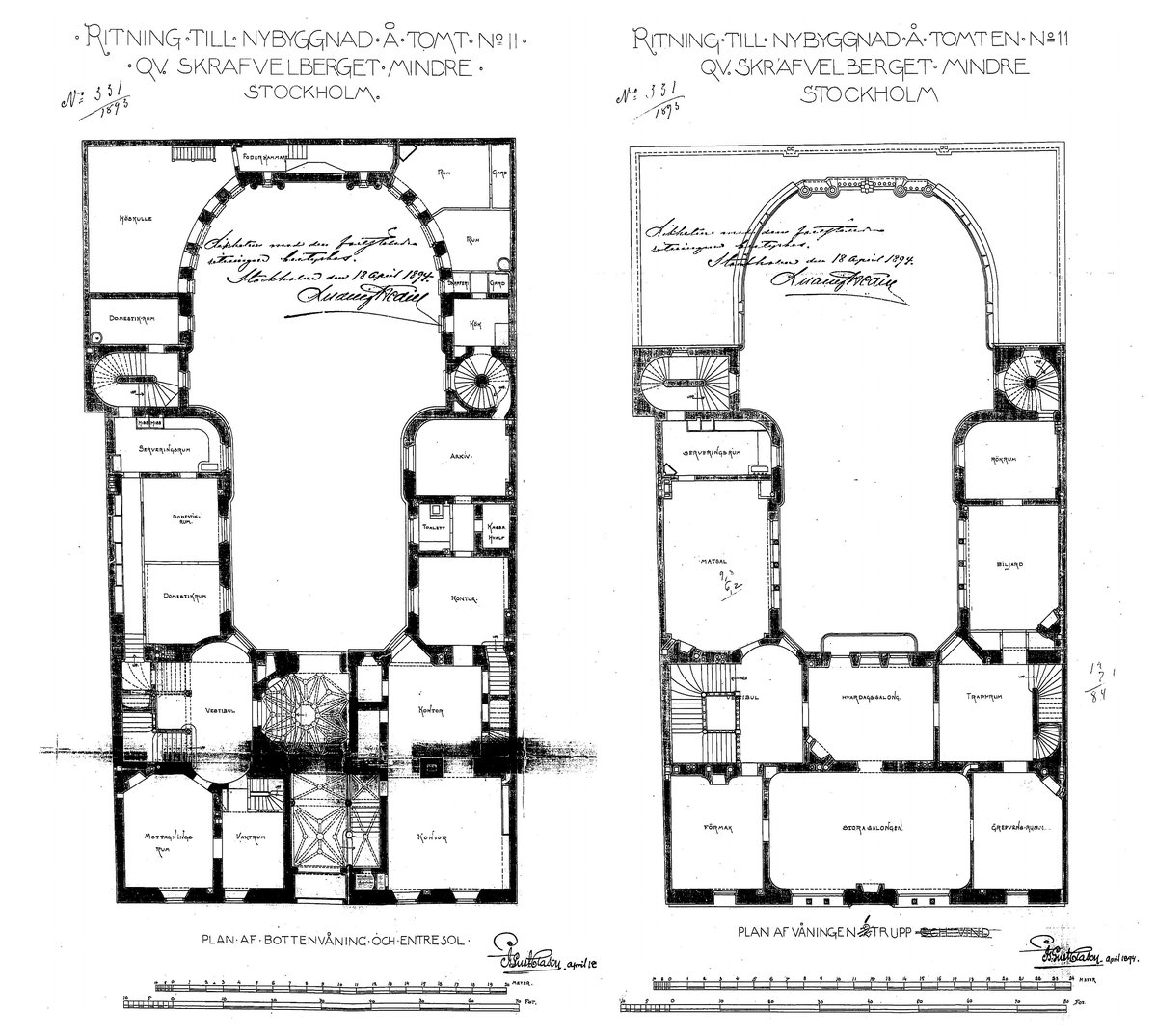
Constructed between 1886–1887 and designed by Johan Laurentz, Granen 14 in Villastaden epitomizes the historicist and eclectic styles prevalent in Stockholm’s upper-class neighborhoods. Key features include:
- Red brick and stucco facades with rusticated bases.
- Sculptural Atlantes figures supporting bay windows.
- Ornate sgraffito friezes on the upper floors (skapakonst.se).
The building’s blue-listed (blåmärkt) status by the Stockholm City Museum highlights its exceptional cultural value and ensures legal protection (sv.wikipedia.org).
Cultural and Socio-Economic Context
Commerce and Cosmopolitanism
Historically, the areas surrounding Granen 14 were vital to Stockholm’s economic life, hosting wealthy merchants and, in the 18th century, benefiting from the Swedish East India Company’s trade. The neighborhood’s transformation from a neglected slum to a prized heritage site reflects Stockholm’s resilience and adaptability (thehiddennorth.com).
Cultural Institutions
Gamla Stan and Villastaden are home to a concentration of cultural landmarks: the Royal Palace, Storkyrkan, Nobel Prize Museum, and numerous galleries, cafes, and boutiques (stockholm.com). Annual festivals and cultural events—like Culture Night and the Jazz Festival—add vibrancy to the area (Visit Stockholm).
Key Historical Events
- Stockholm Bloodbath (1520): A pivotal massacre that led to Swedish independence (all-things-nordic.com).
- Great Fire of 1697: Destruction and rebuilding of the Royal Palace prompted urban renewal (thehiddennorth.com).
- Gustavian Era (1772–1809): Cultural and architectural advancements, including the creation of public spaces and theaters.
- Modern Preservation Initiatives: From the 1970s onward, restoration efforts have preserved Gamla Stan’s and Villastaden’s architectural legacy (historyhit.com).
Visitor Information: Hours, Tickets, Accessibility
Visiting Hours and Tickets
-
Gamla Stan location (museum context):
- Open Tuesday–Sunday, 10:00 AM–6:00 PM; closed Mondays and public holidays.
- Tickets: 120 SEK (general), with discounts for students, seniors, and groups. Family and guided tour packages are available.
- Tickets may be purchased online via the official Stockholm historical sites portal or on-site.
-
Villastaden (Granen 14 residence):
- No interior access (private residence), but the exterior can be viewed and photographed from public sidewalks at any time.
Accessibility
- Wheelchair-accessible entrances, ramps, and elevators at public sites.
- Audio guides in multiple languages, with advance arrangements possible for visually/hearing-impaired visitors.
- Public transportation is highly accessible, with elevators, ramps, and tactile guidance at nearby stations (Visit Sweden).
Guided Tours
- Daily guided tours in Gamla Stan at 11:00 AM, 2:00 PM, and 4:00 PM.
- In Villastaden, walking tours often include commentary on Granen 14’s architectural features.
Visitor Tips
- Wear comfortable shoes for cobblestone streets.
- Spring (April–June) and early autumn (September–October) are optimal for fewer crowds and pleasant weather.
Architectural Highlights
- Narrow medieval streets and colorful facades in Gamla Stan.
- Robust stone and brick construction mandated by historic fire codes.
- Atlantes sculptures and bay windows at Granen 14 in Villastaden.
- Elaborate sgraffito friezes and rusticated ground floors.
These features collectively reflect Stockholm’s evolution from medieval stronghold to modern metropolis (skapakonst.se; stockholm10.com).
Nearby Attractions
- Royal Palace
- Stortorget Square
- Nobel Prize Museum
- Storkyrkan (Great Church)
- Gustav Adolf Square
- Humlegården Park
- Nationalmuseum and Moderna Museet
- Villastaden’s blue-listed buildings
All are accessible via public transport, walking, or cycling (Visit Stockholm).
Frequently Asked Questions (FAQ)
Q: What are the visiting hours for Granen 14?
A: For museum contexts, Tuesday–Sunday, 10:00 AM–6:00 PM. The Villastaden residence is viewable from outside at any time.
Q: How do I purchase tickets?
A: Online via the official portal or on-site for museum sites. No tickets required to view the Villastaden exterior.
Q: Is Granen 14 wheelchair accessible?
A: Yes, public sites are accessible; sidewalks around Villastaden are accessible, but interior access is not available.
Q: Are guided tours available?
A: Yes, both in Gamla Stan and as part of Villastaden walking tours.
Q: What are the best times for photography?
A: Morning and late afternoon for optimal natural lighting.
Sustainable and Inclusive Travel
Stockholm is a leader in sustainability and inclusivity. Visitors are encouraged to use public transportation, bike, or walk. Local businesses often participate in eco-certification, and the city enforces accessibility standards in line with Swedish law (Visit Sweden; Facts.net).
Listen to the full story in the app
Your Personal Curator, in Your Pocket.
Audio guides for 1,100+ cities across 96 countries. History, stories, and local insight — offline ready.
Audiala App
Available on iOS & Android
Join 50k+ Curators
Sources
- verified
- verified
- verified
- verified
- verified
- verified
- verified
- verified
Last reviewed: