Introduction to Bååtska Palatset
Bååtska Palatset, one of Stockholm’s most esteemed Baroque palaces, offers a window into Sweden’s aristocratic heritage and the evolution of its urban landscape. Situated on the Blasieholmen peninsula and often associated with Gamla Stan (Old Town), this 17th-century palace is a testament to the grandeur of the Swedish Age of Greatness. Commissioned by the influential Bååt family and designed by Nicodemus Tessin the Elder, the palace is acclaimed for its Dutch-Swedish Baroque style, characterized by symmetry, intricate stonework, and lavish interiors adorned with trompe-l'œil paintings, stucco, and gilded woodwork (spfjarlabanke.se; Tessinsällskapet; Visit Stockholm). Today, it primarily serves as the headquarters of the Swedish Order of Freemasons, occasionally opening its historically preserved interiors for guided tours.
This comprehensive guide provides insights into Bååtska Palatset’s history, architectural features, current visiting hours, ticketing, accessibility, nearby attractions, and tips to help you make the most of your visit to this iconic site.
Brief History and Architectural Significance
Origins and Early Development
Bååtska Palatset traces its origins to the mid-1600s, when Queen Christina granted the Blasieholmen plot to Seved Bååt, Sweden’s Royal Treasurer, with the mandate to build a residence commensurate with his rank (sv.wikipedia.org; spfjarlabanke.se). Construction began in 1662 under the renowned architect Nicodemus Tessin the Elder, and the palace was completed by 1669 (stockholmskallan.stockholm.se).
Shortly after its completion, Seved Bååt passed away, and a fire in 1669 devastated much of the structure. The estate was subsequently acquired by Gustaf Otto Stenbock, who restored the palace and contributed to its legacy through the Oscarssalen, a grand hall featuring ceiling decorations celebrating military achievements.
Baroque Masterpiece
The palace exemplifies Dutch-Swedish Baroque, with a symmetrical façade, restrained exterior ornamentation, and interiors distinguished by trompe-l'œil paintings and elaborate stucco work (spfjarlabanke.se; spfseniorerna.se). The illusionistic wall and ceiling decorations in the main halls, along with authentic period furnishings, create an atmosphere of 17th-century nobility.
Changing Functions and Present Role
Bååtska Palatset has served various roles: a noble residence, the French Embassy, and since 1874, the headquarters of the Swedish Order of Freemasons. In the late 19th century, the Order added new wings with Gothic and Greek temple influences, inaugurated in 1877 by King Oscar II (frimurarorden.se; stockholmskallan.stockholm.se). Today, the palace is a protected historic building, recognized for its well-preserved interiors, archival art collections, and Masonic heritage (sv.wikipedia.org).
Key Exterior and Interior Features
Exterior
- Baroque Façade: The palace’s three-story elevation features a rusticated ground floor for strength and pilasters framing the upper windows. The central entry is crowned with the Bååt family’s coat of arms, and dormer windows line the roof (The Crazy Tourist).
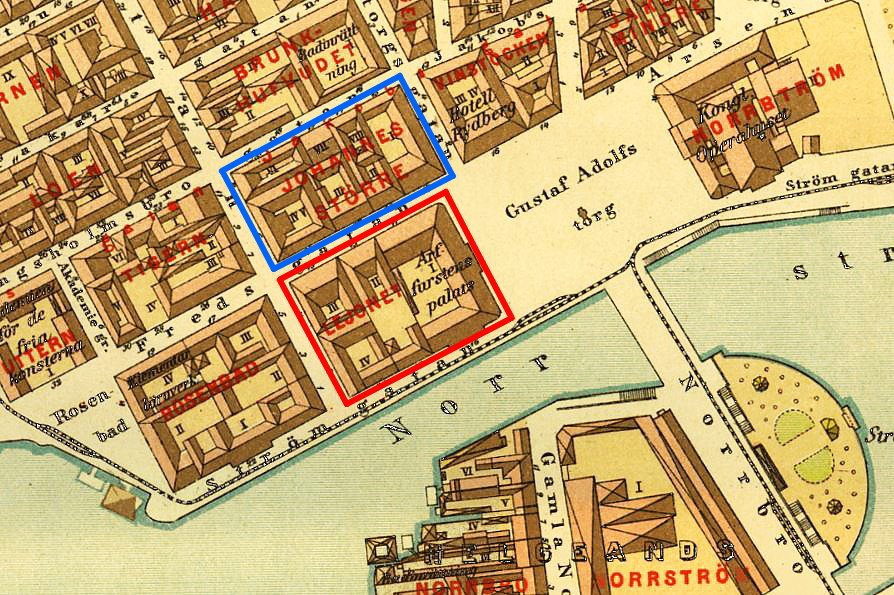
- Urban Setting: Located on Blasieholmen, the palace faces the National Museum and stands near Kungsträdgården, harmonizing with Stockholm’s noble urban landscape.
Interior
- Grand Reception Halls: The Riddarsalen and Oscarssalen are adorned with illusionistic ceiling paintings, stucco, and period chandeliers.
- Artistic Details: Trompe-l'œil, gilded woodwork, and imported materials like marble and Venetian mirrors.
- Historical Artifacts: Family portraits, Masonic archives, and fine decorative arts reflecting French and Dutch influences (Tessinsällskapet).
Visiting Hours and Ticket Information
- Visiting Hours: Bååtska Palatset does not have daily public opening hours. Guided tours are offered occasionally, typically on select dates or during cultural events. Check the official Freemasons website for the latest schedules.
- Tickets: Advance booking is required for tours. Tickets include access to key rooms and are available through the Freemasons’ official site or at designated visitor centers during events.
- Special Events: The palace often participates in Stockholm’s annual heritage days and festivals, when additional public access may be granted (Visit Stockholm).
Accessibility and Travel Tips
- Location: Blasieholmen, central Stockholm. Walking distance from the Royal Palace, National Museum, and Kungsträdgården.
- Public Transit: Closest metro station is Kungsträdgården; trams and buses also serve the area (Visit Stockholm Travel Info).
- Accessibility: Due to historic structures, accessibility is limited. Contact tour organizers in advance for specific needs.
- Photography: Generally not permitted inside, but allowed in exterior courtyards. Always check current policies.
Nearby Attractions
Within minutes of Bååtska Palatset, you can explore:
- National Museum: Sweden’s premier art and design collection.
- Royal Dramatic Theatre: Historic venue for performing arts.
- Gamla Stan: Stockholm’s medieval old town, filled with shops, cafés, and historic sites.
- Royal Palace and Storkyrkan: Essential stops for history enthusiasts.
Guided Tours and Events
- Guided Tours: Offered in Swedish and English, focusing on the palace’s history, architecture, and the role of Freemasonry. Advance booking is essential.
- Special Events: Look for special openings during Midsummer, European Heritage Days, and Stockholm’s cultural festivals (Visit Stockholm).
Seasonal Considerations
- Best Time to Visit: June offers long daylight hours and mild weather, ideal for exploring the palace’s exterior and gardens (Global Highlights).
- Photography: The golden hour near sunset is perfect for capturing the palace’s façade.
Photography and Visitor Etiquette
- Photography: Allowed on the exterior and in gardens; interior photography is often restricted.
- Conduct: Do not touch artworks or furnishings. Food and drink are not allowed inside. Supervise children and follow all posted guidelines.
FAQ
Q: Is Bååtska Palatset open to the public?
A: Public access is limited to guided tours and special events. Check the official website for openings.
Q: Are tickets required?
A: Yes, for tours and events. No ticket is needed for viewing the exterior or gardens.
Q: Is the palace accessible for visitors with disabilities?
A: Accessibility is limited due to stairs and uneven floors. Inquire in advance.
Q: Can I take photos inside?
A: Interior photography is generally prohibited; ask tour guides for details.
Q: What’s nearby to visit?
A: The National Museum, Royal Dramatic Theatre, Royal Palace, and other Gamla Stan attractions.
Listen to the full story in the app
Your Personal Curator, in Your Pocket.
Audio guides for 1,100+ cities across 96 countries. History, stories, and local insight — offline ready.
Audiala App
Available on iOS & Android
Join 50k+ Curators
Sources
- verified
- verified
- verified
- verified
- verified
- verified
Last reviewed: