landmark
Pyramids of Kush
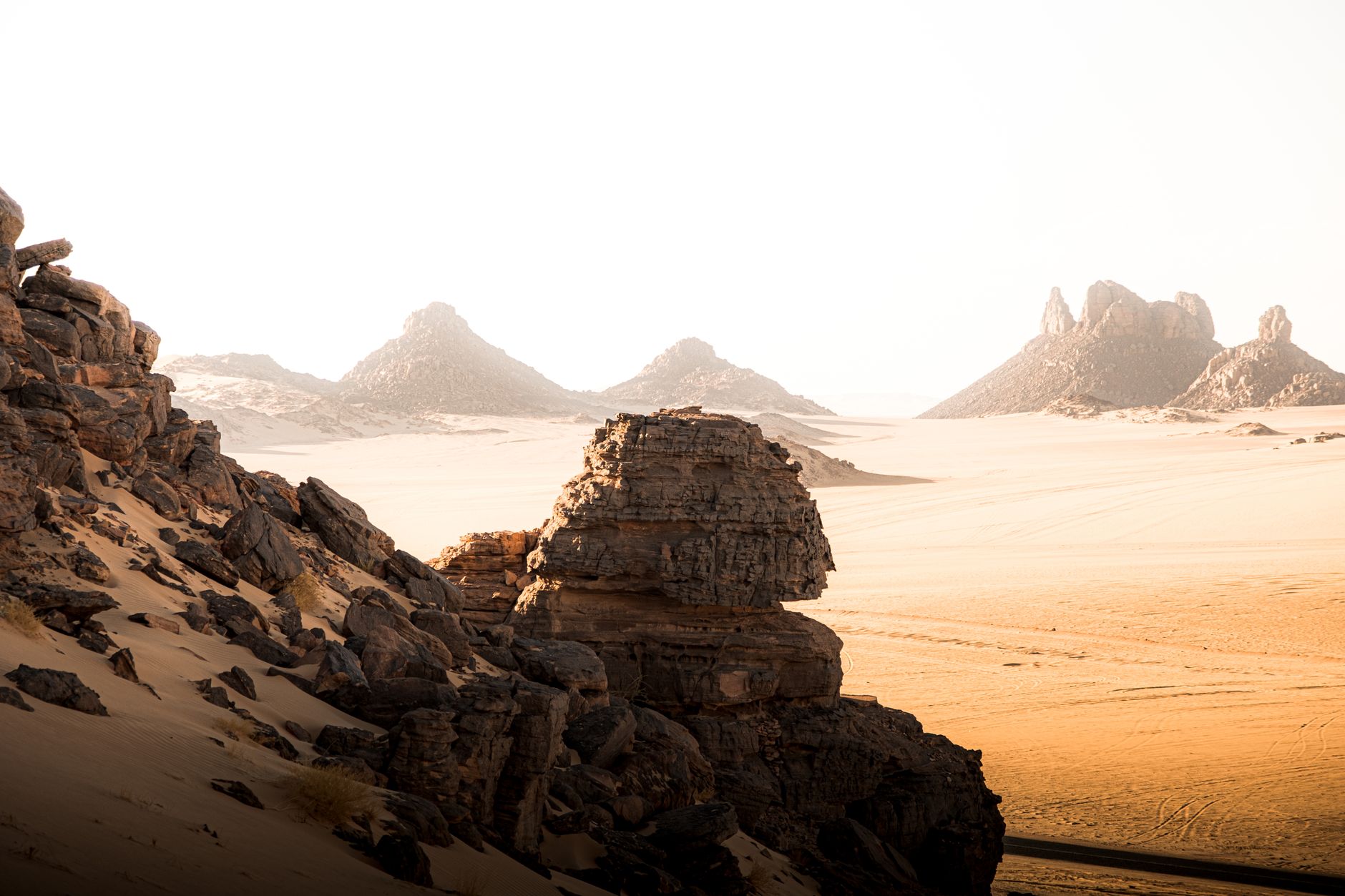
Meroe holds more than 200 steep-sided pyramids built between roughly 300 BCE and 350 CE. They rise from open desert with almost no visual clutter, which is why photographs from here look unreal even before sunrise.
Sudan is where the Nile carries you through rival kingdoms, one-eyed queens, Christian capitals, coral ports, and a pyramid field that still feels larger than its fame.
EntryVisa required in advance for most travelers
SSudan travel guide starts with a fact that resets the map: this country has more pyramids than Egypt, from Meroe to Jebel Barkal.
Sudan rewards travelers who care more about history than polish. The Nile corridor holds the remains of Kerma, the royal cemeteries of Meroe, the temple fields of Naqa and Musawwarat es-Sufra, and the sacred sandstone outcrop of Jebel Barkal, where Kushite rulers once claimed Egypt as well as Nubia. Khartoum and Omdurman add another layer: confluence, empire, Mahdist memory, markets, and the long afterlife of states built on the river.
The country also shifts hard by region. Port Sudan opens onto the Red Sea, with reefs and salt air instead of desert silence, while Suakin preserves a broken coral-stone port that still looks half lifted from the water. Farther north, Dongola and Kerma pull you into medieval Christian Nubia and far older kingdoms, where mud-brick monuments and black-topped pottery do more talking than restoration panels ever could.
Kingdoms of Kerma and Kush, c. 2500 BCE-350 CE
At sunrise in Kerma, the mud-brick deffufa still rises from the plain like a stranded fortress, all blunt mass and baked earth, older than many royal dreams that came later. This is where the story should begin: not with Egypt looking south, but with a Sudanese kingdom already rich in cattle, gold, and ceremony around 2500 BCE. Ce que l'on ignore souvent, c'est que Kerma was not a timid neighbor. It was a rival with its own court, its own rituals, and tombs so immense that power was measured in bodies laid around the dead.
The royal tumuli at Kerma remain hard to forget because they strip away every polite illusion about ancient kingship. Excavations found sacrificed attendants and animals arranged around the ruler, a theater of loyalty carried into death. One king, still nameless to us, was buried beneath a mound ringed by hundreds of graves. His biography is not written in words. It is written in the scale of fear.
Then came the great reversal. In the 8th century BCE, the rulers of Napata, near Jebel Barkal, did what imperial capitals seldom expect: they marched north and took Egypt. Piye presented himself less as a conqueror than as a stern restorer of order, scolding defeated princes for impiety and demanding ritual cleanliness before politics. One almost hears the royal sigh: win your battles if you must, but wash first.
Under Taharqa, the Kushite court reached a magnificence that stretched from Nubia to the Mediterranean world, before Assyrian power drove the dynasty back south. Yet Sudan's ancient brilliance did not end with retreat. It shifted to Meroe, where pyramids multiplied in the desert, ironworking flourished, and queens ruled with unnerving authority. Amanirenas fought Rome itself, and the bronze head of Augustus later found buried beneath a temple threshold at Meroe suggests a delicious insult: worshippers entered by stepping over the emperor's face.
Amanirenas, the one-eyed kandake of Meroe, turns antiquity into drama because she fought Augustus and kept enough strength to negotiate peace rather than beg for it.
The bronze head of Augustus discovered at Meroe was probably buried under a temple entrance so every visitor would trample Rome's emperor underfoot.
Christian Nubia, c. 350-1500
Picture Old Dongola at evening: mud walls cooling after the heat, church plaster catching the last light, Greek and Old Nubian texts copied by men who knew Cairo existed and did not bow to it. After Meroe declined, Sudan did not fall into a blank page. Three Christian kingdoms emerged along the Nile: Nobadia, Makuria, and Alwa. Their bishops, diplomats, and painters belonged to a world most travelers never expect to find between the pharaohs and the sultans.
The decisive scene came in 652 at Dongola. Arab armies advancing from Egypt met Makurian archers so accurate that medieval writers remembered eyes put out in battle, and the result was not total conquest but a treaty: the baqt. That agreement, uneasy yet durable, regulated trade and relations between Muslim Egypt and Christian Nubia for centuries. In a region often explained through conquest alone, Sudan forced coexistence.
Old Dongola became the great river capital of Makuria, and for several hundred years it held its ground with surprising tenacity. Courts married politics to liturgy, cathedrals rose above the Nile corridor, and painted saints stared from walls in colors that still survive in fragments. Ce que l'on ignore souvent, c'est que this was a literate statecraft, not a provincial echo. Letters moved, bishops argued, kings negotiated, and Sudan stood inside the medieval world on its own terms.
Then the long unwinding began. Trade patterns shifted, pressure from Mamluk Egypt increased, internal fractures deepened, and Islam spread gradually through towns, courts, and rural life rather than in one theatrical conversion. Soba, capital of Alwa near modern Khartoum, was described as vast and prosperous before it slipped into ruin. By the early 16th century, the Christian kingdoms had faded, but they left a habit of resilience that Sudanese history would repeat in other forms.
King Qalidurut of Makuria survives in memory as the ruler who faced the Arab invasion at Dongola and helped secure a treaty instead of a collapse.
Medieval Arab chroniclers were so struck by Nubian archery at Dongola that they described the defenders as specialists in blinding enemy soldiers.
Sultanates, Sennar, and the Red Sea World, c. 1500-1821
A letter sealed in Sennar, a caravan leaving Darfur with slaves, ostrich feathers, and gum arabic, a pilgrim ship edging out from Suakin into the Red Sea: this is the Sudan of the early modern centuries. Once the Christian kingdoms receded, power did not gather neatly in one pair of hands. It settled into sultanates, trading networks, and regional courts, above all the Funj Sultanate at Sennar and the Fur sultans of Darfur. The map became less monumental than Meroe, but more human and more politically slippery.
Sennar, founded in the early 16th century, sat on the Blue Nile and turned geography into authority. The Funj rulers oversaw a court where Islam, local custom, pastoral wealth, and military patronage mixed in unstable proportion. Not purity. Power. Ce que l'on ignore souvent, c'est que Sudan's Islamization was gradual and negotiated, carried by scholars, merchants, saints, marriages, and tax collectors rather than by one triumphant decree.
Farther west, Darfur developed its own logic under the Keira sultans. Ali Dinar would come later, but the older Darfuri state already connected central Africa to the Nile and the Hijaz through caravan routes that moved goods and people on a frightening scale. Slavery formed part of that system, and one should say so plainly. Elegance at court was paid for by coercion on the road.
Meanwhile Suakin, off the Red Sea coast near Port Sudan, became one of the great stage sets of the region: coral-block houses, Ottoman officials, merchants, pilgrims on their way to Mecca, and fortunes made in transit. The city looked almost weightless, white walls rising from the water, yet its wealth came from harsh realities as much as devotion. When the Ottoman and Egyptian gaze turned more sharply toward the Sudanese interior, the next chapter was already waiting.
Ali Dinar, though later than Sennar's first rulers, embodies this age's aristocratic instinct for survival: pious, proud, and always balancing local legitimacy against imperial pressure.
Suakin's famous houses were built from coral blocks cut from the Red Sea, which gave the city the eerie appearance of a palace assembled from reef and salt.
Conquest, Mahdists, and the Making of Modern Sudan, 1821-2023
In 1821, Muhammad Ali's Egyptian forces entered Sudan looking for soldiers, slaves, taxes, and gold, and they found a country too large to absorb politely. The Turkiyya, as Sudanese memory calls that era, brought new administration and harder extraction. Khartoum grew at the meeting of the Blue and White Nile into a garrison town, then a capital, because rivers make empires believe they can count everything. They never can.
The answer came from a man in a patched robe on Aba Island. In 1881, Muhammad Ahmad declared himself the Mahdi, the guided one, and turned religious expectation into political rebellion with astonishing speed. His followers took town after town, and in 1885 Khartoum fell after the long siege that ended with General Gordon dead and Europe scandalized. But the real capital of the Mahdist state became Omdurman, where rule was improvised under pressure, severe in discipline, and carried by belief as much as administration.
Ce que l'on ignore souvent, c'est que the Mahdiyya was not just an anti-colonial uprising wrapped in prophecy. It was also a social earthquake that lifted obscure men, frightened old elites, and demanded sacrifice from ordinary Sudanese on a brutal scale. After the Mahdi's early death, his successor Abdallahi ibn Muhammad held the state together longer than his enemies expected. Then came 1898, Kitchener, machine guns, and the battle of Omdurman, one of those moments when industrial violence tears the old military world to pieces in a single morning.
The Anglo-Egyptian Condominium that followed rebuilt authority while pretending partnership, shaping railways, schools, military hierarchies, and the capital's administrative geometry. Independence came in 1956, but the modern state inherited old fractures: center against periphery, army against civilians, Nile valley elites against regions asked to obey without being heard. Coups followed, then wars, then the long Islamist-authoritarian decades of Omar al-Bashir, then the 2019 uprising that filled Khartoum with courage, songs, and impossible hope. And then, in April 2023, Sudan entered another war, with Khartoum and Omdurman again turned into names of grief rather than government. History here does not sleep for long.
Muhammad Ahmad al-Mahdi remains compelling because he was, at once, a mystic, a strategist, and a man who persuaded exhausted people that history could be bent by faith.
After the Mahdist capture of Khartoum in 1885, Gordon's death became a British imperial legend, but in Sudanese memory the more decisive fact was simpler: an empire had been thrown out by men many Europeans had dismissed as impossible rebels.
In Sudan, speech does not open doors. It furnishes a room. In Khartoum and Omdurman, a greeting can outlast an impatient foreigner’s entire plan for the morning, and that is the point: health, family, sleep, heat, children, God, the state of your courage. A country reveals itself in the time it gives to hello.
Sudanese Arabic carries its neighbors inside it. Nubian memory, Beja cadence, river habits, desert restraint. Then a small expression appears and does more work than a paragraph: ya zoul, which can mean friend, man, accomplice, witness, fellow creature. One word. A whole anthropology.
The answer "nosnos" for so-so, half-half, may be the most elegant social invention I know. It says I am not triumphant, I am not collapsing, I remain among the living. Language here dislikes exhibition. It prefers proportion.
And then the names arrive like a second map: Kerma, Dongola, Meroe, Naqa, Jebel Barkal. Say them aloud and the consonants make their own archaeology. Some countries are understood through laws. Sudan begins with the mouth.
A Sudanese table does not flirt. It receives judgment in silence and wins anyway. Kisra looks almost too modest to matter, a thin fermented sheet of sorghum with the pliancy of cloth, until you tear it with your right hand and discover that bread can be utensil, grammar, and dignity at once.
Asida follows another logic. A mound. A crater. Then mullah waika or tagalia poured into the center, and the meal becomes architecture you dismantle with your fingers. Spoonless eating is never primitive. It is precise.
What seduces me is fermentation. The faint sourness of kisra, the dark spell of hilu-mur during Ramadan, the way old grain becomes brightness rather than decay. Sudan understands a truth Belgium also knows from beer and bread: time is an ingredient, and haste tastes poor.
In Omdurman, a breakfast of fuul with cumin, sesame oil, lime, and bread can make the entire day submit. In Port Sudan, fish insists on being counted. In the north, gurasa turns wheat into a thick, spongy answer to hunger. A country is a table set for strangers, but Sudan asks the stranger to learn the hand first.
Sudanese politeness has very little interest in your efficiency. Good. Efficiency is often just vanity wearing a watch. In a shop, in a family courtyard, beside a tea stand in Khartoum, people do not leap at the transaction as if money were the only adult in the room.
Respect shows itself in gradations. Elders first. Titles first. Refusal softened until it can be borne. One does not crash into another person’s day with opinions, demands, or that brisk Western cheerfulness which often resembles poor breeding with better dentistry.
The right hand matters at the table. Dress matters more than the careless traveler hopes. Public behavior also carries a moral temperature: affection lowered, voice lowered, appetite for spectacle lowered. Then the wedding comes, or the Eid visit, or the evening gathering stretches under a fan with tea and jokes, and the restraint turns suddenly sumptuous.
This is not contradiction. It is civilization. Sudanese etiquette knows that reserve gives luxury its shape.
Islam in Sudan is not a backdrop. It edits the day. The call to prayer, the dry-season light, the pause before eating, the refusals around alcohol, the language of patience and praise: each one places the body inside a larger order, and even a visitor who understands little will feel that order at work.
But religion here also has texture. Sufi processions, shrine visits, Qur'anic schools, white robes, hennaed palms, the quiet industry of Ramadan kitchens. Faith is public, yes, though not always theatrical. It can be heard in formulas of thanks, seen in the way people wait, and tasted in the dusk drink after a day of fasting.
I am moved by the word sabr as Sudanese life uses it. Patience is too weak a translation. Sabr is endurance with a spine, a refusal to make drama from hardship even when hardship would fully justify it. That is not passivity. It is moral muscle.
At Meroe and Jebel Barkal, older sanctities still hum under the Islamic present. Amun once ruled imaginations here; now mosques order the hours. Sudan does not erase its layers. It prays over them.
Sudan builds against sun first, vanity second. This produces one of the most intelligent architectures on earth. Thick mud walls in the Nile corridor, courtyards that keep a private climate, low openings, measured light, the date palm leaning over the domestic republic: comfort here is not decoration but engineering with dust and breath.
Then the country changes material as if changing language. In Suakin, coral-block houses rose from the Red Sea in a pale, porous fever, Ottoman balconies and collapsed walls standing over water that remembers trade, pilgrimage, and human cruelty. Ruin has few more photogenic accomplices than salt.
The ancient sites propose another temperament. At Kerma, the deffufa looks less like a building than an argument in mud brick. At Naqa and Musawwarat es-Sufra, temples stand in the open as if the desert had decided to think in columns. And Jebel Barkal does what sacred mountains always do: it makes nearby human work look both absurd and necessary.
Khartoum itself teaches a different lesson. Confluence is an architect too. Where the Blue Nile and White Nile meet, settlement spreads by negotiation with water, heat, and bureaucracy, which is to say with the three elements that defeat grand theories fastest.
Sudanese music loves the line between composure and trance. You hear it in wedding songs, in Sufi dhikr, in modern urban recordings shaped by oud, violin, percussion, and the particular tenderness of voices that do not need to shout in order to command. The body receives the rhythm before the mind has finished classifying it.
Omdurman remains one of the great listening posts. So much radio history, so many singers passing through, so much memory stored in song rather than archive. A capital of airwaves is still a capital.
I admire the white jalabiya for musical reasons as much as visual ones. It moves when the wearer claps, sways, or rises, and that movement gives rhythm a visible form. Clothing becomes percussion by other means.
Music in Sudan is rarely just entertainment. It escorts devotion, courts love, marks harvest, carries satire, survives exile. In Kassala or Khartoum, under a plastic chair and a bad speaker or in a more formal gathering with impeccable timing, the same fact returns: melody remembers what politics tries to damage.
Meroe holds more than 200 steep-sided pyramids built between roughly 300 BCE and 350 CE. They rise from open desert with almost no visual clutter, which is why photographs from here look unreal even before sunrise.
Jebel Barkal, Naqa, Musawwarat es-Sufra, and Kerma map the power of Kush across more than a millennium. You are not looking at an Egyptian copy on the margins, but at a kingdom that once sent pharaohs north to rule Egypt.
Khartoum sits where the Blue Nile meets the White Nile, and Omdurman keeps the denser pulse of market streets, Mahdist history, and everyday river life. Together they explain modern Sudan better than any clean national slogan could.
Port Sudan and Suakin show a different Sudan altogether: coral architecture, Ottoman traces, port traffic, and a coast built for merchants and pilgrims long before package tourism existed. Suakin's ruined island city is the kind of place that stays in your head because so much of it is still collapsing in public.
Sudan's great sites are often lightly interpreted, lightly fenced, and visually spare. For travelers who prefer wind, stone, distance, and the sense of finding history before the souvenir stalls arrive, that is the point.
12 cities — start with the ones we'd send you to first.
Where the Blue and White Nile physically merge into a single brown current, a confluence you can watch from a bridge while the call to prayer rolls across both banks simultaneously.
The city where the Mahdist army broke a British square in 1884 and where, every Friday at dusk, the Qadiriyya Sufi brotherhood still whirl themselves into trance at the tomb of Hamad el-Nil.
Two hundred pyramids steeper and smaller than Egypt's, rising from red sand with no fence and no crowd, close enough to touch the carved reliefs with your hand.
The old Nubian capital that outlasted three successive kingdoms and still sits on its Nile bend surrounded by date palms whose root systems drink directly from the river.
Ground zero of the earliest urban civilization in sub-Saharan Africa, where a mud-brick deffufa the size of a city block has been baking in the desert for four thousand years.
A Meroitic temple complex abandoned mid-construction in the 2nd century CE, sitting alone in open desert forty kilometres from the nearest road with lion-headed gods still facing east.
The Red Sea gateway where Sudanese coffee culture meets Yemeni fishing boats, and where the offshore reef walls drop sixty metres into water that almost nobody dives anymore.
A ghost city of Ottoman coral-block mansions dissolving slowly into the Red Sea, the only place on earth where an entire medieval port is being reclaimed grain by grain by the material it was built from.
A market town pressed against the Eritrean border beneath the Taka Mountains — granite domes that erupt vertically from flat plain — and the place where Sudanese tea ceremony is most elaborately observed.
Khartoum is where the Blue Nile and White Nile meet, and that geography still explains the city better than any slogan could. Pair it with Omdurman for markets, Mahdist history, and a more tactile street life; the two cities read best as one metropolitan argument carried across the river.
The north moves at river pace: date palms, mud-brick villages, old church sites, and long road stretches where the Nile suddenly turns up again like a lifeline. Dongola and Kerma make sense together because they show two different Sudans, one Christian and medieval, the other far older and built for royal power.
Around Jebel Barkal, the desert and the cult of kings are still in direct conversation. This is the landscape of Napata, with temples, pyramids, and sandstone outcrops that explain why rulers linked this bend of the Nile to Amun and imperial legitimacy.
This is the Sudan most travelers imagine first, and for once the famous image is justified. Meroe, Naqa, and Musawwarat es-Sufra sit far enough apart to feel expeditionary, yet close enough to form a coherent circuit through pyramid fields, temple ruins, and open gravel desert.
Port Sudan is practical first and scenic second, which is exactly why it works as a base. From here you get the country's maritime face: ferries, freight, reef traffic, and a day trip to Suakin, where coral-block ruins rise out of the shallows with the air of a city that expected history to stay longer.
Kassala and El-Obeid belong to different horizons, but both mark Sudan's inward-looking trade geography rather than its pharaonic postcard. Kassala sits against the Taka Mountains with a strong eastern identity, while El-Obeid opens Kordofan, where routes, livestock, and market towns have long mattered more than monuments.
From Kerma's royal tumuli to the war that returned Khartoum to the front line
Kerma grows into one of the earliest urban centers in sub-Saharan Africa, commanding trade, cattle wealth, and royal ritual deep in Nubia. Its rulers are mostly anonymous by name, but their deffufas and enormous burial mounds still speak with unnerving confidence.
Egyptian campaigns push deep into Nubia and install the office later known as the Viceroy of Kush. Sudan becomes a frontier of empire, but also a source of gold, archers, and ideas that will one day move north again.
From Napata near Jebel Barkal, Piye defeats rival Egyptian rulers and founds the Kushite Twenty-Fifth Dynasty. Sudan does not merely resist empire here; it exports a pharaoh.
Taharqa becomes the most famous Kushite pharaoh, ruling a kingdom that stretches from Nubia into Egypt. His later retreat south after Assyrian victories gives his story its tragic grandeur.
The political heart of Kush moves to Meroe, where pyramids, workshops, and long-distance trade reshape the Sudanese state. This is the age of iron, royal women, and a court with its own script and style.
Queen Amanirenas leads Kushite resistance against Roman Egypt after clashes on the southern frontier of Augustus's empire. The peace that follows leaves Meroe intact, which is no small achievement when Rome is involved.
The old Meroitic order fades, and new political forms begin to take shape along the Nile. What follows is not a dark pause, but the slow birth of Christian Nubia.
Missionary activity and royal conversion help establish the first of the Christian Nubian kingdoms. Over time, Nobadia, Makuria, and Alwa will turn medieval Sudan into a world of churches, bishops, and painted walls.
Arab forces advancing from Egypt fail to impose a quick conquest at Dongola. The resulting baqt treaty creates one of the medieval world's most durable arrangements between a Muslim state and a Christian kingdom.
Mamluk intervention and internal strain weaken Makuria, and the balance that had preserved Christian Nubia begins to fail. Islam spreads gradually through courts, trade, and settlement rather than in one dramatic rupture.
The Funj Sultanate establishes its capital at Sennar on the Blue Nile, creating a new center of Sudanese power. This courtly world mixes Islam, regional alliances, tax systems, and pastoral wealth in restless combination.
Muhammad Ali's forces invade Sudan, launching the era remembered as the Turkiyya. Khartoum starts its climb from strategic outpost to administrative capital at the meeting of the White and Blue Nile.
On Aba Island, Muhammad Ahmad proclaims himself the Mahdi and ignites a revolt that fuses religion, social anger, and anti-colonial force. Sudan's political center will soon move from Khartoum to Omdurman.
After a long siege, Mahdist forces capture Khartoum and kill General Gordon. Europe turns the episode into imperial melodrama, while Sudan enters a new phase under rulers who had just overthrown the old order.
Kitchener's army destroys Mahdist forces outside Omdurman with industrial firepower on a devastating scale. The battle marks not only reconquest, but the brutal arrival of a new military age.
Britain and Egypt establish joint rule over Sudan, though the balance of power is plain enough in practice. Railways, bureaucracy, and colonial hierarchies leave marks that will outlive the flags flying above them.
On 1 January 1956, Sudan formally gains independence and Ismail al-Azhari becomes the first prime minister of the new state. The celebration is real, but so are the unresolved regional and political fractures built into the inheritance.
A military coup brings Omar al-Bashir to power and ushers in three decades of authoritarian rule shaped by war, repression, and Islamist statecraft. Modern Sudan begins to harden under a new official language of control.
Mass protests centered in Khartoum and beyond force Bashir from office after months of extraordinary civic mobilization. For a brief moment, the streets suggest that Sudan might finally escape the old cycle of barracks and decrees.
Fighting erupts between the Sudanese Armed Forces and the Rapid Support Forces in April 2023, devastating Khartoum, Omdurman, and other cities. The capital that once symbolized state authority becomes, once again, a battlefield.
Kingdoms of Kerma and Kush
Amanirenas, the one-eyed kandake of Meroe, turns antiquity into drama because she fought Augustus and kept enough strength to negotiate peace rather than beg for it.
At sunrise in Kerma, the mud-brick deffufa still rises from the plain like a stranded fortress, all blunt mass and baked earth, older than many royal dreams that came later. This is where the story should begin: not with Egypt looking south, but with a Sudanese kingdom already rich in cattle, gold, and ceremony around 2500 BCE. Ce que l'on ignore souvent, c'est que Kerma was not a timid neighbor. It was a rival with its own court, its own rituals, and tombs so immense that power was measured in bodies laid around the dead.
The royal tumuli at Kerma remain hard to forget because they strip away every polite illusion about ancient kingship. Excavations found sacrificed attendants and animals arranged around the ruler, a theater of loyalty carried into death. One king, still nameless to us, was buried beneath a mound ringed by hundreds of graves. His biography is not written in words. It is written in the scale of fear.
Then came the great reversal. In the 8th century BCE, the rulers of Napata, near Jebel Barkal, did what imperial capitals seldom expect: they marched north and took Egypt. Piye presented himself less as a conqueror than as a stern restorer of order, scolding defeated princes for impiety and demanding ritual cleanliness before politics. One almost hears the royal sigh: win your battles if you must, but wash first.
Under Taharqa, the Kushite court reached a magnificence that stretched from Nubia to the Mediterranean world, before Assyrian power drove the dynasty back south. Yet Sudan's ancient brilliance did not end with retreat. It shifted to Meroe, where pyramids multiplied in the desert, ironworking flourished, and queens ruled with unnerving authority. Amanirenas fought Rome itself, and the bronze head of Augustus later found buried beneath a temple threshold at Meroe suggests a delicious insult: worshippers entered by stepping over the emperor's face.
The bronze head of Augustus discovered at Meroe was probably buried under a temple entrance so every visitor would trample Rome's emperor underfoot.
Christian Nubia
King Qalidurut of Makuria survives in memory as the ruler who faced the Arab invasion at Dongola and helped secure a treaty instead of a collapse.
Picture Old Dongola at evening: mud walls cooling after the heat, church plaster catching the last light, Greek and Old Nubian texts copied by men who knew Cairo existed and did not bow to it. After Meroe declined, Sudan did not fall into a blank page. Three Christian kingdoms emerged along the Nile: Nobadia, Makuria, and Alwa. Their bishops, diplomats, and painters belonged to a world most travelers never expect to find between the pharaohs and the sultans.
The decisive scene came in 652 at Dongola. Arab armies advancing from Egypt met Makurian archers so accurate that medieval writers remembered eyes put out in battle, and the result was not total conquest but a treaty: the baqt. That agreement, uneasy yet durable, regulated trade and relations between Muslim Egypt and Christian Nubia for centuries. In a region often explained through conquest alone, Sudan forced coexistence.
Old Dongola became the great river capital of Makuria, and for several hundred years it held its ground with surprising tenacity. Courts married politics to liturgy, cathedrals rose above the Nile corridor, and painted saints stared from walls in colors that still survive in fragments. Ce que l'on ignore souvent, c'est que this was a literate statecraft, not a provincial echo. Letters moved, bishops argued, kings negotiated, and Sudan stood inside the medieval world on its own terms.
Then the long unwinding began. Trade patterns shifted, pressure from Mamluk Egypt increased, internal fractures deepened, and Islam spread gradually through towns, courts, and rural life rather than in one theatrical conversion. Soba, capital of Alwa near modern Khartoum, was described as vast and prosperous before it slipped into ruin. By the early 16th century, the Christian kingdoms had faded, but they left a habit of resilience that Sudanese history would repeat in other forms.
Medieval Arab chroniclers were so struck by Nubian archery at Dongola that they described the defenders as specialists in blinding enemy soldiers.
Sultanates, Sennar, and the Red Sea World
Ali Dinar, though later than Sennar's first rulers, embodies this age's aristocratic instinct for survival: pious, proud, and always balancing local legitimacy against imperial pressure.
A letter sealed in Sennar, a caravan leaving Darfur with slaves, ostrich feathers, and gum arabic, a pilgrim ship edging out from Suakin into the Red Sea: this is the Sudan of the early modern centuries. Once the Christian kingdoms receded, power did not gather neatly in one pair of hands. It settled into sultanates, trading networks, and regional courts, above all the Funj Sultanate at Sennar and the Fur sultans of Darfur. The map became less monumental than Meroe, but more human and more politically slippery.
Sennar, founded in the early 16th century, sat on the Blue Nile and turned geography into authority. The Funj rulers oversaw a court where Islam, local custom, pastoral wealth, and military patronage mixed in unstable proportion. Not purity. Power. Ce que l'on ignore souvent, c'est que Sudan's Islamization was gradual and negotiated, carried by scholars, merchants, saints, marriages, and tax collectors rather than by one triumphant decree.
Farther west, Darfur developed its own logic under the Keira sultans. Ali Dinar would come later, but the older Darfuri state already connected central Africa to the Nile and the Hijaz through caravan routes that moved goods and people on a frightening scale. Slavery formed part of that system, and one should say so plainly. Elegance at court was paid for by coercion on the road.
Meanwhile Suakin, off the Red Sea coast near Port Sudan, became one of the great stage sets of the region: coral-block houses, Ottoman officials, merchants, pilgrims on their way to Mecca, and fortunes made in transit. The city looked almost weightless, white walls rising from the water, yet its wealth came from harsh realities as much as devotion. When the Ottoman and Egyptian gaze turned more sharply toward the Sudanese interior, the next chapter was already waiting.
Suakin's famous houses were built from coral blocks cut from the Red Sea, which gave the city the eerie appearance of a palace assembled from reef and salt.
Conquest, Mahdists, and the Making of Modern Sudan
Muhammad Ahmad al-Mahdi remains compelling because he was, at once, a mystic, a strategist, and a man who persuaded exhausted people that history could be bent by faith.
In 1821, Muhammad Ali's Egyptian forces entered Sudan looking for soldiers, slaves, taxes, and gold, and they found a country too large to absorb politely. The Turkiyya, as Sudanese memory calls that era, brought new administration and harder extraction. Khartoum grew at the meeting of the Blue and White Nile into a garrison town, then a capital, because rivers make empires believe they can count everything. They never can.
The answer came from a man in a patched robe on Aba Island. In 1881, Muhammad Ahmad declared himself the Mahdi, the guided one, and turned religious expectation into political rebellion with astonishing speed. His followers took town after town, and in 1885 Khartoum fell after the long siege that ended with General Gordon dead and Europe scandalized. But the real capital of the Mahdist state became Omdurman, where rule was improvised under pressure, severe in discipline, and carried by belief as much as administration.
Ce que l'on ignore souvent, c'est que the Mahdiyya was not just an anti-colonial uprising wrapped in prophecy. It was also a social earthquake that lifted obscure men, frightened old elites, and demanded sacrifice from ordinary Sudanese on a brutal scale. After the Mahdi's early death, his successor Abdallahi ibn Muhammad held the state together longer than his enemies expected. Then came 1898, Kitchener, machine guns, and the battle of Omdurman, one of those moments when industrial violence tears the old military world to pieces in a single morning.
The Anglo-Egyptian Condominium that followed rebuilt authority while pretending partnership, shaping railways, schools, military hierarchies, and the capital's administrative geometry. Independence came in 1956, but the modern state inherited old fractures: center against periphery, army against civilians, Nile valley elites against regions asked to obey without being heard. Coups followed, then wars, then the long Islamist-authoritarian decades of Omar al-Bashir, then the 2019 uprising that filled Khartoum with courage, songs, and impossible hope. And then, in April 2023, Sudan entered another war, with Khartoum and Omdurman again turned into names of grief rather than government. History here does not sleep for long.
After the Mahdist capture of Khartoum in 1885, Gordon's death became a British imperial legend, but in Sudanese memory the more decisive fact was simpler: an empire had been thrown out by men many Europeans had dismissed as impossible rebels.
In Sudan, speech does not open doors. It furnishes a room. In Khartoum and Omdurman, a greeting can outlast an impatient foreigner’s entire plan for the morning, and that is the point: health, family, sleep, heat, children, God, the state of your courage. A country reveals itself in the time it gives to hello.
Sudanese Arabic carries its neighbors inside it. Nubian memory, Beja cadence, river habits, desert restraint. Then a small expression appears and does more work than a paragraph: ya zoul, which can mean friend, man, accomplice, witness, fellow creature. One word. A whole anthropology.
The answer "nosnos" for so-so, half-half, may be the most elegant social invention I know. It says I am not triumphant, I am not collapsing, I remain among the living. Language here dislikes exhibition. It prefers proportion.
And then the names arrive like a second map: Kerma, Dongola, Meroe, Naqa, Jebel Barkal. Say them aloud and the consonants make their own archaeology. Some countries are understood through laws. Sudan begins with the mouth.
A Sudanese table does not flirt. It receives judgment in silence and wins anyway. Kisra looks almost too modest to matter, a thin fermented sheet of sorghum with the pliancy of cloth, until you tear it with your right hand and discover that bread can be utensil, grammar, and dignity at once.
Asida follows another logic. A mound. A crater. Then mullah waika or tagalia poured into the center, and the meal becomes architecture you dismantle with your fingers. Spoonless eating is never primitive. It is precise.
What seduces me is fermentation. The faint sourness of kisra, the dark spell of hilu-mur during Ramadan, the way old grain becomes brightness rather than decay. Sudan understands a truth Belgium also knows from beer and bread: time is an ingredient, and haste tastes poor.
In Omdurman, a breakfast of fuul with cumin, sesame oil, lime, and bread can make the entire day submit. In Port Sudan, fish insists on being counted. In the north, gurasa turns wheat into a thick, spongy answer to hunger. A country is a table set for strangers, but Sudan asks the stranger to learn the hand first.
Sudanese politeness has very little interest in your efficiency. Good. Efficiency is often just vanity wearing a watch. In a shop, in a family courtyard, beside a tea stand in Khartoum, people do not leap at the transaction as if money were the only adult in the room.
Respect shows itself in gradations. Elders first. Titles first. Refusal softened until it can be borne. One does not crash into another person’s day with opinions, demands, or that brisk Western cheerfulness which often resembles poor breeding with better dentistry.
The right hand matters at the table. Dress matters more than the careless traveler hopes. Public behavior also carries a moral temperature: affection lowered, voice lowered, appetite for spectacle lowered. Then the wedding comes, or the Eid visit, or the evening gathering stretches under a fan with tea and jokes, and the restraint turns suddenly sumptuous.
This is not contradiction. It is civilization. Sudanese etiquette knows that reserve gives luxury its shape.
Islam in Sudan is not a backdrop. It edits the day. The call to prayer, the dry-season light, the pause before eating, the refusals around alcohol, the language of patience and praise: each one places the body inside a larger order, and even a visitor who understands little will feel that order at work.
But religion here also has texture. Sufi processions, shrine visits, Qur'anic schools, white robes, hennaed palms, the quiet industry of Ramadan kitchens. Faith is public, yes, though not always theatrical. It can be heard in formulas of thanks, seen in the way people wait, and tasted in the dusk drink after a day of fasting.
I am moved by the word sabr as Sudanese life uses it. Patience is too weak a translation. Sabr is endurance with a spine, a refusal to make drama from hardship even when hardship would fully justify it. That is not passivity. It is moral muscle.
At Meroe and Jebel Barkal, older sanctities still hum under the Islamic present. Amun once ruled imaginations here; now mosques order the hours. Sudan does not erase its layers. It prays over them.
Sudan builds against sun first, vanity second. This produces one of the most intelligent architectures on earth. Thick mud walls in the Nile corridor, courtyards that keep a private climate, low openings, measured light, the date palm leaning over the domestic republic: comfort here is not decoration but engineering with dust and breath.
Then the country changes material as if changing language. In Suakin, coral-block houses rose from the Red Sea in a pale, porous fever, Ottoman balconies and collapsed walls standing over water that remembers trade, pilgrimage, and human cruelty. Ruin has few more photogenic accomplices than salt.
The ancient sites propose another temperament. At Kerma, the deffufa looks less like a building than an argument in mud brick. At Naqa and Musawwarat es-Sufra, temples stand in the open as if the desert had decided to think in columns. And Jebel Barkal does what sacred mountains always do: it makes nearby human work look both absurd and necessary.
Khartoum itself teaches a different lesson. Confluence is an architect too. Where the Blue Nile and White Nile meet, settlement spreads by negotiation with water, heat, and bureaucracy, which is to say with the three elements that defeat grand theories fastest.
Sudanese music loves the line between composure and trance. You hear it in wedding songs, in Sufi dhikr, in modern urban recordings shaped by oud, violin, percussion, and the particular tenderness of voices that do not need to shout in order to command. The body receives the rhythm before the mind has finished classifying it.
Omdurman remains one of the great listening posts. So much radio history, so many singers passing through, so much memory stored in song rather than archive. A capital of airwaves is still a capital.
I admire the white jalabiya for musical reasons as much as visual ones. It moves when the wearer claps, sways, or rises, and that movement gives rhythm a visible form. Clothing becomes percussion by other means.
Music in Sudan is rarely just entertainment. It escorts devotion, courts love, marks harvest, carries satire, survives exile. In Kassala or Khartoum, under a plastic chair and a bad speaker or in a more formal gathering with impeccable timing, the same fact returns: melody remembers what politics tries to damage.
Piye turned Sudanese power into a Nile-wide monarchy when he marched north from Napata and took Egypt in the 8th century BCE. His victory stela does not sound like a brute's boast; it sounds like a ruler offended by bad ritual, which tells you a great deal about how Kush wanted to be seen.
Taharqa is the grand prince of Sudanese antiquity: temple builder, imperial player, and the most famous of the so-called Black Pharaohs. Assyria drove him from Egypt, but he died and was buried back in Nubia, which gives his story its proper center of gravity.
Amanirenas is remembered as the one-eyed queen who fought Augustus and did not collapse into legend because the evidence is too stubborn. Her Kushite forces struck Roman territory, and the peace that followed was negotiated, not begged for.
Amanishakheto became famous twice: first as a ruler of Meroe, then as the victim of one of archaeology's ugliest treasure hunts. When Giuseppe Ferlini blasted into her pyramid in 1834 and found magnificent gold jewelry, some Europeans doubted it was real because they could not imagine such work coming from an African court.
Qalidurut stands at the hinge of medieval Sudan, when Arab armies pushed south and Makuria refused to break at Dongola. Tradition credits him with helping secure the baqt, the treaty that preserved a Christian Nubian kingdom for centuries.
Muhammad Ahmad was not born to dynastic splendor, which makes his rise all the more dramatic. In four years he transformed prophecy into government, overthrew Egyptian rule, and shifted the center of power from Khartoum to Omdurman before dying at the height of his triumph.
Abdallahi inherited a state built on revelation and had to run it like a government, which is a cruel assignment for any man. He kept the Mahdist state alive under siege, famine, and factional strain until Kitchener's reconquest crushed it.
Ali Dinar was one of the last Sudanese rulers to play the old aristocratic game of autonomy under imperial pressure. He restored the Darfur sultanate, sent gifts to the holy cities, and lasted until British forces killed him in 1916, closing one of Sudan's last independent courts.
Ismail al-Azhari belongs to that difficult moment when flags rise faster than institutions. He stood at the front of Sudan's independence in 1956, but the state he helped launch carried unresolved tensions that would haunt every decade after.
Fatima Ahmed Ibrahim brought another Sudan into view: urban, intellectual, female, and impatient with the idea that politics belonged to men in uniform or men in turbans. Her career reminds you that Sudanese history is not only a sequence of rulers and battles, but also of women who fought to widen the country's moral horizon.
This is the shortest route that still feels like a journey rather than an airport transfer. Base yourself in Port Sudan for logistics and the coast, then make the short run south to Suakin for coral-stone ruins, Ottoman traces, and one of the strangest old ports on the Red Sea.
This is Sudan's cleanest archaeological week: pyramids first, then the temple complexes further east where the desert keeps its own silence. Meroe gives you the iconic skyline, while Naqa and Musawwarat es-Sufra show how large the Kushite world really was once you leave the postcard angle behind.
Northern Sudan rewards patience more than speed. This route follows the Nile through old Nubia, pairing Kerma's deep antiquity with Dongola's Christian afterlife and finishing at Jebel Barkal, where the sacred mountain still dominates the river plain like a stage set built for kings.
This is the route for travelers who want living Sudan as much as ancient Sudan. Khartoum and Omdurman give you the Nile confluence, markets, and the political weight of the present, while El-Obeid opens the Kordofan horizon, where trade routes, savanna edges, and long-distance road culture still shape the mood.
Right hand tears. Okra stew coats. Family eats from one tray.
Breakfast or iftar. Fingers pinch from the rim. Meat sauce fills the crater.
Morning hunger meets beans, cumin, lime, sesame oil. Bread scoops. Conversation continues.
Northern table. Pancake tears. Yogurt, garlic, onion, cumin, oil follow.
Ramadan dusk. Sorghum drink cools the mouth. Women brew, soak, strain, serve.
Charcoal glows. Kettle hisses. City life pauses, drinks, watches, resumes.
Evening smoke, lamb, friends, standing plates. Meat arrives fast and disappears faster.




Most travelers need a visa in advance, and current official guidance points to slow processing, sometimes up to two months. Your passport should have at least six months' validity and two blank pages, and many visitors must also register within three days of arrival; hotels in Khartoum or Port Sudan may handle that for a fee.
Sudan runs on cash. The currency is the Sudanese pound, but foreign bank cards and international ATMs are not dependable for visitors, so bring enough post-2006 US dollars in clean notes to cover the full trip and exchange carefully.
Port Sudan is the only entry point that multiple official advisories still describe as handling limited international civilian flights with any regularity. Khartoum has had shifting reports on reopening and closure, so treat any schedule there as provisional until the airline and your embassy both confirm it.
Domestic movement depends on permits, fuel, and the security picture more than on distance alone. Outside Khartoum, Omdurman, Port Sudan, Meroe, or Dongola, many travelers rely on a local fixer, driver, or hotel-arranged transport because rules can change by state with little warning.
November to February is the workable window for most routes, with northern desert sites like Meroe and Jebel Barkal usually far easier to handle then. From May to September, heat can push past 45C, dust storms cut visibility, and seasonal flooding can disrupt roads around Khartoum and the Nile corridor.
Expect patchy mobile data, power cuts, and sudden service interruptions rather than reliable all-day coverage. Buy a local SIM if networks are functioning, download offline maps before leaving Port Sudan or Khartoum, and do not assume hotel Wi-Fi will support calls, uploads, or card payments.
As of 20 April 2026, official advice from the US, UK, Canada, and Australia is to avoid travel to Sudan because of armed conflict, drone attacks, kidnapping risk, and collapsed services. If you go anyway, keep plans narrow, monitor embassy updates daily, and build every route around exit options rather than wishful timing.
Bring more cash than you would for a comparable trip in Egypt or Jordan. Cards may fail completely, and money changers often prefer newer US dollar notes without marks or folds.
Do not assume a hotel booking means you can freely move between states. Travel permits outside Khartoum or beyond Red Sea State can still matter, and the rule can change faster than the road conditions.
Choose hotels that confirm registration help, airport transfers, and late cancellation in writing. In Sudan, a room with reliable water, a generator, and someone who answers the phone is worth more than a polished website.
Use the first hours after sunrise for long drives and site visits. Heat builds fast at Meroe, Naqa, and Jebel Barkal, and afternoon dust can turn a simple road day into a slow one.
Offline maps, embassy contacts, and scanned passport pages should be on your phone before you leave Port Sudan or Khartoum. Mobile data can disappear without warning, and hotel Wi-Fi is often too weak to rescue poor planning.
Dress conservatively, greet people properly, and use your right hand for eating and passing items. In Khartoum, Omdurman, and smaller towns alike, politeness is measured in time given, not in speed.
Keep every route reversible. If a road closes or a flight is canceled, you want enough cash, water, fuel margin, and local contacts to get back to Port Sudan or your last secure base without improvising under pressure.
Explore Sudan with a personal guide in your pocket
Audio guides for 1,100+ cities across 96 countries. History, stories, and local insight — offline ready.

No, not by normal leisure-travel standards. As of 20 April 2026, official advice from the US, UK, Canada, and Australia is to avoid travel because of armed conflict, drone attacks, kidnapping risk, and the collapse of basic services, so any trip needs a contingency plan from day one.
Yes, you should assume you need a visa in advance. Current official guidance also points to slow processing, six months of passport validity, and possible registration within three days of arrival, with extra movement permits needed for travel beyond Khartoum or certain states.
Yes, but only in a limited and unstable way. Port Sudan is the only airport that multiple official advisories still describe as handling international civilian flights with any consistency, while Khartoum's status has shifted across advisories and airline notices.
No, you should plan as if you cannot. Foreign cards are widely reported as unusable, international ATMs are not dependable, and even where mobile service works, payment infrastructure often does not.
November to February is the practical season for most routes. Temperatures are easier in the north, the desert sites around Meroe and Naqa are more manageable, and you are less likely to deal with the worst heat, dust storms, or flood disruptions around Khartoum.
Often, yes. Official travel advice indicates that permits may be required outside Khartoum and that state-level rules can vary, including extra restrictions in Red Sea State, so check before moving toward Port Sudan, Dongola, or the archaeological zones.
Yes, if archaeology is the point and you understand the risks. Meroe, Naqa, Musawwarat es-Sufra, Kerma, and Jebel Barkal give Sudan one of the strongest ancient-history circuits in Africa, with far fewer visitors than the better-known Nile sites farther north.
Yes, mainly as a coastal base rather than as a polished city break. Port Sudan works best when paired with Suakin, harbor life, fish markets, and the Red Sea atmosphere rather than treated as a destination that will entertain you on looks alone.
Sudan uses Type C and Type G plugs on 230V, 50Hz. Bring a universal adapter and a power bank, because even when the socket fits, power cuts and weak hotel backup systems are common.
Last reviewed