Sri Jayawardenepura Kotte
Sri Lanka Updated Apr 2026
Sri Jayawardenepura Kotte is a capital that whispers. You won't find the chaotic energy of Colombo here, just the quiet echo of footsteps in parliamentary halls and the rustle of marsh reeds in protected wetlands. This is Sri Lanka's legislative brain, a deliberate city of calm built on the watery foundations of a 13th-century fortress.
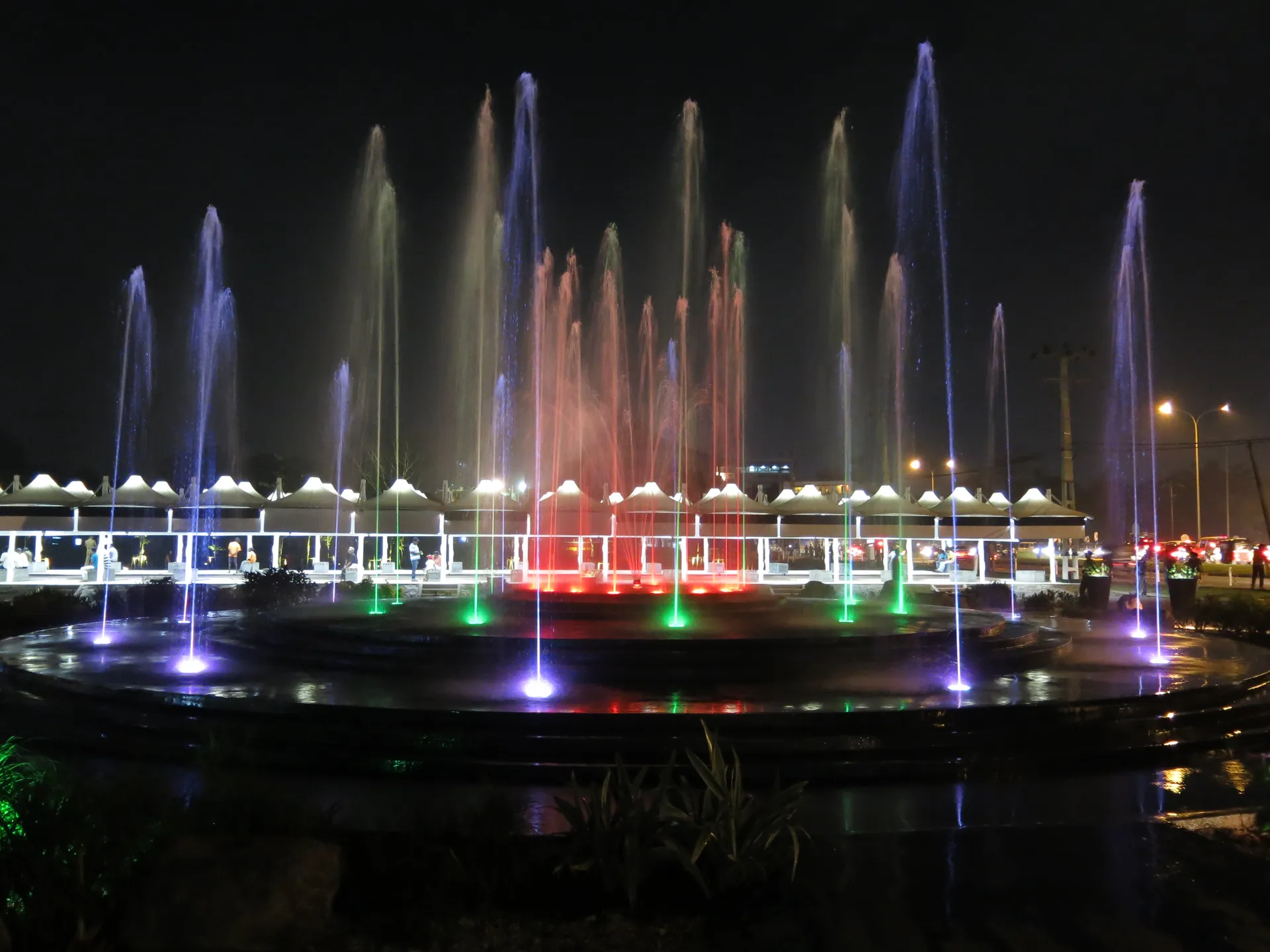 Photo: Hansa Nanayakkara · CC BY-SA 3.0
- Attractions
- 2
- Trip length
- 1 day
- Best season
- December to March
Why Sri Jayawardenepura Kotte
Built from cited sources · see the method · How we make our guides →
The city's modern identity began with a chicken farm. The 12-acre island that now holds Geoffrey Bawa's magnificent Parliament Complex was, until the 1970s, a poultry operation owned by a man named E.W. Perera. Before that, Portuguese soldiers used it as a drinking spot, a place to escape the alcohol ban of the royal city. Bawa reclaimed the swamp, turning it into a jala durgha—a water fortress—for a new republic.
Kotte has always been defined by concealment. In 1505, when Portuguese envoys first approached, local guides led them on a three-day circuitous route from Colombo to hide the capital's true location. The phrase 'to go to Kotte' entered Sinhalese as an idiom for taking the long way round. That sense of a place just out of view persists. The city feels like a secret kept from its louder neighbor.
Walk the boardwalks of Beddagana Wetland Park and you'll hear the city's ancient pulse. This isn't a manicured garden; it's a surviving piece of the marshes that once formed a natural triangle of defense. The light here is soft, filtered through tall grass, and the air carries the mineral scent of still water. It’s a reminder that all of Kotte, even its modern government blocks, rests on this slow, wet earth.
A Capital in a Swamp
Parliament sits on Duwa Island, a 12-acre speck of reclaimed swampland in Lake Diyawanna Oya. Geoffrey Bawa's design turns necessity into poetry, a government complex you reach by boat, built where Portuguese soldiers once came to drink.The Fortress That Wasn't
In 1505, Portuguese envoys were led on a three-day, circuitous route from Colombo to hide the city's location. The phrase 'to go to Kotte' entered Sinhalese as an idiom for taking the long way around.Urban Wetlands
The city's original 13th-century defense was its marshy, triangular shape. That legacy survives in places like Beddagana Wetland Park, where boardwalks let you walk through the same reeds that once guarded a kingdom.
Neighborhoods
Where to wander, by quarter — each with its own rhythm.
Parliament Complex & Duwa Island
This is the city's monumental heart. Geoffrey Bawa's Parliament building rises from a man-made island in Lake Diyawanna Oya, a 50,000-square-meter statement in white and geometric form. Access is by bridge or boat. The scale is immense, the lines clean against the Sri Lankan sky. It feels less like a seat of power and more like a temple to modern governance, isolated and serene.Beddagana
Come here to breathe. The Beddagana Wetland Park is a carefully preserved slice of the marshes that once made Kotte an impregnable fortress. Well-maintained boardwalks let you move silently through reeds taller than a person. You'll see water monitors sliding into dark channels and hear a chorus of frog calls. It’s the city's green lung, and the most direct connection to its ancient, watery origins.Ethul Kotte
This area holds fragments of the old royal city. Look for the remnants of laterite ramparts—walls 2.5 meters high and over 10 meters wide, built from a material called kabook. They’re often hidden behind modern houses or overgrown with vines. This is where the King's palace stood, its walls said to be made of quartz. You have to search for history here. It doesn't announce itself.Bataramulla
The administrative engine room. This is where many of the government ministries and departments relocated from Colombo have settled. The architecture is functional, mid-20th century concrete. The rhythm of life follows the official workday: quiet in the early morning, a brief rush at lunch, then emptying out by six. It feels orderly, purposeful, and slightly anonymous—a district built for work, not for show.Pita Kotte
A residential quarter with a lived-in feel. The streets are quieter, lined with houses behind garden walls. You'll find local shops, neighborhood temples, and the everyday rhythm of family life. This is where many who work in the government buildings actually live. It lacks major landmarks, which is precisely its appeal. It's the uncurated, domestic counterpart to the formality of the capital district.
Plan your trip
Before you go
- Getting There
- Fly into Bandaranaike International Airport (CMB), 35 km north. From there, a taxi to Kotte takes about an hour. The city is also directly connected to Colombo via the A1 and High Level Road; it's an 8 km, 20-minute drive southeast from Colombo Fort.
- Getting Around
- Kotte is served by Colombo's extensive bus network. For government buildings, taxis or ride-hailing apps are the most efficient option. There's no dedicated metro, but the city's compact administrative core is walkable once you arrive.
- Climate & Best Time
- Temperatures hover between 25°C and 30°C year-round. The main variable is rain. The southwest monsoon brings heavy showers from May to September. Visit between December and March for drier, sunnier days—the city's greenery is lush but the paths are firm underfoot.
- Language & Currency
- Sinhala and Tamil are official; English is widely spoken in government and business circles. The currency is the Sri Lankan Rupee (LKR). Credit cards are accepted at hotels, but carry cash for smaller vendors and transport.
Who lived here
-
Architect · 1919–2003
Geoffrey Bawa
Designed the Parliament Complex here
Bawa transformed a swampy chicken farm into a serene island of power. His Parliament complex, opened in 1982, floats on Lake Diyawanna Oya—a testament to his genius for blending modernism with the landscape. He would likely approve of how the building still commands the water, though he might frown at the bureaucratic sprawl growing around its edges.
-
President of Sri Lanka · 1906–1996
Junius Richard Jayewardene
Inaugurated the new Parliament here
Jayewardene presided over the move of political power from Colombo to this planned capital. On April 29, 1982, he opened the new Parliament, setting in motion a gradual exodus of ministries. He envisioned a decongested, modern administrative center. Today's Kotte, with its wetlands intact beside government blocks, partially fulfills that quiet, orderly vision.
-
Chief Minister · 13th century
Nissanka Alagakkonara
Built the original fortress (kotte) here
Alagakkonara saw the strategic potential in the swampy confluence of two rivers. He built a fortress here in the 13th century, using the marshes as natural defenses. His 'kotte' gave the city its name and its reason for being. He'd be astonished to see an island parliament where his fortress once stood, but he'd understand the choice of a defensible site.
Insider tips
Small things that change how the city treats you.
Visit Parliament by Boat
The Parliament sits on Duwa Island, a 12-acre reclaimed swamp. You can reach it by boat—check ahead for public tour availability.Learn the Local Idiom
In 1505, locals led Portuguese envoys on a three-day detour to hide the city. 'To go to Kotte' still means taking a roundabout route.Walk the Wetland Boardwalks
Visit Beddagana Wetland Park for a quiet escape. The elevated boardwalks let you explore the marshes without getting your feet wet.Distinguish the Capitals
Kotte is the legislative capital; Colombo is the commercial one. Government offices are still moving here, a process that began in 1983.Time Your Visit
The city is quietest on weekends when Parliament isn't sitting. Mornings are best for the wetlands before the afternoon heat sets in.
Gallery
The city, as it actually looks.

Frequently asked
Is Sri Jayawardenepura Kotte worth visiting?
Yes, if you're interested in architecture, politics, or urban wetlands. Geoffrey Bawa's Parliament complex is a masterpiece of modern design, and the surrounding lake offers a peaceful counterpoint to Colombo's chaos. It's a day trip, not a week-long stay.
How many days should I spend in Sri Jayawardenepura Kotte?
One day is sufficient. You can see the Parliament complex (from the outside or on a tour), walk the Beddagana Wetland boardwalks, and get a sense of the city's administrative calm. It's easily combined with a longer stay in Colombo.
How do I get from Colombo to Sri Jayawardenepura Kotte?
It's only 8 kilometers southeast of Colombo city center. A taxi or tuk-tuk takes 20-30 minutes depending on traffic. There's no direct tourist shuttle, so negotiate the fare before you get in.
What is there to do in Sri Jayawardenepura Kotte?
The main draws are architectural and natural. Visit the Parliament island, designed by Geoffrey Bawa. Explore the Beddagana Wetland Park on its boardwalks. The rest of the city feels like a quiet, green government precinct.
Why is Sri Jayawardenepura Kotte the capital?
The government designated it the new administrative capital in 1977 to decongest Colombo. The new Parliament was inaugurated on Duwa Island on April 29, 1982. The relocation of ministries is an ongoing process.
Pick up where you left off
Saved and recently read places — kept on this device only.
Photo credits (1)
- Fountain at Diyatha Uyana — Hansa Nanayakkara — CC BY-SA 3.0 (https://creativecommons.org/licenses/by-sa/3.0/) — Source: https://commons.wikimedia.org/wiki/File:Fountain_at_Diyatha_Uyana.JPG
Photos may have been resized or cropped.