Plan and listen to Castillo De San Sebastián with Audiala.
Audio guide in your pocket, itinerary in your browser. Built for the way you actually visit.
Introduction
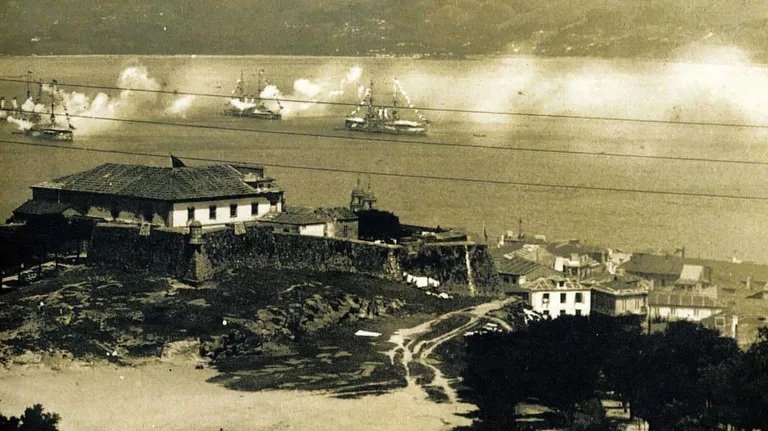
Perched strategically at the entrance to the Ría de Vigo, the Castillo de San Sebastián stands as a testament to the city’s rich maritime and military heritage. Built in the 17th century amidst the turbulence of the Portuguese Restoration War, this fortress played a pivotal role in protecting Vigo from foreign invasions and has since evolved into a cultural landmark. Today, its thick granite walls, bastions, and panoramic views make it a must-see for history enthusiasts and travelers alike.
This comprehensive guide provides an in-depth look at the Castillo de San Sebastián's history, architecture, cultural importance, practical visitor information—including opening hours, tickets, accessibility—and tips for making the most of your visit. For up-to-date details and further resources, consult the Ayuntamiento de Vigo and Vigo en Fotos.

Early Origins and Strategic Location
Before the construction of the fortress, the site was occupied by a hermitage dedicated to Saint Sebastian, highlighting its early religious significance (Ayuntamiento de Vigo). The choice of location was strategic—overlooking Vigo’s bay from a coastal promontory, it provided an ideal vantage point for monitoring maritime activities and defending against seaborne threats.
Construction and Military Role
Timeline and Context:
Construction began in 1656, a period marked by frequent attacks on Vigo from English pirates and Portuguese forces during the Portuguese Restoration War (1640–1668). The fortress was designed to work in tandem with the nearby Fortaleza de O Castro, forming an integrated defensive network (Galicia Máxica; Vigo en Fotos).
Key Contributors:
Military engineers Juan de Villarroel y Prado, Carlos Grunemberg, and Fernando Grunemberg oversaw construction. The defensive wall extended from the Castillo de San Sebastián to the Puerta del Sol, along the city’s historical perimeter (Wikipedia).
Architectural Features and Defensive Design
Structural Elements:
- Granite Walls: Thick, load-bearing granite walls were tailored to the rugged coastal terrain, maximizing durability.
- Bastions: Projecting bastions provided overlapping fields of fire, a hallmark of early modern military engineering.
- Gateways and Tunnels: The main gate controlled access, while subterranean tunnels connected the castle to other city points and possibly to O Castro fortress (Galicia Máxica).
- Internal Structures: Barracks, storage rooms, a chapel, and a polvorín (gunpowder magazine) were housed within the fortress (La Voz de Galicia).
Gardens and Views:
The grounds feature meticulously sculpted gardens with benches and winding paths, offering panoramic views of Vigo, its estuary, and the Cíes Islands (Castlepedia).
Historical Conflicts and Evolution
Military Engagements:
The fortress played a critical role in the defense of Vigo during the Portuguese Restoration War, the War of Spanish Succession, and the Peninsular War. Its defiance against sieges, notably the British assault in 1719, underscores its military significance (portugalvisitor.com).
Decline:
Improvements in military technology and repeated bombardments led to the decline of the castle’s defensive role. After the 1813 polvorín explosion, which caused substantial damage, the fortress was progressively repurposed and partially demolished to accommodate urban expansion (Wikipedia).
Restoration and Modern Cultural Significance
Preservation Efforts:
The castle has been the focus of restoration and preservation programs, supported by local and European funds (Ayuntamiento de Vigo). It is protected under Spanish heritage laws.
Cultural Hub:
Today, Castillo de San Sebastián hosts community events, exhibitions, and festivals, contributing to Vigo’s vibrant cultural life. Its gardens and open spaces serve as a tranquil retreat within the city (Castlepedia).
Integration with Vigo’s Urban Development
The castle’s defensive perimeter influenced the layout of present-day streets and neighborhoods, such as Puerta del Sol, Calle Carral, and Berbés district. The juxtaposition of historic walls and modern city hall highlights the ongoing dialogue between Vigo’s past and present (Vigo en Fotos).
Visiting the Castillo de San Sebastián
Opening Hours
- General Access: Grounds are open daily from 9:00 AM to 8:00 PM (May–October) and 9:00 AM to 6:00 PM (November–April). Hours may vary during special events or restoration work (Castlepedia).
Tickets & Admission
- Entry: Exterior grounds and gardens are free to access. Tickets may be required for guided tours or special exhibitions; check official sources for current information (Ayuntamiento de Vigo).
Guided Tours
- Availability: Guided tours in Spanish and English are available, particularly on weekends and during high season. Reserve in advance for in-depth historical insights.
Accessibility
- Terrain: Some uneven surfaces and stairs may limit access for visitors with reduced mobility, but main plazas and certain garden areas are accessible.
- Assistance: Contact local tourist information for accessibility support.
Special Events
The castle regularly hosts concerts, exhibitions, and festivals. Check the local events calendar or tourism websites before your visit (Castlepedia).
Travel Tips
- Wear comfortable shoes due to cobblestones and gradients.
- Bring a jacket or umbrella; Vigo’s Atlantic weather is changeable.
- Early mornings and late afternoons offer the best light for photography.
- Combine your visit with a walk to Fortaleza de O Castro or Vigo Old Town for a full historical experience.
Nearby Attractions and Suggested Itineraries
- Fortaleza de O Castro: An imposing hilltop fortress with sweeping city and bay views (Scope Trip).
- Casco Vello (Old Town): Explore Vigo’s historic heart, traditional taverns, and lively squares (Passaporte no Bolso).
- Cíes Islands: Accessible by ferry, these protected islands are famed for their beaches and natural beauty (Only By Land).
Frequently Asked Questions (FAQ)
Q: What are the Castillo de San Sebastián visiting hours?
A: Typically from 9:00 AM to 8:00 PM in summer and 9:00 AM to 6:00 PM in winter, but confirm before visiting.
Q: Is there an entry fee?
A: Access to the grounds and gardens is free. Some interior spaces or events may require tickets.
Q: Are guided tours available?
A: Yes, in Spanish and English, especially during weekends and high season.
Q: Is the castle accessible for people with reduced mobility?
A: Some areas are accessible, but steep paths and stairs may pose challenges.
Q: What else can I see nearby?
A: Consider visiting Fortaleza de O Castro, Vigo’s Old Town, and the Cíes Islands.
Discover More
The Castillo de San Sebastián stands as a monument to Vigo’s strategic, architectural, and cultural heritage. Its robust granite walls, bastions, and panoramic gardens narrate centuries of resilience and transformation, while ongoing events and preservation efforts ensure its continued vitality. As one of Vigo’s premier historical sites, it offers visitors an immersive experience into the city’s maritime legacy.
Plan your visit by checking current opening hours, booking guided tours, and exploring nearby attractions for a complete cultural itinerary. For the latest updates, download the Audiala app and follow local tourism channels on social media.
Listen to the full story in the app
The whole Castillo De San Sebastián,
told well.
Listen to sourced travel stories with local history and practical context — ready offline.
Verified, and shown.
Researched and written by the Audiala editorial team from historical records, architectural archives, and local expertise.
Built from cited sources · see the method · How we make our guides →