Introduction
Nestled in the vibrant heart of Valencia, the Convent of Santo Domingo stands as a living testament to the city’s layered religious, cultural, and architectural evolution. Founded in 1239 by King James I of Aragon after Valencia’s Christian reconquest, the convent has played pivotal roles as a Dominican religious center, seat of learning, and site for royal and civic ceremonies. Over nearly eight centuries, it has witnessed and contributed to Valencia’s medieval growth, Renaissance splendor, Baroque embellishment, and modern transformations. Today, visitors are invited to explore its tranquil cloisters, remarkable chapels, and rich history—making it a must-see for both cultural travelers and history enthusiasts (Tourism Valencia; Visit Valencia; Wikipedia).
Photo Gallery
Explore Convent of Santo Domingo in Pictures
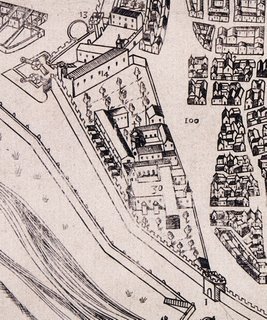
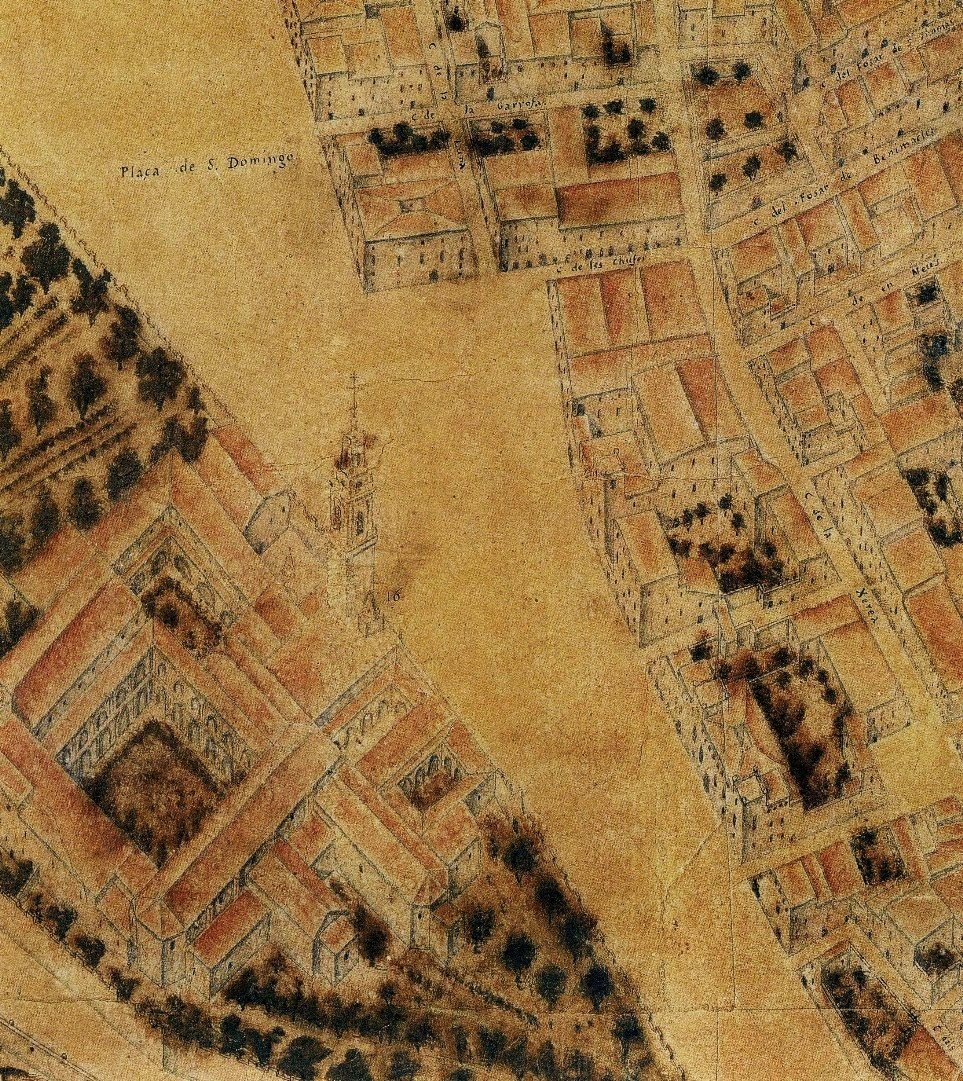
Historical map detail from the 1608 Mancelli plan showing the Convent de Sant Domingo or Doménec de València.
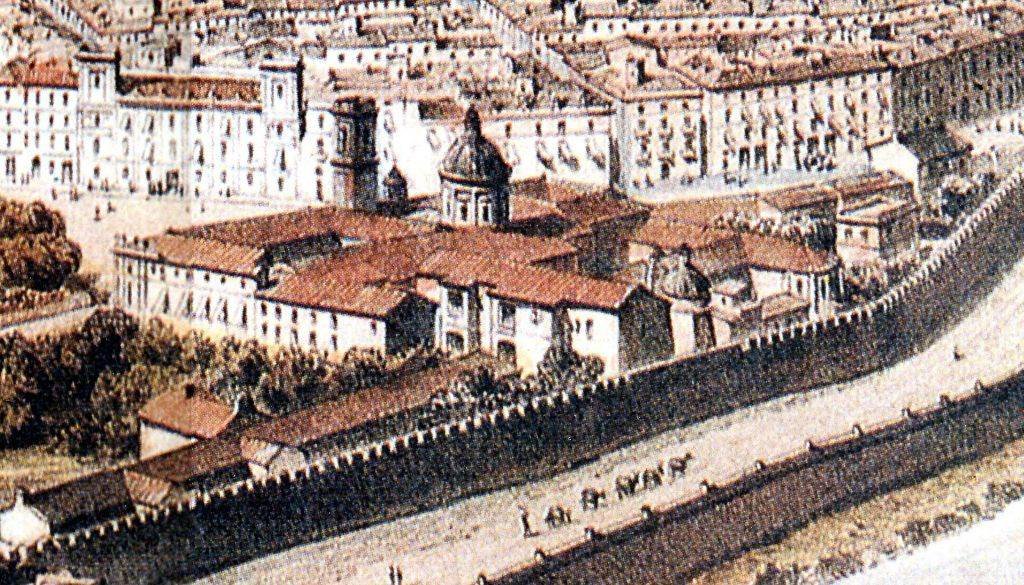
Engraving of Convent de Sant Domingo in Valencia drawn by Alfred Guesdon in 1858 showing a general view of the city
Detailed 1704 plan of the Convent de Sant Domingo or Predicadors in Valencia as depicted by Tomàs Vicent Tosca.
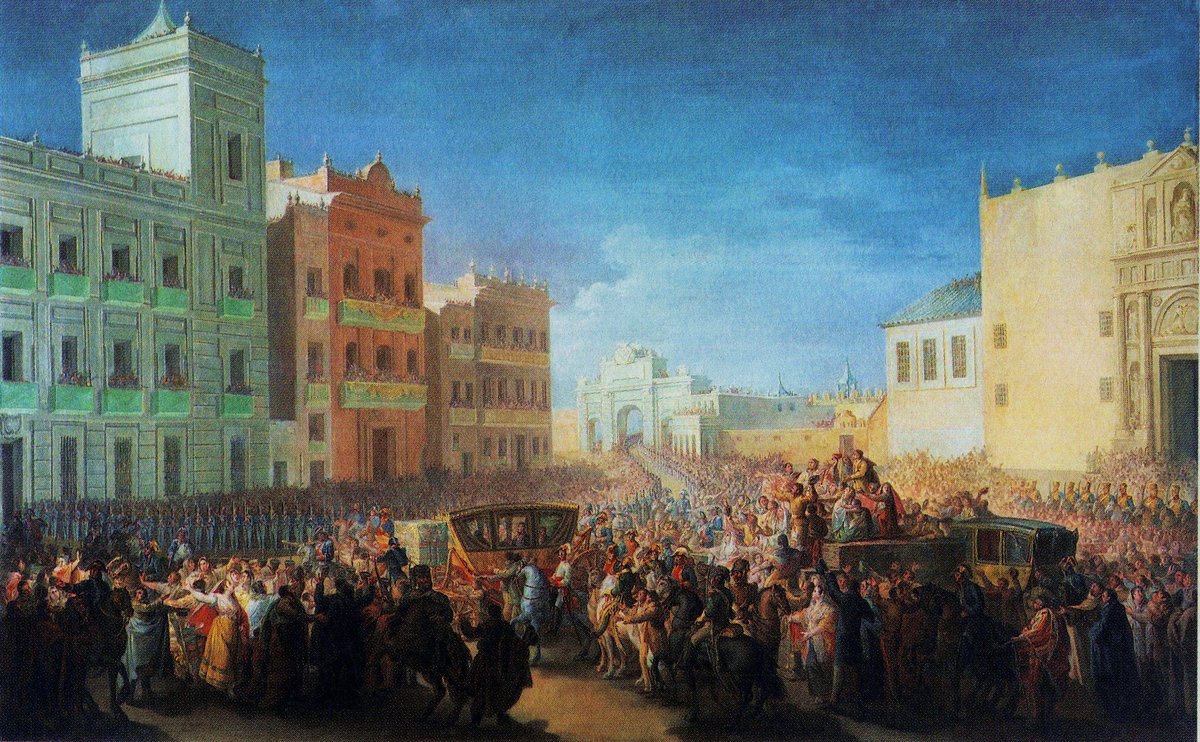
Painting depicting the triumphant entry of King Ferdinand VII into Valencia in 1815, created by Spanish artist Miquel Parra i Abril (1780-1846)
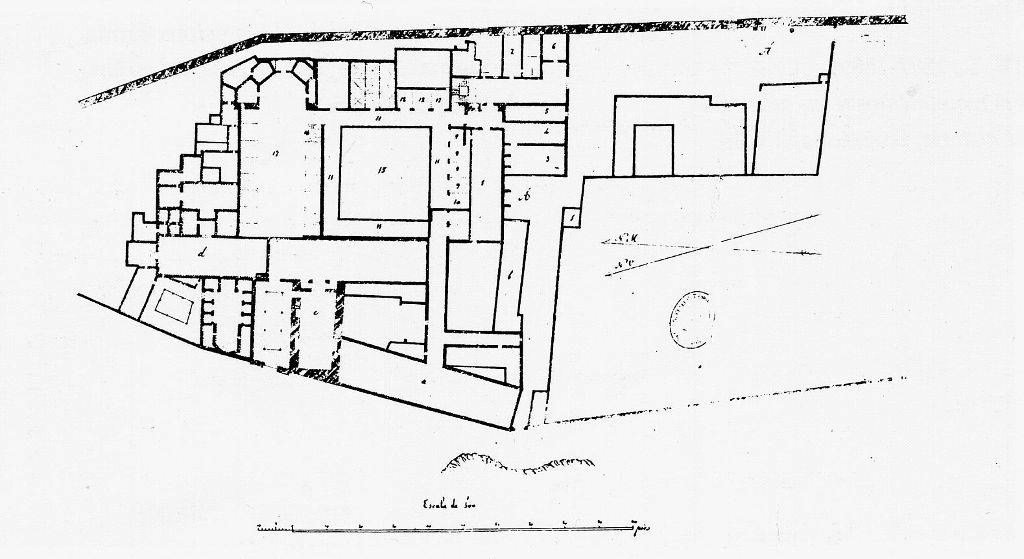
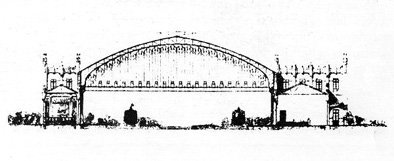
Detailed 1864 architectural plan of the Sant Doménec convent in Valencia illustrating the church building before its demolition.
Foundation and Medieval Expansion
Established on the former palace grounds of the Muslim ruler Zayyan ibn Mardanish, the convent began with a modest structure, quickly expanding due to the Dominican Order’s growing influence. By 1250, a larger church replaced the original, marking the start of centuries of architectural development. The 14th-century Gothic cloister, featuring ribbed vaults and the coats of arms of Valencian patrons, and the Chapter House (Sala Capitular), became central to the convent’s monastic and civic life (Tourism Valencia). In 1276, the extension of the city walls incorporated the convent, highlighting its importance in Valencia’s urban fabric.
Intellectual and Civic Significance
The convent was a renowned center for education and scholarship. The Dominicans established a School of Grammar and Logic in 1259, followed by chairs in Oriental Languages and Theology. By the 17th century, it was a hub for Hebrew studies, supporting diplomatic missions. It also hosted sessions of the Valencian Parliament and significant royal events, reinforcing its status as a nexus of religious, political, and academic activity (Tourism Valencia).
Architectural Highlights
Valencian Gothic
The convent’s architectural core is a masterwork of Valencian Gothic. The Gothic cloister, with its pointed arches and tranquil garden, and the 14th-century Chapter House, with slender columns and ribbed vaults, exemplify the style’s elegance (Fascinating Spain).
Renaissance and Baroque Transformations
The Chapel of the Kings (Capilla de los Reyes), completed in 1463, boasts a ribless Gothic vault and a unique double helicoidal staircase, allowing two people to ascend and descend without crossing paths (Wikipedia). The Renaissance cloister and main portal add classical symmetry, while the Baroque period introduced ornate altarpieces and chapels, reflecting shifting artistic tastes.
Neoclassical and 19th-Century Modifications
The Capilla de San Vicente Ferrer, built in the late 18th century, embodies Neoclassical order, with a domed lantern flooding the nave with light (Visit Valencia). After the secularization of religious orders in 1835, the convent became a military headquarters, resulting in further Neoclassical modifications and the adaptation of spaces for governmental use (All Andorra).
Visitor Information
Visiting Hours and Tickets
- Hours: Visits are by prior appointment only, typically Monday to Friday, 8:00 AM to 2:00 PM. The convent is closed on weekends and public holidays due to its current use by the Spanish military (Valencia City Info).
- Admission: Entry is free, but all visits must be reserved in advance by phone. Walk-in visits are not permitted.
- Guided Tours: Guided group tours are available in Spanish and, upon request, in English. These tours provide insights into the convent’s history, architecture, and art. It is strongly recommended to book well ahead, especially during peak seasons.
Accessibility
- The site has partial accessibility due to its historic structure. Some areas, such as the cloister and upper levels, may present mobility challenges. Contact the site before visiting to discuss specific needs.
Location and Getting There
- Address: Plaça de Tetuán, 22, 46003 Valencia, Spain
- Public Transport: Nearest metro stops are Colón and Alameda (both about ten minutes’ walk). Multiple bus lines serve the area. Walking from other historic sites is straightforward.
Visitor Tips
- Advance Booking: Essential. Group visits only; solo travelers should join scheduled groups.
- Dress Code: Modest attire is advised, covering shoulders and knees.
- Photography: Allowed in most areas without flash or tripods.
- Best Time to Visit: June offers pleasant weather and fewer crowds (Abroad in Valencia).
- Facilities: Restrooms are available. There is no on-site gift shop or café.
- Security: Bring valid ID, as security checks are common.
Notable Residents, Events, and Legacy
The convent has housed saints like Vincent Ferrer and Luis Beltrán. It hosted royal weddings, parliamentary sessions, and was a burial place for prominent Valencians. During the Peninsular War and later, it served as a military barracks, a role it retains in part today.
Its architectural legacy includes the Gothic cloister and Chapter House, the Chapel of the Kings with its remarkable staircase, and the Neoclassical Capilla de San Vicente Ferrer. Despite changes and the loss of some original elements, it remains a monument of immense historical and artistic value (Wikipedia; Tourism Valencia).
Suggested Itineraries and Nearby Attractions
While touring the convent, consider visiting:
- Valencia Cathedral: Home to the Holy Grail and stunning Gothic and Baroque features.
- Lonja de la Seda: A UNESCO World Heritage site showcasing late Gothic civic architecture.
- Plaza de la Virgen: A picturesque square encircled by historic buildings and lively cafés.
- Museo de Bellas Artes de Valencia: A must for art lovers, just a short stroll away.
Frequently Asked Questions (FAQ)
Q: What are the visiting hours?
A: Monday to Friday, 8:00 AM to 2:00 PM, by prior appointment only.
Q: Is there an entrance fee?
A: Admission is free, but advance reservation is required.
Q: Are guided tours available?
A: Yes, group guided tours are available; request your preferred language when booking.
Q: Is the convent accessible for visitors with mobility issues?
A: Some areas are challenging; contact ahead for details on accessibility.
Q: Can I take photos inside?
A: Photography is permitted in most areas but avoid using flash or tripods.
Final Recommendations
The Convent of Santo Domingo offers an unparalleled journey through Valencia’s religious, political, and artistic heritage. Its layered architecture, from Gothic to Neoclassical, and its central location make it an essential stop for anyone interested in understanding the city’s evolution. Remember to book your guided group tour well in advance, wear comfortable shoes, and explore nearby historical sites for a comprehensive cultural experience. For the latest information on hours, group bookings, and special events, refer to official tourism resources and consider using the Audiala app for personalized guides and updates.
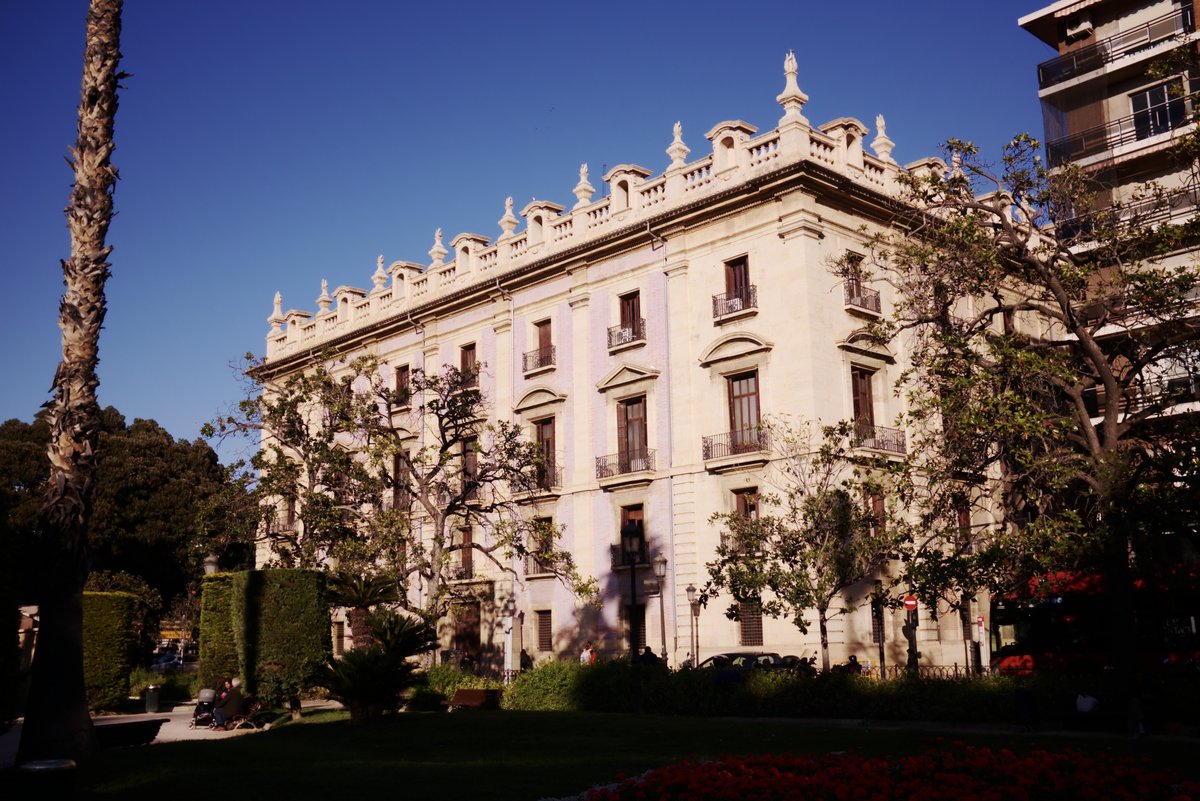
 Alt text: Exterior view of the Convent of Santo Domingo in Valencia showcasing Gothic and Renaissance architectural elements.
Interactive map of Valencia historical sites
Virtual tour of the Convent of Santo Domingo
Listen to the full story in the app
Your Personal Curator, in Your Pocket.
Audio guides for 1,100+ cities across 96 countries. History, stories, and local insight — offline ready.
Audiala App
Available on iOS & Android
Join 50k+ Curators
Sources
- verified
- verified
- verified
- verified
- verified
- verified
- verified
- verified
- verified
Last reviewed: