Introduction
Puerta Bab Al-Mardum, situated in the heart of Toledo, Spain, represents a compelling testament to the city's multicultural past and enduring architectural heritage. Erected in the late 10th century during the Caliphate of Córdoba, this ancient Islamic gate was once a crucial part of Toledo's defensive walls, serving as a key entry point to the prosperous Muslim quarter (the Medina). Its Arabic name, meaning “the blocked gate,” reflects its original defensive role and later modifications following the Christian conquest of Toledo in 1085 (Wikipedia: Mosque of Cristo de la Luz).
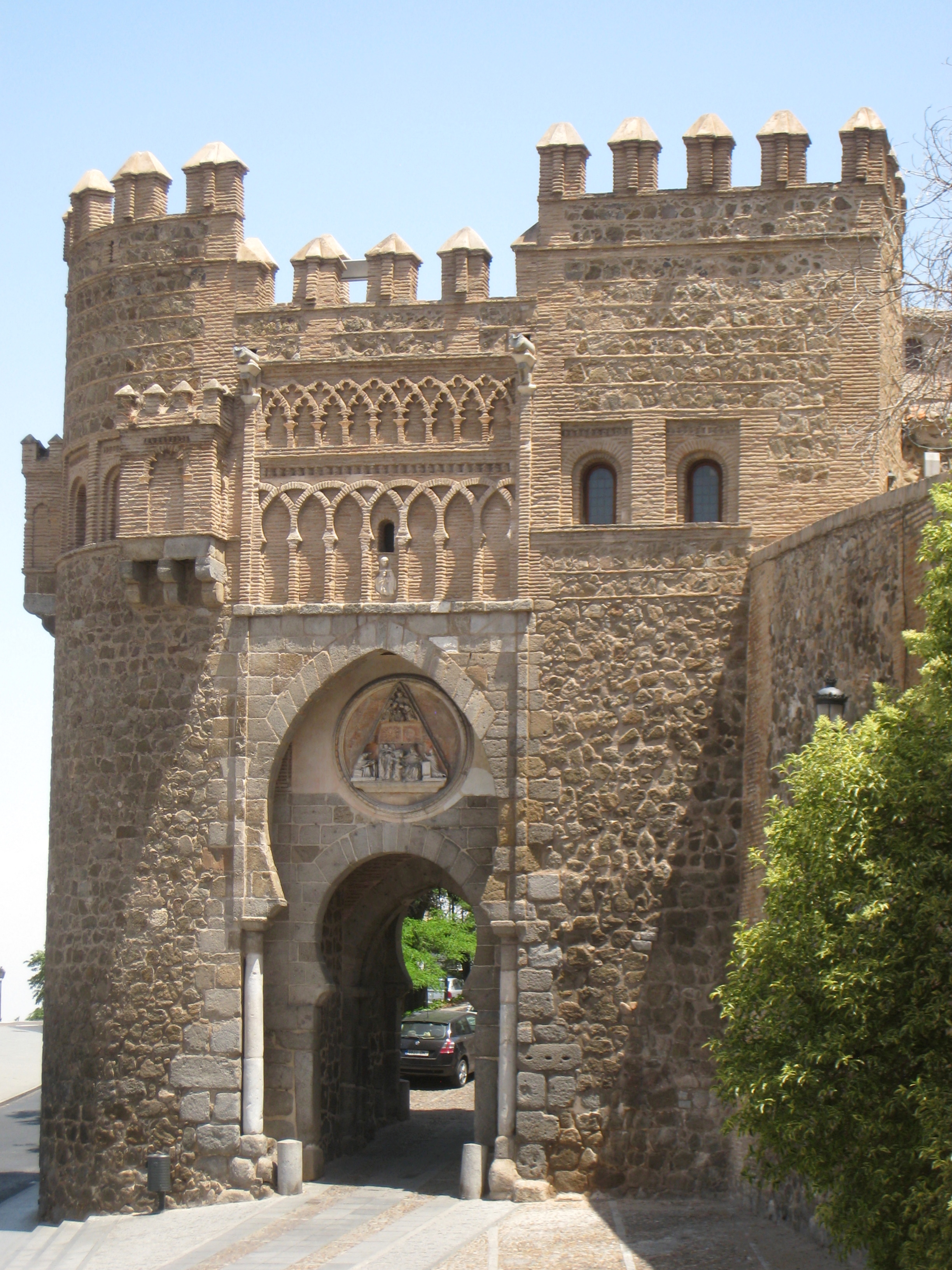
The gate is a classic example of Hispano-Muslim military architecture, featuring horseshoe arches, alternating brick and stone courses, and decorative motifs emblematic of Al-Andalus artistry. Adjacent to the gate is the Mosque of Cristo de la Luz, a remarkably preserved structure that further illustrates the blending of religious and civic life in medieval Toledo. Together, these landmarks embody the city’s layered history—from Islamic origins through Christian rule to their current status as cherished cultural monuments.
Today, Puerta Bab Al-Mardum is open to visitors year-round, free of charge, and is often explored alongside nearby attractions like the Mosque of Cristo de la Luz and Puerta del Sol. Whether you are interested in history, architecture, or photography, the gate offers a rewarding journey into Toledo’s diverse heritage (Toledo Monumental; Islamic Landmarks).
Origins and Construction
Puerta Bab Al-Mardum, also called Bab al-Mardum Gate, is among the most significant surviving examples of Islamic military architecture in Toledo. Built in the late 10th century, its name—“the blocked gate”—alludes to its defensive function and later partial closure. Strategically located near the Medina, the city’s affluent Muslim quarter, the gate formed part of an extensive system of walls, towers, and gates designed to protect Toledo and regulate access.
The construction of Puerta Bab Al-Mardum is closely linked to the nearby Mosque of Cristo de la Luz (originally Mezquita Bab al-Mardum), completed in 999 CE. The close proximity of the gate and mosque highlights the integration of religious and civic structures in medieval urban planning (Wikipedia: Mosque of Cristo de la Luz).
Architectural Features and Evolution
Puerta Bab Al-Mardum reflects the architectural style of the Caliphate of Córdoba, with its robust rectangular form, single horseshoe-arched entrance, and alternating brick and stone construction. Decorative geometric and vegetal patterns are visible in the brickwork—hallmarks of Al-Andalus design.
After the Christian conquest of Toledo, the gate underwent modifications, including partial closure to enhance security during turbulent periods. The architectural dialogue between the gate and the mosque—shared arches and motifs—testifies to a seamless urban and architectural integration (Wikipedia: Mosque of Cristo de la Luz).
Historical Significance
During the Islamic era, Puerta Bab Al-Mardum was a vital entrance to the Medina, facilitating the movement of people and goods while serving as a defensive stronghold. The gate’s strategic importance is underscored by its role during the Christian Reconquista, with legendary events such as King Alfonso VI’s reported miracle near the site.
Following the Reconquista, the mosque became a Christian chapel, and the gate symbolized the city’s religious and cultural transformation. Despite diminished defensive relevance over time, Puerta Bab Al-Mardum endures as a potent historical symbol (Wikipedia: Mosque of Cristo de la Luz).
Cultural and Urban Context
Located in the former Muslim quarter, the gate is surrounded by narrow, winding streets and historic buildings. Its placement within the ancient city walls illustrates the sophistication of Toledo’s urban planning, influenced by Roman, Visigothic, Islamic, and Christian rulers. The gate’s endurance through these epochs underscores the city’s adaptability and layered identity (Wikipedia: Mosque of Cristo de la Luz).
Visiting Information: Hours, Tickets, Accessibility
Opening Hours & Tickets
- Puerta Bab Al-Mardum: Free and accessible at all hours as an outdoor monument (Islamic Landmarks).
- Mosque of Cristo de la Luz: Open daily, typically 10:00 AM–6:00 PM (seasonal variations possible). Modest entry fee applies; discounts for students, seniors, and groups (Toledo Monumental).
- Combined Tickets: The Toledo Monumental wristband provides discounted access to multiple monuments, ideal for broader exploration.
Accessibility
- The gate area is accessible on foot from central Toledo.
- Streets are cobblestoned and steep; wear comfortable shoes.
- The mosque offers wheelchair ramps and assistance; surrounding terrain may pose challenges for those with reduced mobility.
Guided Tours
- Local tour operators include the gate and mosque in historical walking tours.
- Multilingual audioguides are available for a small fee at the mosque.
Nearby Attractions
- Mosque of Cristo de la Luz: Adjacent to the gate; renowned for its original Islamic architecture and later Mudéjar modifications.
- Puerta del Sol: Another impressive city gate featuring Islamic and Christian design elements.
- Alcázar of Toledo: A dominant fortress with panoramic city views.
- Jewish Quarter: Known for its synagogues and historic charm.
Photography Tips
- Early morning and late afternoon light best accentuate the gate’s textures and brickwork.
- The horseshoe arch of Puerta Bab Al-Mardum and the mosque’s domed bays are particularly photogenic.
- Capture panoramic views from nearby vantage points for a sense of Toledo’s skyline.
Legends and Local Traditions
Local lore recounts that King Alfonso VI’s horse knelt before the mosque in 1085, revealing a hidden crucifix and a lamp said to have burned through centuries of Muslim rule. This legend, while apocryphal, enriches the site’s significance as a place of enduring faith and miraculous discovery (Wikipedia: Mosque of Cristo de la Luz).
Restoration and Preservation
Puerta Bab Al-Mardum and the Mosque of Cristo de la Luz have been the focus of sustained conservation efforts. Restoration has included stabilizing masonry, recovering lost decorative elements, and preserving rare Romanesque frescoes in the mosque’s Mudéjar apse (Wikipedia: Mosque of Cristo de la Luz). Both structures are protected as part of Toledo’s UNESCO World Heritage designation.
Role in Modern Toledo
Today, the gate is a symbol of Toledo’s complex identity and serves as an educational site for visitors and locals alike. Interpretive signage, guided tours, and community events foster understanding of the city’s history of coexistence—convivencia—among Christian, Muslim, and Jewish communities. Ongoing preservation ensures that future generations can appreciate these monuments as living links to Toledo's storied past (Wikipedia: Mosque of Cristo de la Luz).
Frequently Asked Questions (FAQs)
Q: What are the visiting hours for Puerta Bab Al-Mardum?
A: The gate is outdoors and accessible 24 hours a day, year-round, free of charge.
Q: Do I need tickets to visit Puerta Bab Al-Mardum?
A: No tickets are required for the gate itself. The nearby Mosque of Cristo de la Luz charges a modest entrance fee.
Q: Is Puerta Bab Al-Mardum wheelchair accessible?
A: The gate is outdoors and generally accessible, but the area’s cobblestones may be challenging for wheelchair users. The mosque provides ramps and assistance.
Q: Are guided tours available?
A: Yes, many tours include the gate and mosque, offering deeper historical context.
Q: What other sites can I visit nearby?
A: Puerta del Sol, the Alcázar, and the Jewish Quarter are all within walking distance.
Summary and Recommendations
Puerta Bab Al-Mardum stands as a vital link to Toledo’s rich multicultural past, with its distinctive horseshoe arches and robust construction narrating the story of the city’s transformation from Islamic stronghold to Christian capital. When combined with a visit to the adjacent Mosque of Cristo de la Luz, visitors gain a comprehensive perspective on medieval Toledo's urban, religious, and artistic life. The site’s accessibility, interpretive resources, and surrounding historical district make it an essential stop on any Toledo itinerary. For up-to-date information on visiting hours, tickets, and special events, consult official tourism resources and consider downloading the Audiala app for guided tours and further insights (Wikipedia: Mosque of Cristo de la Luz; Toledo Travel Guide).
Listen to the full story in the app
Your Personal Curator, in Your Pocket.
Audio guides for 1,100+ cities across 96 countries. History, stories, and local insight — offline ready.
Audiala App
Available on iOS & Android
Join 50k+ Curators
Last reviewed: