Plan and listen to Plaza De España with Audiala.
Audio guide in your pocket, itinerary in your browser. Built for the way you actually visit.
Introduction
Plaza de España, situated in the heart of María Luisa Park, is one of Seville's most celebrated architectural achievements and a symbol of Spain’s cultural unity. Built as the centerpiece for the 1929 Ibero-American Exposition, the plaza seamlessly blends Renaissance Revival, Baroque Revival, and Neo-Mudéjar styles, reflecting Spain’s diverse heritage and its historical connections with the Americas. This guide provides a thorough overview of Plaza de España’s history, visitor information, accessibility, nearby attractions, and travel tips to help plan an unforgettable visit.
For the latest updates and personalized advice, you can consult the Official Seville Tourism Website, or explore detailed resources at Spanish Glory, Espanaguide, and ISA Journal.

Historical Background and Construction
Plaza de España was envisioned by Sevillian architect Aníbal González as the centerpiece of the 1929 Ibero-American Exposition. Construction started in 1914 and, despite setbacks caused by World War I and political turbulence, was completed in 1928 (treasuresoftraveling.com). González’s design intended to symbolize Spain’s embrace of its former colonies and showcase the nation’s artistic achievements on a global stage (espanaguide.com; sevillecityguide.com).
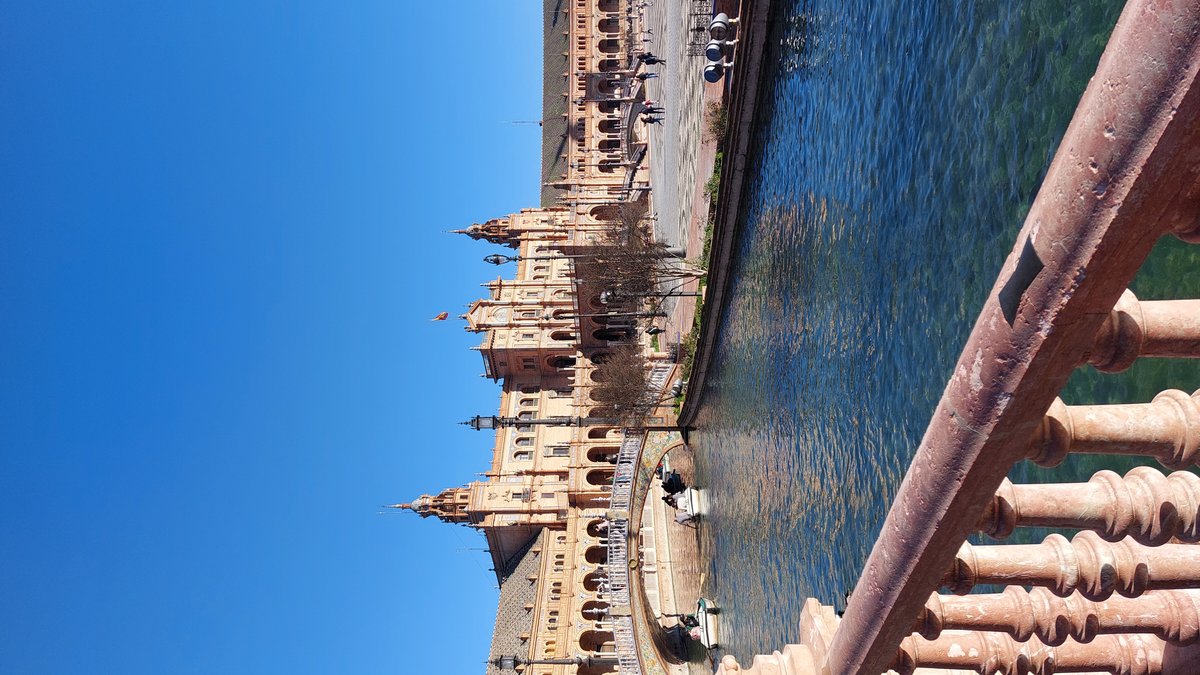
The plaza’s defining semicircular layout is approximately 200 meters in diameter, encircled by a grand structure adorned with porticoes, colonnades, and towers. Its orientation toward the Guadalquivir River symbolically links Spain to the Americas (wikipedia.org).
Architectural Features and Symbolism
Semicircular Layout and Canal
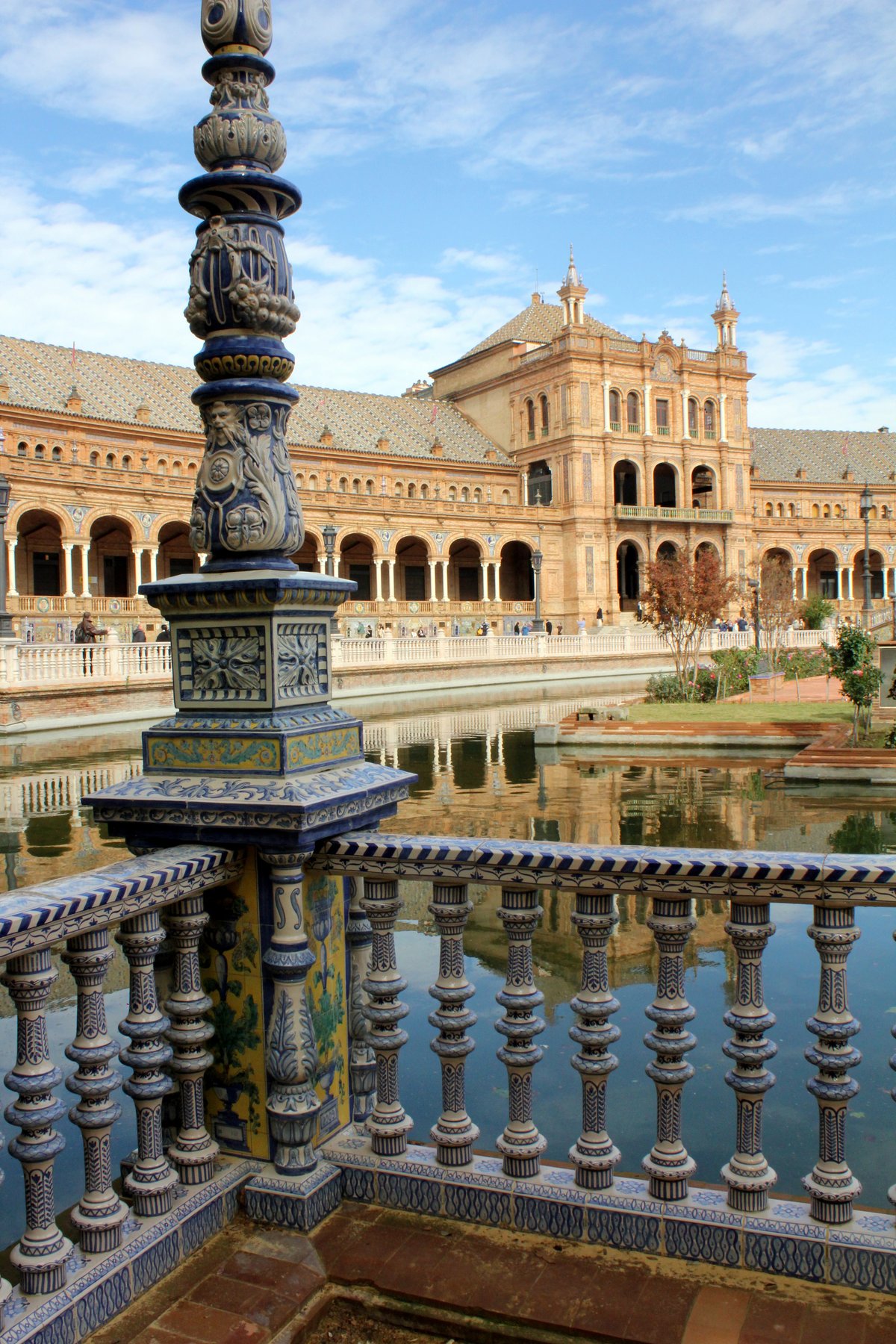
The plaza’s sweeping arc envelops a central esplanade and a 515-meter-long canal, crossed by four ornate bridges—each representing one of Spain’s historic kingdoms: Castile, León, Aragón, and Navarre (travelchoreography.com). The canal and bridges, combined with the central fountain by Vicente Traver, create a harmonious interplay of water, stone, and greenery.
Towers and Colonnades
At each end of the semicircle, towers rise 74 meters high, framing the structure and providing visual balance. A continuous arcade of arches, supported by intricately carved columns, offers shaded walkways and a rhythmic visual experience (en.visitarsevilla.com).
Ceramic Tilework (Azulejos) and Alcoves
The plaza is adorned with vibrant ceramic tiles, most famously in the 48 alcoves along the base of the building—each representing a Spanish province with detailed maps, coats of arms, and historical scenes. These benches are both decorative and educational, and locals often seek out their home province for photos and reflection (sevillecityguide.com).
Structural Innovations
A blend of traditional red brick and modern reinforced concrete made the ambitious scale and curves possible, while detailed cornices, balustrades, and finials highlight the craftsmanship (ISA Journal).
Restoration and Modern Use
After the exposition, Plaza de España experienced various uses and periods of neglect, including use as a military barracks during the Spanish Civil War (visitspainandmediterranean.com). A major restoration from 2007–2010 revitalized the monument, restoring ceramic work and structural features (wikipedia.org). Today, parts of the building house government offices, while the plaza remains a vibrant civic space for locals and visitors.
Visiting Hours and Ticket Information
- Plaza Access: Open 24 hours a day, seven days a week. Entry to the plaza’s outdoor areas is always free (Seville Tourism).
- Buildings and Museums: Some areas inside the buildings may have restricted hours (typically 9:00 am – 6:00 pm) and could require tickets, especially for guided tours or special exhibits.
- Boat Rentals: Rowboats can be rented for canal rides (approximately €6 for 35 minutes), available on-site.
- Guided Tours: Available through official tourism agencies and local operators; pre-booking is recommended for in-depth experiences.
Accessibility and Transportation
Getting There
- Metro: Prado de San Sebastián station (Line 1) is a five-minute walk away and fully accessible (Spain Inspired).
- Bus: Several city bus lines (C1, C2, 34, 37) and the tourist hop-on hop-off bus stop near the plaza.
- Walking/Cycling: The pedestrian-friendly city center and Maria Luisa Park make walking or cycling from major attractions quick and pleasant.
- Parking: Underground car parks (Plaza de España, San Bernardo) offer paid parking. Reserved spaces for those with reduced mobility are near the South tower (Motion4Rent).
Accessibility
- Paths and Entrances: The main plaza is flat and accessible, with ramps connecting levels. The ceramic benches and lower promenade are wheelchair-accessible.
- Upper Levels: Towers and upper walkways are only accessible via stairs.
- Bridges: The four ornate bridges crossing the canal require stairs and are not wheelchair-accessible.
- Restrooms: No public restrooms within the plaza; facilities are available in nearby cafés, museums, or park buildings (A Piece of Travel).
Key Activities and Visitor Tips
- Explore the Tile Benches: Find your home province or favorite artwork among the 48 alcoves.
- Rowboat Rides: Enjoy panoramic views from the canal.
- Horse-Drawn Carriage: Take a traditional ride around the plaza and park.
- Photography: Visit early morning or late afternoon for the best lighting and fewer crowds.
- Stay Hydrated and Protected: Bring water, sun protection, and comfortable shoes.
- Guided Tours: Enhance your experience with a walking or audio-guided tour for historical context.
- Events: Check for free cultural performances, especially during festivals and weekends (Spain Inspired).
Nearby Attractions
María Luisa Park
Seville’s largest park, featuring shaded walks, fountains, the Plaza de América, and lush Mediterranean and exotic flora (Voyage Tips). Ideal for relaxation or a picnic after touring the plaza.
Museums
- Seville Archaeological Museum: Roman and regional artifacts, located in the former Fine Arts Pavilion.
- Museum of Popular Arts and Traditions: Folk crafts and Andalusian traditions, in the Mudejar Pavilion (Espanaguide).
Other Landmarks
- Royal Alcázar of Seville: UNESCO-listed palace with exquisite Mudéjar, Gothic, and Renaissance architecture.
- Seville Cathedral & Giralda Tower: The world’s largest Gothic cathedral, just 15 minutes’ walk away.
- Archivo de Indias: Historic archive near the cathedral.
Events and Cultural Impact
Plaza de España is a dynamic venue for open-air concerts, flamenco shows, and religious processions, particularly during Holy Week and the Bienal de Flamenco (Spain Inspired). The plaza has also featured in major films such as Star Wars: Episode II – Attack of the Clones and Lawrence of Arabia, boosting its international reputation (ISA Journal).
Frequently Asked Questions (FAQ)
Q: What are Plaza de España’s opening hours?
A: The plaza is open 24/7; buildings and museums may have separate hours.
Q: Is there an admission fee?
A: Entry to the main plaza is free; fees apply to boat rides, carriage rides, and museum entries.
Q: Is Plaza de España wheelchair accessible?
A: Most of the plaza and María Luisa Park are accessible via ramps and smooth paths; bridges and towers are accessed by stairs only.
Q: How do I get there?
A: Accessible by metro, bus, walking, cycling, or taxi. Parking is available nearby.
Q: Are guided tours available?
A: Yes, several local operators and official tourism agencies offer guided walking or audio tours.
Listen to the full story in the app
The whole Plaza De España,
told well.
Audio guides for 1,100+ cities across 96 countries. History, stories, and local insight — offline ready.
Verified, and shown.
Researched and written by the Audiala editorial team from historical records, architectural archives, and local expertise.
Researched from Wikidata, Wikipedia & official sources · fact-checked · How we make our guides →