


Alcázar & Cathedral Cluster
The world’s largest Gothic cathedral and an active royal palace built by Almohad rulers sit on the same plaza—one ticket unlocks 900 years of layered stone, tile, and incense.
Seville, Spain, hides an active royal palace inside a 10th-century fort. The guide covers 89 listed attractions. Spring (March–May) is the best season, with an average visit duration of 3–5 days.
The scent of orange-blossom drifts through Seville, Spain, at 10 p.m. while a trumpeter in velvet robes steps through a cathedral door to summon a procession that will circle the city until dawn. That collision of perfume, pageantry, and midnight timing is your first clue that Seville refuses to live by ordinary clocks.
Curated from places in this city. Same price as official sites.
Prices shown are indicative — final pricing and availability are confirmed at checkout. Audiala may receive a commission from bookings made via these links.
Researched from Wikidata, Wikipedia & official sources · fact-checked · How we make our guides →
SThe scent of orange-blossom drifts through Seville, Spain, at 10 p.m. while a trumpeter in velvet robes steps through a cathedral door to summon a procession that will circle the city until dawn. That collision of perfume, pageantry, and midnight timing is your first clue that Seville refuses to live by ordinary clocks.
Inside the world’s largest Gothic cathedral, builders repurposed a 12th-century minaret into the Giralda bell tower: climb its 34 gently sloping ramps and you’ll see how Islamic brickwork, Renaissance stone, and Baroque bells stack one faith atop another. A ten-minute walk south, the Real Alcázar is still an active royal palace; the king’s chambers sit inside walls begun by Almohad caliphs, tiled by Mudejar craftsmen, and gilded for Castilian queens. The whole historic core is a palimpsest of Roman walls, Jewish quarter alleys, and 16th-century imperial warehouses built with gold that arrived on the Río Guadalquivir from the Americas.
But Seville’s real genius is everyday alchemy. A ceramic workshop in Triana fires the same cobalt-and-white tiles that once clad Ibero-American pavilions in 1929. In the Alameda, an 18th-century convent serves espresso under a suspended skateboard, and at 2 p.m. office workers queue for montaditos de pringá while the rest of Spain is still finishing coffee. Stay long enough and you’ll synchronize to the city’s cadence: breakfast at nine, siesta-calm at four, dinner when the cathedral bells strike ten, flamenco when the moon is high.
What makes this place worth slowing down for.
The world’s largest Gothic cathedral and an active royal palace built by Almohad rulers sit on the same plaza—one ticket unlocks 900 years of layered stone, tile, and incense.
Triana’s peñas and the Flamenco Dance Museum keep the city’s 3-beat compás alive; the Bienal (9 Sept–3 Oct 2026) turns every courtyard into a stage.
A half-moon canal, 48 tiled provinces, and rowing boats under ceramic bridges—Seville’s post-colonial swagger frozen in 1929, best seen at sunrise before the crowds.
Iberian ham carved to order, montaditos of grilled squid, and fino sherry poured at 21:30—dinner starts when other cities go to bed.
Not every monument, just the ones we'd walk you past ourselves.

Isla Mágica, located in the heart of Seville, Spain, is far more than just an amusement park.
The Plaza de Toros de la Maestranza in Seville, Spain, stands as one of the country’s most iconic and historically rich landmarks.

Nestled within the lush greenery of María Luisa Park, Plaza de España in Seville stands as one of Spain’s most iconic and architecturally stunning landmarks.

Hidden behind three passageways by Seville Cathedral, this semicircular plaza pairs an Almohad wall with Sunday stalls selling coins, stamps, and curios.
Nestled in the historic and culturally vibrant district of La Macarena in Seville, Spain, the Basílica de la Macarena stands as a remarkable emblem of faith,…
The Puente de San Telmo, an architectural marvel located in Seville, Spain, serves as a vital link between the city's historic center and the vibrant southern…
Seville Cathedral, officially known as Catedral de Sevilla or the Cathedral of Saint Mary of the See, stands as a magnificent symbol of Gothic architecture,…
Where to wander, by quarter — each with its own rhythm.
The old Jewish quarter is a lattice of whitewashed walls, wrought-iron gates, and geranium-filled patios. Lose your map here; the joy is in dead-ending at a hidden plazoleta where the only sound is the splash of a Renaissance fountain and the echo of your own footsteps.
Across the iron bridge, this former gypsy quarter still smells of clay kilns and fried pescaíto. Browse the Ceramics Centre, eat espinacas con garbanzos at the market, then follow the sound of heels on wood into a peña flamenca that doesn’t advertise its address.
Bullfighters once trained in the 18th-century plaza here; now the grid of taverns between Calle Arfe and the river is Seville’s official gastrobarrio. Drop into Casa Moreno for canned seafood and sherry, or book Cañabota for Michelin-starred razor clams while the Torre del Gold glints outside.
Two ancient Roman columns mark the gateway to Seville’s alternative heart. By day, skateboarders crisscross the broad esplanade; by night, indie bars spill onto the cobbles, and the soundtrack switches from sevillanas to synth-pop at 3 a.m.
Centered on the mushroom-shaped Metropol Parasol, this zone blends a 14th-century market hall with rooftop sunset views. Alfalfa’s narrow lanes fill with students clutching cañas and serranito sandwiches, making it the city’s easiest bar-hop.
Across the river, a Carthusian monastery turned contemporary-art centre (CAAC) anchors the 1992 Expo grounds. Come for cutting-edge exhibitions, stay for the Navigation Pavilion’s river-view tower and the quiet of a campus where cranes once built the Age of Discoveries.
North of the center, working-class Macarena hides a royal Renaissance monastery and the city’s best surviving stretch of Almohad wall. Friday’s Calle Feria market snakes past convents that still sell dulces through wooden turntables.
A 34-hectare Romantic garden designed for the 1929 Ibero-American Expo, where tiled provincial benches arc around a half-moon canal. Row a boat under ceramic bridges at dusk and you’ll understand why locals call this the city’s outdoor living room.
Three millennia of sailors, poets, and kings trading futures on the Guadalquivir
Salt-crusted merchants from Tyre beach their round-hulled ships where Patio de Banderas later blooms. They lay out a grid of mud-brick counting houses and a sanctuary to Melqart—first stone heartbeat of what will become Seville.
Scipio’s legions march in after pulverizing Carthaginian Spain. The town is rewarded with paved streets, a forum, and the legal right to mint bronze—tiny coins that will buy olive oil, garum, and the ambition to rival Italica across the river.
Born on a lane that smells of tanneries and incense, Isidore catalogues the world—astronomy, medicine, even the shapes of clouds—inside the episcopal palace. His 20-volume Etymologiae becomes Europe’s Google for a thousand years.
Berber horsemen splash across the Guadalquivir at low tide. Minarets replace basilicas, waterwheels hum night and day, and Arabic replaces Latin in the markets selling saffron, damascene steel, and poetry chapbooks.
Norse dragon-prows appear at dawn, ransack the alcázar, and hold the city for two weeks before being bribed off with 7,000 gold dinars. The emir responds with a river chain and new stone walls—Seville’s first customs checkpoint.
The taifa king enlarges the Alcázar gardens to 300 varieties of rose, funds translators who ferry Greek medicine into Arabic, and still finds time to compose wine songs that scandalize the ulama. Seville learns that power can speak in verse.
Masons top the 70-metre tower with four copper spheres that flash like sunfish above the plain. From its ramps, the muezzin’s call now travels farther than any voice in al-Andalus, a sonic flag planted in the western sky.
For fifteen months, Ferdinand III’s engineers push siege towers uphill while river patrols sever the bridge of boats. Surrender comes on 28 November; muezzins fall silent, church bells explode across the rooftops, and Seville’s bilingual centuries begin.
Fiery sermons spark mobs who torch the Judería, murder hundreds, and force mass conversions. The sound of splintering wood and breaking glass echoes as far as the cathedral worksite, where masons pause, then keep laying stone.
‘Let us build a church so large future generations will think we were mad.’ The chapter’s audacious vote erases the old mosque—except the minaret, rebranded as Christian bell-tower—and starts Europe’s biggest Gothic footprint.
Every ounce of American gold, every parrot, every enslaved person must pass through Seville’s customs pier. Clerks invent double-entry ledgers, pilots master Atlantic charts, and the city smells of tar, sugar, and new money.
In a cramped studio off Calle Santa María, Bartolomé Murillo mixes pearlescent glazes that turn scrubbed Andalusian kids into cherubs and street beggars into saints. His canvases flood local churches with soft, forgiving twilight.
Carts stacked with bodies creak to mass graves outside the walls. Roughly 60,000 die—half the population—and the survivors awake to empty houses, unpaid mortgages, and a silence that will last generations.
A royal stamp closes the Casa de Contratación. Merchants pack up their ledgers, shipyards fall quiet, and the Guadalquivir begins to silt up. Seville’s golden century ends with the creak of moving crates.
Electric bulbs outline a brand-new Plaza de España, its tiled provinces glittering like postage stamps in marble. The fair masks cholera outbreaks and political jitters, but it gifts Seville sewers, streetlights, and a cinematic backdrop.
On Cartuja island, monorails glide past pavilions shaped like sails. Forty-one million visitors ride the new AVE from Madrid in two hours and forty minutes, and Seville re-enters the global conversation on high-speed steel wings.
Mushrooming parasols of glued timber crown the plaza where, six metres below, the Antiquarium’s spotlights reveal 1st-century mosaics. The city now picnics on top of its own stratified past, sipping vermouth while traffic purrs underneath.
From 9 September to 3 October, every courtyard, tablao, and crumbling theatre vibrates with heel strikes and broken voices. The world’s most rigorous flamenco festival reminds Seville—and everyone watching—that its oldest grief is still its loudest art.
The people who shaped the city — and were shaped by it.
He learned light by painting water-sellers and old women frying eggs in Triana’s narrow streets; today the same light bounces off the Alcázar tiles he once copied. Walk Calle de la Judería at dawn and you’ll see what he saw before Madrid stole him.
He turned the Alcázar into a palace of verses and nightingales, then was exiled to Morocco lamenting ‘the morning of Seville has no dawn’. Stand in the Patio de las Doncellas and you’re standing where he composed love poems that still circulate in Arabic classes.
His soft-faced Virgins once covered the walls of every convent here; after the 1870 earthquake, citizens rescued his canvases before their own furniture. In Hospital de la Caridad you can still sit where he painted orphans who believed angels looked just like them.
He wrote the Rimas in a crumbling house on Calle Conde de Barajas, convinced every orange tree hid a legend. Modern graffiti quotes his lines on the very walls he walked, turning the city into an open-air book of broken hearts.
He rode through the Puerta de la Macarena and ordered a cathedral built inside the mosque; his silver coffin still lies behind the altarpiece he never saw finished. Every spring, Semana Santa processions pass his tomb as if thanking him for the street plan they follow.
He wrote the world’s first encyclopedia by candlelight in Visigothic Seville, defining what Europe would know for a thousand years. His carved stone face greets you above the Puerta del Perdón—still lecturing travellers who rarely notice.
He stood so close to the horns that critics said he danced with death itself; Belmonte perfected his footwork on the muddy riverbank below Calle Betis. Today, Triana bars keep his cape framed beside the sherry casks, as if he might walk in after a corrida.
She grew up hearing washerwomen sing saetas across the Guadalquivir and turned those river echoes into platinum records. Step into any peña during the Bienal and you’ll hear younger cantaores still trying to mimic the break in her voice.
Where locals actually book dinner — not the tourist menus.
Small things that change how the city treats you.
Lunch starts after 14:00, dinner after 21:00. Arrive earlier and you’ll dine alone—or not at all.
Round up the bill or leave coins; 10 % is foreign. Many bars give a free tapa only if you pay cash.
Same-day tickets sell out, especially in April. Reserve online at least 48 h ahead for the earliest slot.
From 29 Mar–5 Apr 2026, processions block streets 14:00–02:00. Plan routes ahead; taxis detour.
The Metropol Parasol lift costs €10 and faces west—golden hour over the cathedral is 20:30 in May.
Paseo de Cristóbal Colón cools down, lights come on, and buskers gather beneath Torre del Oro.
The city, as it actually looks.

A stunning view of a traditional tiled dome and architectural details atop a historic church in the heart of Seville, Spain.
Ana Rubio on Pexels

An elevated perspective of the charming, historic streets and traditional terracotta-roofed architecture in the heart of Seville, Spain.
Zekai Zhu on Pexels

The stunning Plaza de España in Seville, Spain, showcases grand Renaissance Revival architecture, a picturesque canal, and a vibrant central fountain under a clear blue sky.
Smail Dahmani on Pexels

The historic Giralda tower and Seville Cathedral dominate the skyline above a peaceful, tree-lined courtyard in the heart of Seville, Spain.
Marian Florinel Condruz on Pexels

A stunning elevated view of the historic rooftops and traditional architecture that define the charming cityscape of Seville, Spain.
chang on Pexels

The breathtaking Mudéjar craftsmanship of the Royal Alcázar in Seville showcases the intricate beauty of historic Spanish architecture.
José Maldonado Díaz on Pexels

A beautiful view of historic stone walls and a traditional tiled tower in Seville, Spain, framed by lush palm trees under a bright blue sky.
Diogo Silva on Pexels
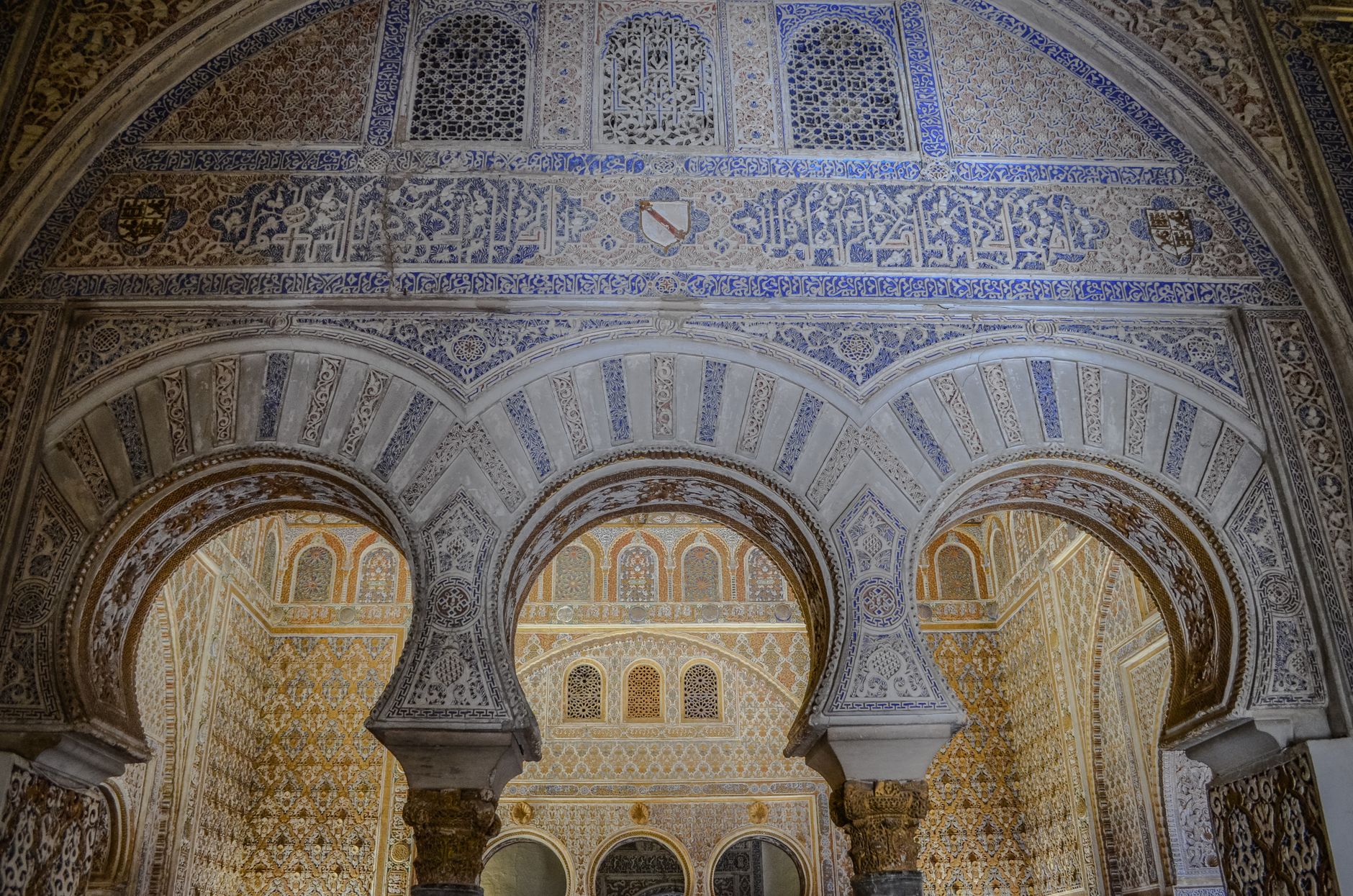
The stunning Mudéjar craftsmanship of the Royal Alcázar in Seville showcases intricate geometric patterns and iconic horseshoe arches.
Hub JACQU on Pexels

The stunning Gothic architecture of the Seville Cathedral glows under the warm light of the setting sun in Seville, Spain.
Emre Bilgiç on Pexels
Yes—its palace is still a royal residence, its cathedral is the world’s largest Gothic one, and flamenco echoes in the very stones. One city layers Roman, Islamic, and colonial wealth into walkable streets.
Three full days cover the Alcázar, Cathedral, Triana tapas crawl and a day-trip to Itálica or Carmona. Add two more for lesser palaces, Cartuja’s Expo sites and a flamenco peña night.
Technically yes—AVE high-speed trains take 2 h 45 min each way—but you’ll see only the cathedral and Plaza de España. Stay overnight; the city wakes up after dark.
Centro, Triana and Alameda are well-lit and busy until late; pickpockets operate around Calle Sierpes and after big festivals. Stick to main streets after 01:00 and use licensed taxis.
Expect €2–€2.50 for a caña (small beer) in local bars; many still give a free tapa with each drink in working-class neighborhoods like El Arenal or Macarena.
EA bus costs €4 and drops you at Plaza de Armas in 35 min; taxis are fixed €25 to the centre. No train link.
The 2026 fair (21–26 April) is free to enter public casetas, but you’ll pay for rides, sherry and flamenco shows. Private casetas require an invitation—make friends.
Ready to book?
Curated from places in this city. Same price as official sites.
Prices shown are indicative — final pricing and availability are confirmed at checkout. Audiala may receive a commission from bookings made via these links.
Seville Airport (SVQ) sits 10 km northeast; the EA airport bus runs every 15–30 min, €6 single, €8 return. Santa Justa train station handles AVE high-speed links to Madrid (2 h 30) and Córdoba (45 min). A-4 motorway south to Cádiz, A-66 north to Mérida.
Metro Line 1 (1 line, 22 stations) crosses the city 06:30–02:00 Fri, €1.35–1.80. TUSSAM runs 48 daytime bus lines plus tram T1 (Plaza Nueva–San Bernardo); single ride €1.40, contactless accepted. Tourist cards: 1-day €5, 3-day €10 (+€2 deposit). 261-station Sevici bike share, 2,600 bikes, first 30 min free.
April averages 17 °C highs 23 °C, 54 mm rain—perfect for Semana Santa (29 Mar–5 Apr 2026). May climbs to 27 °C, only 30 mm. July–August peaks near 36 °C with 2–5 mm rain; sightseeing best 08:00–12:00. November wettest at 91 mm. Sweet spots: April–May and October.
Pickpocketing dominates in the Cathedral–Santa Cruz maze and on the EA airport bus; keep bags zipped and phones off table-edges. Night crime is rare—stick to lit streets around Alameda after 01:00. Emergency: dial 112 (multilingual).
Euro (€) only; cards accepted almost everywhere, minimum spend ~€10 common in bars. Tipping is optional—leave 5–10 % if pleased. Basic Spanish helps in old-town taverns; museum staff switch to fluent English.
87 places, one continuous walking route. Free with your first city.
87 places to discover


Showing 1–48 of 87 places