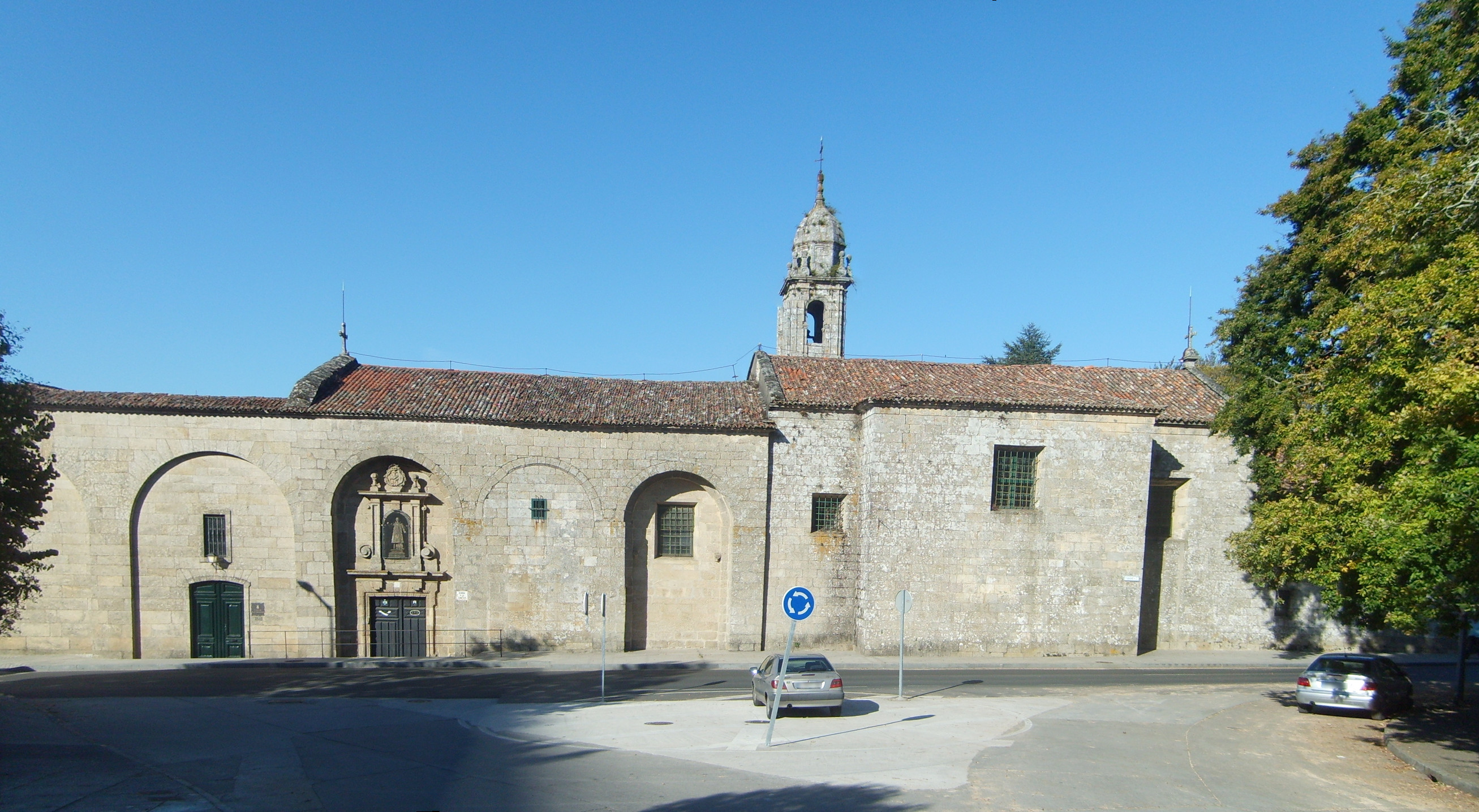
Plan and listen to Pazo De San Lourenzo, Santiago with Audiala.
Audio guide in your pocket, itinerary in your browser. Built for the way you actually visit.
Introduction
Nestled just beyond the medieval heart of Santiago de Compostela, the Pazo de San Lourenzo de Trasouto emerges as one of Galicia's most enchanting historical estates. This architectural and cultural landmark, founded in the early 13th century by Martín Arias, Bishop of Zamora, began as a Franciscan monastery and evolved over centuries into a symbol of Galician nobility and artistry (cvc.cervantes.es; gl.wikipedia.org). Today, visitors encounter a harmonious blend of sacred and secular spaces—13th-century chapels, cloisters with symbolic boxwood topiary, grand salons adorned with Flemish tapestries, and sprawling gardens that reflect both monastic serenity and 19th-century romantic landscaping (santiagoturismo.com).
This guide presents a comprehensive overview of the Pazo de San Lourenzo, offering practical information about visiting hours, ticketing, accessibility, and surrounding attractions, while exploring its layered history and enduring cultural significance.
Monastic Origins
Founded in 1216, the Pazo de San Lourenzo de Trasouto began as a Franciscan monastery. Its location, in a tranquil valley just outside Santiago's medieval walls, was chosen for spiritual retreat and contemplation. The original Romanesque church, sacristy, and cloisters remain central to the estate, their austere granite construction reflecting the spiritual ideals of the Franciscan order (gl.wikipedia.org; cvc.cervantes.es). The surrounding oak groves provided both sustenance and a mystical setting, inspiring Galician legends and literature.
Architectural Evolution
Over the centuries, the Pazo underwent significant transformations. In the 16th and 17th centuries, the House of Altamira acquired the property, converting the monastery into a noble residence. Renaissance and Baroque flourishes were introduced, including ornate retablos, sepulchral monuments, and formal gardens with geometric layouts and ornamental fountains (cvc.cervantes.es). The 18th and 19th centuries saw further adaptations, blending French and English landscape design with the estate’s monastic roots (feverup.com).
Central to the estate’s appeal is its cloister, featuring boxwood hedges trimmed into Christian symbols such as the scallop shell, Cross of St. Dominic, and gridiron of St. Lawrence—living catechisms that have endured for over four centuries (santiagoturismo.com).
Cultural and Literary Significance
The Pazo's spiritual heritage is heightened by its proximity to the Cathedral of Santiago de Compostela and the Camino de Santiago (walkthecamino.com). The estate has inspired Galician writers, most notably Rosalía de Castro, whose poetry captures its blend of natural beauty and sacred tranquility (santiagoturismo.com). Heraldic shields, religious motifs, and Baroque tapestries further testify to its role as both a place of devotion and aristocratic life.
Preservation and Modern Use
Declared a Bien de Interés Cultural and part of Spain’s National Artistic Heritage, the Pazo benefits from careful conservation efforts that have preserved its Romanesque elements, grand salons, and gardens (gl.wikipedia.org). Since the late 20th century, it has served as a venue for cultural events, concerts, exhibitions, weddings, and guided tours, balancing historic integrity with contemporary relevance (pazodesanlorenzo.com).
Visitor Information
Visiting Hours and Tickets
- General Hours: The Pazo is typically open Tuesday to Sunday, from 10:00 AM to 7:00 PM. It is closed on Mondays and public holidays. Hours may be adjusted for private events or special programs (pazodesanlorenzo.com).
- Tickets: Standard admission is approximately €8 for adults, with discounts for students, seniors, and groups. Children under 12 usually enter free. Tickets are available online or at the entrance.
- Special Guided Tours: Public guided tours are frequently available Tuesday through Thursday, with two daily time slots: 11:30–13:30 and 16:30–18:30. Admission for these is often €2 per person (Paxinas Galegas). Advance booking is highly recommended as the estate is a popular venue for private events.
Accessibility
The Pazo offers partial accessibility, including ramps and adapted restrooms. Due to its historic architecture, some sections may be difficult to access for visitors with reduced mobility. Contact the administration in advance to arrange specific accommodations (Aptcm.es).
Directions and Travel Tips
- Location: About 1.5 km from Santiago de Compostela’s city center, near the Sarela River valley.
- By Foot: A scenic 20-minute walk from the city center or Praza do Obradoiro.
- By Public Transport: Local buses connect the city center to stops near the Pazo.
- By Car: Limited parking is available; public transport or taxis are recommended if attending public tours or events (Santiago Turismo).
Guided Tours and Events
Guided tours, available in multiple languages, explore the estate’s history, architecture, and gardens. The Pazo also hosts seasonal events, including concerts and art exhibitions. Private tours can be arranged tailored to interests in art, architecture, or botany.
Nearby Attractions
- Cathedral of Santiago de Compostela: A UNESCO World Heritage Site and pilgrimage destination.
- Monastery of San Martiño Pinario: A major monastic complex.
- Praza do Obradoiro and Old Town: The heart of historic Santiago, ideal for exploring on foot.
- Carballeira de San Lourenzo: Ancient oak groves surrounding the estate (nomads-travel-guide.com).
Visuals and Media
The Pazo’s official website and tourism platforms offer high-resolution images and virtual tours, featuring the cloister’s boxwood parterre (“Pazo de San Lourenzo cloister boxwood parterre”), Flemish tapestries, and the estate’s lush gardens.
Frequently Asked Questions (FAQ)
Q: What are the current opening hours?
A: Typically Tuesday–Sunday, 10:00 AM–7:00 PM; guided tours are available Tuesday–Thursday at set times. Hours may change for special events.
Q: How do I purchase tickets?
A: Tickets can be bought online or at the entrance. Advance booking is advised, especially for guided tours.
Q: Is the estate accessible to people with reduced mobility?
A: The site has ramps and adapted restrooms, but some historic areas may be difficult to access. Contact ahead for details.
Q: Can I take photos?
A: Photography is allowed in gardens and most public areas, but restrictions may apply inside the church or during events.
Q: Are there facilities for parking and food?
A: Limited parking is available; no café on site, but Santiago’s city center offers many dining options.
Q: What other historical sites are nearby?
A: The Cathedral, Monastery of San Martiño Pinario, and Santiago’s historic old town are all easily accessible.
Discover More
For current visiting hours, event schedules, and guided tour availability, visit the Pazo de San Lourenzo official website, or follow the estate on Instagram, Facebook, and Twitter. Download the Audiala app for personalized cultural experiences, virtual tours, and travel tips on Santiago de Compostela and Galicia’s historical sites.
Listen to the full story in the app
The whole Pazo De San Lourenzo, Santiago,
told well.
Audio guides for 1,100+ cities across 96 countries. History, stories, and local insight — offline ready.

Verified, and shown.
Researched and written by the Audiala editorial team from historical records, architectural archives, and local expertise.
Last reviewed
Researched from Wikidata, Wikipedia & official sources · fact-checked · How we make our guides →


