Plan and listen to Cervantes Square with Audiala.
Audio guide in your pocket, itinerary in your browser. Built for the way you actually visit.
Introduction
Praza de Cervantes, or Cervantes Square, stands at the heart of Santiago de Compostela’s historic old town, serving as a vibrant crossroads of history, culture, and community life. Once a medieval marketplace, the square has evolved into a lively gathering space, renowned for its architectural heritage and its tribute to Miguel de Cervantes, the acclaimed author of "Don Quixote." Its proximity to the Cathedral of Santiago de Compostela and strategic position along the Camino de Santiago pilgrimage route make it a key waypoint for both locals and visitors (facts.net, walkthecamino.com).
Today, Praza de Cervantes is a seamless blend of Romanesque, Gothic, and Baroque architecture. Its arcaded former town hall and central 19th-century statue of Cervantes symbolize the city’s civic and literary spirit. The square is also a hub for contemporary life, bustling with cafés, artisan markets, and vibrant festivals such as Semana Santa and the Feast of Saint James (Nomads Travel Guide, Adventure Backpack).
Open to the public 24 hours a day with no entrance fee and accessible to all, Praza de Cervantes offers a welcoming window into Santiago’s layered history and dynamic present (Trip.com). This comprehensive guide will provide insights into the square’s origins, its architectural and cultural significance, practical information for visitors, and suggestions for exploring nearby attractions (santiagoturismo.com).
- Historical Origins and Civic Role
- Architectural Features and Landmarks
- Pilgrimage, Religion, and Community Life
- Literary and Cultural Legacy
- Praza de Cervantes Today: Visiting Hours, Tickets & Accessibility
- Events, Guided Tours & Photo Opportunities
- Nearby Attractions and Suggested Itineraries
- Visitor Tips and Practical Information
- Frequently Asked Questions (FAQ)
- Conclusion and Resources
Historical Origins and Civic Role
Praza de Cervantes dates back to the Middle Ages, originally known as Praza do Campo. It was the main marketplace and center of civic activity, where local merchants, townspeople, and pilgrims converged (facts.net). The square was a site for public announcements and theatrical performances, and the adjacent streets—like Rúa do Preguntoiro—echo its legacy as a hub for municipal proclamations (santiagoturismo.com).
As the city grew, Praza de Cervantes became a key waypoint for pilgrims on the Camino de Santiago, situated just steps from the famed cathedral (walkthecamino.com). Its enduring function as a civic and social heart continues today with regular markets and community events (try-travel.com).
Architectural Features and Landmarks
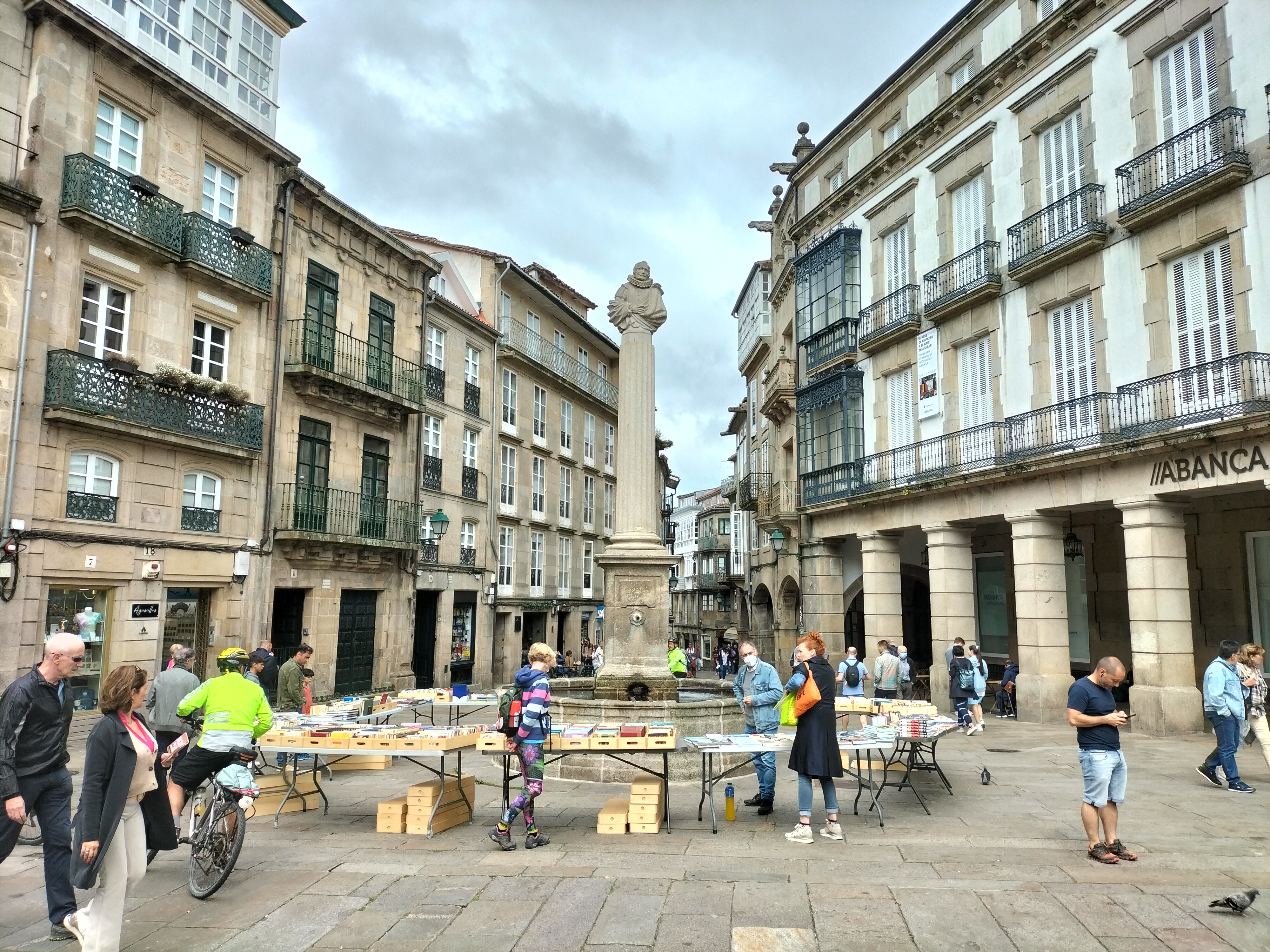
Praza de Cervantes is framed by a harmonious mix of Romanesque, Gothic, Renaissance, and Baroque buildings. The former town hall (Casa do Concello), built in 1682, is a prime example of Galician Baroque civic architecture, featuring stately arcades that once sheltered market stalls. Restoration work has revealed original features such as the escribanías (scribes’ offices), oratory, and dungeons (santiagoturismo.com).
The square’s most recognizable feature is the fountain crowned by a bust of Miguel de Cervantes. This 19th-century monument celebrates the author’s legacy and adds a whimsical note with the local “feet of Cervantes” prank, where the unwary are playfully splashed (quesantiago.es). The granite slab paving and arcaded façades, with wrought-iron balconies and wooden galleries, enhance the square’s historic atmosphere (explorial.com).
Nearby, the Church of San Benito del Campo features a neoclassical façade and medieval origins, while the Cepeda grocery store (operational since 1888) and various cafés contribute to the square’s lived-in character (santiagoturismo.com).
Pilgrimage, Religion, and Community Life
Located along the Camino de Santiago, Praza de Cervantes has served as a crucial stop for pilgrims approaching the cathedral. Historically, the square was the last place to draw water before reaching the sacred destination, and it continues to host religious processions, especially during Semana Santa and the Feast of Saint James (facts.net).
The square’s role extends beyond religion, acting as a hub for book fairs, art exhibitions, and communal celebrations throughout the year, reflecting the city’s vibrant social rhythms (Nomads Travel Guide, Adventure Backpack).
Literary and Cultural Legacy
The square’s dedication to Miguel de Cervantes highlights Santiago’s literary heritage and its ties to broader Spanish culture. The city’s university, founded in 1495, and the legacy of Galician poets such as Rosalía de Castro underscore its status as a center of learning and creativity (facts.net). Book fairs and artistic events regularly animate the square, making it a magnet for writers, artists, and culture lovers.
Praza de Cervantes Today: Visiting Hours, Tickets & Accessibility
Visiting Hours: Praza de Cervantes is an open public plaza, accessible 24 hours a day, every day of the year. Cafés and nearby attractions typically operate from morning through late evening, with some seasonal variation.
Tickets: There are no entrance fees or tickets required to visit the square. Some nearby museums or churches may have admission charges.
Accessibility: The square is wheelchair accessible, with smooth stone pavements and ramps. It is pedestrian-friendly and easily reached from the old town’s main thoroughfares (Trip.com).
Events, Guided Tours & Photo Opportunities
Praza de Cervantes is a lively venue for festivals, open-air concerts, and religious events, especially during major celebrations like the Feast of Saint James on July 25. Guided walking tours of Santiago de Compostela often include the square as a highlight, sharing its stories and architectural details (willflyforfood.net).
The square is also a favored spot for photography, thanks to its historic facades, central monument, and bustling atmosphere. Early mornings and late afternoons offer optimal light and fewer crowds.
Nearby Attractions and Suggested Itineraries
Cervantes Square is an ideal starting point for exploring Santiago’s historic center. Notable nearby sites include:
- Cathedral of Santiago de Compostela: The city’s iconic pilgrimage destination, featuring Romanesque, Gothic, and Baroque elements.
- Monastery of San Martiño Pinario: One of Spain’s largest monasteries, known for its Baroque architecture.
- Museum of the Galician People: Showcasing regional history and culture.
- Praza do Obradoiro: The city’s main square, framed by the cathedral, Hostal dos Reis Católicos, and city hall.
- Mercado de Abastos: The central market, perfect for sampling local produce and delicacies (The Crazy Tourist).
A sample itinerary could include coffee in Cervantes Square, a cathedral tour, lunch at a local tapas bar, and an afternoon browsing the market or museums.
Visitor Tips and Practical Information
- Best Times to Visit: Early mornings and late afternoons for tranquility and beautiful light; evenings for lively social scenes.
- Dining: Enjoy Galician specialties like pulpo a la gallega and Tarta de Santiago at surrounding cafés.
- Events: Check local calendars for festivals and markets. Booking guided tours in advance is recommended during peak seasons.
- Etiquette: Greeting locals with “bos días” (good morning in Galician) is appreciated.
- Safety: The square is generally safe; exercise normal caution during crowded events.
Frequently Asked Questions (FAQ)
Q: What are the visiting hours of Praza de Cervantes?
A: The square is open 24/7.
Q: Is there an entrance fee?
A: No, visiting the square is free.
Q: Are guided tours available?
A: Yes, many tours of Santiago include Praza de Cervantes.
Q: Is the square accessible for people with disabilities?
A: Yes, it is wheelchair accessible.
Q: When is the best time to visit?
A: Early mornings and late afternoons for peaceful ambiance and great light; evenings for local activity.
Listen to the full story in the app
The whole Cervantes Square,
told well.
Audio guides for 1,100+ cities across 96 countries. History, stories, and local insight — offline ready.

Verified, and shown.
Researched and written by the Audiala editorial team from historical records, architectural archives, and local expertise.
Last reviewed
Researched from Wikidata, Wikipedia & official sources · fact-checked · How we make our guides →


