Plan and listen to Castriño Of Conxo with Audiala.
Audio guide in your pocket, itinerary in your browser. Built for the way you actually visit.
Introduction
Castriño de Conxo, nestled in the parish of Santa María de Conxo just south of Santiago de Compostela’s historic center, is one of Galicia’s most important archaeological treasures. This ancient site presents visitors with a rare opportunity to engage with the prehistoric past, featuring a fortified castro settlement and some of the most remarkable petroglyphs in northwestern Iberia. The engravings, which include depictions of swords, halberds, and daggers, are not only artistically significant but also provide evidence of cultural connections across Atlantic Europe, particularly with Bronze Age Britain and Ireland (Parque Fluvial de Santiago; rochaforte.santiagodecompostela.gal; Wikipedia - Castriño de Conxo).
This guide provides all the essential information for planning your visit—covering visiting hours, ticketing, accessibility, travel tips, and highlights of nearby attractions. Whether you are an archaeology aficionado, a history enthusiast, or a curious traveler, Castriño de Conxo offers an immersive journey into Galicia’s ancient heritage, supported by ongoing preservation initiatives (elcorreogallego.es).
Historical Background
Origins and Prehistoric Settlement
Castriño de Conxo’s origins date back to the late Bronze Age and early Iron Age (circa third to second millennium BCE). Positioned on a low hill in the area known as A Volta do Castro, the site consists of remnants of a fortified pre-Roman castro, a type of settlement typical of the northwestern Iberian Peninsula. These castros were built on elevated ground for defense and visibility, and while much of Castriño de Conxo remains unexcavated, archaeological surveys have revealed evidence of ancient defensive structures and habitation areas (Wikipedia PT).
The Petroglyphs: Art and Symbolism
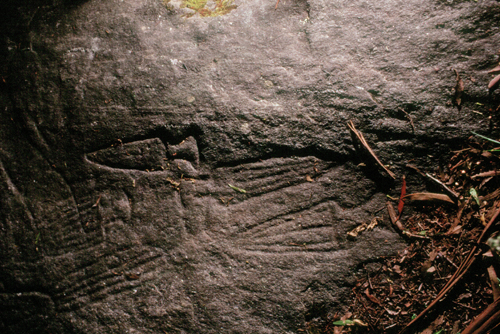
The site’s granite outcrop is etched with petroglyphs that stand among the most important in Galicia. These prehistoric engravings, discovered in 1935 by archaeologist Ramón Sobrino Buhigas, depict weapons such as swords, halberds, and daggers—motifs exceptionally rare in Galician rock art. The iconography suggests connections with Atlantic European cultures, notably the Wessex culture of southern Britain (elcorreogallego.es). The petroglyphs also feature triangular designs, which scholars interpret as anthropomorphic idols, shields, or ritual symbols, reflecting the spiritual and social concerns of prehistoric communities (Turismo de Galicia).
Evolution Through Roman and Medieval Eras
Although Castriño de Conxo’s primary archaeological evidence is prehistoric, the surrounding Conxo area saw significant transformation during Roman and medieval times. The castro likely declined under Roman influence, as local settlements integrated into new administrative systems. In the 10th century, a religious hub developed around the Church of Nuestra Señora de la Merced de Conxo, and the founding of the Monastery of Santa María de Conxo in 1129 reinforced the area’s religious and cultural importance. The construction of the Castle of Rocha Forte in the 13th century, later destroyed in the Irmandiño Revolt, further marked its medieval significance (Parque Fluvial de Santiago).
Modern Era and Administrative Changes
After Spain’s territorial reorganization in 1833, Conxo became an independent municipality, which lasted until its incorporation into Santiago de Compostela in 1925. The area also played a notable role in Galician cultural life as the birthplace of poet Rosalía de Castro and the site of the historic Banquete de Conxo in 1856, a landmark gathering of intellectuals (Wikipedia GL).
Visiting Castriño de Conxo: Practical Information
Hours and Tickets
- Visiting Hours: The site is an open-air archaeological area accessible year-round during daylight hours. Spring and summer: typically 9:00 AM – 7:00 PM; autumn and winter: 9:00 AM – 5:00 PM. For up-to-date information, check local tourism resources.
- Tickets: Entry is free. Guided tours or special events may require advance booking and a fee.
Accessibility
Castriño de Conxo offers partial accessibility for visitors with reduced mobility. Some pathways are uneven, and natural terrain may present challenges. For the best experience, contact local visitor centers or the site administration to inquire about current accessibility conditions.
How to Get There
- On Foot: Approximately a 30–40 minute scenic walk from Santiago de Compostela’s city center, following the Sar River.
- Public Transport: Local buses connect the city center to Conxo; check schedules for the nearest stop.
- By Car: Limited parking is available in adjacent residential areas; avoid parking at the archaeological site to help preserve the environment.
Best Times to Visit
Early mornings or late afternoons are recommended for optimal petroglyph visibility, as raking sunlight accentuates the engravings. Spring and autumn offer mild weather and less dense vegetation, enhancing the site’s beauty and accessibility.
Nearby Attractions
- Monastery of Santa María de Conxo
- Castle of Rocha Forte (a medieval fortress ruin, 12 minutes on foot from Castriño de Conxo)
- Santiago de Compostela’s Old Town (UNESCO World Heritage Site)
- Sar River Walkways
Preservation and Community Engagement
The original petroglyph slab is preserved at the Estudios Galegos Padre Sarmiento research institute to ensure its long-term protection. Local organizations, such as A Rula, actively promote awareness and stewardship of the site (rochaforte.santiagodecompostela.gal). Galicia is also planning a Center for the Interpretation of Rock Art in Villestro to serve as an educational and research hub (elcorreogallego.es).
Cultural and Educational Value
Castriño de Conxo’s petroglyphs provide a vital research focus for understanding Atlantic Bronze Age societies. The site is featured in innovative projects such as the "Galiverso" virtual reality exhibit at Museo Centro Gaiás, making Galician rock art accessible to a wider audience (elcorreogallego.es).
Visitor Tips and Frequently Asked Questions (FAQs)
Visitor Tips
- Wear sturdy footwear due to uneven, rocky terrain.
- Visit in the early morning or late afternoon for the best lighting.
- Bring water, as there are no facilities on site.
- Respect property boundaries and do not disturb the petroglyphs.
- Use photography rather than rubbings or tracings—avoid touching the engravings.
FAQs
Q: What are the visiting hours?
A: The site is open access during daylight hours throughout the year; ideal times are early morning or late afternoon.
Q: Are tickets required?
A: No, Castriño de Conxo is free to visit. Guided tours may require advance booking.
Q: Is the site accessible for people with disabilities?
A: Partial accessibility; some assistance may be needed due to uneven terrain.
Q: How do I get there?
A: On foot (30–40 minutes from the city center), by public bus, or by car (park in nearby residential areas).
Q: Are guided tours available?
A: Yes, through local cultural centers and during special events. Contact Santiago’s tourism office for schedules.
Q: Can I take photographs?
A: Yes, but please avoid physical contact with the petroglyphs.
Listen to the full story in the app
The whole Castriño Of Conxo,
told well.
Audio guides for 1,100+ cities across 96 countries. History, stories, and local insight — offline ready.

Verified, and shown.
Researched and written by the Audiala editorial team from historical records, architectural archives, and local expertise.
Last reviewed
Researched from Wikidata, Wikipedia & official sources · fact-checked · How we make our guides →


