
Historical Background
Origins and Setting
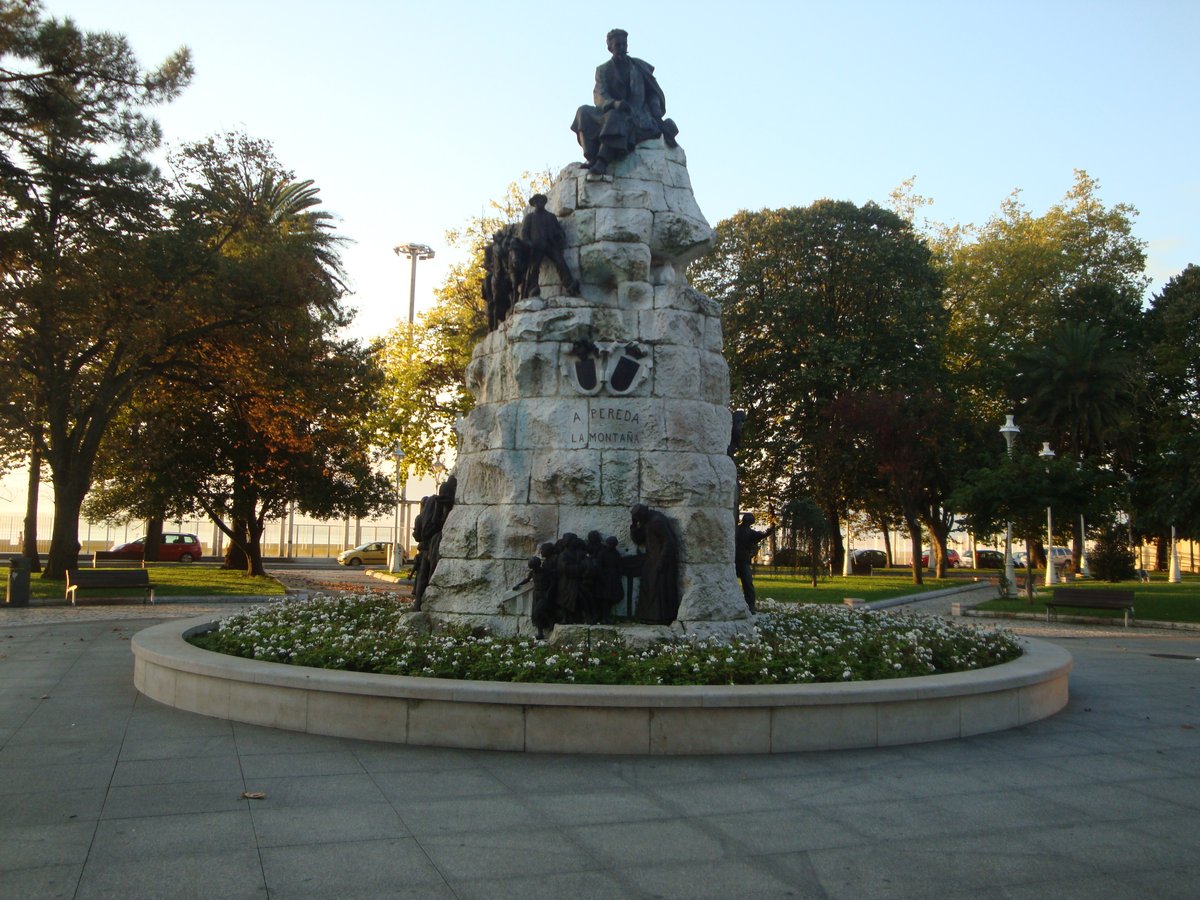
Erected in 1911, the Monument to José María de Pereda is set within the centrally located Jardines de Pereda, an urban park developed on reclaimed land that once formed part of the city’s port. The gardens themselves were inaugurated in 1905, reflecting Santander’s early 20th-century commitment to public spaces celebrating local heritage (Santander Que Hacer). The monument’s location at Paseo de Pereda underscores its status as a landmark within the city’s social and cultural fabric.
Life and Legacy of José María de Pereda
Born in Polanco, Cantabria, José María de Pereda (1833–1906) is renowned for his realist novels vividly portraying Cantabrian rural life and traditions. His best-known works, including "Sotileza," "Peñas arriba," and "Escenas montañesas," are celebrated for their authentic depiction of local customs, landscapes, and dialects. Pereda’s literary achievements contributed profoundly to regional identity and Spanish literature as a whole. His recognition includes membership in the Royal Spanish Academy and service as a Carlist deputy (Wikipedia).
Artistic Features and Symbolism
Designed by acclaimed sculptor Lorenzo Coullaut Valera, the monument features a dignified bronze statue of Pereda atop a rugged stone base, symbolizing his deep roots in Cantabria. The base is adorned with five intricately detailed bronze high-reliefs (altorrelieves), each depicting scenes from Pereda’s novels:
- Sotileza – Life of Santander’s fishermen
- La Leva – The drama of rural military conscription
- La Puchera – Everyday struggles of Cantabrian people
- El sabor de la tierruca – Celebration of regional character
- Peñas Arriba – Contrasts between rural and urban life
These artistic elements invite visitors to visually connect with Pereda’s literary universe and the cultural essence of Cantabria (Santander Que Hacer, El Tomavistas de Santander).
Preservation and Community Role
The Jardines de Pereda and the monument underwent significant restoration in 2014, led by landscape architect Fernando Caruncho and coinciding with the creation of the nearby Centro Botín. These efforts expanded the gardens and improved accessibility, ensuring the monument remains a focal point for civic life, public events, and educational programs. Regular maintenance preserves its aesthetic and historical integrity (Santander Que Hacer).
Visiting Information
Hours and Admission
- Monument and Gardens Open daily from 7:00 AM to 10:00 PM.
- Admission Free of charge; no tickets or reservations required.
Accessibility
- Wheelchair Access Paved paths and ramps throughout the gardens and around the monument.
- Restrooms Accessible facilities available nearby.
- Seating Benches and shaded areas for rest and contemplation.
Getting There
- Address Paseo de Pereda, s/n, 39004 Santander, Cantabria, Spain (Google Maps).
- Public Transport Multiple Santander bus routes stop at or near Paseo de Pereda (Santander Transport).
- Parking Nearby options include Parking Alfonso XIII and Parking Plaza de Pombo.
- On Foot/Bike The site is easily reached from the city center, ferry terminal, or railway station.
Travel Tips
- Best Times to Visit Spring and early autumn for mild weather and vibrant gardens.
- Refreshments Café kiosk in Jardines de Pereda, plus nearby cafés and restaurants.
- Photography Early morning and late afternoon provide optimal lighting for photos of the monument and gardens.
Nearby Attractions
- Centro Botín Contemporary art center adjacent to the gardens (Centro Botín Official Site).
- Paseo Marítimo Scenic waterfront promenade.
- Historic City Center Including Plaza Porticada, Santander Cathedral, and Mercado del Este.
- Palacio de la Magdalena Iconic palace accessible via a scenic coastal walk.
- Museo Marítimo del Cantábrico Maritime museum highlighting regional heritage.
- Playa de los Peligros Nearest city beach, approximately 2 km away.
Special Events and Guided Tours
- Cultural Events The monument is a focal point during festivals such as the Santander International Festival and the city’s Book Fair.
- Guided Tours Offered by the tourist office and local operators, often as part of broader literary or historical itineraries. Booking in advance is recommended.
Visitor Experience
Interpretive signage, QR codes, and digital guides provide context about Pereda’s life and literary contributions. The monument’s integration into the gardens, with their mature trees and open spaces, creates a tranquil setting for reflection, education, and photography. The site’s proximity to key cultural venues and the waterfront allows for a full day of exploration.
Frequently Asked Questions (FAQ)
Q: What are the opening hours for the Monument to José María de Pereda?
A: The monument and Jardines de Pereda are open daily from 7:00 AM to 10:00 PM.
Q: Do I need a ticket to visit?
A: No, access to the monument and gardens is free.
Q: Is the monument accessible for people with disabilities?
A: Yes, there are paved paths and ramps throughout the gardens.
Q: Are guided tours available?
A: Yes, guided tours including the monument are available via local tourism offices and operators.
Q: What other attractions are nearby?
A: Centro Botín, Paseo Marítimo, historic city center, Palacio de la Magdalena, and the maritime museum.
Q: Can I take photographs at the monument?
A: Photography is encouraged, especially during golden hour.