Plan and listen to Monument To Concha Espina with Audiala.
Audio guide in your pocket, itinerary in your browser. Built for the way you actually visit.
Introduction
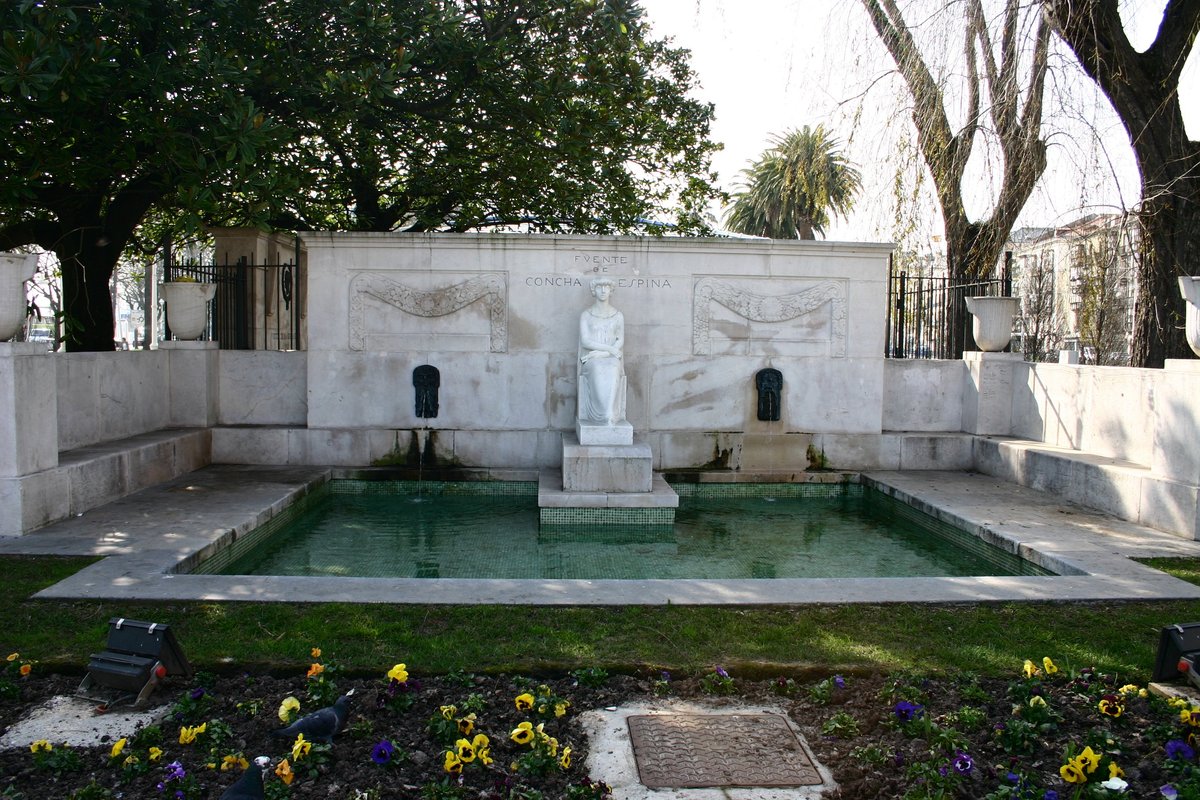
The Monument to Concha Espina, also known as the Fuente de Concha Espina, is a landmark of literary and cultural heritage in the heart of Santander. Located in the lush Jardines de Pereda, this monument honors Concha Espina (1869–1955), one of Spain’s foremost female novelists and essayists. Espina broke social barriers by forging a successful literary career, earning multiple Nobel Prize nominations and national acclaim. Her monument stands not only as a tribute to her literary achievements but also as a symbol of Santander’s commitment to cultural memory and gender progress (TravelRous, eldiariocantabria.publico.es).
This guide provides a detailed exploration of the monument’s history, artistic and architectural features, practical visiting information, nearby attractions, and essential travel tips for a complete visitor experience.

Historical Background and Concha Espina’s Literary Legacy
Concha Espina was born in Santander in 1869. Growing up during a period when women's roles were largely confined to the domestic sphere, she boldly pursued a career as a writer. Espina’s works, such as La niña de Luzmela (1909), La esfinge maragata (1914), and Altar mayor (1926), often featured strong female protagonists, rural life, and themes of social justice. Her writing is celebrated for its emotional depth and linguistic richness, challenging prevailing gender norms and offering nuanced portrayals of women’s lives (eldiariocantabria.publico.es).
Espina’s literary influence extended far beyond Santander. She was nominated for the Nobel Prize in Literature three consecutive times and received the National Prize for Literature for Altar mayor. Her works remain central to Spanish literary studies and have inspired adaptations in film and other media (turismo.santander.es).
Description and Artistic Features of the Monument
Sculptor and Design
The monument was inaugurated in 1927 by King Alfonso XIII and designed by the renowned sculptor Victorio Macho. Macho’s expressive realism is evident in the dignified bust of Concha Espina, integrated into an elegant fountain structure. The tranquil flow of water symbolizes the enduring influence of Espina’s creativity (TravelRous). The monument is crafted from stone, chosen for its durability and harmony with the garden’s landscape.
Symbolic Elements
- Bust of Concha Espina: Portrays the writer with a serene, introspective expression, evoking inspiration and intellectual depth.
- Fountain: Water flows from the base, representing the flow of ideas and Espina’s lasting literary legacy.
- Frontón Addition: In 1960, a stone backdrop was added to honor Espina’s son, journalist Víctor de la Serna, linking two generations of cultural achievement (TravelRous).
Integration with Jardines de Pereda
The Jardines de Pereda, inaugurated in 1905 and renovated in 2014, provide a verdant setting for the monument. The gardens are home to diverse flora—magnolias, cedars, and palms—and several other monuments that form a cultural narrative through Santander’s history (Santander Que Hacer). The monument’s placement along a central pathway ensures visibility and accessibility, while benches and shaded areas invite quiet reflection.
The monument is also part of the “Ruta de los Ilustres,” a literary trail marking the homes and achievements of Santander’s most influential figures (eldiariocantabria.publico.es).
Practical Visitor Information
Location
- Address: Jardines de Pereda, Santander city center
- Access: Walking distance from major city landmarks (Centro Botín, Paseo de Pereda); accessible by public transport and close to parking facilities
Visiting Hours & Admission
- Hours: Open year-round, 24 hours (public park)
- Admission: Free; no tickets required
Accessibility
- Wheelchair-accessible paved paths and ramps
- Benches and shaded rest areas
- Public restrooms and tourist information nearby
Visitor Tips and Nearby Amenities
- Best Times to Visit: Spring and summer for vibrant gardens; early mornings and late afternoons offer peaceful ambiance and excellent lighting for photography
- Amenities: On-site café (in the park’s repurposed gas station), children’s playground, traditional carousel, benches, and drinking fountains
- Etiquette: Respect the monument and gardens; avoid climbing or damaging plantings; quiet reflection is welcomed
- Language: Most plaques in Spanish; basic English is spoken at local establishments
Guided Tours and Cultural Events
- Guided Tours: Several city walking tours include the monument, offering insights into Espina’s life and Santander’s cultural history (My Little World of Travelling).
- Events: During festivals such as Semana Grande, special performances and gatherings often occur near the monument (hollymelody.com).
Suggested Itineraries and Nearby Attractions
Morning:
- Stroll through Jardines de Pereda and visit the Monument to Concha Espina
- Tour Centro Botín for contemporary art and bay views (spainguides.com)
Afternoon:
- Lunch at a local café
- Visit Santander Cathedral (hollymelody.com)
- Explore Plaza Porticada or walk along the waterfront
Evening:
- Relax at Sardinero Beaches
- Enjoy Cantabrian cuisine at nearby restaurants
Frequently Asked Questions (FAQ)
Q: What are the visiting hours for the Monument to Concha Espina?
A: The monument is in Jardines de Pereda, accessible 24/7 year-round.
Q: Is there an entrance fee or ticket required?
A: No, entry is free as the monument is in a public park.
Q: Is the monument wheelchair accessible?
A: Yes, paved paths and ramps ensure accessibility.
Q: Are guided tours available?
A: Yes, many local tours include the monument along with other historical sites.
Q: Can I take photographs at the monument?
A: Yes, photography is encouraged.
Listen to the full story in the app
The whole Monument To Concha Espina,
told well.
Audio guides for 1,100+ cities across 96 countries. History, stories, and local insight — offline ready.
Verified, and shown.
Researched and written by the Audiala editorial team from historical records, architectural archives, and local expertise.
Researched from Wikidata, Wikipedia & official sources · fact-checked · How we make our guides →