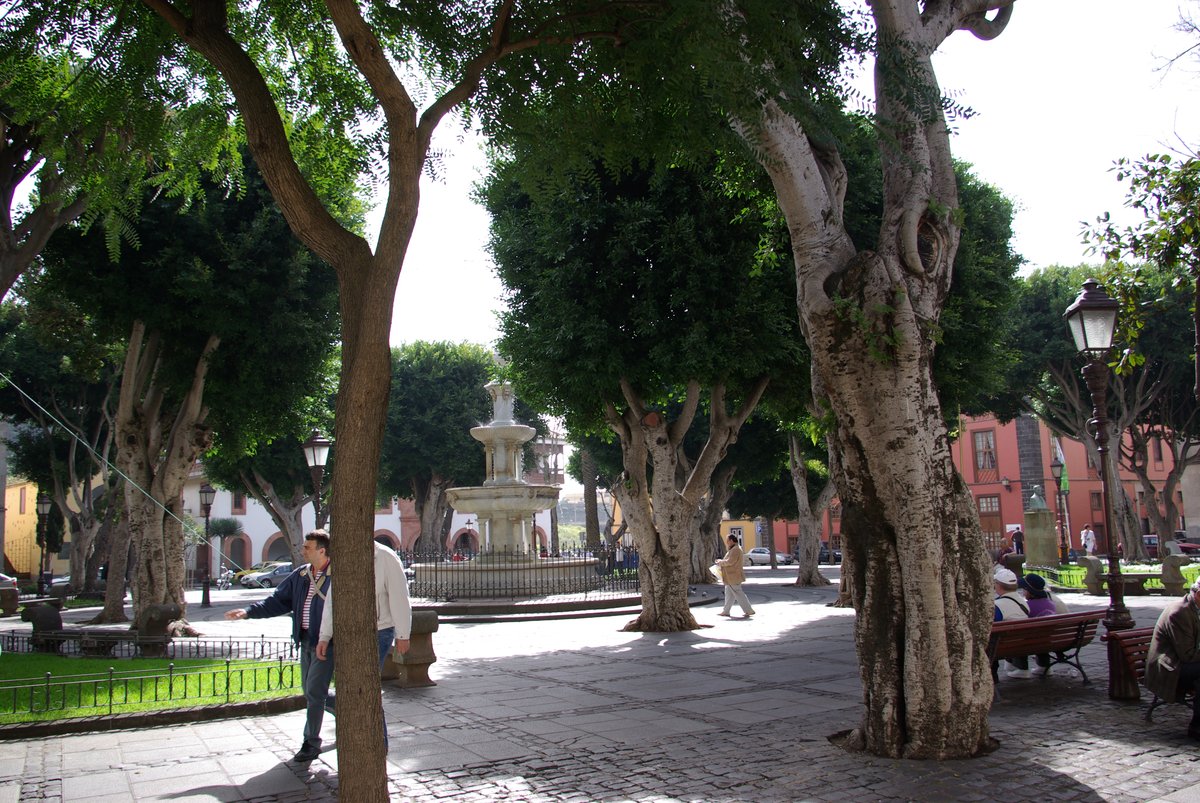
Plan and listen to Casa De Los Jesuitas, San Cristóbal De La Laguna with Audiala.
Audio guide in your pocket, itinerary in your browser. Built for the way you actually visit.
Introduction
Located in the heart of San Cristóbal de La Laguna, Tenerife, the Casa de los Jesuitas is a landmark that embodies the city’s rich religious, educational, and cultural heritage. Constructed in the 18th century by the Society of Jesus, the building is a prime example of Baroque and Canarian architecture and has played a central role in the intellectual and civic life of the Canary Islands. Today, Casa de los Jesuitas stands as a vibrant cultural hub, open to visitors eager to explore its history, architecture, and ongoing significance.
Whether you are a history enthusiast, architecture admirer, or cultural traveler, this comprehensive guide will provide you with everything you need to plan your visit—including up-to-date information on hours, tickets, accessibility, and nearby attractions (Turismo de La Laguna; eldia.es; UNESCO World Heritage Centre).
Origins and Jesuit Legacy (1733–1767)
Casa de los Jesuitas was constructed between 1733 and 1737 by the Society of Jesus, who sought to establish a prominent educational and religious center in La Laguna. The Jesuit college quickly became a leading institution, offering advanced instruction in philosophy, theology, mathematics, and the humanities. With its strategic location in the city’s historic core, the building reflected La Laguna’s role as Tenerife’s intellectual and spiritual hub (Turismo de La Laguna).
However, in 1767, King Carlos III expelled the Jesuits from Spanish territories, marking an abrupt end to their presence. The building was left vacant, though the semicircular arch of the oratory remains as a physical reminder of its ecclesiastical origins (eldia.es).
Reuse and Educational Transformation (1777–Present)
A decade after the Jesuits' expulsion, the Casa de los Jesuitas became the headquarters of the Real Sociedad Económica de Amigos del País de Tenerife, fostering economic and cultural reform during the Enlightenment. In 1792, it became the first seat of the University of La Laguna (originally the University of San Fernando), cementing its status as the nucleus of higher education in the Canary Islands (Universidad de La Laguna). Over the centuries, the building has hosted primary and teacher training schools, and today it continues to house archives and serve as a cultural venue (eldia.es).
Architectural and Artistic Features
Casa de los Jesuitas exemplifies the harmonious blend of Baroque and traditional Canarian architecture. Its robust stone façade, blue stone (cantería azul) portal, and split curved pediment (frontón curvo partido) distinguish its exterior. The main entrance, crowned by a heraldic shield and shell motif, opens onto an L-shaped plan organized around a central patio—a hallmark of Canarian design that maximizes light and ventilation (gestorpatrimoniocultural.cicop.com).
Original interior elements include a finely crafted wooden staircase, thick masonry walls, wooden beams, and deep-set windows with curved seats. The preserved toral arch that once led to the oratory is a rare ecclesiastical relic. The building’s adaptive reuse over time is evident in its layered spatial organization and decorative details (routeyou.com).
Educational and Cultural Legacy
Casa de los Jesuitas is foundational to the development of higher education in the Canary Islands, as the birthplace of the University of La Laguna (Universidad de La Laguna). Its archives house rare Enlightenment-era volumes and documents from prominent families, while its public programs preserve the Jesuit commitment to scholarship and civic engagement.
Today, the building continues to foster cultural exchange, hosting art exhibitions, lectures, concerts, and academic conferences. The Real Sociedad Económica de Amigos del País de Tenerife remains active, promoting research and community events (Red de Espacios Culturales de Canarias).
Visiting Information
Hours and Admission
- Opening Hours: Tuesday to Saturday, 10:00 AM – 6:00 PM; Sunday, 10:00 AM – 3:00 PM; closed Mondays and public holidays. Please verify current hours before visiting (Turismo de La Laguna).
- Admission: Free entry; some special exhibitions or guided tours may require a ticket or prior booking.
Accessibility
The building offers step-free access at the main entrance and accessible restrooms, but some upper floors and historic areas may have limited accessibility due to the original structure. It is advisable to contact the site in advance regarding specific needs.
Guided Tours and Special Events
Guided tours (in Spanish and English) are available on weekends and by appointment. These tours provide in-depth insights into the building’s history, architecture, and archival treasures. Casa de los Jesuitas also hosts periodic cultural events and temporary exhibitions, often focusing on local history, art, and the Jesuit legacy. Booking in advance for tours is recommended, especially during high season (Turismo de La Laguna).
Visual Highlights
- Facade: Stately blue stone portal with Baroque ornamentation.
- Central Patio: The heart of the building, ideal for photography.
- Wooden Staircase: Showcasing traditional Canarian craftsmanship.
- Toral Arch: A preserved ecclesiastical element from the original oratory.

Location and Nearby Attractions
Address: Calle San Agustín, 23, San Cristóbal de La Laguna, Tenerife
Casa de los Jesuitas is centrally located in La Laguna’s UNESCO World Heritage historic center. Within walking distance, you can explore:
- Plaza del Adelantado
- Ermita de San Miguel
- Palacio de Nava
- Museum of History and Anthropology
- Cathedral of San Cristóbal de La Laguna
The area is ideal for a walking tour, with numerous cafes, restaurants, and shops nearby (Guide to Canary Islands; spain.info).
Frequently Asked Questions (FAQs)
Q: What are the visiting hours?
A: Tuesday to Saturday, 10:00 AM – 6:00 PM; Sunday, 10:00 AM – 3:00 PM; closed Mondays and holidays.
Q: Is admission free?
A: Yes, general admission is free. Some exhibitions or tours may require tickets.
Q: Are guided tours available in English?
A: Yes, guided tours are offered in Spanish and English. Booking in advance is advised.
Q: Is the building wheelchair accessible?
A: The main entrance is accessible, but upper floors may have limited access due to the historic architecture.
Q: Can I take photographs inside?
A: Photography is permitted in public areas unless otherwise indicated during special events.
Q: What else can I visit nearby?
A: Major attractions include the Cathedral of La Laguna, Museum of History and Anthropology, and Plaza del Adelantado.
Listen to the full story in the app
The whole Casa De Los Jesuitas, San Cristóbal De La Laguna,
told well.
Audio guides for 1,100+ cities across 96 countries. History, stories, and local insight — offline ready.

Verified, and shown.
Researched and written by the Audiala editorial team from historical records, architectural archives, and local expertise.
Researched from Wikidata, Wikipedia & official sources · fact-checked · How we make our guides →