SSix soldiers standing on a breached wall, shouting down to an army below: "¡Adentro, adentro, que todo es nuestro!" That was how Palma fell to James I of Aragon on December 31, 1229 — and why the bronze horseman in Plaça d'Espanya, Palma de Mallorca, Spain, still rides eastward almost 800 years later. Come to meet the 21-year-old king who planned an island's conquest over dinner in Tarragona, and whose ghost the city summons every New Year's Eve.
The statue itself is almost banal on a first pass — a king on a horse in a transit-choked square you'll probably cross to reach your hotel. Keep walking and you miss the point. Stop, and the city opens.
Every date carved on Palma's oldest stones, every mosque-turned-cathedral, every Catalan street name over an erased Arabic one, traces back to this one man and the three months in 1229 when a Muslim capital of 300 years became a Christian one. Jaume I is not a historical footnote here. He's the reason Palma speaks Catalan, prays in La Seu, and throws a civic festival older than most European nations.
01 What to See
The Equestrian Statue on Plaça d'Espanya
Enric Clarasó's bronze king sits on a stocky, heavy-boned warhorse — historically accurate for a 13th-century destrier, not the elegant show-horse silhouette most equestrian monuments inherit from the Baroque. Jaume I faces toward Carrer de Sant Miquel, staring directly at the old medina he took in December 1229. First stone laid in 1913 by the Infanta Isabel, inaugurated on the Feast of Sant Sebastià, January 20, 1927.
The pedestal hides the best story. It looks like ordinary dressed stone, but the masonry is salvaged from Palma's own medieval city walls, torn down in 1902 during the Pla Calvet urban clearance. The king who took the city now stands on the very stones that once defended it against him — a self-eating monument that almost no visitor notices.
Go around to the north side and find the second figure everyone walks past. A standing almogàver — a medieval Aragonese light infantryman — holds a laurel branch aloft at ground level, victory-gesture frozen in bronze. Clarasó sculpted him as part of the same composition in the 1920s, but because tourists fixate on the horse above, the foot soldier gets skipped by maybe nine out of ten cameras.
The 2024 Plaza and Its Buried Gate
The entire 8,100 m² square was rebuilt between May 2023 and September 2024 for €2.8 million, and the result genuinely changes how the statue reads. The old slippery grey slate is gone, replaced by three kinds of pale stone that warm to gold in late afternoon light. 6,800 new plants, new benches, and respectful amber lighting on the mature ficus make the plaza somewhere you'd actually sit — a civic upgrade rather than a commuter corridor.
During pre-renovation excavations in March 2023, workers uncovered buried remains of the Porta Pintada, the Painted Gate — one of Palma's most ornate medieval entrances, demolished in 1902 so this plaza could exist. Walk five minutes north to Carrer de Sant Miquel 66 and a glass panel in the pavement shows a section of the 1544 bastion that survived underground.
Now stand on the statue and pay attention to your feet. When the Sóller train departs from the Estació Intermodal directly below, a low rumble travels up through the new stone tiles — 800 years of conquest history vibrating on top of a subway. Best felt around 9am, worst time to photograph the monument and the best time to understand where you are.
Walking Route: From the Conqueror Into His Conquest
Start at the statue's back, looking over Jaume's shoulder down Carrer de Sant Miquel — the same sightline the king's bronze gaze follows into the old town. Stop at no. 66 for the glass panel over the 1544 bastion, then keep walking south through Mercat de l'Olivar for a mid-morning coffee and an ensaïmada among actual residents buying fish.
Continue to Plaça Major, then cut east to Plaça de Cort — the civic heart where, every December 31 at 10am, the Festa de l'Estendard raises the Royal Standard of the Conquest in one of the oldest surviving civil ceremonies in Europe (continuous since the 14th century). From Cort it's a seven-minute walk south to La Seu, the cathedral Jaume vowed to build during a storm on the crossing. Roughly 3.5km end to end, two to three hours with stops. Go anticlockwise and you'll trace his 1229 entry in reverse.
02 Explore James I of Aragon in pictures.




Videos
Watch & Explore James I of Aragon
Palma de Mallorca Spain - Cruise Port Travel Guide
🌴Walking Through Palma de Mallorca/ Explore the Heart of Mallorca’s Capital in 4K
Plan and listen to James I Of Aragon with Audiala
Audio guide in your pocket, itinerary in your browser. Built for the way you actually visit.
03 Visitor logistics.
The practical scaffolding for a good visit — kept short.
Getting There
Plaça d'Espanya is Palma's transit heart — the underground Estació Intermodal sits directly beneath the statue, connecting the Sóller and Inca trains, the M1 metro, and intercity buses. From the airport, EMT bus A1 runs straight to the square in about 20 minutes. On foot from La Seu Cathedral, it's a 15-minute walk northwest up Passeig del Born and Carrer Sant Miquel.
Opening Hours
Open 24/7, 365 days a year. It's an outdoor public monument in a civic square — no gates, no tickets, no seasonal closures. As of 2026, the statue and plaza are in mint condition after the €2.82M renovation completed September 2024.
Time Needed
Five to ten minutes for a photo and a walk around the bronze. Give it 20–30 minutes if you want to sit at a plaza café, read the inscriptions on the pedestal, and watch the commuter churn. Pair it with Mercat de l'Olivar five minutes away and you've got a satisfying one-hour loop.
Accessibility
The square is flat paved stone with no kerbs or steps around the monument — fully wheelchair and stroller friendly after the 2024 repaving. Lifts and escalators link the plaza surface to the Estació Intermodal below, and all Palma metro stations now have platform-gap bridging. Wheelchair rental is available through Motion4rent nearby.
Cost & Parking
The monument itself is free. If you're driving, Parking Plaça d'Espanya sits directly underneath at roughly €2.40/hour in 2026, though the historic centre has driving restrictions — most visitors do better with the peripheral Park & Ride lots and a bus in.
05 Tips for visitors.
Small things that change the day.
Come December 31
The Festa de l'Estendard on December 31 is one of Europe's oldest civic ceremonies — nearly 800 years unbroken, commemorating Jaume I's 1229 entry into the city. The day before, institutions lay floral offerings at this very statue. It's a locals' ritual, barely touristed.
Pickpocket Hotspot
Plaça d'Espanya is a known lift zone — so much so that Palma deployed a new elite police unit here in September 2024 and added CCTV during the renovation. Keep bags zipped and front-facing, especially around the station entrances and café terraces.
Eat At The Market
Skip the plaza's fast-food chains and walk five minutes to Mercat de l'Olivar, Palma's working-class food hall since 1951. Grab a sobrasada bocadillo at the fish-hall bar (budget) or splurge on oysters and cava. Open Mon–Fri 7:00–14:30, Sat till 15:00.
Light On The Bronze
The equestrian statue faces roughly east, so afternoon sun from the west hits Jaume's face and the horse's flank beautifully. Shoot before 09:00 or after 20:00 for quiet frames without commuter crowds. Drones are effectively off-limits — AESA bans urban flights over assemblies without permits.
Vermut At Bar Espanya
For the Mallorcan Saturday pre-lunch ritual, the locals' move is a cold vermut at Bar Espanya near the square — cheap, classic, and blissfully untouristed. Order it on the rocks with an olive. It's what you do before, not instead of, lunch.
Stash Your Bags
Estació Intermodal has lockers downstairs but fills fast in summer. Backup options: Stow Your Bags from €1.49/bag near Plaça Major, or app-based Radical Storage and Bounce drop points from about €1.95/day.
Call Him En Jaume
Locals call him "En Jaume" — the affectionate Catalan article signals belonging. Say "el monument" or "la plaça" rather than the full "Monument a Jaume I" and you'll sound less like a guidebook. Avoid framing the 1229 conquest as a "Reconquista" — historians and locals consider that framing inaccurate.
Walk To The Cathedral
From the statue, head south down Carrer Sant Miquel through Plaça Major, past Porta Pintada's hidden medieval bastion fragments at number 66, and down to La Seu. It's about 3.5 km door-to-door, two hours with stops — the spine of old Palma.
Where to Eat
Don't Leave Without Trying
Dining Tips
- check Lunch (13:30–15:30) is the main meal; dinner is very late (21:00–22:30 is normal for locals)
- check La hora del vermut (noon–14:00) is the sacred pre-lunch aperitivo ritual — vermouth + tapas with locals
- check The bill only arrives when you ask for it — never placed automatically
- check Service charge is NOT included; check for 'Servicio incluido' on the bill before tipping
- check Standard tip is 5–10%, though locals often leave minimal or round up loosely
- check Cards are accepted almost universally; contactless payment and Apple Pay are standard across Palma
- check Casual tapas bars and market stalls are walk-in only; mid-range restaurants benefit from 1–2 week advance phone reservations in high season
- check No universal closing day — each restaurant sets its own schedule; always verify hours ahead, especially for Sunday and winter closures
Restaurant data powered by Google
04 Historical Context
The Conqueror at Twenty-One
James I — Jaume to the Catalans, En Jaume to the Mallorcans — was born in Montpellier in February 1208 and inherited a kingdom at five years old, orphaned when his father died at Muret fighting the papal crusade. The Templars raised him at Monzón castle. By twenty he was already bored of Aragonese politics and staring at a map of the Mediterranean.
The Llibre dels Fets, his own first-person autobiography and the first royal chronicle of its kind in medieval Europe, records the moment the idea of Mallorca took hold. It happened, records show, at dinner.
The Chronicle That Came Back
For almost 800 years, Mallorca's conquest was told only by its victors. Then, in the early 21st century, a digitized Arabic manuscript surfaced on a CD in a library in Tindouf, Algeria — the Kitab Tarikh Mayurqa, written by Ibn Amira al-Makhzumi, the qadi (chief Islamic judge) of Mallorca who lived through the siege and escaped to die in Tunisian exile between 1251 and 1259. His account describes the sighting of the Christian fleet, betrayals within the besieged city, and violence the Christian chronicles never recorded. Scholars at the Universitat de les Illes Balears are still working through its implications. The 2018 IB3 documentary 1229, el rostre ocult gave it a first public hearing.
La Seu, Built on a Mosque
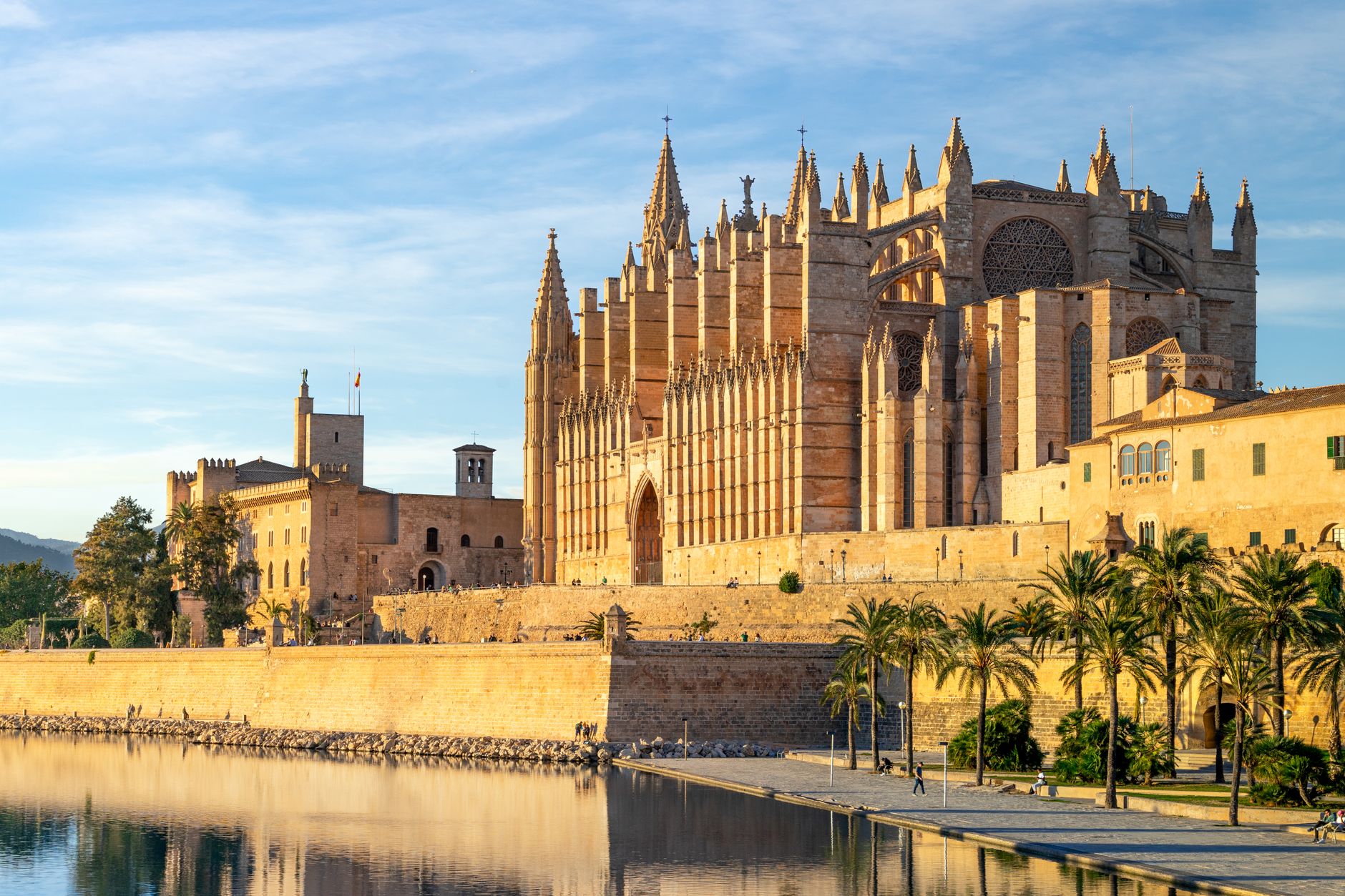
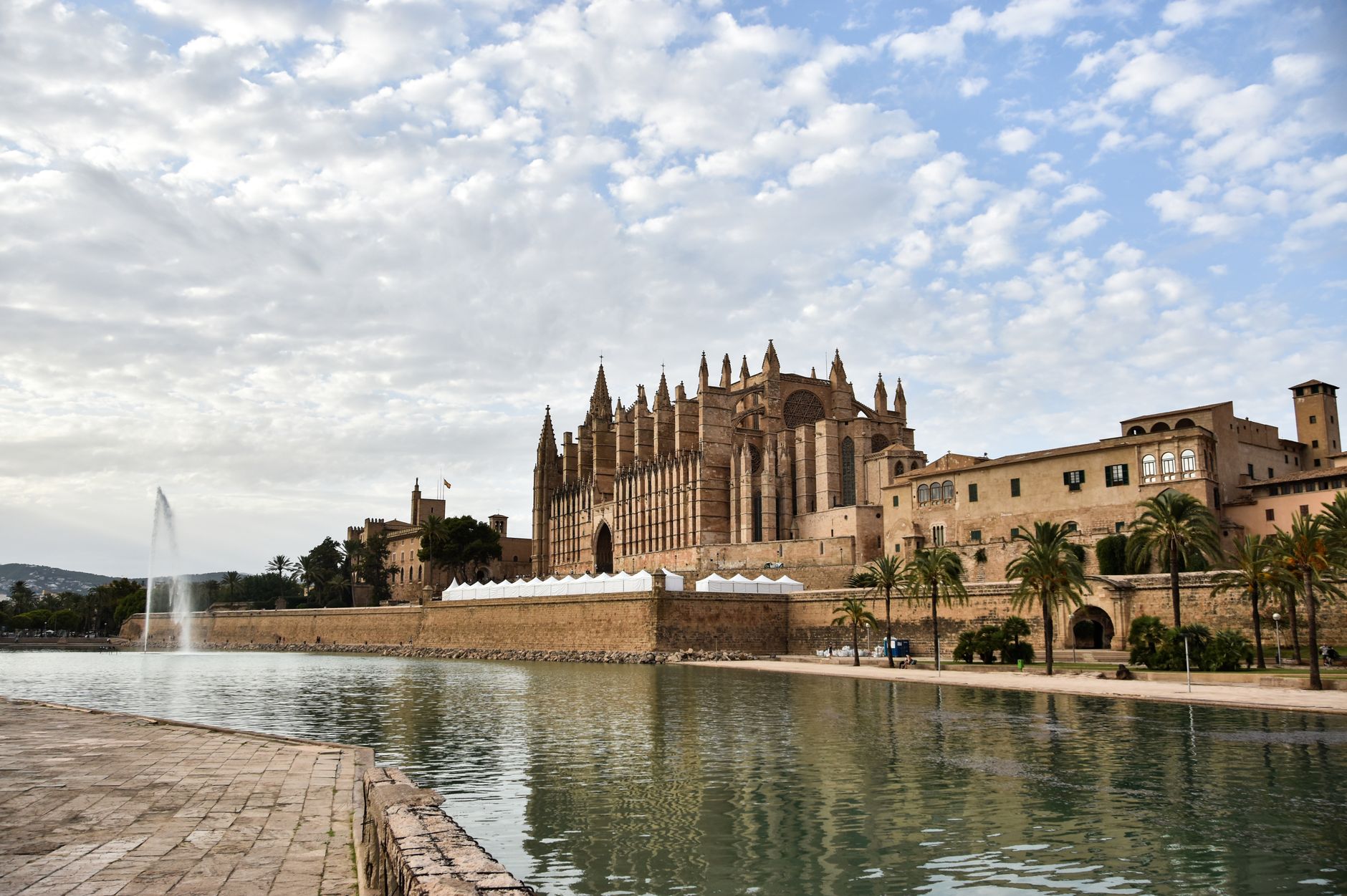
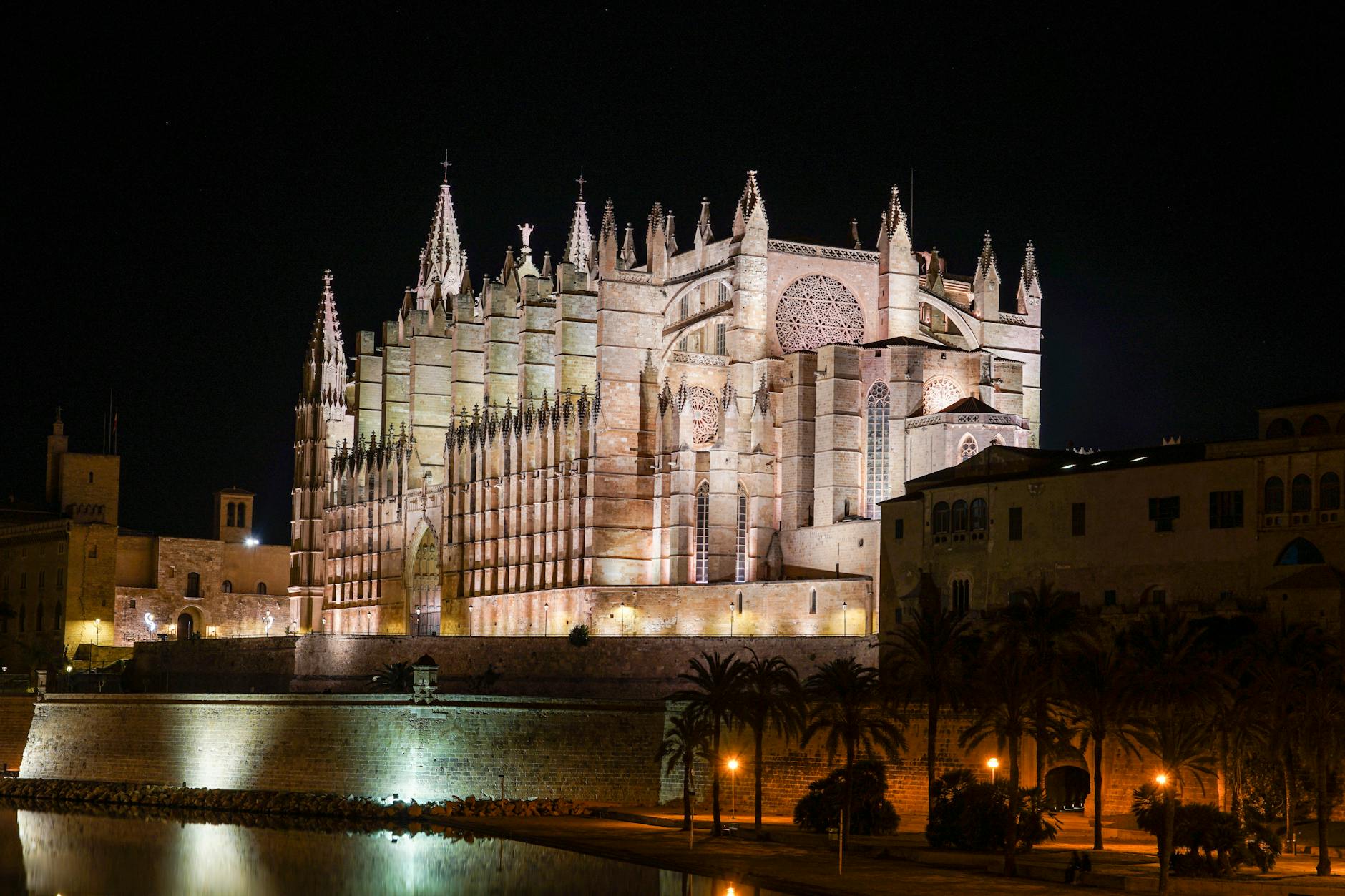
Tradition holds that James vowed during a terrible storm at sea to build a cathedral to the Virgin if he survived — and that La Seu, Palma's golden sandstone cathedral, is the fulfillment of that vow. The storm vow is attributed, not documented; it doesn't appear in James's own otherwise-candid autobiography. What records show is colder and more interesting: on the very day the city fell, December 31, 1229, James ordered the immediate conversion of the aljama mosque — Mallorca's chief Islamic house of worship — into a Christian church. La Seu rose on that site, partly from that fabric. The mosque is gone. Its footprint holds up the cathedral.
Listen to the full story in the app
06 Frequently asked.
Is the James I monument in Palma worth visiting?
Yes, especially after the €2.8M plaza renovation completed September 2024 left the bronze freshly restored and the square cleaner than it's been in decades. It's a 5-minute stop with serious historical weight: Jaume I took the city on December 31, 1229, and his statue still gets floral wreaths laid at its base every December 30. Skip it if you only want photos; come back on December 31 morning if you want to see Palma stop and remember itself.
How long do you need at the Jaume I statue in Palma?
Five to ten minutes for a photo and a walk around the plinth, twenty to thirty if you sit at a café terrace and read the inscriptions. The monument isn't a building you enter — it's an equestrian bronze in an open square, so your time is set by your curiosity. Pair it with Mercat de l'Olivar five minutes away and you've got an easy hour.
How do I get to Plaça d'Espanya in Palma?
Take EMT bus A1 from Palma airport — direct to Plaça d'Espanya in about 20 minutes. The square is also Palma's main intermodal hub, so the underground Estació Intermodal connects metro line M1 and trains to Sóller, Inca and beyond directly beneath the statue. From La Seu Cathedral it's a 15-minute walk northwest along Passeig del Born and Carrer Sant Miquel.
Can you visit the Jaume I monument for free?
Yes — it's an open-air public monument with no ticket, no booking, no opening hours. The square is accessible 24/7, 365 days a year, and there's no skip-the-line product to buy. The only cost might be the €2.40/hour underground car park if you drive in.
What is the best time to visit the Jaume I statue?
December 31 if you want the Festa de l'Estendard — nearly 800 years of uninterrupted civic ceremony, declared Intangible Cultural Heritage of Spain. For photography, golden hour catches the bronze warmly from the west, and pre-9am gives you the statue without the commuter wave surfacing from the metro. Avoid midday in July and August: the new pale stone paving reflects heat hard.
What should I not miss at the Jaume I monument?
The almogàver foot soldier at the plinth's base — a second figure by sculptor Enric Clarasó that almost everyone walks past while photographing the king on horseback. Also look at the pedestal stone itself: it's recycled masonry from Palma's medieval city walls, demolished in 1902, so the conqueror literally stands on the fortifications he once breached. During the 2024 restoration workers concealed a phrase in medieval Catalan inside the fountain railing — invisible from outside, a deliberate time capsule.
Is Plaça d'Espanya in Palma safe?
Generally yes during the day, with normal urban vigilance for pickpockets — Palma scores 81.9/100 for daytime safety. The square is a known pickpocket area because of its transport-hub crowds, which is why Palma deployed a new elite police unit specifically covering Plaça d'Espanya in September 2024. After dark it stays active but a bit gritty; keep your bag zipped.
Who built the Jaume I statue in Palma?
Catalan Modernista sculptor Enric Clarasó i Daudí (1857–1941) cast the bronze equestrian figure, after the original sculptor Ignacio Farran abandoned the commission in 1914. The first stone was laid in 1913 by Infanta Isabel, but the monument wasn't inaugurated until January 20, 1927 — a 14-year gap nobody has fully explained. It marked the 700th anniversary of the 1229 conquest.
Researched and written by the Audiala editorial team from historical records, architectural archives, and local expertise.
Official municipal description of the monument and its history
Local cultural perspective on the monument and its meaning to Mallorcans
Visitor overview of the square and statue
Visitor reviews and practical info
Transport hub overview and surrounding amenities
Detailed walking-tour description of the square
Sculpture history, commission and inauguration dates
Description of the statue and surrounding accessibility
Coordinates and visitor reference for the monument
Coverage of the start of statue restoration works in 2024
Inauguration of the renovated square, September 2, 2024
Renovation cost and scope details
Discovery of Porta Pintada remains during pre-renovation excavations
Visual coverage of the renovated plaza
Local press coverage of the new square
Biography of the sculptor of the Jaume I equestrian figure
Detailed history of the 1229 conquest
Spanish-language conquest history
September 12, 1229 battle details
Tactical details and Montcada deaths
Biography of Montcada noble killed at Portopí
James I's autobiographical chronicle
Muslim chronicler of the conquest, Kitab Tarikh Mayurqa
Navigator who hosted the 1228 Tarragona dinner
Pere Martell historical context
Etymology debate around the Bendinat name
Documentary on Muslim perspective of the conquest
Documentary release coverage
Narrative account of the December 31, 1229 entry
Conquest narrative and context
Templar role in Jaume I's upbringing and conquest
Open historical questions about the conquest
Cathedral history including mosque conversion
Critical historical perspective
Official description of the December 31 ceremony
Intangible Cultural Heritage designation
Festival schedule and details
Cultural background of the festival
Recent festival coverage
Santa Ponça reenactment festival details
Santa Ponça festival programme
Festival closing coverage
Police presence at Plaça d'Espanya since September 2024
Safety scores and traveler advice
Market hours and offerings
Market overview and food culture
Market description and dining options
Local tapas bar near the square
Restaurant inside Mercat de l'Olivar
Nearby dining options
Public transport directions
Bus routes serving Plaça d'Espanya
Official transport information
Underground car park details
Current parking rates
Wheelchair access information
Luggage storage near the square
Automatic locker service
Old town walking route
Tourist-friendly EMT routes
Drone restrictions over urban Palma
AESA registration requirements
Local language and identity politics
Settler demographics from Llibre del Repartiment
Alternative Mallorcan history perspectives
Biographical context of the conqueror
Last reviewed