Plan and listen to Segovia Viaduct with Audiala.
Audio guide in your pocket, itinerary in your browser. Built for the way you actually visit.
Introduction
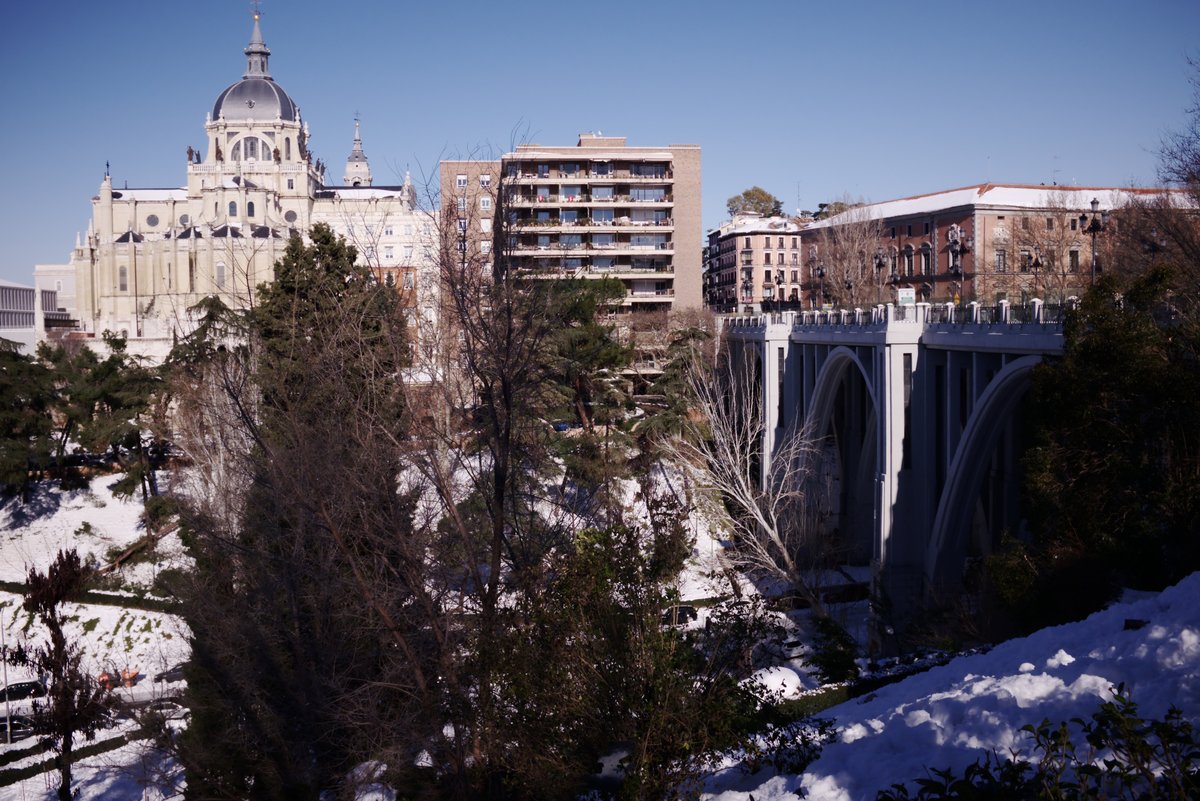
The Segovia Viaduct ("El Viaducto de Segovia") is an enduring symbol of Madrid’s urban evolution, bridging the city’s medieval past with its vibrant present. Spanning the deep ravine of Calle de Segovia in the La Latina district, this historic structure not only connects key neighborhoods but also offers panoramic views, a compelling blend of architectural styles, and a poignant social legacy. Whether you are a history enthusiast, architecture aficionado, or a casual visitor, exploring the Segovia Viaduct is an essential experience for understanding Madrid’s unique character and transformation.
For up-to-date information and planning, visit Madrid Tourism, and consult guides such as Madrid-Tourist.com and Lonely Planet.

Visitor Information: Hours, Tickets, and Best Times to Visit
Visiting Hours:
The Segovia Viaduct is open to the public 24 hours a day, 7 days a week. There are no gates or restrictions on entry, making it accessible at any time.
Tickets and Fees:
There is no entry fee or ticket required to visit or cross the Segovia Viaduct. It is a public thoroughfare and viewpoint.
Best Times to Visit:
- Early mornings and late afternoons offer softer light for photography and quieter ambiance.
- The viaduct is beautifully illuminated at night, making evening visits especially atmospheric.
- Sunset is particularly popular for sweeping city views.
How to Get There and Accessibility
Location:
The viaduct is located in the heart of Madrid’s La Latina district, connecting Calle de Bailén with the Royal Palace area and the Vistillas gardens.
Public Transportation:
- Metro: La Latina (Line 5) and Ópera (Lines 2, 5, R) stations are both within a 10–15 minute walk.
- Bus: Multiple city bus lines serve the vicinity.
- On Foot: Easily accessible from nearby attractions like the Royal Palace and Almudena Cathedral.
Accessibility:
- The upper deck of the viaduct is flat and wheelchair accessible.
- The stairways connecting to Calle de Segovia and the Vistillas gardens are steep and may be challenging for those with mobility issues.
- Benches and shaded areas are available nearby for rest.
Historical Background and Architectural Evolution
Origins and Early Constructions:
Plans for a viaduct date as far back as the 18th century, but the first structure was inaugurated in 1874 as part of Madrid’s modernization. Designed by engineer Eugene Barron, this iron-and-wood bridge was considered a technological marvel, spanning 120 meters and rising 23 meters over Calle de Segovia (Wikipedia).
Rationalist Redesign and Reconstruction:
By the early 20th century, structural issues prompted a redesign. Architect Francisco Javier Ferrero Lluisa’s rationalist vision, built of polished concrete and granite, was completed in 1934. The viaduct was damaged during the Spanish Civil War and rebuilt in 1942. A major restoration in 1977–78 increased its height and length, adapting it for modern traffic while preserving its architectural essence (Madrid-Tourist.com).
Key Features:
- Current Length: Nearly 200 meters (656 feet)
- Height: 25 meters (82 feet) above Calle de Segovia
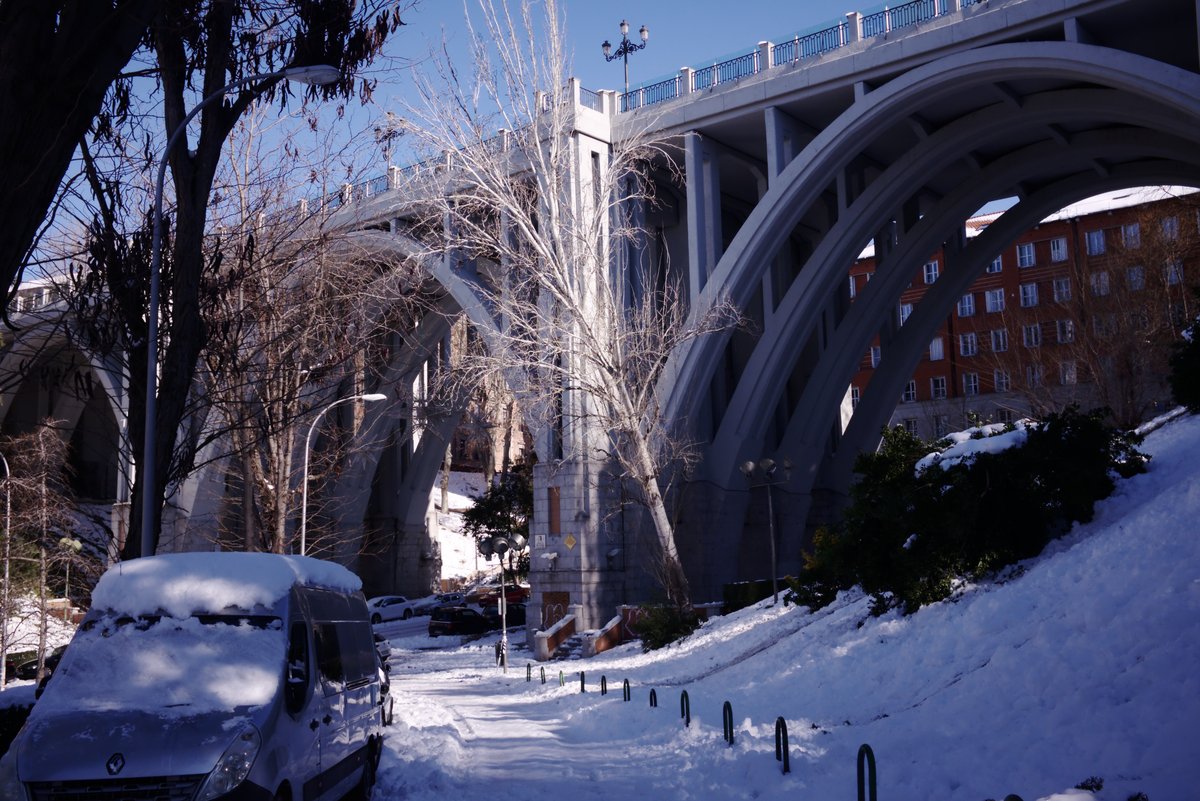
- Arches: Three main arches, each subdivided for strength
- Materials: Polished concrete and granite-clad piers
The viaduct’s rationalist design integrates seamlessly with Madrid’s historic core and the city’s topography, linking the Royal Palace with the lively southern districts (Lonely Planet).
Cultural, Social, and Artistic Significance
Urban Landmark and Gathering Place:
The Segovia Viaduct is a favorite spot for locals and visitors, offering some of Madrid’s best city vistas, especially at sunset or during festivals. Its elevated walkway frames the domes of the Basílica de San Francisco el Grande and the greenery of Las Vistillas park (historiasdemadrid.com).
A Somber Legacy: The “Bridge of Suicides”:
From its early days, the viaduct was associated with tragic incidents. In the 1990s, suicide rates peaked, prompting the installation of transparent acrylic barriers in 1998. These safety measures have since greatly reduced such incidents, making the bridge a symbol of both challenge and positive intervention (travelwithintent.com).
In Popular Culture:
The dramatic arches and urban setting have inspired filmmakers, artists, and writers. The viaduct frequently appears in Spanish cinema and literature as a symbol of both progress and inner struggle, echoing Madrid’s own history of resilience.
Safety, Renewal, and Community Role
Urban Renewal and Preservation:
A major restoration in the 1970s raised and extended the viaduct, ensuring it could meet increased traffic demands. Enhancements focused on both structure and aesthetics, preserving the bridge’s historical integrity while improving its function.
Community and Accessibility:
The viaduct connects neighborhoods, supports local events (especially during San Isidro festival), and serves as a focal point for walking tours. Its integration with the Madrid Río project and other pedestrian routes has enhanced the area’s accessibility and appeal (miradormadrid.com).
Nearby Attractions and Photographic Spots
- Royal Palace of Madrid: A short walk away, offering grand interiors and gardens.
- Basílica de San Francisco el Grande: Known for its immense dome and neoclassical architecture.
- La Latina Neighborhood: Famous for its tapas bars, narrow streets, and lively atmosphere.
- Fuente de los Caños Viejos: Features Madrid’s oldest stone coat of arms.
- Las Vistillas Park: A tranquil green space with panoramic views.
Photography Tips:
- For dramatic shots, photograph the arches from Calle de Segovia below.
- Wide-angle views from the upper deck capture the Royal Palace and western skyline.
- Early morning or late afternoon light is ideal.
Guided Tours and Events
While there are no tours dedicated exclusively to the Segovia Viaduct, many walking tours of historic Madrid feature it as a highlight—providing insight into its history, architecture, and social impact (Madrid-Tourist.com). Check with local tour operators or the official tourism website for current events.
Frequently Asked Questions (FAQ)
Is the Segovia Viaduct free to visit?
Yes, it is open to the public and free of charge.
What are the visiting hours?
Accessible 24/7, year-round.
How do I get there by public transit?
Metro stations La Latina and Ópera are nearby; several bus routes also serve the area.
Is it accessible for people with disabilities?
The upper deck is wheelchair accessible, but the connecting stairways are steep.
Are guided tours available?
Many general Madrid walking tours include the viaduct as a key stop.
Can I take photos?
Absolutely—some of the best city views are from the viaduct and its approaches.
Summary and Visitor Recommendations
The Segovia Viaduct stands as a testament to Madrid’s architectural ambition, historical depth, and enduring community spirit. Its open accessibility, central location, and sweeping views make it both a practical thoroughfare and a memorable destination. Visitors are encouraged to combine their viaduct experience with local walking tours, nearby attractions, and time spent in the vibrant La Latina district. Early morning and sunset visits provide the best light and ambiance for photos and reflection.
For more information and detailed planning, consult these resources:
- Madrid Tourism Official Site
- Madrid-Tourist.com
- Lonely Planet
- Historias de Madrid
- Travel With Intent
- Mirador Madrid
Tickets & tours.
These are guided options from our partners — same price as booking direct.
Prices are indicative — final pricing and availability are confirmed at checkout. Audiala may earn a commission from bookings made through these links.
Listen to the full story in the app
The whole Segovia Viaduct,
told well.
Audio guides for 1,100+ cities across 96 countries. History, stories, and local insight — offline ready.
Verified, and shown.
Researched and written by the Audiala editorial team from historical records, architectural archives, and local expertise.
Researched from Wikidata, Wikipedia & official sources · fact-checked · How we make our guides →
