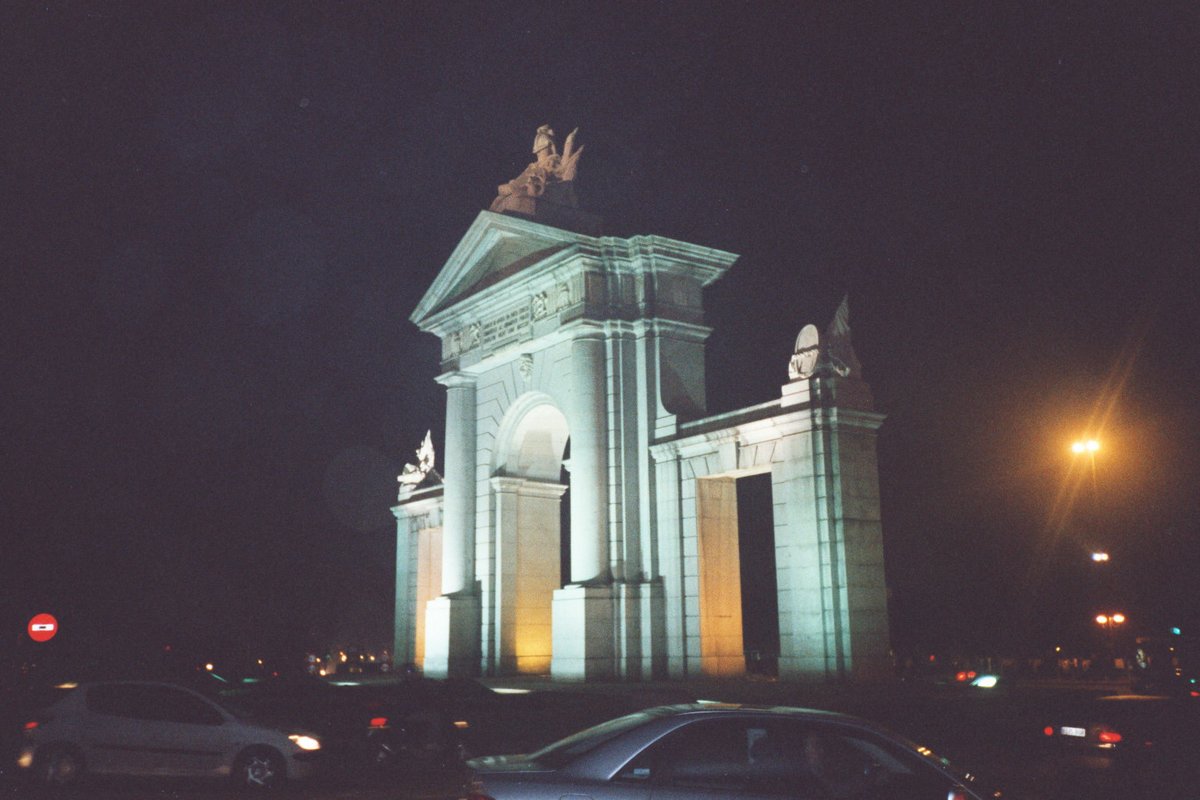
Plan and listen to Puerta De San Vicente with Audiala.
Audio guide in your pocket, itinerary in your browser. Built for the way you actually visit.
Introduction
The Puerta de San Vicente in Madrid, Spain, is a monumental gateway that holds a significant place in the city's historical and architectural landscape. Originally constructed in 1726 under the reign of King Philip V and designed by the architect Pedro de Ribera, this Baroque masterpiece served as an essential entry point into Madrid from the west (Hospicio de San Fernando). Over the centuries, the gate has undergone numerous transformations, including a notable reconstruction in 1775 by Francesco Sabatini, reflecting the shift from Baroque to Neoclassical styles (Royal Palace of Madrid). The gate's historical significance is further emphasized by its role in various royal processions, military parades, and public celebrations, making it a cultural icon of resilience and adaptability (Madrid Tourism Board). Today, the Puerta de San Vicente stands as a testament to Madrid's rich architectural heritage and historical evolution, attracting visitors from around the world. This comprehensive guide provides an in-depth look at its history, architectural significance, visiting information, and travel tips to enhance your experience.
Origins and Early History
The Puerta de San Vicente, located in Madrid, Spain, has a rich history that dates back to the 18th century. The original gate was constructed in 1726 under the reign of King Philip V. It was designed by the architect Pedro de Ribera, who was also responsible for other significant works in Madrid, such as the Hospicio de San Fernando. The gate was part of the city's defensive walls and served as a crucial entry point into Madrid from the west.
Architectural Significance
Pedro de Ribera's design for the Puerta de San Vicente was a fine example of Baroque architecture, characterized by its elaborate decorations and dramatic forms. The gate featured three arches, with the central arch being the largest, flanked by two smaller ones. The structure was adorned with various ornamental elements, including coats of arms, sculptures, and intricate stone carvings. This design not only served a functional purpose but also acted as a symbol of the city's grandeur and architectural prowess.
Demolition and Reconstruction
In 1770, the original gate was demolished as part of a broader urban renewal project initiated by King Charles III. The king aimed to modernize Madrid and improve its infrastructure. Consequently, the Puerta de San Vicente was rebuilt in 1775, this time designed by the renowned architect Francesco Sabatini, who also designed the Royal Palace of Madrid.
Sabatini's design was more neoclassical, reflecting the architectural trends of the time. The new gate featured a simpler, more symmetrical design with fewer ornamental elements. It retained the three-arch structure but with a more refined and elegant appearance. This reconstruction marked a significant shift in architectural styles in Madrid, moving from the elaborate Baroque to the more restrained Neoclassical.
19th and 20th Century Changes
Throughout the 19th century, the Puerta de San Vicente underwent several modifications and repairs. The gate continued to serve as an important entry point into the city, witnessing numerous historical events and changes. However, by the early 20th century, the gate had fallen into disrepair and was eventually dismantled in 1892 to make way for modern urban development.
Modern Reconstruction
In 1995, the city of Madrid decided to reconstruct the Puerta de San Vicente as part of a broader effort to preserve its historical landmarks. The new gate was built based on Sabatini's 18th-century design, using modern construction techniques and materials. The reconstruction aimed to restore the gate's historical significance while ensuring its durability for future generations.
Today, the Puerta de San Vicente stands as a testament to Madrid's rich architectural heritage and historical evolution. It serves as a popular tourist attraction, offering visitors a glimpse into the city's past and its architectural transformations over the centuries.
Cultural and Historical Impact
The Puerta de San Vicente has played a significant role in Madrid's cultural and historical landscape. As one of the city's main gates, it has witnessed numerous historical events, including royal processions, military parades, and public celebrations. The gate has also been a symbol of Madrid's resilience and adaptability, reflecting the city's ability to evolve and modernize while preserving its historical identity.
The gate's reconstruction in the late 20th century was part of a broader movement to preserve Madrid's historical landmarks and promote cultural tourism. Today, the Puerta de San Vicente is not only a historical monument but also a cultural icon, attracting visitors from around the world who come to admire its architectural beauty and historical significance.
Visitor Experience
Visitors to the Puerta de San Vicente can explore the gate and its surroundings, taking in the architectural details and learning about its history through informational plaques and guided tours. The gate is located near several other historical landmarks, including the Royal Palace and the Campo del Moro Gardens, making it an ideal starting point for a historical tour of Madrid.
Visiting Hours and Tickets
The Puerta de San Vicente is open to visitors daily from 9:00 AM to 8:00 PM. While there is no entrance fee to view the gate itself, guided tours may have associated costs. It's advisable to check for the latest information on tickets and tour schedules on the official Madrid tourism website.
Accessibility
The site is easily accessible by public transportation, with several bus and metro lines serving the area. There are also facilities for visitors with disabilities, ensuring that everyone can enjoy this historic landmark.
Nearby Attractions
In addition to the Puerta de San Vicente, visitors can explore nearby attractions such as the Royal Palace, the Campo del Moro Gardens, and the bustling Plaza de España. These sites offer a rich blend of history, culture, and scenic beauty.
Travel Tips
- Best Time to Visit - Spring and autumn are ideal seasons to visit, with pleasant weather and fewer crowds.
- Photography - The gate and its surroundings offer excellent photographic opportunities, especially during the golden hour.
- Local Cuisine - Don't miss out on trying local tapas at nearby cafes and restaurants.
Frequently Asked Questions (FAQ)
Q: What are the visiting hours for Puerta de San Vicente?
A: The gate is open daily from 9:00 AM to 8:00 PM.
Q: Is there an entrance fee?
A: There is no entrance fee to view the gate itself, but guided tours may have associated costs.
Q: How can I get to Puerta de San Vicente?
A: The gate is easily accessible by public transportation, with several bus and metro lines serving the area.
Q: Are there any guided tours available?
A: Yes, guided tours are available and can provide a more in-depth understanding of the gate's history and significance.
Q: What are some nearby attractions?
A: Nearby attractions include the Royal Palace, Campo del Moro Gardens, and Plaza de España.
Listen to the full story in the app
The whole Puerta De San Vicente,
told well.
Audio guides for 1,100+ cities across 96 countries. History, stories, and local insight — offline ready.

Verified, and shown.
Researched and written by the Audiala editorial team from historical records, architectural archives, and local expertise.
Last reviewed
Researched from Wikidata, Wikipedia & official sources · fact-checked · How we make our guides →


