
Plan and listen to Monument To The Discovery Of America, Madrid with Audiala.
Audio guide in your pocket, itinerary in your browser. Built for the way you actually visit.
Introduction
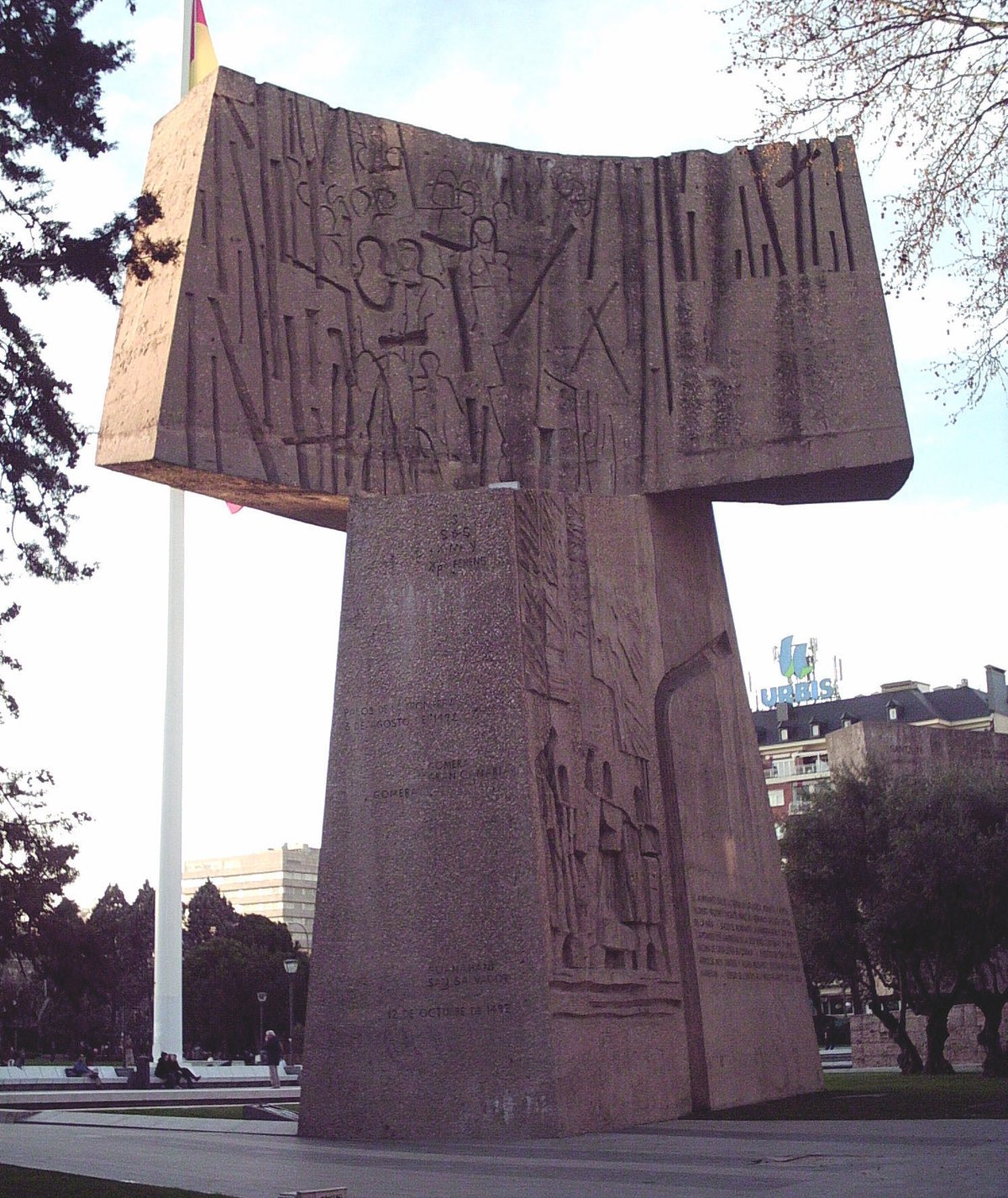
The Monument to the Discovery of America (Monumento al Descubrimiento de América), prominently situated in Madrid’s Plaza de Colón, is a powerful tribute to Christopher Columbus’s 1492 voyage and Spain’s consequential role in world history. Designed by Joaquín Vaquero Turcios and inaugurated in 1977, the monument’s modernist concrete blocks symbolize the three ships—Niña, Pinta, and Santa María—that carried Columbus across the Atlantic. More than a celebration of Spanish maritime achievement, the monument encourages reflection on the cultural encounters and complex legacies that followed the Age of Discovery. Surrounded by the Jardines del Descubrimiento and key cultural landmarks, this site is not only a historical focal point but also a vibrant urban gathering space. This guide details the monument’s history, design, symbolism, visiting information, accessibility, nearby attractions, and practical tips for a rewarding visit (exploramonumentos.com, Spain.info, Madrid Secreto).




Origins and Historical Context
Commissioned to mark the quincentenary of Columbus’s first voyage, the monument was conceived during the late 1970s as Spain transitioned to democracy. This era saw renewed reflection on national identity and history, and the monument was intended to both honor Spain’s maritime exploits and acknowledge the enduring impact of the Age of Discovery. Its location in Plaza de Colón—a square named for Columbus since the late 19th century—underscores its symbolic significance. The monument has since become a site of celebration, public dialogue, and, at times, debate regarding the consequences of European exploration (exploramonumentos.com, en.wikipedia.org).
Design, Architecture, and Symbolism
Artistic Vision
Sculptor and architect Joaquín Vaquero Turcios’s design is a striking example of late 20th-century Brutalism. Three monumental reinforced concrete blocks—rising up to 15 meters—represent distinct phases of the Discovery:
- The Prophecies: Anticipation and foretelling of new lands.
- The Discovery: Columbus’s Atlantic crossing and arrival.
- The New Men: Cultural encounters and transformations that ensued.
The blocks are inscribed with historical excerpts and adorned with bas-reliefs depicting navigational instruments, ships, and scenes from both Spanish and indigenous perspectives. This abstract, modern form was initially controversial, yet it now stands as an iconic Madrid landmark (nomadepicureans.com, Madrid City Council).
Setting
The monument is set within the Jardines del Descubrimiento, a nearly 2-hectare garden with olive trees, pines, and water features. A vast Spanish flag—the largest in Spain—flies nearby, reinforcing the connection to national identity (en.wikipedia.org).
Visiting Information
Hours and Tickets
- Monument & Gardens: Open 24 hours a day, year-round. As an outdoor public site, access is unrestricted (esmadrid.com).
- Fernán Gómez Cultural Center (beneath the gardens): Typically open from 11:00 AM to 9:00 PM; check official site for updates.
- Admission: Free. No tickets are required to visit the monument or gardens.
Accessibility
The site is fully accessible for visitors with mobility challenges. Wide, gently sloped paths, ramps, and benches are provided throughout the plaza and gardens (esmadrid.com).
Getting There
- Location: Plaza de Colón, at the intersection of Paseo de la Castellana, Paseo de Recoletos, Calle de Goya, and Calle de Serrano (Google Maps).
- Metro: Colón (Line 4)
- Bus: Multiple routes stop at or near the plaza.
- Parking: Public parking is available beneath the plaza, but public transport is recommended due to central location (spain.info).
Guided Tours
While there are no official tours dedicated solely to the monument, it is featured on many walking tours of Madrid’s historical sites. Informational plaques onsite support self-guided exploration (nomadepicureans.com).
Nearby Attractions
Plaza de Colón is surrounded by several major Madrid attractions:
- National Library of Spain: A must for history and literature enthusiasts.
- National Archaeological Museum: Showcasing Spain’s ancient and medieval past.
- Fernán Gómez Cultural Center: Hosting exhibitions and performances.
- Serrano Shopping District: Upscale shops and dining.
- Wax Museum (Museo de Cera): Family-friendly and engaging.
- Jardines del Descubrimiento: Ideal for a relaxing stroll.
(Spain.info, nomadepicureans.com)
Visitor Tips and Photography
- Best Time to Visit: Early morning or late afternoon provides the best lighting and fewer crowds. Evening illumination of the monument is especially atmospheric.
- Photography: The interplay of light and shadow on the concrete surfaces, reflections in the pond, and the sight of the Spanish flag make for excellent photo opportunities.
- Amenities: The area is safe, well-lit, and offers public restrooms at the Fernán Gómez Cultural Center. Numerous cafés and restaurants are nearby (nomadepicureans.com).
Events and Contemporary Use
Plaza de Colón hosts major public events, most notably Spain’s National Day (Día de la Hispanidad) on October 12. These occasions provide a vibrant cultural atmosphere but may also result in larger crowds. The monument is maintained by the Madrid City Council, with periodic restoration to ensure its preservation (publicartaroundtheworld.com).
Frequently Asked Questions (FAQs)
Q: Is there an entry fee to visit the monument?
A: No, the monument and gardens are free and open to the public.
Q: What are the opening hours?
A: The monument and gardens are accessible 24/7.
Q: Is the monument wheelchair accessible?
A: Yes, wide ramps and gentle paths ensure accessibility.
Q: Are guided tours available?
A: The monument is featured in many city walking tours, but no dedicated tours are provided.
Q: Can I take photographs?
A: Yes, photography is encouraged throughout the site.
Listen to the full story in the app
The whole Monument To The Discovery Of America, Madrid,
told well.
Audio guides for 1,100+ cities across 96 countries. History, stories, and local insight — offline ready.
Verified, and shown.
Researched and written by the Audiala editorial team from historical records, architectural archives, and local expertise.
Researched from Wikidata, Wikipedia & official sources · fact-checked · How we make our guides →
