Introduction
The Fountain of Cybele (Fuente de Cibeles) stands as one of Madrid’s most enduring symbols, celebrated for its neoclassical grandeur, mythological resonance, and central location at Plaza de Cibeles. Since its completion in 1782, this monument has been a testament to Madrid’s artistic, historical, and civic character, drawing visitors from around the world to admire its sculptural elegance and participate in city celebrations. This comprehensive guide provides a detailed overview of the fountain’s history, symbolism, practical visitor information—including visiting hours, accessibility, and tickets—as well as tips for experiencing the surrounding landmarks and cultural atmosphere.
Historical Background
Origins and Commissioning
Commissioned in 1777 under King Charles III as part of his Enlightenment-era modernization of Madrid, the Fountain of Cybele was designed by renowned architect Ventura Rodríguez. The project aimed to transform the city with monumental works that reflected Madrid’s growing prominence (Wikipedia; esmadrid.com). The fountain was completed in 1782, with sculptors Francisco Gutiérrez (Cybele) and Roberto Michel (the lions) bringing Rodríguez’s vision to life (Wikipedia; History Tools).
Mythological and Symbolic Significance
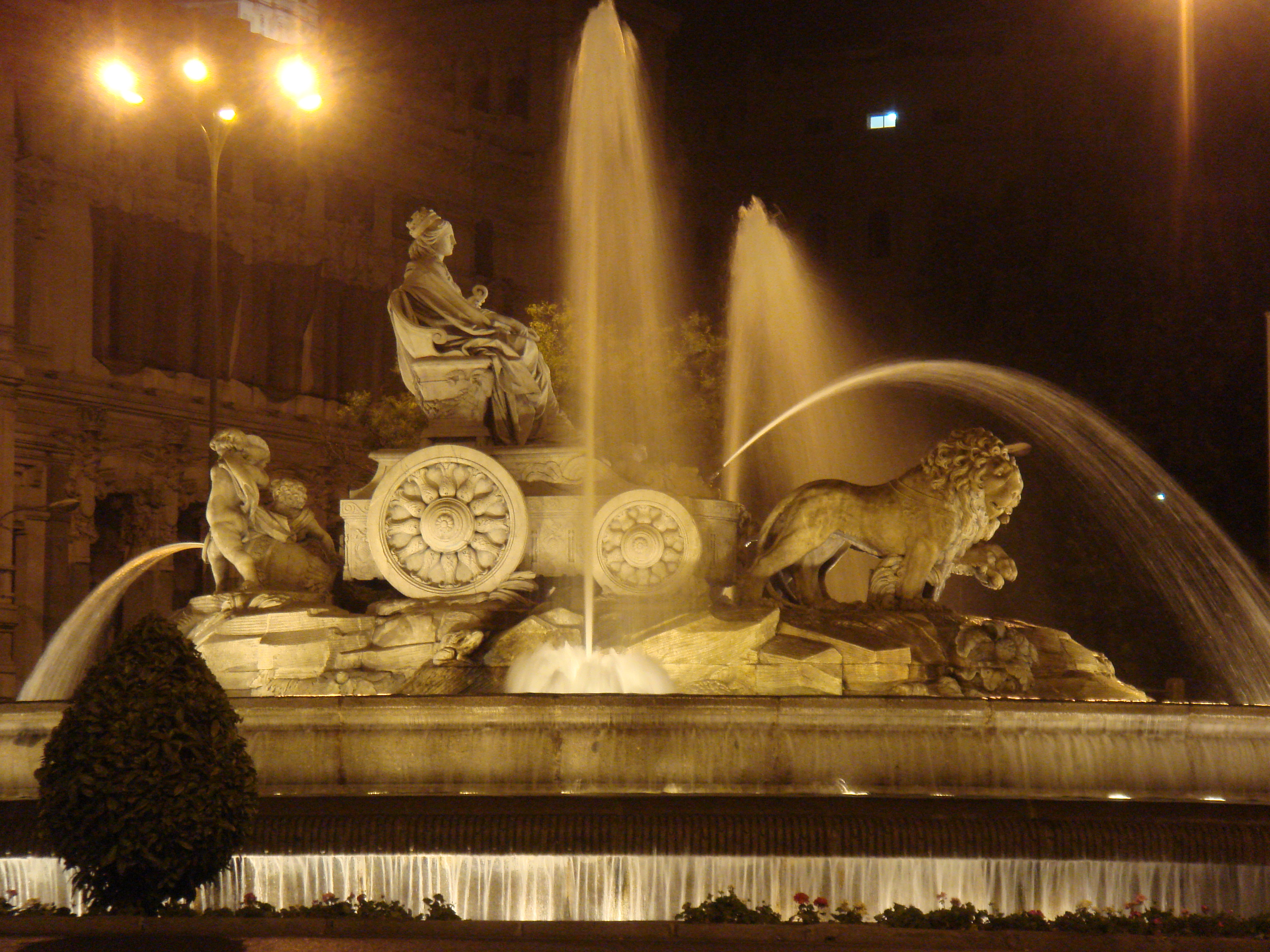
The central figure, Cybele (Cibeles), is a goddess from Phrygian and Greco-Roman mythology, symbolizing fertility, nature, and protection. She is depicted seated on a chariot drawn by lions—Atalanta and Hippomenes—who, according to myth, were transformed by the gods. Cybele’s scepter and key reinforce her sovereignty and guardianship over the city, while the lions represent strength and transformation (citysecreto.com; besthotels.wiki).
Construction, Materials, and Artistic Style
The fountain features white marble from Montesclaros (Toledo) for Cybele and the lions, set atop a granite basin. The monument stands about 8 meters tall with a 32-meter diameter basin, creating a striking visual anchor for the plaza (esmadrid.com; spain.info). The design is a prime example of Spanish neoclassicism, with classical forms, balanced composition, and subtle baroque dynamism (mymadridpass.com; Guías Viajar).
Historical Evolution and Urban Role
Initially installed at the start of Paseo de Recoletos, the fountain was moved to the center of Plaza de Cibeles in 1895 to accommodate urban growth (Wikipedia; spain.info). Historically, it served as both a decorative monument and a practical water source for residents and cavalry. Over time, it has become a focal point for public gatherings, especially Real Madrid football celebrations, and a cherished symbol of the city’s resilience—surviving the Spanish Civil War and periodic restorations (besthotels.wiki; citysecreto.com).
Visiting the Fountain of Cybele: Practical Information
Location and Access
The Fountain of Cybele is centrally located at Plaza de Cibeles, where Paseo del Prado, Paseo de Recoletos, and Calle de Alcalá converge. It is framed by four monumental buildings: Palacio de Cibeles (Madrid City Hall), Bank of Spain, Linares Palace, and Buenavista Palace (Madrid-Tourist.com).
Getting There
- Metro: Banco de España (Line 2) is the closest station.
- Bus: Numerous lines serve Plaza de Cibeles (e.g., 1, 2, 9, 10, 15, 20, 34, 51, 52, 53, 74, 146, 202, 203) (TripSavvy).
- Walking: The plaza is a 10–15 minute walk from Puerta del Sol, Gran Vía, and the Prado Museum.
Visiting Hours
- Fountain of Cybele: Outdoor monument accessible 24 hours a day, seven days a week.
- Best Times: Early morning or late afternoon for optimal lighting and fewer crowds; evenings for illuminated views.
Entrance Fees and Tickets
- Fountain: Free, no ticket required.
- Nearby Attractions:
- Palacio de Cibeles Rooftop Terrace: Open daily (10:00 AM–8:00 PM); approx. €3 admission (CentroCentro).
- Linares Palace (Casa de América): Free exhibitions; guided tours by booking.
- Buenavista Palace: Free guided tours with appointment.
Accessibility
- The plaza is wheelchair and stroller-friendly, with paved walkways and ramps.
- The fountain itself is in a busy roundabout—use designated crossings for safe access.
- Public restrooms are available at Palacio de Cibeles and nearby venues.
Tips for Visitors
- Photography: Daylight offers crisp details; night visits highlight beautiful illumination.
- Safety: The fountain is surrounded by traffic; always use crosswalks.
- Events: Expect crowds during Real Madrid victories and national celebrations.
- Etiquette: Climbing the fountain is prohibited; photography is welcome, but respect other visitors.
Nearby Attractions
- Palacio de Cibeles: Rooftop viewing terrace, art exhibitions, and cultural events.
- Bank of Spain: Striking neoclassical façade.
- Linares Palace: Casa de América cultural center.
- Buenavista Palace: Spanish Army headquarters; guided tours available.
- Retiro Park, Prado Museum, Thyssen-Bornemisza Museum, Puerta de Alcalá, and Gran Vía: All within walking distance, offering art, culture, and leisure.
Cultural Significance and Celebrations
The Fountain of Cybele is more than an architectural masterpiece—it is a living part of Madrid’s identity. It is the preferred gathering spot for football fans, notably Real Madrid supporters, and is often decorated with scarves and flags after major victories (besthotels.wiki). The fountain is also central to public festivities, national holidays, and seasonal illuminations (citysecreto.com).
Restoration and Conservation
Ongoing conservation efforts by the Madrid City Council ensure the fountain’s preservation, including cleaning, structural repairs, and modern lighting installations. These initiatives protect the monument’s artistic and historical value for future generations (Madrid-Tourist.com).
Frequently Asked Questions (FAQs)
Q: What are the visiting hours for the Fountain of Cybele?
A: The fountain is accessible 24/7 as an outdoor public monument.
Q: Is there an entry fee?
A: No, visiting the fountain is free.
Q: How do I get there on public transport?
A: Banco de España metro (Line 2) and several bus lines serve Plaza de Cibeles.
Q: Are guided tours available?
A: Yes, many city walking tours include the fountain and surrounding landmarks.
Q: Is the area wheelchair accessible?
A: Yes, the plaza is accessible with ramps and paved paths.
Q: When is the best time to visit?
A: Early morning or evening for fewer crowds and beautiful lighting.
Q: Can I visit the Palacio de Cibeles rooftop terrace?
A: Yes, tickets are required (approx. €3); check operating hours.
Visual Gallery
(Insert high-quality images with descriptive alt text such as "Fountain of Cybele illuminated at night," "Cybele statue and lions detail," "Plaza de Cibeles at sunset.")
Plan Your Visit and Explore More
The Fountain of Cybele is a must-see destination for anyone seeking to understand Madrid’s history, artistry, and spirit. Its accessibility, central position, and proximity to major attractions make it the perfect starting point for your exploration of the Spanish capital.
For further details and updates:
For guided tours and personalized recommendations:
Download the Audiala app and follow us on social media for exclusive tips and the latest events.
Summary and Traveler Tips
- The Fountain of Cybele is open 24/7 and free to visit.
- Centrally located, easily reached by metro, bus, or on foot.
- Best times to visit: early morning or evening for fewer crowds and illuminated views.
- Combine your visit with nearby attractions like Palacio de Cibeles, Prado Museum, and Retiro Park.
- Check for special events and guided tours to enrich your experience.
- Respect safety rules and local customs, especially during celebrations.
Listen to the full story in the app
Your Personal Curator, in Your Pocket.
Audio guides for 1,100+ cities across 96 countries. History, stories, and local insight — offline ready.
Audiala App
Available on iOS & Android
Join 50k+ Curators
Sources
- verified
- verified
- verified
- verified
- verified
- verified
- verified
- verified
Last reviewed: