Plan and listen to Ermita De San Pelayo Y San Isidoro with Audiala.
Audio guide in your pocket, itinerary in your browser. Built for the way you actually visit.
Introduction
The Ermita de San Pelayo y San Isidoro de Ávila is a captivating historical site located within El Retiro Park in Madrid, Spain. Originally constructed in the 11th century in the city of Ávila, this Romanesque church has traveled through time and space to become an integral cultural landmark in Madrid. The hermitage was initially dedicated to Saint Pelagius, a child martyr from Córdoba, and later also to Saint Isidore, a revered scholar and Archbishop of Seville. Over the centuries, the church has witnessed various stages of change, decline, and restoration, ultimately finding its home in one of Madrid's most beloved parks (Wikipedia).
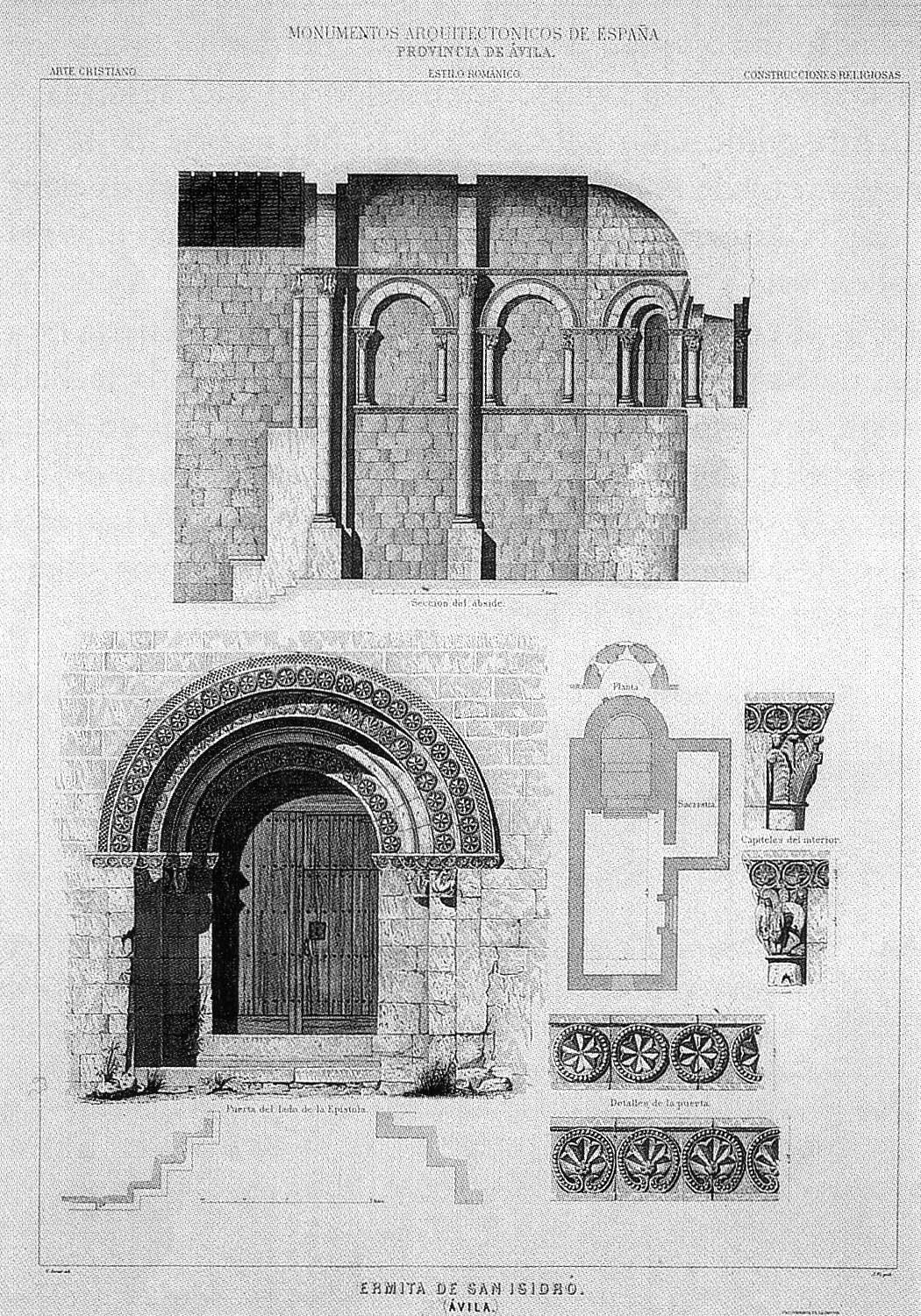
The history of the hermitage is deeply intertwined with Spain's medieval past, evident in its architectural features like the semicircular apse, giant order columns, and intricately adorned capitals. These elements offer visitors a glimpse into the Romanesque style prevalent during the time of its construction (Patrimonio y Paisaje).
This guide aims to provide a comprehensive overview of the Ermita de San Pelayo y San Isidoro de Ávila, covering its rich history, architectural significance, and practical visitor information. Whether you are a history enthusiast, an architecture aficionado, or a curious traveler, this guide will equip you with all the essential details to enhance your visit.

Origins and Early History
The Ermita de San Pelayo y San Isidoro was initially located outside the city walls of Ávila, near the Gate of Malaventura. Constructed in the 11th century, it was dedicated to Saint Pelagius, a child martyr from Córdoba. A document from 1250 mentions the church's tax exemption (Wikipedia).
Architectural Features
The Romanesque architecture of the church includes a semicircular apse and a lateral doorway. Giant order columns extend from the plinth to the cornice, with semi-circular arches on small columns adorned with vegetal motifs on the capitals. The doorway features a molded arch supported by columns and pillars (Patrimonio y Paisaje).
Change of Dedication
In the 13th century, the church's dedication shifted from Saint Pelagius to Saint Isidore. This change is documented on a tombstone dated 1270, believed to mark the second consecration of the church. The church also housed the relics of Saint Isidore before their transfer to León in 1062 (Wikipedia).
Decline and Abandonment
By the 19th century, the church had fallen into disrepair. It belonged to the Asociación de Labradores and was dedicated to Saint Isidore, the patron saint of plowmen. In 1854, the building was severely damaged, and the city council ordered its demolition. The demolition was delayed until 1877, when the remains were sold to private individuals (Atlas Obscura).
Relocation to Madrid
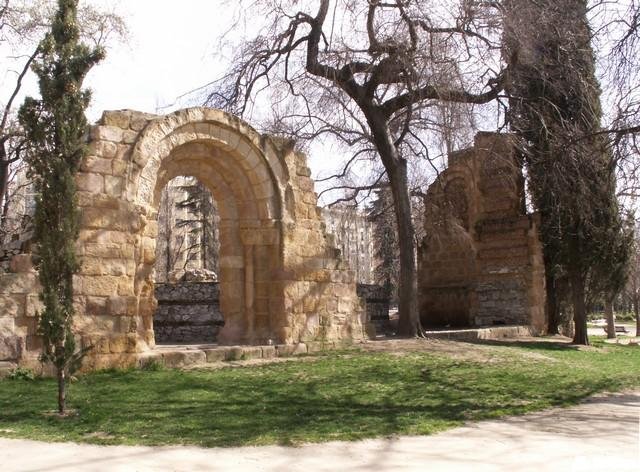
The remains were purchased by Emiliano Rotondo Nicolau, who later sold them to the Real Academia de la Historia in 1893 for 18,000 pesetas. Initially placed in the gardens of the Museo Arqueológico Nacional, the ruins were later moved to El Retiro Park (Wikipedia).
Final Placement in El Retiro Park
In 1884, the ruins were acquired by the state to adorn the gardens of the Museo Arqueológico Nacional. The final relocation to El Retiro Park was facilitated by the government led by Antonio Cánovas del Castillo, placing the ruins near the Montaña Artificial and the Casita del Pescador (Madrid Lovers).
Visitor Information
Visitors to El Retiro Park can easily access the ruins of the Ermita de San Pelayo y San Isidoro. The park is accessible via the Madrid Metro's Line 2, with stops at Retiro and Ibiza stations. The Cercanías train also provides access through the Recoletos station, and several bus lines serve the area. The best times to visit are during spring and autumn when the weather is mild, and the park's natural beauty is at its peak (Xixerone).
Travel Tips
- Visiting Hours: El Retiro Park is open daily from 6 AM to 10 PM.
- Tickets: Entry to the park and the ruins is free of charge.
- Best Time to Visit: Spring and autumn are ideal for visiting due to the pleasant weather.
Nearby Attractions
While visiting the Ermita de San Pelayo y San Isidoro, explore other attractions in El Retiro Park, such as the Palacio de Cristal, the Velazquez Palace, and the Retiro Pond. Madrid's Prado Museum and the Royal Botanical Garden are also nearby.
Accessibility
El Retiro Park is wheelchair accessible, with paved paths and ramps. The ruins of the Ermita de San Pelayo y San Isidoro are easily reachable within the park.
Preservation Efforts
The relocation and preservation of the Ermita de San Pelayo y San Isidoro are part of Spain's broader effort to conserve its historical heritage. The ruins, now a part of El Retiro Park, serve as a reminder of the country's rich medieval history and architectural legacy (Patrimonio y Paisaje).
Dimensions and Materials
The ruins include the apse and the lateral doorway. The apse measures 14.00 x 25.00 x 1.00 meters, while the doorway measures 7.00 x 13.00 x 1.00 meters. The materials used in the construction include sandstone, brick, and limestone (Patrimonio y Paisaje).
Significance in Modern Times
Today, the ruins of the Ermita de San Pelayo y San Isidoro are a significant cultural and historical landmark in Madrid. They offer a glimpse into the medieval past and the architectural styles of the Romanesque period. The site is a testament to the efforts made to preserve Spain's historical monuments and provides an educational experience for visitors interested in the country's rich heritage (Xixerone).
FAQ
- What are the visiting hours for Ermita de San Pelayo y San Isidoro? El Retiro Park is open daily from 6 AM to 10 PM.
- How much are the tickets for Ermita de San Pelayo y San Isidoro? Entry to the park and the ruins is free of charge.
- Is the Ermita de San Pelayo y San Isidoro accessible for visitors with disabilities? Yes, El Retiro Park is wheelchair accessible, including the area around the ruins.
Discover More
Plan your visit to El Retiro Park today and explore the rich history of the Ermita de San Pelayo y San Isidoro. Don't forget to check out other historical sites in Madrid and follow us on social media for more updates on cultural landmarks.
Listen to the full story in the app
The whole Ermita De San Pelayo Y San Isidoro,
told well.
Audio guides for 1,100+ cities across 96 countries. History, stories, and local insight — offline ready.
Verified, and shown.
Researched and written by the Audiala editorial team from historical records, architectural archives, and local expertise.
Researched from Wikidata, Wikipedia & official sources · fact-checked · How we make our guides →
