Plan and listen to Beti Jai Fronton with Audiala.
Audio guide in your pocket, itinerary in your browser. Built for the way you actually visit.
Introduction
Beti Jai Fronton, tucked away in Madrid’s Chamberí district, stands as a unique testament to the city’s sporting, architectural, and cultural legacy. Designed by Joaquín Rucoba and built between 1891 and 1894, Beti Jai was conceived as a premier venue for Basque pelota—a sport central to Basque tradition but whose influence has enriched Madrid’s urban fabric. Its open-air elliptical court, pioneering use of cast iron, and blend of Historicist and Neo-Mudéjar styles make it one of Europe’s most distinctive 19th-century sports buildings (Madrid City Council, Frontón Beti Jai Official).
Over more than a century, Beti Jai has witnessed sporting triumphs, social gatherings, political events, and periods of decline—culminating in a landmark restoration completed in 2019. Today, it operates as a protected cultural asset and interpretation center, offering exhibitions, guided tours, and a window into Madrid’s evolving urban identity (Comunidad de Madrid, Madrid Secreto). This guide details Beti Jai’s history, architectural highlights, visitor information, and practical tips to ensure a memorable experience at this Madrid historical site.

Origins and Construction (1891–1894)
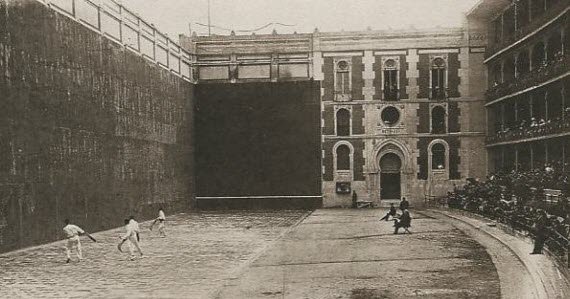
Beti Jai—meaning “Always Party” in Basque—was envisioned as a grand fronton for Madrid’s burgeoning Basque community and elite. Designed by Joaquín Rucoba, it opened in 1894 with a capacity for 4,000 spectators. Its elliptical, open-air court and four-tiered cast-iron grandstands set a new standard for sports architecture (Madrid City Council, Madrid Secreto).
The Golden Age: Sporting and Social Hub
During its early years, Beti Jai was a magnet for Madrid’s high society and royalty. Though it was built for Basque pelota, the venue also hosted concerts, fencing tournaments, and social events—reflecting its versatility and central role in the city’s cultural life.
Twentieth-Century Transformations and Decline
By 1919, shifting leisure trends led to the closure of Beti Jai as a sporting venue. Over the decades, it was repurposed as a workshop, car dealership, residential quarters, and even an aeronautical test center under inventor Leonardo Torres Quevedo (Madrid City Council). These changes contributed to the building’s decline, and by the early 21st century, Beti Jai was at risk of irreversible ruin (Madrid Secreto).
Heritage Recognition and Restoration
Thanks to persistent advocacy by local citizens and heritage groups, Beti Jai was declared a Bien de Interés Cultural (BIC) in 2011 (Madrid City Council). The Madrid City Council expropriated the site in 2015, leading to a meticulous, multi-year restoration that preserved original materials and design (Frontón Beti Jai Official, Gacetín Madrid).
Rebirth as a Cultural Landmark
Since 2019, Beti Jai has functioned as a public interpretation center, hosting exhibitions and guided tours. It is now recognized as the oldest surviving sports facility of its kind in Europe and a vibrant example of Madrid’s commitment to heritage conservation (Madrid Secreto, Time Out Madrid).
Architectural Highlights
Location and Setting
Beti Jai is discreetly located at Calle del Marqués de Riscal, 7, behind a stately historicist façade in the Chamberí district. The building is surrounded by 19th-century residential blocks, making its discovery a delightful surprise for visitors (Time Out Madrid, Madrid4u).
Style and Structure
- Façade: The main façade is inspired by classical architecture, while the grandstand façade is Neo-Mudéjar, echoing Spain’s Moorish legacy with exposed brick, ceramic motifs, and horseshoe arches (Frontón Beti Jai Official).
- Court and Galleries: The elliptical court (67m x 11m) is encircled by semi-circular galleries on three levels, supported by cast-iron columns and wooden seating, originally accommodating up to 4,000 spectators (Bibliotecas Madrid).
- Roof and Canopy: A cantilevered wooden canopy, supported by decorative ironwork, shelters the grandstand while the court remains open to the sky.
- Ornamentation: Finely wrought iron railings, original wooden benches, and detailed brickwork reflect the craftsmanship of the era.
Restoration and Adaptive Reuse
The 2015–2019 restoration removed intrusive later additions, reinforced the structure, and restored original materials. Modern accessibility features—such as ramps and elevators—blend discreetly with the historic design (Gacetín Madrid).
Cultural and Social Significance
Beti Jai is more than a sports venue—it is an emblem of Madrid’s openness to regional influences and a symbol of civic engagement:
- Basque Influence: The fronton’s creation helped popularize Basque pelota and fostered intercultural dialogue in Madrid (El País).
- Social and Political Hub: Over its history, Beti Jai has hosted concerts, rallies, and even served as a police station during the Spanish Civil War (ABC Madrid).
- Artistic Inspiration: Its striking architecture has featured in films, art, and literature, symbolizing festivity and resilience (Madrid Film Office).
- Community Engagement: Guided tours, workshops, and educational programs promote heritage appreciation among locals and tourists (Patrimonio Cultural de Madrid).
Visiting Beti Jai Fronton: Hours, Tickets, and Practical Info
Location and Access
- Address: Calle del Marqués de Riscal, 7, Chamberí, Madrid.
- Metro: Alonso Martínez (Lines 4, 5, 10), Rubén Darío (Line 5), Iglesia, and Quevedo.
- Bus: Lines 5, 7, 14, 27, 40, 45, 147, 150 (Madrid4u).
Opening Hours
- Tuesday to Sunday: 10:00 AM – 2:00 PM
- Closed: Mondays and public holidays
Note: Hours may vary for special events or tours. Always check the official website for updates.
Admission and Tickets
- General Admission: Free (since March 28, 2024, no advanced booking required for general visits) (ccmagazine.es, madridsecreto.co)
- Guided Tours: Free, but require advance reservation via reservaspatrimonio.es (Madrid4u)
- Special Events: Check the official website or esmadrid.com for details and registration.
Accessibility
- Wheelchair Access: Main areas accessible; some upper galleries may be limited due to historic structure.
- Facilities: Restrooms and information desks are available. Most materials are in Spanish, but some English resources are provided.
Amenities
- Interpretation Centre: Exhibitions on Beti Jai’s history, restoration, and multiple uses, with artifacts and multimedia displays (frontonbetijai.es).
- Photography: Allowed (non-flash).
- No physical gift shop, but digital materials and brochures are available online.
Nearby Attractions
- Museo Sorolla: Celebrating Spanish Impressionism.
- Plaza de Chamberí: Charming square with shops and cafes.
- Malasaña Neighborhood: Known for street art and nightlife.
- Canal de Isabel II Exhibition Space: Contemporary art.
Tips for a Memorable Visit
- Arrive early for fewer crowds and better photography.
- Combine with nearby sites in Chamberí and Malasaña for a full day of cultural discovery.
- Check for workshops or pelota demonstrations on weekends or festival days.
- Dress for the weather, as the court is open-air.
- Non-Spanish speakers may find translation apps helpful during tours.
Frequently Asked Questions (FAQ)
Q: Is Beti Jai Fronton free to visit?
A: Yes, admission is free; guided tours require reservation.
Q: What are the visiting hours?
A: Tuesday to Sunday, 10:00 AM to 2:00 PM; closed Mondays.
Q: Can I take photos?
A: Yes, non-flash photography is permitted.
Q: Is the site accessible?
A: Main areas are accessible; some upper galleries may not be.
Q: Are tours available in English?
A: Most tours are in Spanish; some materials are in English.
Preservation and Recognition
Beti Jai’s restoration and BIC protection ensure its legacy for future generations (Bibliotecas Madrid). The building is a symbol of Madrid’s commitment to safeguarding its diverse cultural heritage.
Related Articles
Explore more on Malasaña Neighborhood Guide, Historic Sites in Chamberí, and Basque Pelota History.
Discover More
Beti Jai Fronton is an enduring symbol of Madrid’s historical depth and cultural vitality. Its unique architecture, storied past, and dynamic programming make it a must-visit for anyone seeking to understand the city beyond its most famous landmarks. Plan your visit, take a guided tour, and explore the fascinating interplay of sport, architecture, and community that Beti Jai represents.
Stay updated: Visit the official Beti Jai Fronton website and follow their social media channels. Download the Audiala app for exclusive audio guides and up-to-date information on Madrid’s cultural events.
Listen to the full story in the app
The whole Beti Jai Fronton,
told well.
Audio guides for 1,100+ cities across 96 countries. History, stories, and local insight — offline ready.
Verified, and shown.
Researched and written by the Audiala editorial team from historical records, architectural archives, and local expertise.
Researched from Wikidata, Wikipedia & official sources · fact-checked · How we make our guides →
