Plan and listen to Almudena Cathedral with Audiala.
Audio guide in your pocket, itinerary in your browser. Built for the way you actually visit.
Introduction
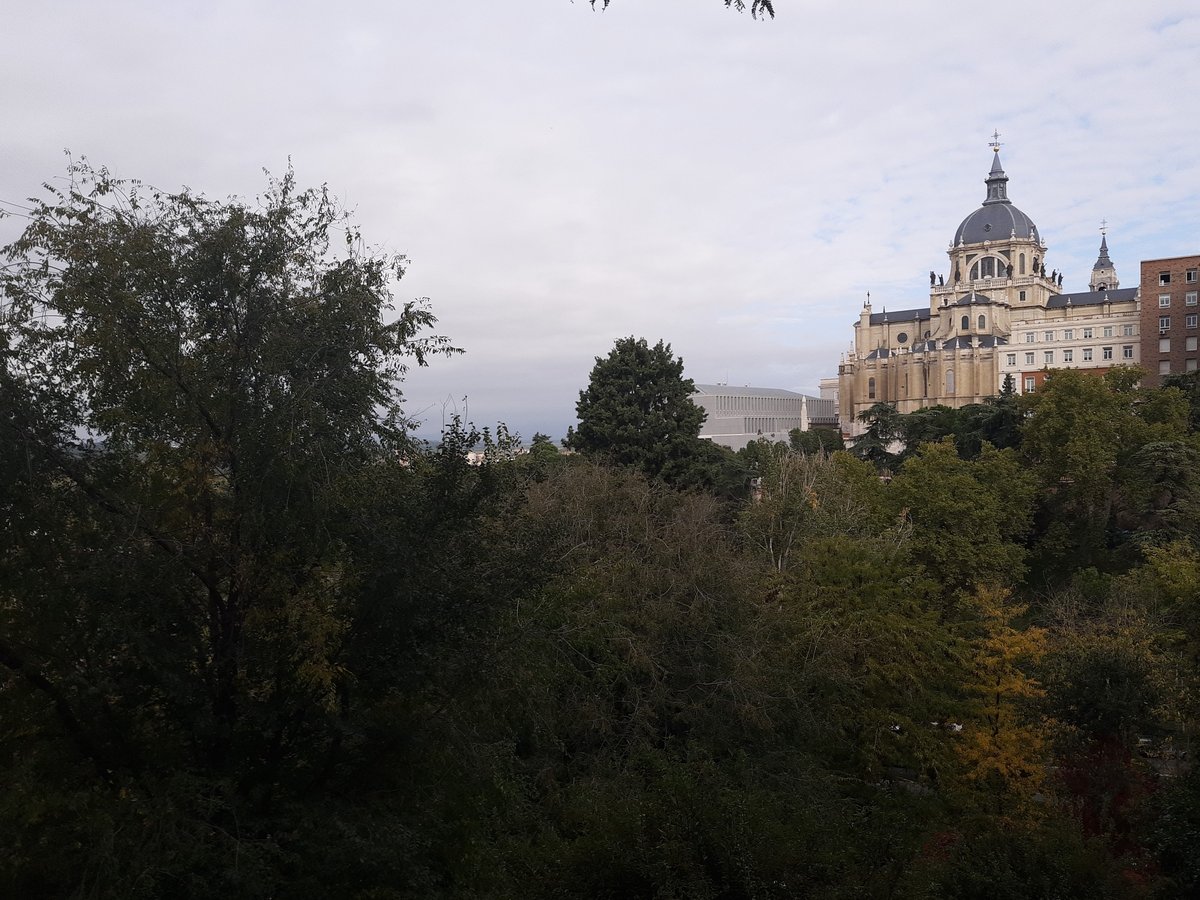
The Catedral de la Almudena stands as one of Madrid's most cherished landmarks, a testament to the city's rich historical tapestry and architectural grandeur. From its conception in the late 19th century to its completion in the late 20th century, the cathedral has weathered socio-political upheavals and wars, symbolizing Madrid's resilience and religious heritage. This guide delves into the cathedral's storied past, its architectural evolution, and its pivotal role in Madrid's cultural and religious life. Whether you're an avid historian, an architecture aficionado, or a devout pilgrim, this comprehensive overview will equip you with all the essential information to make your visit to the Catedral de la Almudena unforgettable. For further details on its history and visitor information, please refer to the official website.

Exploring the History and Significance of the Catedral de la Almudena
Early Beginnings and Conception
The idea of constructing a grand cathedral in Madrid dates back to the 16th century. However, it wasn't until the late 19th century that the project began to materialize. The initial impetus for the cathedral's construction was the relocation of the Spanish capital from Toledo to Madrid in 1561. Despite this significant change, Madrid lacked a cathedral, a symbol of ecclesiastical and civic pride. The first formal proposal for the cathedral was made in 1879 by King Alfonso XII, who wanted to honor his late wife, María de las Mercedes of Orléans. The project was initially conceived as a pantheon for the queen but evolved into a full-fledged cathedral (source).
Architectural Evolution
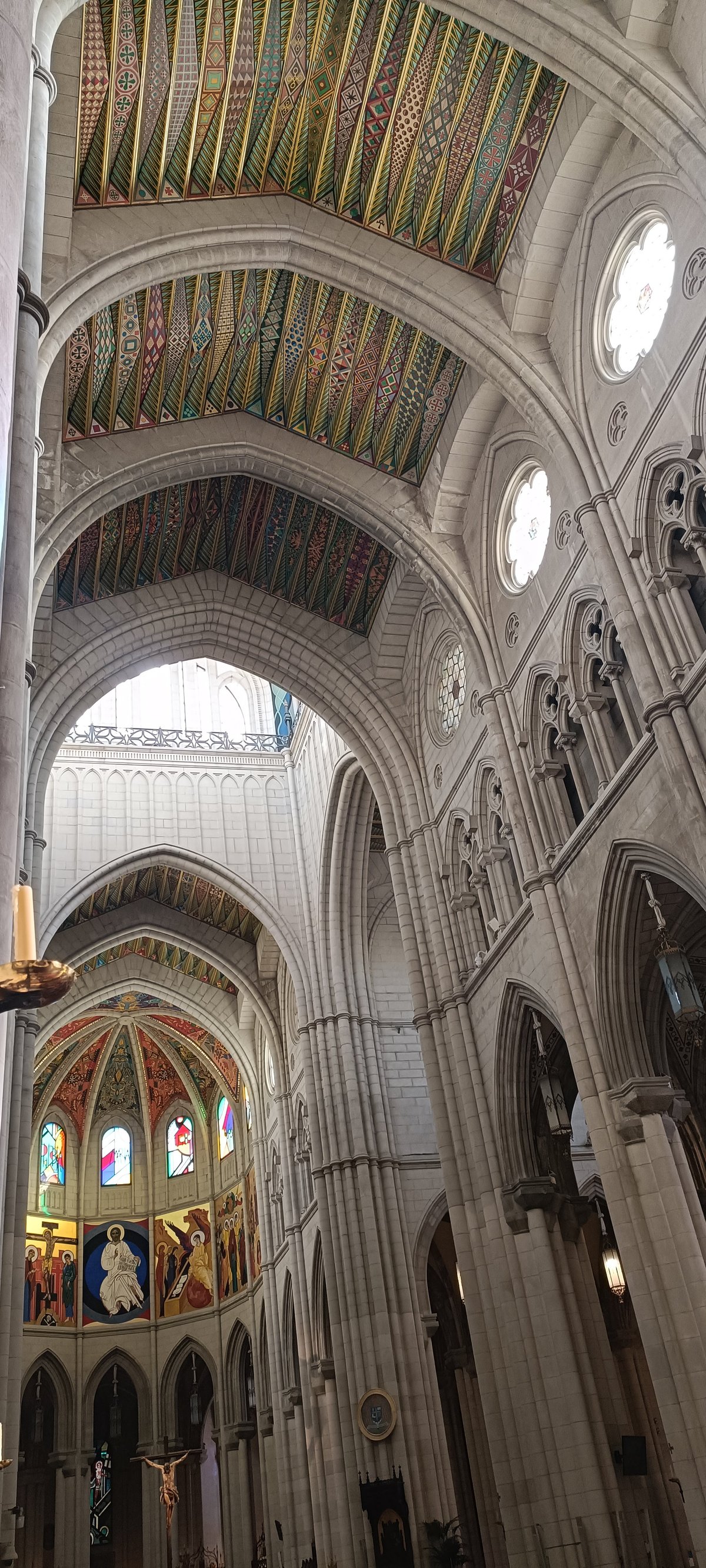
The architectural journey of the Catedral de la Almudena is a tale of evolving styles and changing visions. The original design was crafted by Francisco de Cubas, also known as Marqués de Cubas, in a Gothic Revival style. The foundation stone was laid in 1883, and construction began in earnest. However, the project faced numerous delays and interruptions, including the Spanish Civil War (1936-1939), which halted construction for several years (source).
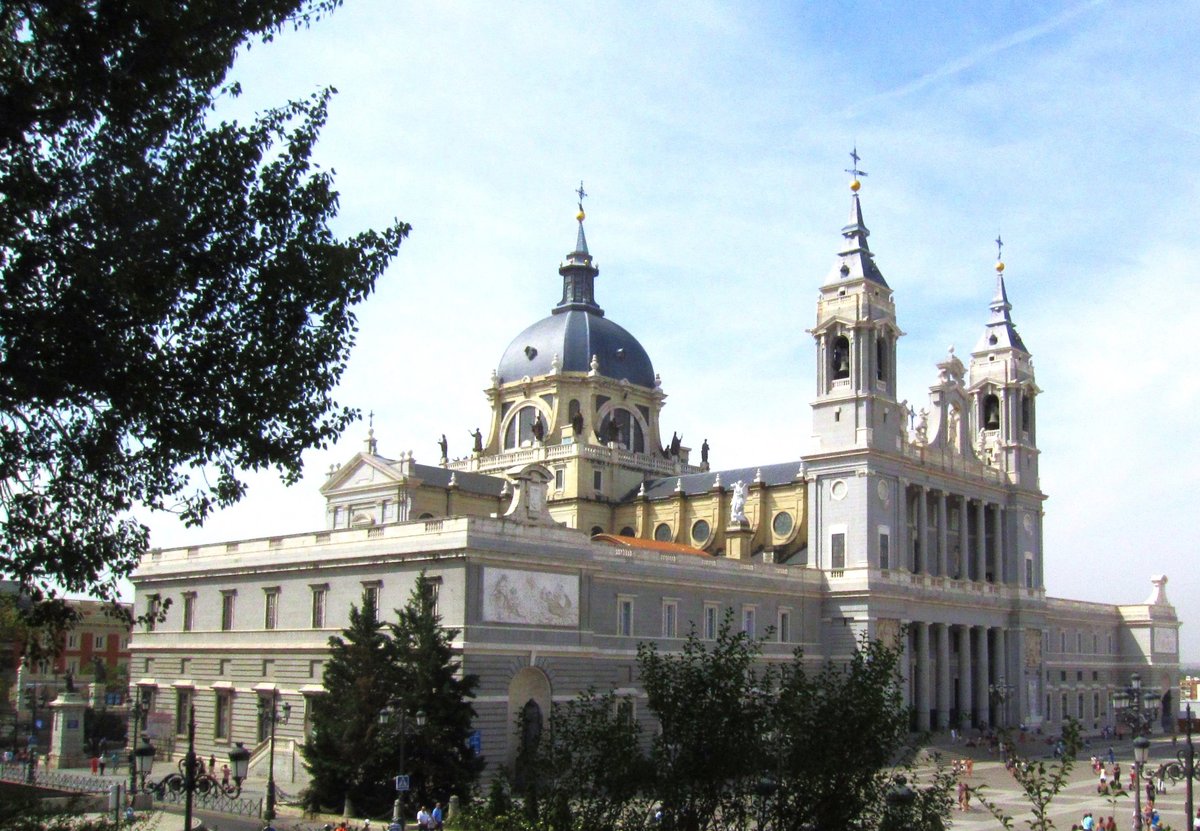
Post-war, the architectural plans underwent significant revisions. In the 1940s, architect Fernando Chueca Goitia took over the project, introducing a blend of styles. He incorporated elements of Baroque and Neoclassical architecture to harmonize the cathedral with the adjacent Royal Palace. This eclectic mix of styles is evident in the cathedral's façade, which features Neoclassical columns and Baroque ornamentation (source).
Construction Milestones
The construction of the Catedral de la Almudena spanned over a century, marked by several key milestones:
- 1883: The foundation stone was laid by King Alfonso XII.
- 1911: The crypt, built in a Neo-Romanesque style, was completed and opened for worship.
- 1944: Post-war construction resumed under the direction of Fernando Chueca Goitia.
- 1993: The cathedral was finally completed and consecrated by Pope John Paul II on June 15, 1993 (source).
Historical Significance
The Catedral de la Almudena holds immense historical significance for Madrid and Spain. It symbolizes the city's transformation from a modest town to the nation's capital. The cathedral's construction reflects the socio-political changes in Spain over the centuries, including the monarchy's influence, the impact of the Spanish Civil War, and the country's post-war recovery.
The cathedral is also a testament to Spain's religious heritage. It is dedicated to the Virgin of Almudena, Madrid's patron saint. According to legend, a statue of the Virgin Mary was hidden in the city walls during the Muslim occupation in the 8th century. It was rediscovered in 1085 when King Alfonso VI reconquered Madrid. This legend underscores the deep-rooted Christian traditions in the city (source).
Cultural and Religious Role
Beyond its architectural and historical significance, the Catedral de la Almudena plays a vital role in the cultural and religious life of Madrid. It serves as the seat of the Roman Catholic Archdiocese of Madrid and hosts numerous religious ceremonies, including weddings, baptisms, and funerals. One of the most notable events was the wedding of King Felipe VI and Queen Letizia in 2004, which was attended by numerous dignitaries and broadcast worldwide (source).
The cathedral also houses several important religious artifacts and artworks. The main altar features a statue of the Virgin of Almudena, and the chapels are adorned with paintings and sculptures by renowned artists. The crypt, one of the oldest parts of the cathedral, contains the tombs of several notable figures, including the Marqués de Cubas, the cathedral's original architect (source).
Visitor Information
If you're planning to visit the Catedral de la Almudena, here are some essential details to help you make the most of your trip:
Visiting Hours
The cathedral is open to visitors from 9:00 AM to 8:30 PM daily. However, hours may vary on religious holidays and special occasions.
Tickets
Admission to the cathedral is free, but donations are appreciated. Tickets for the museum and the dome can be purchased on-site or through the cathedral's official website.
Guided Tours
The cathedral offers guided tours that provide deeper insights into its history, architecture, and religious significance. These tours are available in multiple languages.
Accessibility
The cathedral is wheelchair accessible, with ramps and elevators available for visitors with mobility issues.
Photography
Photography is allowed inside the cathedral, but the use of flash and tripods is prohibited to preserve the artworks and maintain a respectful atmosphere.
Nearby Attractions
While visiting the Catedral de la Almudena, consider exploring other nearby historical sites and attractions in Madrid:
- Royal Palace of Madrid: Located adjacent to the cathedral, the Royal Palace is the official residence of the Spanish royal family and a stunning example of Baroque architecture.
- Plaza Mayor: A historic square in the heart of Madrid, known for its beautiful architecture, vibrant atmosphere, and numerous cafes and shops.
- Puerta del Sol: One of Madrid's most famous squares, featuring the iconic clock tower and the statue of the Bear and the Strawberry Tree, the symbol of the city.
- Temple of Debod: An ancient Egyptian temple relocated to Madrid, offering a unique historical experience and panoramic views of the city.
Modern-Day Relevance
Today, the Catedral de la Almudena stands as a symbol of Madrid's rich history and cultural heritage. It attracts millions of visitors annually, who come to admire its architectural beauty, learn about its history, and participate in religious services. The cathedral's museum offers a comprehensive overview of its construction and significance, featuring exhibits on its architectural evolution, religious artifacts, and the history of the Archdiocese of Madrid (source).
FAQ
- What are the visiting hours for Catedral de la Almudena? The cathedral is open from 9:00 AM to 8:30 PM daily, with variations on religious holidays and special occasions.
- How much are tickets for Catedral de la Almudena? Admission to the cathedral is free, but donations are appreciated. Tickets for the museum and the dome can be purchased on-site or online.
- Is the Catedral de la Almudena wheelchair accessible? Yes, the cathedral is wheelchair accessible, with ramps and elevators available for visitors with mobility issues.
- Can I take photos inside the cathedral? Yes, photography is allowed, but the use of flash and tripods is prohibited.
Tickets & tours.
These are guided options from our partners — same price as booking direct.
Prices are indicative — final pricing and availability are confirmed at checkout. Audiala may earn a commission from bookings made through these links.
Listen to the full story in the app
The whole Almudena Cathedral,
told well.
Audio guides for 1,100+ cities across 96 countries. History, stories, and local insight — offline ready.
Verified, and shown.
Researched and written by the Audiala editorial team from historical records, architectural archives, and local expertise.
Researched from Wikidata, Wikipedia & official sources · fact-checked · How we make our guides →
