An introduction.
Researched by the Audiala editorial team from historical records, architectural archives, and local expertise.
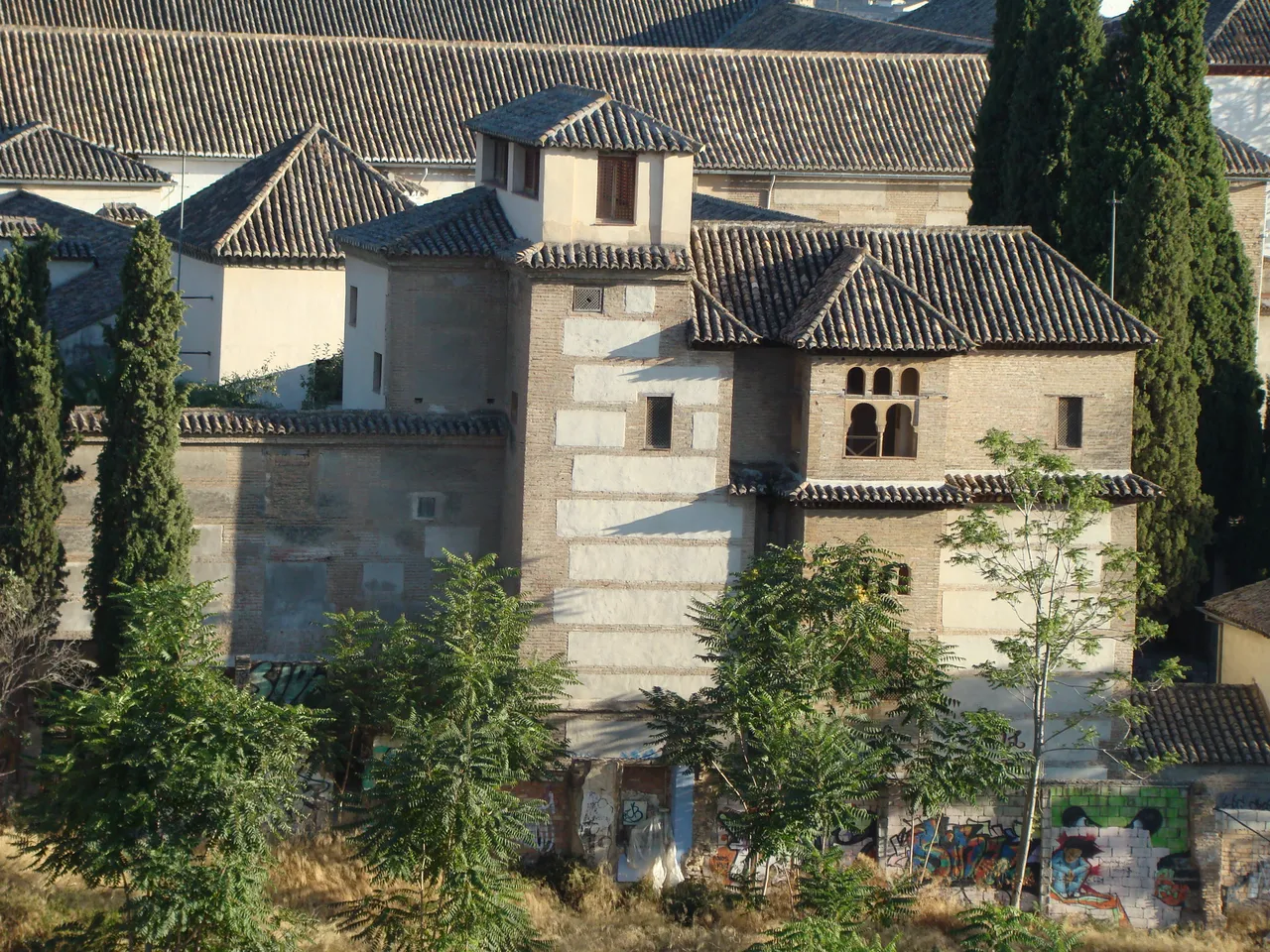
WWhy would a queen choose exile in a palace with a window pointed straight at the Alhambra? Palacio de Dar-al-Horra sits on the highest spine of the Albaicín in Granada, Spain — a modest two-story Nasrid house with a rectangular courtyard, a shallow pool, and a mirador that refuses to look anywhere except at the fortress where her husband took another woman. Come here because this is where the fall of Muslim Spain was actually engineered: not on a battlefield, but in a small upstairs room with good sightlines.
Most visitors arrive expecting grief. They find geometry instead. The courtyard measures roughly 9.9 by 6.6 metres — smaller than a suburban swimming pool — and the water in the central basin still catches light the same way it did six centuries ago. Marble columns about 2.5 metres tall, cubic capitals, tiny lead plaques where column meets capital. The whole thing feels domestic, almost restrained, until you climb to the mirador and understand what the room is for.
From that upper window, the Alhambra is so close you can watch comings and goings at the gates. Records show this was the residence of Aisha al-Horra — "the Honest One" — mother of Boabdil, the last Nasrid sultan. She lived here after 1482. She did not live here quietly.
The palace survived because the Poor Clares moved in in 1507 and happened to like the layout. Five hundred years of cloistered nuns, baking hojarascas and marzipan next door, preserved what the conquerors might otherwise have flattened. You're walking through a conspiracy headquarters hidden inside a convent.
Palacio Dar al Horra | Casa Horno | Granada | Spain | Andalusia | Holidays in Spain | Visit Spain
ConnollyCove01 What to see.
The Upper Mirador and Its Arabic Inscriptions
Climb the narrow stair to the upper north room and the palace finally tells you why Aixa was exiled here instead of killed. Three horseshoe arches open onto a projecting chamber, and through them, across the Darro valley, the Alhambra sits in plain view — the precise sightline the mother of Boabdil used to track her estranged husband's court while she plotted the 1482 civil war that put her son on the throne.
Look closer at the plasterwork beside your shoulder. Carved into the yesería at eye level, in small Arabic script most visitors walk straight past, are the words Blessing, Happiness, Health is perpetual, Joy continues. Domestic prayers, cut by the same craftsmen who decorated the Fountain De Los Leones (Alhambra), reading like bitter irony on the walls of a repudiated queen.
The chamber is dim and cool after the glare of the courtyard. Your eyes adjust. The inscriptions emerge from shadow, the fortress across the valley frames itself through a Nasrid arch, and for a moment you are standing exactly where she stood.
The Courtyard and Its Reflecting Pool
You enter from the Callejón Ladrón del Agua — Water Thief Alley, named for neighbors who tapped the Aynadanar canal before it reached the palace — and pass beneath the low Arco de las Monjas into sudden sunlight. The rectangular patio is only about 9.9 by 6.6 metres, smaller than a doubles tennis court, but the scale is the point. This was a home, not a throne room.
A narrow reflecting pool runs north–south, set slightly south of center in the Nasrid convention, pulling the eye and cooling the air by several degrees against the Albaicín's summer heat. Three horseshoe arches on slender columns face three more across the water, each topped with an alfarje ceiling of interlocked wooden beams. On still mornings around ten, the pool doubles the arches so precisely you can't tell which set is real.
Step into the southern chamber off the courtyard and look up. A polychrome Nasrid artesonado ceiling runs into a 16th-century Gothic ogival arch and an octagonal panel over what became the Poor Clares' first chapel in 1507 — Islamic Granada ending and Christian Spain beginning in a single room.
Walk the Dobla de Oro Circuit
The €28.50 Dobla de Oro ticket pairs Dar al-Horra with three other surviving Nasrid houses — the Bañuelo Arab baths by the Darro, the Casa del Chapiz, and the Horno de Oro morisco house — and it's the sharpest-value way to read the Albaicín as a residential quarter rather than a postcard.
Start at Dar al-Horra in the morning before the light gets hard, drop down through the whitewashed lanes to the Bañuelo's 11th-century vaulted hammam, then work back up past San Cristóbal toward Granada's main viewpoints. If you're visiting on a Saturday, admission to Dar al-Horra, the Bañuelo, and the Horno de Oro is free year-round — the same applies Sundays across all Andalusian monuments.
Give the full circuit half a day. Bring water. The cobblestones are uneven and the climbs are real.
02 In pictures.


Watch & Explore Palacio De Dar-Al-Horra.
Plan and listen to Palacio De Dar-Al-Horra with Audiala.
Audio guide in your pocket, itinerary in your browser. Built for the way you actually visit.
Tickets & tours.
These are guided options from our partners — same price as booking direct.
Prices are indicative — final pricing and availability are confirmed at checkout. Audiala may earn a commission from bookings made through these links.
03 Visitor logistics.
The practical scaffolding for a good visit — kept short.
Getting There
Callejón de las Monjas, upper Albaicín — no cars, the lanes are too narrow. Take minibus C31 or C32 from Plaza Nueva to Plaza de San Nicolás, then walk 5 minutes. On foot from Plaza Nueva it's a 25–30 minute uphill climb through cobbled medieval streets; drivers should park at San Cristóbal on Carretera de Murcia (~€1.80/hr) and walk 9 minutes down.
Opening Hours
As of 2026, open 7 days a week with a seasonal split. Winter (15 Sep–30 Apr): 10:00–17:00. Summer (1 May–14 Sep): 09:00–14:30 and 17:00–20:30 — closed during the 14:30–17:00 siesta gap, so don't arrive at 15:00 expecting to get in.
Time Needed
Courtyard and a quick lap: 20–30 minutes. For the plasterwork, the mirador views toward the Alhambra, and the medicinal garden: 45–60 minutes. Pairs naturally with the Mirador de San Nicolás (3 minutes away) and Casa de Zafra for a half-day Albaicín loop.
Tickets & Free Saturdays
As of 2026, standalone entry is €5. Free every Saturday, year-round, no reservation — first-come-first-served. The Dobla de Oro combined ticket (€5, or €28.50 bundled with the full Alhambra) also covers Bañuelo, Casa Morisca, Casa del Chapíz, and Casa de Zafra — the best heritage-value ticket in the city.
Accessibility
Tough for wheelchairs and limited mobility. The Albaicín is steep cobblestone with no lifts on the approach, and the palace itself has no dedicated accessibility infrastructure. If mobility is a concern, take bus C31/C32 to San Nicolás rather than walking up; Turisigno offers a Spanish Sign Language video guide for the monument.
04 Tips for visitors.
Small things that change the day.
Mind the Door
The entrance is a small wooden door on a quiet alley near the Santa Isabel la Real convent — easy to walk straight past. Slow down once you cross the bridge by the convent wall and watch for the modest Patronato sign.
Dobla de Oro Hack
For the same €5 as standalone entry, the Dobla de Oro ticket adds the Bañuelo, Casa Morisca Horno de Oro, Casa del Chapíz, and Casa de Zafra. Four extra monuments for zero extra euros — the best heritage deal in Granada.
Photography Rules
Photography is fine; flash, tripods, monopods and stabilizers are not. The courtyard light is best mid-morning, and the mirador gives you a rare elevated angle on the Alhambra across the Darro ravine.
Pickpocket Alert
Petty theft is the real risk in the Albaicín — especially on the crowded C31/C32/C34 minibuses and around the Mirador de San Nicolás. Backpack on your front in crowds, phone in a zipped pocket, no wallet in back jeans.
Eat Like a Local
Walk 5 minutes to Placeta de San Miguel Bajo for Mesón El Yunque (budget tapas — snails, oxtail) or Bar Ocaña. For institutional granadino cooking, Casa Torcuato on Calle Pagés has been frying fish since 1932 (budget to mid-range).
Go Early, Go Weekday
While Alhambra queues snake down the hill, Dar-al-Horra is usually empty before 11:00 on weekdays. Saturdays are free but busier — trade a fiver for a quiet courtyard if you can.
Finish in Calderería
Walk 15 minutes downhill to Calderería Nueva for the city's teterías — mint tea and Arabic pastries in a living thread of the Moorish culinary tradition you just saw walled inside the palace. Pestiños and soplillos are the Nasrid-era sweets to order.
Shoes Matter
The Albaicín is medieval cobblestone on steep gradients — the street layout hasn't changed since Aixa lived here. Leave the leather soles at the hotel; trainers or grippy walking shoes make the difference between a pleasant hour and a twisted ankle.
Where to Eat
Don't Leave Without Trying
Restaurante Jero
local favoriteOrder: Chickpea dishes showcase authentic Syrian flavors; the chef's hand shines in every plate. Homemade lemon juice is tart-balanced, not oversweetened.
Exceptionally talented Syrian chef in intimate setting. Genuine article — locals eat here, not tourists. Warm, attentive owner who treats regulars like family.
Atípico
local favoriteOrder: Fried cod is the best in Europe—crispy exterior, tender flesh. Tuna tatar refreshes; eggs Benedict (bacon or salmon) dominate brunch.
Sleek contemporary dining with near-flawless execution. Seafood arrives impeccable; service is genuinely attentive without hovering. Strong wine list, fruit wines unusual and worth trying.
Jerusalem Books Cafe
cafeOrder: Lentil soup is soul-warming and authentic. Pair with Palestinian coffee or herbal tea. Light snacks sustain afternoon exploration.
Serene Palestinian-themed sanctuary in chaotic medieval Albaicín. Escape tourist crush here, sip genuinely good coffee, sit among locals and long-term visitors. Nostalgia and emotional resonance in every corner.
El Mirador de Tato
local favoriteOrder: Duck breast with golden roasted potatoes. Caprese salad or burger if lighter. House sangria elevates everything.
Panoramic views of Granada and Alhambra from the Albaicín heights. The climb rewards with refined Spanish cooking and sunset vistas that make it memorable. Service knows its craft.
Dining Tips
- check Granada's most important custom: Free tapa arrives with every drink (beer, wine, soft drink, soda). Each new round brings a new tapa. Best hours: 13:00–16:00 and 20:00–00:00.
- check Lunch (la comida, 14:00–16:00) is the main meal. Dinner (cena, 21:00–23:00) is lighter. Don't arrive at restaurants after 15:45 for lunch service.
- check Many restaurants close 16:00–20:00 (siesta). Kitchens stop earlier than posted closing times.
- check Tipping is optional—5–10% is generous and appreciated. Pay tips in cash when possible. No expectation like Anglo-Saxon countries.
- check Cards widely accepted; contactless standard. Carry €30–50 cash for small bars, markets, and emergencies.
- check Reservations rarely needed for casual restaurants unless it's a busy weekend. Tapas bars: no reservations—just show up and wait with a drink.
Restaurant data powered by Google
05 The Queen Who Would Not Weep
Scholars date the palace to the reign of Yusuf III (1408–1417), built atop the 11th-century Zirid citadel that once crowned the Albaicín hill. The attribution is stylistic — no inscription, no founding charter — so treat it as probable, not proven. What is documented is who lived here next, and why the building mattered far beyond its size.
By the 1480s, Granada was the last Muslim emirate in Iberia, squeezed between Castilian armies and its own civil war. Dar-al-Horra became the quiet end of that war's fuse.
The Coup of 26 April 1482
The guidebook version is tidy and tragic. Sultan Abu'l-Hasan Ali — Muley Hacén — fell for Isabel de Solís, a Christian captive who converted and took the name Zoraya. He repudiated his wife Aisha al-Horra and exiled her from the Alhambra to this smaller palace across the ravine. A jilted queen, a stolen throne, a love story with a moral.
The detail that doesn't fit: the mirador. Every surviving inscription carved into its plasterwork reads some variation of "Blessing," "Joy continues," "Health is everlasting." These are not the walls of a grieving woman. Castilian chroniclers — the enemy, writing about her — described Aisha's "passionate outbursts and masculine spirit." When her son was captured at Lucena in 1483, she didn't mourn. She negotiated his release.
What actually happened here: on 26 April 1482, from this courtyard, Aisha coordinated a coup against her own husband. Her allies were the Abencerraje clan and the warlord Ali Atar of Loja, with the Albaicín's popular support behind them. Muley Hacén was deposed and imprisoned; her son Boabdil was raised to the throne. The palace wasn't a retreat — it was a war room with a clear view of the target. Knowing this, the mirador stops being a widow's window. It becomes a tactical instrument, and the pool below it stops being decorative. It's the quiet surface a conspirator watches while she waits for a messenger.
Hernando de Zafra and the Paperwork of Defeat
The Convent That Saved the Palace
Listen to the full story in the app
The whole Palacio De Dar-Al-Horra,
told well.
Listen to sourced travel stories with local history and practical context — ready offline.
06 Frequently asked.
The questions travellers send us most about Palacio De Dar-Al-Horra.
Is Palacio de Dar-Al-Horra worth visiting?
Yes, especially if you've already seen the Alhambra and want the intimate counterpoint. This was the domestic palace of Aixa al-Horra, mother of Boabdil, and it preserves Nasrid plasterwork, a reflecting pool courtyard, and a mirador with a direct sightline to the Alhambra across the valley. Crowds are thin, entry is €5, and Saturdays are free.
How long do you need at Palacio de Dar-Al-Horra?
Plan 45 to 60 minutes to see the courtyard, both porticoes, the south chamber's polychrome chapel ceiling, and the upper mirador properly. A quick courtyard-only visit takes about 20 to 30 minutes. Most people combine it with the nearby Mirador de San Nicolás for a half-day Albaicín loop.
How do I get to Palacio de Dar-Al-Horra from central Granada?
Take minibus C31 or C32 from Plaza Nueva to Plaza de San Nicolás, then walk about 5 minutes. On foot from Plaza Nueva it's a 25 to 30 minute uphill climb through Albaicín lanes. Cars can't reach the door — park at Parking San Cristóbal on Carretera de Murcia (~€1.80/hr) and walk 9 minutes down.
Can you visit Palacio de Dar-Al-Horra for free?
Yes, entry is free every Saturday year-round, no reservation needed, first-come basis. Sundays are also free for Andalusian residents. Otherwise it's €5 standalone, or bundled into the Dobla de Oro ticket (€28.50 with full Alhambra access, €21.50 gardens only).
What is the best time to visit Palacio de Dar-Al-Horra?
Weekday mornings between 10:00 and 11:00 — the courtyard pool is calm, the light is soft, and you'll often have the mirador to yourself. In summer the evening slot (17:00–20:30) delivers golden light on the south-facing courtyard. Spring adds jasmine and orange blossom; winter gives clear Sierra Nevada views from the upper window.
What should I not miss at Palacio de Dar-Al-Horra?
The Arabic plasterwork inscriptions in the upper north mirador — they read "Blessing," "Happiness," "Health is perpetual," "Joy continues," carved at eye level and usually walked past. Also find the south chamber, where a polychrome Nasrid artesonado ceiling meets a Gothic ogival arch in a single room — Islamic Granada ending and Christian Spain beginning in the same glance. Then frame the Alhambra through the horseshoe arch of the mirador — the exact view Aixa used to watch the court she was plotting against.
Who lived at Palacio de Dar-Al-Horra?
Aixa al-Horra, wife of Sultan Abu'l-Hasan Ali (Muley Hacén) and mother of Boabdil, the last Nasrid ruler of Granada. Exiled from the Alhambra after her husband took the Christian slave Isabel de Solís as his favorite, Aixa ran a coup from this palace on April 26, 1482, allying with the Abencerraje family to depose her husband and put her son on the throne. After 1492 the building passed to Hernando de Zafra, then became a Poor Clares convent in 1507.
Is Palacio de Dar-Al-Horra wheelchair accessible?
Access is difficult. The approach through the Albaicín is steep cobblestone with no step-free route, and the palace has an upper floor reached by stairs. The courtyard itself is flat once inside. Mobility-impaired visitors should take bus C31 or C32 to San Nicolás rather than walking uphill, and approach from the Carretera de Murcia side for the flattest entry.
Verified, and shown.
Researched and written by the Audiala editorial team from historical records, architectural archives, and local expertise.
Official monument page with architectural and historical background
Official seasonal opening hours and ticket prices
Official announcement of free Saturday entry policy
Combined ticket details covering Dar-al-Horra and other Andalusian monuments
Tour options and feminist heritage angle for guided visits
Photography rules and general visitor regulations
Accessibility information across Patronato monuments
Spanish-language hours and tariffs
Dobla de Oro itinerary in Spanish
Spanish monument page; Aynadanar canal and hydraulic details
Practical visitor info and photography guidance
Ticketing and Granada Card coverage details
Spanish local info on the palace
Bus line and stop information for reaching the palace
Parking options and Albaicín access restrictions
Closest car park rates and walking distance
Spanish Sign Language guide and accessibility notes
Visitor reviews and time-needed estimates
Visitor timing guidance
Concise editorial overview
Nearby dining and neighborhood context
Local tourism overview
Luggage storage pricing near Plaza Nueva
City-wide luggage storage options
Granada luggage storage guidance
Architectural description and inscription content
Zirid foundation and Nasrid attribution details
Detailed Spanish-language architectural analysis including the Gothic ogival arch and polychrome ceiling
GPS-triggered self-guided audio tour including the palace stop
Aixa al-Horra's story and the love-triangle narrative
Seasonal visitor guidance
Callejón Ladrón del Agua etymology and neighborhood context
Photo spots and visitor experience
Private guided tour options
Official tourism board page
Spanish-language visitor info
Dobla de Oro circuit overview
Albaicín gentrification crisis and tourist-beds-vs-residents data
Academic context on Albaicín heritage and displacement
Scholarship on convivencia myth and Nasrid history
Dynasty background and 1230–1492 Emirate context
Safety overview for Granada
Pickpocketing hotspots in Albaicín
April 2025 marble column restoration project
2023 reopening and recent site news
Nearby tapas bars and neighborhood dining
Calderería Nueva teterías and living Moorish food culture
Moorish-origin dishes including pestiños and soplillos
Built from cited sources · see the method · How we make our guides →