Plan and listen to Museo Provincial De Bellas Artes with Audiala.
Audio guide in your pocket, itinerary in your browser. Built for the way you actually visit.
Introduction
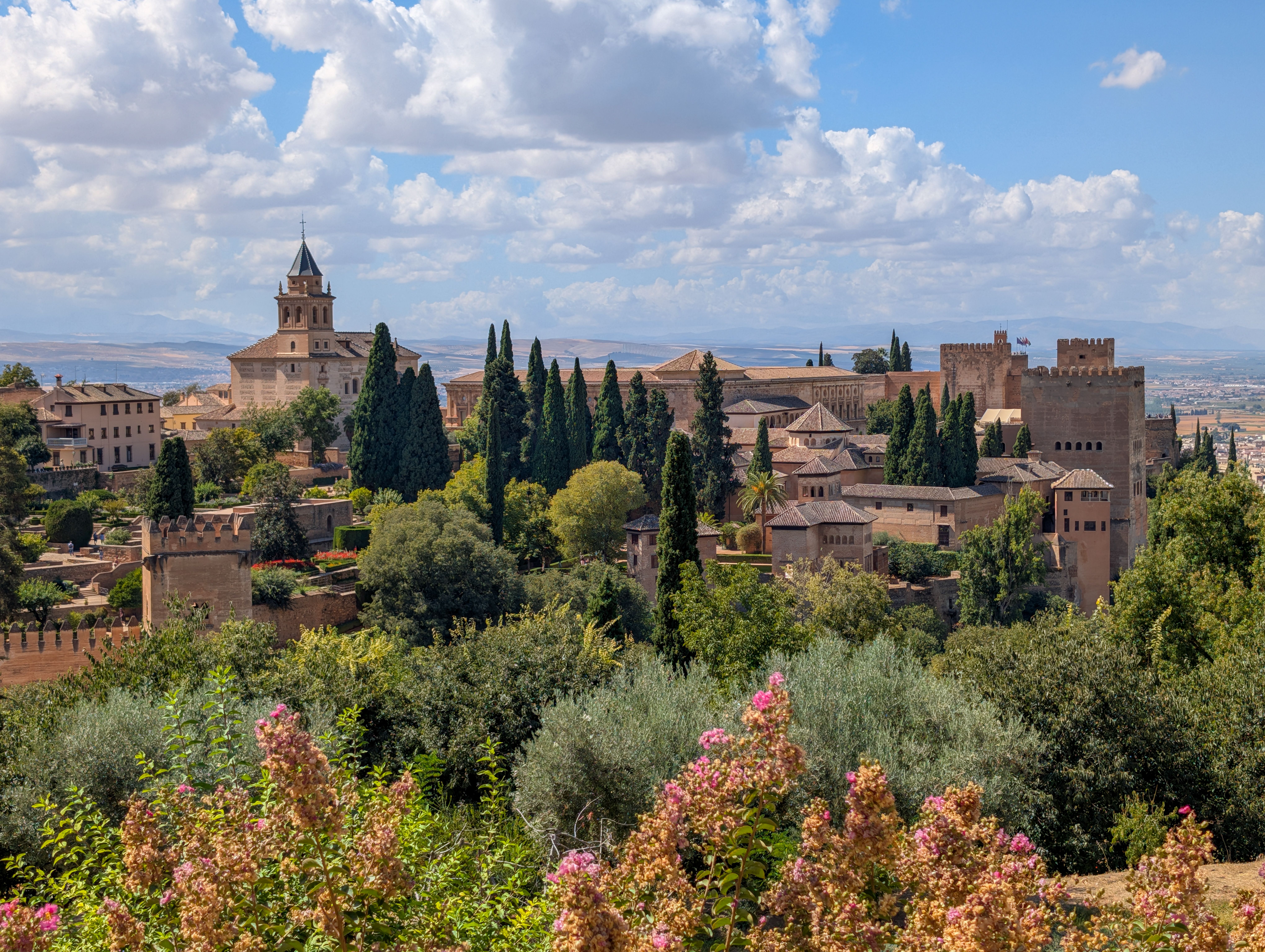
The Museo Provincial de Bellas Artes de Granada, nestled within the iconic Alhambra complex, is a cornerstone of Andalusian and Spanish cultural heritage. Housed in the magnificent Renaissance Palacio de Carlos V, the museum offers a journey through five centuries of art, spanning from the late 15th century to the modern era. Its unique setting, historical depth, and carefully curated collections make it a must-visit for art lovers, history enthusiasts, and cultural travelers exploring Granada’s rich tapestry.
(granadaspain.co.uk, visitarmuseo.com, spain.info)
Origins and Evolution
Established in 1839 during the wave of ecclesiastical confiscations known as the Desamortización, the Museo Provincial de Bellas Artes de Granada is one of Spain’s oldest provincial art museums. Its initial collection comprised religious artworks salvaged from local monasteries and churches, reflecting Granada’s historical ties to the Catholic Church. Over time, the collection expanded through acquisitions, private donations, and deposits from institutions such as the Museo del Prado, growing to over 2,000 works.
The museum has played a vital role in preserving Granada’s artistic legacy, serving both as a guardian of regional art and as an educational hub that illuminates the city’s multicultural past—blending Christian, Islamic, and Jewish influences.
(en.granada.info, artsandculture.google.com)
Architectural Marvel: The Palacio de Carlos V
Renaissance Grandeur and Historical Context
The museum is housed in the Palacio de Carlos V, a Renaissance masterpiece designed by Pedro Machuca in the 16th century. Commissioned by Emperor Charles V, the building stands in striking contrast to the surrounding Moorish architecture of the Alhambra, symbolizing the cultural and political shifts of its era.
Notable Features
- Structure: Square exterior with a unique circular two-story courtyard.
- Dimensions: 63 meters per side, 17 meters high.
- Details: Rusticated stonework, classical pilasters, a double colonnade of Doric and Ionic columns.
The palace’s architectural dialogue with the Alhambra underscores Granada’s layered history and cultural synthesis.
Organization and Highlights of the Collections
Thematic Layout
The museum’s 10 rooms are organized into four main sections, tracing the evolution of regional and Spanish art:
- Renaissance and Mannerism: Religious altarpieces, portraits, and works by Pedro Machuca and Juan de Sevilla, reflecting the Italian Renaissance’s influence on local traditions.
- Granada Baroque: Masterworks by Alonso Cano (e.g., "Inmaculada Concepción"), Pedro de Mena’s expressive sculptures ("Ecce Homo"), and pieces by José de Mora and Juan de Sevilla, showcasing dramatic religious intensity.
- 19th-Century Granada Painting: Secular themes, Romanticism, and Realism, with artists such as José María López Mezquita and Mariano Fortuny capturing Granada’s landscapes and history.
- Early 20th-Century and Avant-Garde: Works by Pablo Picasso, Joan Miró, Salvador Dalí, and local avant-garde artists, highlighting Cubism and Surrealism.
(WhichMuseum, visitarmuseo.com, Spain Holiday)
Collection Highlights
- Alonso Cano: "La Virgen del Lucero," "San Jerónimo penitente en el desierto"
- Juan Sánchez Cotán: "Bodegón con cardo y zanahorias"
- Pedro de Mena: Busts of the Dolorosa and Soledad
- Mariano Fortuny: "Vista del Antiguo Ayuntamiento de Granada"
- Antonio Muñoz Degrain: "Paisaje de Sierra Nevada"
- Manuel Ángeles Ortiz: Modernist art contributions
These works reflect not just technical skill but also the social, political, and religious contexts of their times.
(turismo.granada.org, artsandculture.google.com)
Practical Visitor Information
Location and Access
- Address: Palacio de Carlos V, Alhambra, 18009 Granada, Spain
- Public Transport: Bus lines C30 and C32
- Parking: Alhambra and Generalife lots; walking recommended from city center
Visiting Hours
- Winter (October to March): Tuesday–Sunday, 10:00–18:00
- Summer (April to September): Tuesday–Sunday, 10:00–20:00
- Closed: Mondays, January 1, May 1, December 25
Hours may vary for special events or holidays; check the official website for updates.
Tickets and Admission
- General Admission: €1.50 (non-EU visitors)
- Free Entry: EU citizens, students, children under 18, seniors (65+), people with disabilities (33%+), ICOM members
- Where to Buy: At the entrance or online via official platforms
The museum is also included in the Bono Turístico Granada card, which offers multi-attraction access and public transport discounts.
Accessibility
- Wheelchair accessible via ground floor entrance
- Ramps and elevators provided; some historic areas have limited access
- Contact in advance for specific needs: +34 958 563 508
Special Events and Guided Tours
- Temporary exhibitions, educational workshops, and cultural events throughout the year
- Free guided tours for groups/schools by advance booking
- Guided tours available in Spanish and English; booking recommended
Visitor Tips
- Museum entry is independent of Alhambra tickets
- Photography without flash is allowed; some restrictions during temporary exhibitions
- Large bags may be checked at the entrance
- Visit early or late in the day to avoid crowds
- Virtual tours and digital resources available through Google Arts & Culture
Nearby Historical Sites and Attractions
- The Alhambra and Generalife Gardens: UNESCO World Heritage Site, Nasrid Palaces, Alcazaba, lush gardens
- Museo de la Alhambra: Islamic art collection on the palace’s ground floor
- Albaicín Quarter: Historic Moorish neighborhood with panoramic views
- Sacromonte: Flamenco culture and cave dwellings
- Granada Cathedral and Royal Chapel: Renaissance and Gothic architecture
- Fundación Rodríguez-Acosta: Unique villa and gardens
- Parque de las Ciencias: Family-friendly science museum
- Huerta de San Vicente: Federico García Lorca’s former home
Combine your museum visit with these attractions for a comprehensive Granada cultural experience.
Frequently Asked Questions (FAQ)
Q: Do I need an Alhambra ticket to visit the Museo Provincial de Bellas Artes de Granada?
A: No, the museum has independent entry.
Q: What are the museum’s opening hours?
A: Tuesday to Sunday, 10:00–18:00 (winter) or 10:00–20:00 (summer); closed Mondays and select holidays.
Q: How much is admission?
A: Free for EU citizens; €1.50 for non-EU visitors.
Q: Is the museum accessible for visitors with reduced mobility?
A: Yes, with ramps and elevators; some historic areas may have limitations.
Q: Are guided tours available?
A: Yes, in Spanish and English by advance reservation.
Q: Can I take photographs inside?
A: Yes, without flash; some restrictions may apply during special exhibitions.
Tickets & tours.
These are guided options from our partners — same price as booking direct.
Prices are indicative — final pricing and availability are confirmed at checkout. Audiala may earn a commission from bookings made through these links.
Listen to the full story in the app
The whole Museo Provincial De Bellas Artes,
told well.
Listen to sourced travel stories with local history and practical context — ready offline.

Verified, and shown.
Researched and written by the Audiala editorial team from historical records, architectural archives, and local expertise.
Built from cited sources · see the method · How we make our guides →