An introduction.
Researched by the Audiala editorial team from historical records, architectural archives, and local expertise.
HHow does a modest farmhouse beside a city park hold the final drafts of Spain's most performed plays? Casa Huerta de San Vicente in Granada, Spain, is that riddle. Walk into its tiled parlor and you smell jasmine from the garden, feel the cool of the whitewashed walls, and see the same desk where Federico García Lorca wrote Bodas de Sangre, Yerma, and La Casa de Bernarda Alba between 1926 and 1936 — the reason to visit is not the building, but what it still holds of his voice.
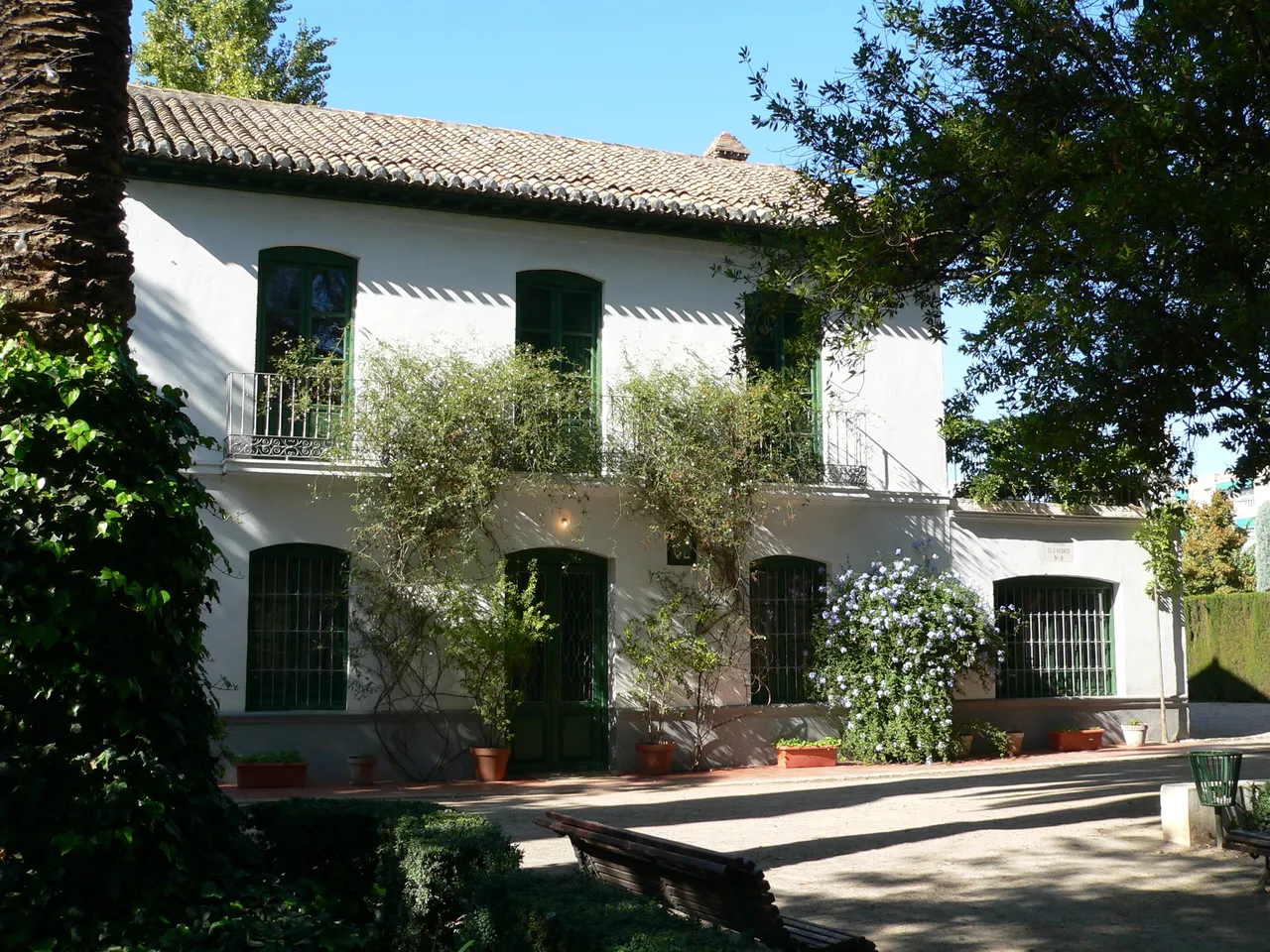
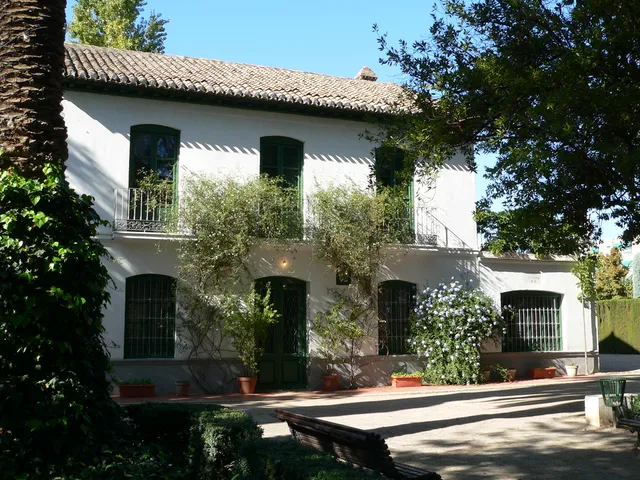
Today the house sits inside Parque Federico García Lorca, 71,500 square meters of poplars and rose beds. It's a small two-story whitewashed box surrounded by picnic blankets and school groups. Inside, the rooms are not roped-off reconstructions: the upright piano stands where Lorca played, the Thonet chairs hold his father's guests, the desk faces the window.
You come to Huerta de San Vicente not for architecture or artifacts. The draw is what happened at that desk. During ten summers, Lorca turned folk songs, family tension, and the heat of the plain into Romancero Gitano, Llanto por Ignacio Sánchez Mejías, and La Casa de Bernarda Alba. The house feels less like a museum than a paused rehearsal.
That pause has a dark edge. In August 1936, armed Falangists tore through these rooms looking for a hidden radio transmitter. They dragged the caretaker outside and beat him against a tree. The house you see is a survivor of that week. It's also why the desk still faces the window—as if waiting for its writer.
Beauty of Alhambra Palace, Granada-Andalusia, Spain in 4K| World in 4K
World in 4K01 What to see.
Federico's Bedroom and the Open Balcony
The Music Salon with the Half-Grand Piano
A Slow Loop Through the Huerta Grounds
02 In pictures.


Watch & Explore Casa Huerta De San Vicente.
Plan and listen to Casa Huerta de San Vicente with Audiala.
Audio guide in your pocket, itinerary in your browser. Built for the way you actually visit.
03 Visitor logistics.
The practical scaffolding for a good visit — kept short.
Getting There
From Granada Cathedral or Puerta Real, walk south down Calle Recogidas, turn right onto Calle Arabial, and enter Parque Federico García Lorca at Paseo de los Tilos—about 15–20 minutes. City bus lines 5, 9, 11, 21, and U3 stop near Calle Arabial or Camino de Ronda (€1.40); metro station Recogidas leaves a 7–9 minute walk east to the park. Drivers exit the A-44 ring road at Centro/Recogidas and park at APK2 Arabial or the Neptuno shopping center garage.
Opening Hours
As of 2026, the house interior is open Tuesday–Sunday only; closed Mondays, January 1, and December 25. Winter (Oct 1–May 31): 10:00–17:00 with last entry 16:30. Summer (Jun 1–Sep 30): 09:00–15:00 with last entry 14:30. The surrounding park is gated and stays open roughly 08:00–21:00 in winter and 08:00–23:00 in summer.
Time Needed
A quick visit takes 45–60 minutes: the guided house tour lasts about 30 minutes, leaving time for exterior photos and a brief park stroll. For panels, the manuscript display room, and the rose garden, budget 1.5–2 hours total.
Accessibility
The park's flat, paved and crushed-gravel paths work for wheelchairs and strollers, and the ground floor—reception, living room, dining room, piano salon—is wheelchair accessible. Federico's upstairs bedroom and manuscript room are reached only by the original historic staircase; no elevator serves the upper floor.
Cost & Tickets
Standard adult entry is €3; reduced €1 covers ages 6–12, students up to 26, and seniors 65+. Children under 6 enter free, and Wednesdays are free for everyone—pick up a timed ticket at reception because guided groups are small. Bring ID for reduced rates.
04 Tips for visitors.
Small things that change the day.
Interior photos forbidden
Inside the historic rooms, photography, video, flash, tripods, and selfie sticks are strictly forbidden to protect original furniture, family photographs, and artwork. Shoot the whitewashed exterior and rose gardens outside; drones over the park need municipal and aviation permits.
Tapas after Lorca
Walk 12 minutes to Café Fútbol (Plaza de Mariana Pineda, 8) for churros con chocolate at a 1922 institution, or hit Bar La Esquinita de Javi for pescaíto frito. Both are budget-friendly; every drink in Granada still comes with a free tapa.
Go early, especially Wednesday
Tours leave in small groups and free Wednesdays fill up fast, so arrive at opening (10:00 winter, 09:00 summer as of 2026) or earlier. Summer afternoons in Granada are punishing; the rose garden offers little shade.
Free Wednesday tickets
General entry is €3, but Wednesdays are free—just pick up a timed ticket at reception because capacity is strict. Reduced €1 tickets cover ages 6–12, students to 26, and seniors 65+.
No big bags inside
The house is a preserved early 20th-century interior with tight rooms; large backpacks and suitcases are refused. Only small lockers at reception exist, so leave full-size luggage at your hotel or city storage.
Park gates lock after dark
Parque Federico García Lorca is gated and locks at night—usually 20:00/21:00 in winter, 22:00/23:00 in summer. The surrounding streets are safe by day but dimly lit late; stick to Calle Arabial if walking after dinner.
Quiet rooms, no food
The guide asks for low voices inside; rooms are small and original floorboards echo. Finish drinks and tapas before entering—open food and drink containers are not allowed in the museum.
05 The Voice in the White House
Federico García Lorca spent his final creative decade in this house, but the story begins with his father's money and his mother's name. In May 1925, Federico García Rodríguez purchased a 19,000-square-meter farming estate at the edge of the Vega. He named it Huerta de San Vicente for his wife, Vicenta Lorca Romero.
From 1926 to 1936, the family arrived each June and stayed until the grapes ripened. For Lorca, this was not a holiday home; it was the acoustic chamber where he read drafts aloud, played piano, and shaped his tragedies. Records show he drafted, revised, or completed Bodas de Sangre (1932), Yerma (1934), and La Casa de Bernarda Alba (June 1936) at the second-floor desk.
The Sanctuary That Became a Trap
The official story is simple: between 1926 and 1936, Federico García Lorca retreated to this whitewashed family farmhouse each summer and wrote masterpieces in peace. You picture the poet at his upstairs desk, the Sierra Nevada through the window, a piano downstairs, jasmine at the door.
But the dates don't add up. Lorca arrived from Madrid on 14 July 1936, days before the military uprising. By early August, armed squads were searching the house under the excuse of a hidden radio transmitter for contacting Russian submarines.
The truth is uglier. On 6 and 9 August 1936, paramilitaries led by Nicolás Velasco Simarro dragged caretaker Gabriel Perea into the garden, tied him to a tree, and beat him while the family watched; Lorca, when he intervened, was pushed and insulted. The turning point came on the night of 9 August, when he left for the home of Falangist poet Luis Rosales Camacho—a friend whose protection he trusted.
They did not protect him. A week later, Lorca was arrested at Rosales's house and killed. Now, when you stand in the garden, you see the tree line differently: the desk by the window is not a romantic spot but the last place he wrote before realizing this open house offered no walls against guns.
Early Life & Vision
Legacy & Influence
Listen to the full story in the app
The whole Casa Huerta de San Vicente,
told well.
Listen to sourced travel stories with local history and practical context — ready offline.
06 Frequently asked.
The questions travellers send us most about Casa Huerta de San Vicente.
Is Casa Huerta de San Vicente worth visiting?
Yes, especially if you care about Lorca or 20th-century Spanish literature. This is the actual summer house where Lorca wrote Blood Wedding and Yerma at a desk facing the Sierra Nevada. The rooms still hold the family piano, gramophone, and a Dalí sketch, and the guided tour takes only 30 minutes.
How long do you need at Casa Huerta de San Vicente?
Plan 45 minutes to an hour for the guided house tour and a quick walk outside. The house tour itself runs about 30 minutes and is the only way inside. Add another 30-60 minutes if you want to wander the rose garden and acequia paths in Parque Federico García Lorca.
How do I get to Casa Huerta de San Vicente from Granada city centre?
Walk south from the Cathedral down Calle Recogidas, then turn right on Calle Arabial — it's about a 15-20 minute walk. Buses 5, 9, 11, 21 and U3 stop near Calle Arabial; the metro's Recogidas station leaves you a 7-9 minute walk away.
What is the best time to visit Casa Huerta de San Vicente?
Go in spring (April-May) for the rose garden in full bloom, or in summer for the jasmine and dama de noche scent. Summer hours shorten to 09:00-15:00, so arrive before 14:30 for the last tour. Winter runs 10:00-17:00, Tuesday to Sunday, closed Mondays.
Can you visit Casa Huerta de San Vicente for free?
Yes — Wednesdays usually offer free entry, and kids under 6 always enter free. Standard adult admission is €3, reduced €1 for students, seniors and children 6-12. Because tours are small and fill up, grab a free Wednesday ticket at the on-site box office early.
What should I not miss at Casa Huerta de San Vicente?
Don't miss Lorca's upstairs bedroom desk angled toward the balcony. That's where he wrote Romancero Gitano and Blood Wedding, often leaving the balcony open all night. Also look for the 20-year-old Dalí sketch and the original half-grand piano in the ground-floor salon.
Was Federico García Lorca arrested at Casa Huerta de San Vicente?
No — he was attacked here in August 1936 but arrested days later at the Rosales family house in central Granada. Paramilitaries raided the Huerta on August 6 and 9, tied caretaker Gabriel Perea to a tree and beat him, and shoved Lorca down the stairs. Lorca fled on the night of August 9/10, and was arrested on August 16.
What did Federico García Lorca write at Casa Huerta de San Vicente?
He wrote or revised Blood Wedding, Yerma, Romancero Gitano, and Lament for Ignacio Sánchez Mejías here. The upstairs desk was his summer workstation from 1926 to 1936. Drafts of his avant-garde plays El Público and La Comedia sin Título were also worked on in this house.
Verified, and shown.
Researched and written by the Audiala editorial team from historical records, architectural archives, and local expertise.
Background on the estate's purchase, Lorca's works written there, rooms and garden details, directions and tour info.
Opening hours, guided tour access, and booking details for the house-museum.
Historical names, purchase date, bedroom and desk details, and the August 1936 raids.
Summer residency period and works completed at the house.
Room-by-room guide, Dalí sketch, summer hours, and access policy.
Current ticket prices and reduced admission categories.
Transport options and location context for the museum.
Eyewitness details of the August 1936 paramilitary raids and Lorca's departure.
Community use of the park and the 2020 book on the estate's history.
Additional confirmation of works associated with the house.
Built from cited sources · see the method · How we make our guides →