Plan and listen to Alhambra with Audiala.
Audio guide in your pocket, itinerary in your browser. Built for the way you actually visit.
Introduction: The Alhambra in Granada
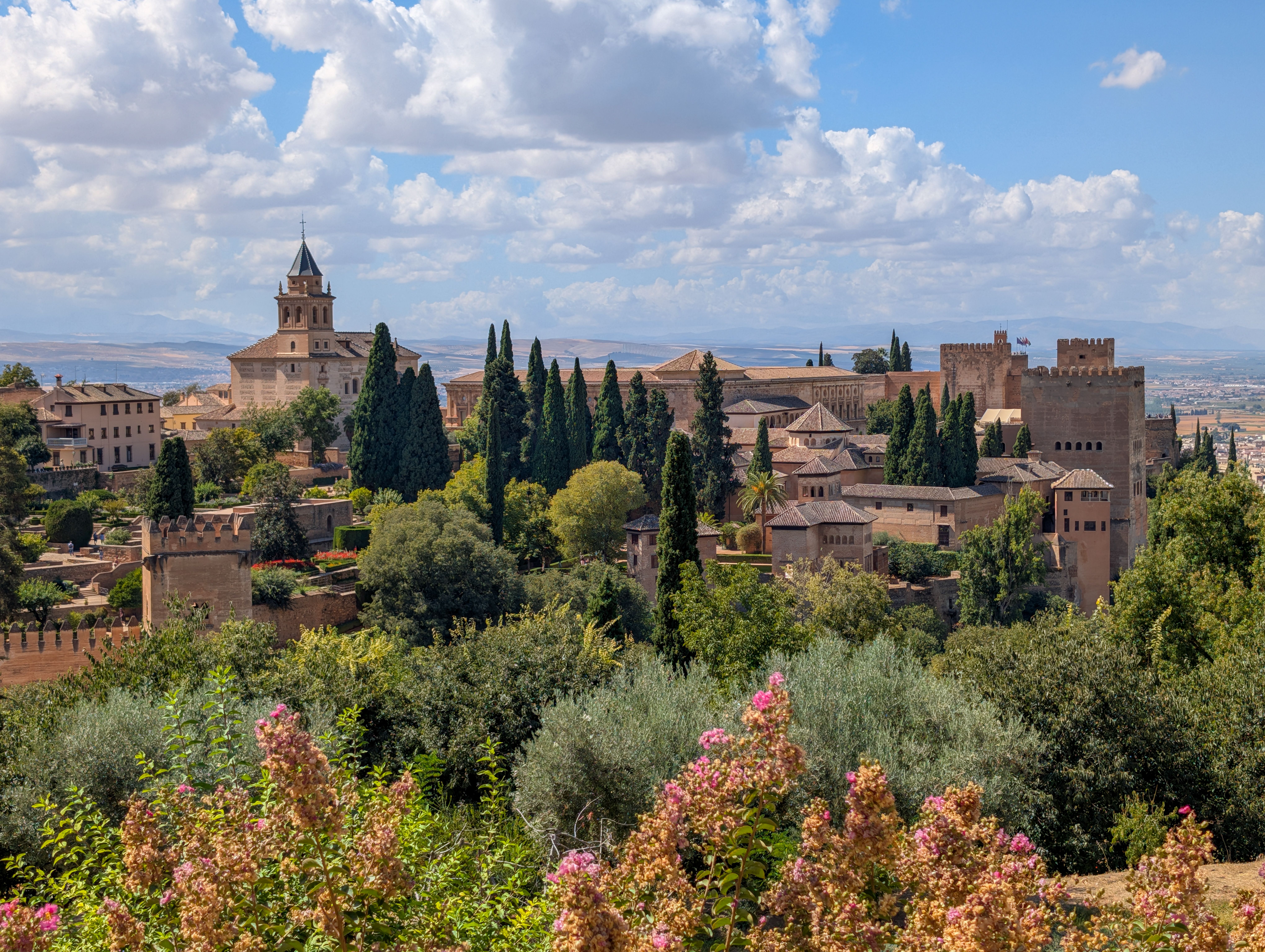
Perched atop Sabika Hill and commanding views of Granada, Spain, the Alhambra stands as a pinnacle of Moorish architecture and Andalusian heritage. Its name, drawn from the Arabic "al-Qal’a al-Hamra" or "the Red Fortress," harks back to its 9th-century origins as a military outpost. Under the Nasrid dynasty (13th–15th centuries), these fortifications blossomed into an opulent palatial city, replete with intricate stucco, geometric mosaics, delicate woodwork, and ingenious water features—hallmarks of Islamic artistry (visit-alhambra.com; Spain Cultures).
Following the Christian conquest in 1492, the Alhambra was transformed by the Catholic Monarchs, who added Renaissance elements like the Palace of Charles V while preserving its Moorish essence. Today, the Alhambra is a UNESCO World Heritage Site, captivating millions each year with its palaces, gardens, and fortress (whc.unesco.org; alhambra-tickets.es).
This guide offers a comprehensive overview of the Alhambra’s history, architectural wonders, visitor logistics, and nearby attractions, ensuring your visit is both seamless and deeply rewarding (granadaturismoyocio.com; earthtrekkers.com).



Early Origins and Moorish Foundations
The Alhambra's foundations were laid in the 9th century as a small fortress, its name referencing the reddish hue of its walls (visit-alhambra.com). The Zirid dynasty established the Alcazaba in the 11th century, setting the stage for the complex’s later transformation (alhambra.org).
The Nasrid Dynasty and the Golden Age
In 1238, Muhammad I ibn Nasr made the Alhambra his royal seat, initiating its golden era. Over two centuries, the Nasrids expanded the complex into a palatine city, constructing the Nasrid Palaces, Generalife gardens, and medina. These spaces exemplify Islamic art through their ornate stucco, tile mosaics, calligraphy, and use of water (discoveringspain.net; whc.unesco.org).
Architectural Highlights
- Nasrid Palaces: The Court of the Lions, Hall of the Abencerrajes, and Hall of the Two Sisters are masterpieces of Nasrid craftsmanship (visit-alhambra.com).
- Generalife: The summer palace and gardens, famed for their terraces and fountains (whc.unesco.org).
- Alcazaba: The fortress section, with imposing towers and ramparts.
The design integrates geometric motifs, poetic inscriptions, and the play of light and water, symbolizing paradise (whc.unesco.org).
Christian Transformation and Renaissance Interventions
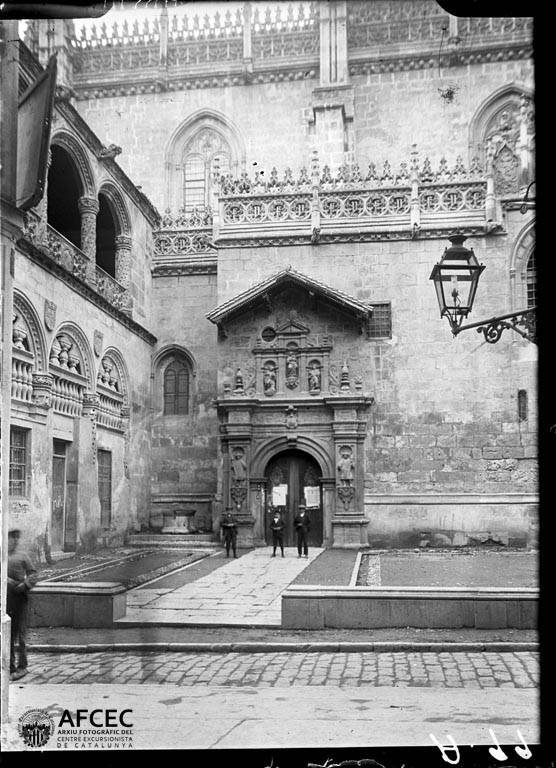
After the Christian conquest in 1492, the Alhambra became the royal residence for Ferdinand and Isabella. Churches and the Royal Chapel were added, and later, Emperor Charles V commissioned the Renaissance Palace of Charles V, a stark contrast to the Islamic designs (alhambra-tickets-tours.com).
Decline, Rediscovery, and UNESCO Recognition
The Alhambra declined with Spain’s shifting capitals and suffered damage during the Peninsular War (1808–1814). Restoration began after its 1870 designation as a national monument, culminating in UNESCO World Heritage status in 1984 (visit-alhambra.com; whc.unesco.org).
Architectural & Artistic Highlights
Nasrid Palaces
These interconnected palaces form the heart of the Alhambra. Signature features include:
- Mexuar: Administrative center with austere yet beautiful tilework.
- Comares Palace: Houses the Hall of the Ambassadors and the tranquil Court of the Myrtles.
- Palace of the Lions: Renowned for its marble lion fountain, muqarnas ceilings, and intricate stucco (Granada Turismo y Ocio; Spain Cultures).
Alcazaba
The oldest part of the Alhambra, the Alcazaba served as a fortress and watchtower, with panoramic city views from the Torre de la Vela. Its walls, towers, and ramparts reflect its military origins (Veronika’s Adventure; World Tourism).
Generalife Gardens
The Generalife was the Nasrid rulers’ summer retreat, famed for:
- Patio de la Acequia: A central water channel flanked by flowers and cypress.
- Water Stairway: Steps with flowing water, exemplifying Nasrid hydraulic mastery.
Palace of Charles V
This Renaissance palace, with its circular courtyard and classical columns, houses the Alhambra Museum and the Fine Arts Museum of Granada, merging Moorish and Christian artistic legacies (Veronika’s Adventure).
Cultural Layers and Coexistence
The Alhambra stands as a testament to Granada's layered identity. After 1492, mosques were converted to churches, and Renaissance elements were introduced. Despite these changes, restoration efforts have preserved the core Islamic heritage (The Fun Plan; Mundo Wanderlust).
Planning Your Visit
Visiting Hours
- April–October: 8:30 AM–8:00 PM
- November–March: 8:30 AM–6:00 PM
- Last entry: 30 minutes before closing (visit-alhambra.com)
Tickets & Entry
- General Admission: ~€14–€15
- Reduced/Free Admission: Discounts for EU youth, children, disabled visitors; free for under 12s and on special days
- Purchase: Advance booking is essential (alhambra-tickets.es; Spain Traveller)
- Timed Entry: Particularly for the Nasrid Palaces—arrive at least 15 minutes early
- Identification: Name on ticket must match passport or EU ID (Tricks and Trips)
Accessibility & Facilities
- The site is partially accessible, with adapted routes, lifts, and accessible toilets (Disabled Accessible Travel).
- Wheelchairs and assistance are available.
- Guided tours and audio guides in multiple languages enhance the experience (The Tour Guy).
Getting There
- On Foot: 20–30 min uphill from city center
- Bus: C30, C32, C3, C4 lines
- Car: Park at Alhambra lot; city center is pedestrianized
- Taxi: Readily available; useful for mobility needs
Facilities
- Restrooms at entrances and key areas
- Lockers at the main entrance
- Cafés and vending machines onsite; full meals outside recommended
Travel Tips & Nearby Sights
- Book tickets 1–3 months ahead, especially in peak season (Earth Trekkers).
- Morning or late afternoon visits are best for comfort and light.
- Wear sturdy footwear; terrain is uneven.
- Children are welcome, but strollers may find certain areas challenging.
- Explore nearby: Albaicín (UNESCO district), Sacromonte caves, Granada Cathedral, Mirador de San Nicolás for panoramic views.
Frequently Asked Questions (FAQ)
Q: What are the Alhambra’s opening hours?
A: 8:30 AM–8:00 PM (Apr–Oct); 8:30 AM–6:00 PM (Nov–Mar). Night visits offered seasonally.
Q: Can I buy tickets on-site?
A: Not reliably—advance online purchase is strongly advised.
Q: Is the Alhambra accessible for wheelchairs?
A: Partially; some routes and lifts are adapted, but historic areas may pose challenges.
Q: Are guided tours available?
A: Yes—book in advance for the best selection.
Q: Can I bring food and drinks?
A: Only water is allowed in Nasrid Palaces; food and large bags must be stored.
Visual & Media Suggestions
- Feature high-resolution images of the Court of the Lions, Generalife gardens, and Palace of Charles V
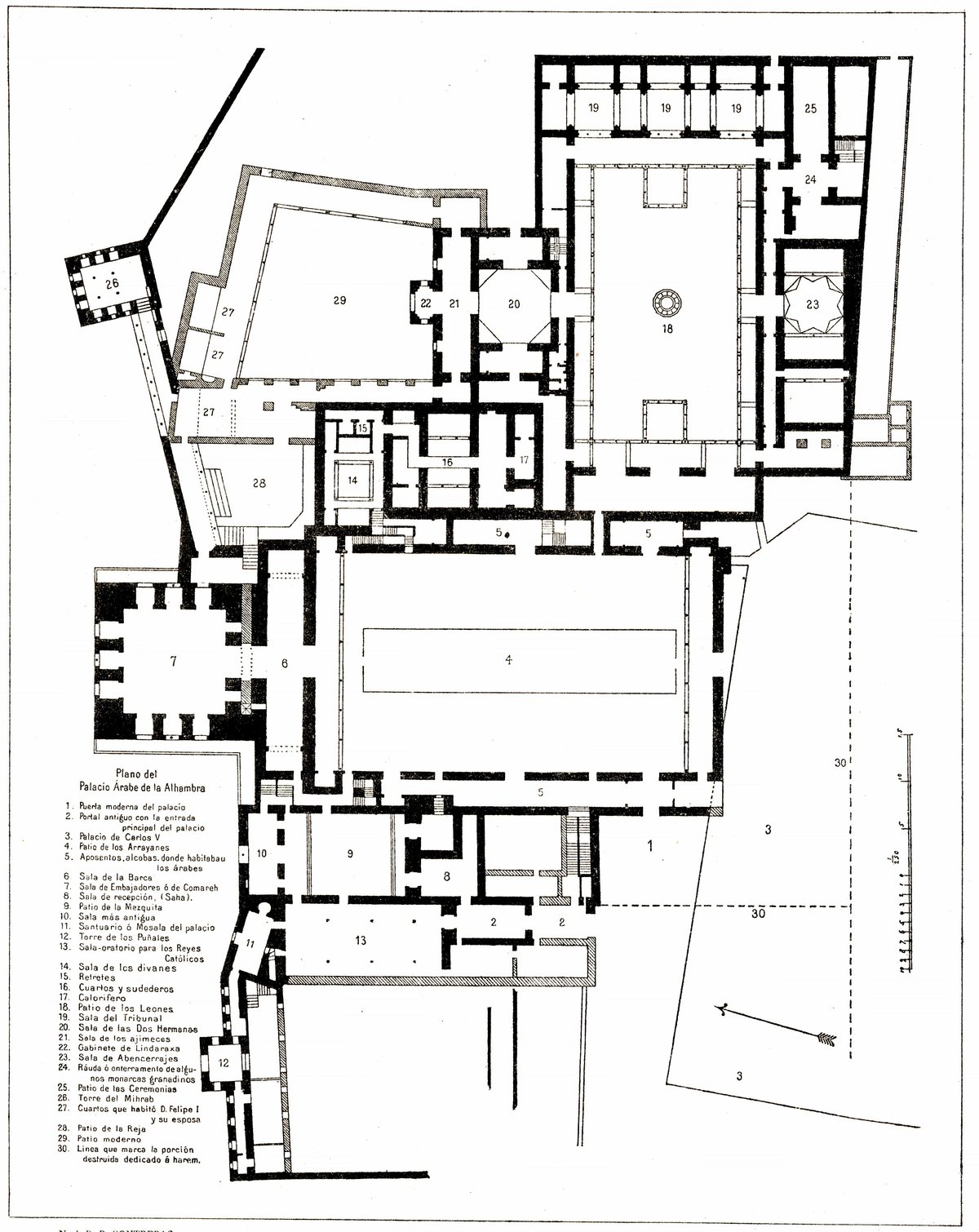
- Include a map of the Alhambra complex
- Add infographics summarizing ticket options and visiting hours
Tickets & tours.
These are guided options from our partners — same price as booking direct.
Prices are indicative — final pricing and availability are confirmed at checkout. Audiala may earn a commission from bookings made through these links.
Listen to the full story in the app
The whole Alhambra,
told well.
Listen to sourced travel stories with local history and practical context — ready offline.
Verified, and shown.
Researched and written by the Audiala editorial team from historical records, architectural archives, and local expertise.
Built from cited sources · see the method · How we make our guides →