



Place
Spain Updated Aug 2026
Salt hangs in the air above La Concha, where white railings, clock towers, and the dark hump of Santa Clara Island frame a beach in the middle of the city. Donostia-San Sebastián, Spain, pairs this polished seaside view with steep green hills, a working fishing harbor, and narrow streets where dinner arrives on a slice of bread. The contrast is the point.
 Photo: Gustavo de J Sánchez / Pexels
Built from cited sources · see the method · How we make our guides →
San Sebastián carries its history in sharp layers: the 1813 fire left Calle 31 de Agosto as the Old Town’s only surviving street, while the Belle Époque produced Miramar Palace, the Hotel Maria Cristina, and the Victoria Eugenia Theatre. At the Urumea River’s mouth, Rafael Moneo’s Kursaal turns toward the Bay of Biscay as two translucent forms, a deliberate break from the city’s ornate royal-era façades.
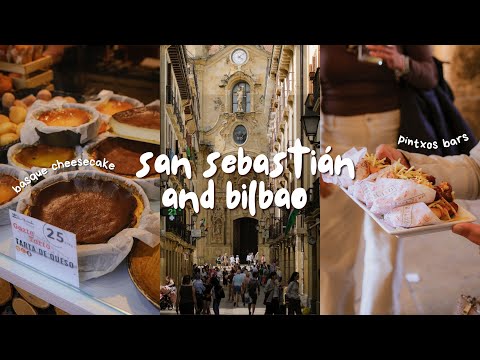
Food here follows a social rhythm rather than a reservation schedule. A local evening might begin with a Gilda of anchovy, Ibarra pepper, and olive, continue with hot pintxos at La Cuchara de San Telmo or Borda Berri, and end with txakoli poured from a height; order one bite and one small drink, then keep walking.
The beaches are only the opening frame. Climb Monte Urgull past cannons and the English Cemetery, cross the river into surf-minded Gros, or spend an evening at Tabakalera in Egia, and the resort-town image gives way to a Basque city with its own music, arguments, rituals, and working habits.
Not every monument, just the ones we'd walk you past ourselves.


Where to wander, by quarter — each with its own rhythm.
Before you go
A port, a royal summer court, and a city rebuilt with stubborn memory
The city’s earliest story is less tidy than its literary nickname, La Bella Easo, suggests. Archaeological work around Santa Teresa, beneath Monte Urgull, has found traces attributed to Roman presence; the Roman port Oiasso, once placed here by tradition, is now located by scholars at nearby Irun.
A document names the monastery of San Sebastián El Antiguo, on the site now occupied by Miramar Palace. Under Leyre Abbey and the Bishop of Pamplona, the monastery anchors the city’s name to a real institution rather than a later invention.
Around 1180, Sancho VI of Navarre granted San Sebastián a fuero, or municipal charter, based on the laws of Estella. The charter gave the landlocked kingdom an Atlantic outlet for wool and iron, while Gascon merchants from Bayonne brought ships, contracts, and new street names.
King Alfonso VIII of Castile captured Gipuzkoa and brought San Sebastián into the Castilian crown. The town kept its fueros and commercial privileges, but its role changed from Navarrese outlet to a guarded port on Castile’s northern frontier.
The defenses on Monte Urgull were rebuilt and enlarged after the Castilian conquest, with major work continuing under Charles V. Stone bastions, powder stores, and artillery turned the hill above the harbor into a military machine with a view over every approach.
The rebuilt Church of San Vicente was completed in the late Basque Gothic style, its dark stone vaults rising at the edge of the old town. The church survived the destruction of 1813 and remains one of the few substantial witnesses to medieval Donostia.
During the War of the Quadruple Alliance, French troops under the Duke of Berwick captured San Sebastián. The occupation lasted until the Treaty of The Hague in 1720, another reminder that the town’s harbor brought danger along with trade.
Philip V chartered the Real Compañía Guipuzcoana de Caracas, linking the port of Pasaia and San Sebastián with Venezuela. Ships carried Basque merchants toward cocoa, indigo, and tobacco, and returned with cargoes whose smells reached the quays before the vessels were unloaded.
Builders replaced the medieval church at the foot of Monte Urgull with the Basilica of Santa María del Coro. Its Baroque and Churrigueresque façade brought elaborate curves and carved ornament to a town still shaped by artillery and sea walls.
French imperial troops occupied San Sebastián while supposedly passing through to Portugal, as Napoleon installed his brother Joseph Bonaparte on the Spanish throne. The garrisoned port became a locked door in the Peninsular War, with French soldiers behind its walls and an allied army closing in.
After Wellington’s victory at Vitoria on June 21, British Lieutenant-General Sir Thomas Graham directed the allied siege of San Sebastián. British and Portuguese troops began operations on July 7 against General Louis Rey’s French garrison, which held the town and Monte Urgull with stubborn discipline.
The first allied assault, on July 25, failed with roughly 700 allied casualties; the second broke through on August 31. Soldiers plundered and attacked civilians before fires consumed nearly the entire town, leaving Calle 31 de Agosto as the surviving thread through the ashes.
French General Louis Emmanuel Rey withdrew with his remaining forces into the citadel on Monte Urgull after the city fell. He surrendered the fortress on September 8–9, ending the siege but not the grief of the people left below.
Surviving town elders met at Casa Aizpurua in Zubieta and resolved to rebuild San Sebastián on its ruined site. Their decision rejected abandonment, even though the streets still smelled of smoke and much of the old town had become blackened masonry.
According to local historical accounts, Queen Isabella II first came to San Sebastián in 1845 after doctors prescribed wave-bathing in La Concha Bay. Her visits helped turn the former fortress town into a fashionable seaside retreat, where salt water became part of court medicine.
In 1854, San Sebastián became Gipuzkoa’s sole provincial capital, succeeding Tolosa. On May 4, 1863, workers began demolishing the medieval and Renaissance walls, opening the narrow isthmus to the ordered streets of the Ensanche Cortázar.
Pío Baroja was born in San Sebastián into a family connected with printing and journalism. The city’s Basque speech, port life, and restless streets fed the sensibility of the future Generation of 98 novelist, whose pages often carry the damp light of Gipuzkoa.
After Alfonso XII’s death in 1885, Queen Regent María Cristina chose San Sebastián as the summer seat of the Spanish court. Aristocrats, politicians, musicians, and financiers followed, bringing hotels, promenades, gossip, and a new rhythm to the bay.
English architect Ralph Selden Wornum designed Miramar Palace for Queen María Cristina on the headland between La Concha and Ondarreta. Its Queen Anne-style brickwork and clipped lawns gave the royal summer court a private balcony over the water.
Manuel de Echave’s Neo-Gothic Cathedral of the Good Shepherd was consecrated, with a spire rising about 75 meters above the expanding city. Its pale stone and pointed arches announced that San Sebastián now wanted to look like a European capital, not merely a military port.
The Hotel María Cristina and Teatro Victoria Eugenia opened beside the Urumea, giving the city grand rooms, velvet curtains, and a stage for visiting celebrities. That same year, the Monte Igeldo funicular began carrying passengers uphill toward the bay’s wide sweep.
Primo de Rivera’s 1924 ban on gambling closed the Gran Casino, ending one of the royal resort’s favorite rituals; the building became San Sebastián’s City Hall in 1947. In between, 1928 brought the Aquarium and Monte Igeldo’s Montaña Suiza, a curious shift from roulette tables toward marine science and cliffside amusement.
Civil War fighting around the Hotel María Cristina and Loyola barracks ended with Nationalist forces taking San Sebastián on September 13, 1936. Under Franco, public Basque language and institutions faced repression; in 1959, the founding of ETA opened decades of political violence across the city and Gipuzkoa.
A 12-meter Sacred Heart statue was erected atop Monte Urgull in 1950, overlooking the bay from the old fortress. The International Film Festival began in 1953, and Donostiako Jazzaldia followed in 1966, giving a politically restricted city two public stages for international culture.
San Sebastián-born sculptor Eduardo Chillida and architect Luis Peña Ganchegui inaugurated Peine del Viento at the foot of Monte Igeldo. Three 10-ton corten-steel forms grip the granite rocks, while waves force air and seawater through the blowholes below the plaza.
The Statute of Gernika restored broad self-government to the Basque Country after the dictatorship. For San Sebastián, the change reopened public life around Basque identity, language, and institutions that had been pushed out of view for decades.
Rafael Moneo’s Kursaal Congress Centre opened beside Zurriola Beach as two translucent cubic volumes, often compared to rocks washed ashore. Its auditoriums gave the film festival and Jazzaldia a modern civic stage, and the building received the Mies van der Rohe Prize in 2001.
After the Aiete Peace Conference at the Palacio de Ayete, ETA declared a permanent cessation of armed activity on October 20, 2011. The statement did not erase the violence that preceded it, but it changed the daily meaning of streets long marked by fear, protest, and funerals.
San Sebastián shared the title of European Capital of Culture with Wrocław, Poland. The program placed memory, peace, migration, and Basque culture at the center of a city better known abroad for film, food, and the curve of La Concha.
Cristina Iglesias installed Hondalea inside the restored lighthouse on Santa Clara Island, turning an old maritime signal into a permanent marine sculpture. Water surges through its dark sculpted chamber, making the island’s geology audible as well as visible.
Sculptor · 1924–2002
Born here
Born near La Concha, Chillida first played goalkeeper for Real Sociedad before an injury redirected him toward sculpture. His Peine del Viento still lets the sea complete the work; he might recognize today’s city as a place where public art is weathered rather than fenced away.
Writer · 1872–1956
Born here
Baroja was born in San Sebastián into a family linked to printing and journalism, then carried the city’s Basque edge into the novels that made him a key voice of Spain’s Generation of ’98. He might find the present-day pintxo streets more crowded, but the rain, hills, and restless conversations would still feel familiar.
Queen Regent of Spain · 1858–1929
Summered here from 1887 to 1929
Maria Cristina brought the Spanish court to San Sebastián for summers over more than four decades, helping turn the bay into a royal resort and commissioning Miramar Palace above the shore. She might be surprised by how openly the city now uses those former courtly views, with joggers and swimmers passing beneath the palace gardens.
Queen of Spain · 1830–1904
Visited here; first visit dated to 1845
City tourism records date Isabella II’s first visit to San Sebastián to 1845, an early spark in the royal habit of taking the northern air. She would find today’s bay less courtly and more public, but the ritual of arriving for sea, promenades, and summer spectacle survives.
Where locals actually book dinner — not the tourist menus.
These small Basque bar snacks are built for grazing rather than sitting down to a formal meal. Order one or two at a time in Parte Vieja, then try Gros institutions such as Bar Bergara or Bodega Donostiarra.
An anchovy, green olive, and pickled guindilla threaded onto a skewer, the gilda is salty, sharp, oily, and wonderfully direct. It is the right first bite before a long evening of bar-hopping.
Spider-crab meat is mixed with aromatics and baked, often in the shell, until the top takes on a faintly toasted edge. Try it when you want a taste of the old fishing port rather than another clever bar canapé.
Hake or cod throats have a soft, gelatinous texture that turns silky when folded into a garlic-and-olive-oil pil-pil sauce. They are a small dish with a surprisingly rich mouthfeel.
Salt cod meets the same trembling emulsion of olive oil, garlic, and fish gelatin, producing a sauce that clings without feeling heavy. It shows how Basque cooking can make restraint taste luxurious.
A thick-cut beef steak grilled over fierce coals, usually served with a deeply browned crust and a red, tender centre. Look for a grill room or cider-house-style restaurant rather than ordering it in a crowded snack bar.
This dry, lightly spritzy white wine comes from the coastal vineyards around Getaria and Zarautz west of the city. Its brisk acidity cuts through fried seafood, anchovies, and the rich sauces that appear after the third pintxo.
The local style arrives with a near-black caramelized top and a soft, almost molten centre. La Viña in Parte Vieja is closely associated with the form; a slice alongside bitter coffee makes a convincing final stop.
Small things that change how the city treats you.
The city, as it actually looks.


Yes, especially if you care about food, sea views, and public art within a compact city. A day can hold La Concha, Parte Vieja pintxos, and Eduardo Chillida’s Peine del Viento; extra time adds Monte Urgull, the Kursaal, San Telmo Museum, and the cider houses beyond town.
Plan 3–4 days for a balanced first visit. That gives you time for both beaches, Monte Urgull or Monte Igeldo, a museum, several pintxo walks, and a slower meal rather than treating the city as a single bay photograph.
For the central sights, walking is the simplest option. La Concha, Parte Vieja, Centro, Gros, and the main waterfronts connect through compact streets and promenades; use the funicular for Monte Igeldo and the summer motorboat for Santa Clara Island.
Yes, with normal urban care. Keep valuables close in the crowded, bar-packed Parte Vieja and during the Tamborrada, while the clearest physical warning is at Peine del Viento: high swell can send water through the blowholes and make the rocks dangerous.
San Sebastián can become expensive at the high end, but pintxos let you control the bill one stop at a time. In Gros on Thursday evenings, pintxo-pote usually costs €2.50–€3.50 for a pintxo with a small beer or wine; bar tipping is often €0.20–€1, while seated meals commonly receive 5–10%.
Late spring and early autumn, especially May–June and September–October, offer a good balance of open-air time and cultural programming. Choose late July for Jazzaldia, mid-August for fireworks over La Concha, late September for the film festival, or mid-January to late April for cider-house season.
Start with a Gilda, the anchovy, Ibarra pepper, and olive skewer associated with the city, then try kokotxas, txangurro, and charcoal-grilled txuleta. Leave room for the creamy burnt cheesecake at La Viña or a warm pantxineta from Casa Otaegui.
10 places to discover

Saved and recently read places — kept on this device only.
Photos may have been resized or cropped.