Plan and listen to Iglesia De Santa Marina De Aguas Santas with Audiala.
Audio guide in your pocket, itinerary in your browser. Built for the way you actually visit.
Introduction
The Iglesia de Santa Marina de Aguas Santas is a striking example of Córdoba’s rich historical and architectural legacy. As one of the twelve “Iglesias Fernandinas” constructed after the Christian Reconquista, it highlights the city’s cultural transformation and enduring spiritual traditions. From its Visigothic origins and Islamic past to its current role as a vibrant community hub, Santa Marina embodies centuries of religious, artistic, and architectural evolution. This comprehensive guide provides essential information for visitors, including opening hours, ticket details, accessibility, travel tips, and an exploration of the church’s significance within the cultural tapestry of Córdoba (mycityhunt.com; andalusien360.de; tuttocordoba.com; AmedinaCordoba).


Visiting Information
Opening Hours
- Monday to Saturday: 10:00 AM – 1:30 PM & 4:30 PM – 7:30 PM
- Sundays and Public Holidays: 11:00 AM – 1:30 PM
Hours may vary during religious services or special events.
Tickets and Guided Tours
- Admission: Free; donations are appreciated to support ongoing preservation.
- Guided Tours: Available upon request and best arranged in advance, especially during peak tourist seasons.
Accessibility
- The church is wheelchair accessible, with ramps at the main entrance.
- For specific accessibility needs, contact the church administration prior to your visit.
Travel Tips
- Located in the Santa Marina neighborhood, easily reached by foot from Córdoba’s historic center.
- Public transport: Several city bus lines stop nearby.
- Please respect religious services and maintain a quiet atmosphere inside the church.
Historical Background
Origins and Early Foundations
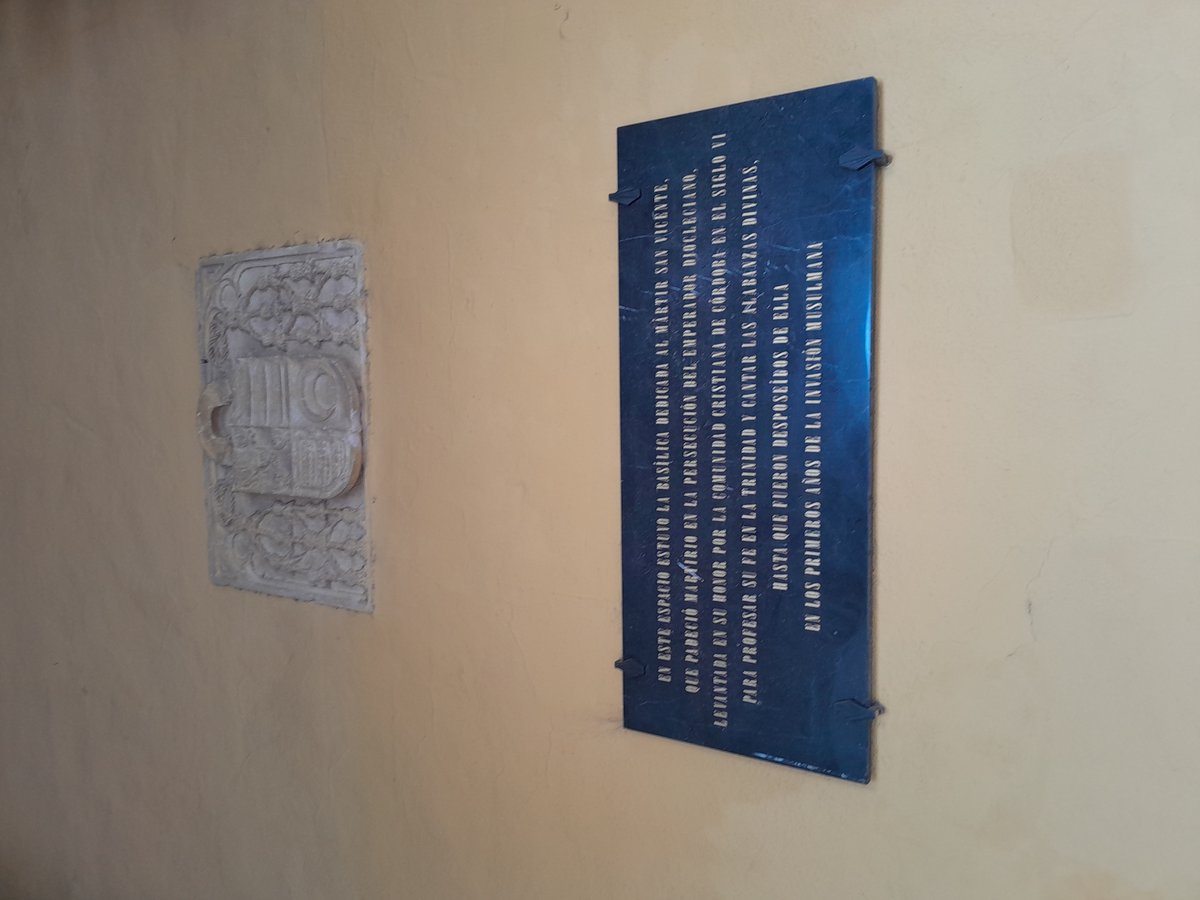
Santa Marina de Aguas Santas stands on a site with deep historical layers. Originally, a Visigothic church occupied the area in the 7th century, succeeded by a mosque during the Islamic era. The current church was commissioned by King Ferdinand III following the Christian Reconquista in 1236, making it one of the earliest and most significant “Iglesias Fernandinas” (andalusien360.de; tuttocordoba.com; AmedinaCordoba).
Architectural Evolution
Medieval Construction and Styles
The church’s design blends late Romanesque, proto-Gothic, and Mudéjar styles. Its basilica plan features a central nave flanked by lower aisles, separated by pointed arches. The fortress-like exterior, with four asymmetrical buttresses and a prominent rose window, embodies both defensive and religious symbolism (tuttocordoba.com).
Later Additions and Modifications
Significant modifications occurred over the centuries, including the Renaissance bell tower (16th century) and Baroque influences in the sanctuary and chapels. The sacristy, originally the Orozco Chapel, reflects the church’s function as a burial place for notable families (mycityhunt.com).
Restoration and Preservation
Santa Marina has withstood earthquakes (1680, 1755), a major fire in 1880, and multiple restorations. Efforts in the 19th and 20th centuries aimed to recover its original medieval character. In 1931, it was declared a National Historic-Artistic Monument and is a Bien de Interés Cultural (tuttocordoba.com).
Cultural and Religious Significance
Role in the Community
Santa Marina has long served as a spiritual and social hub for its neighborhood. It is home to the Hermandad del Resucitado, which participates in Córdoba’s renowned Holy Week processions. The church is also a center for local devotion, especially to San Pancracio, with weekly visits for intercessions (turismodecordoba.org).
Artistic Heritage
The church houses significant works, including a main retablo by Antonio del Castillo, sculptures by Gómez de Sandoval, and other religious artworks from various periods. The Mudéjar baptistery and Orozco family chapel are notable interior features (andalusien360.de).
Urban and Cultural Context
Situated near the old city walls and the former Puerta del Colodro, Santa Marina anchors a neighborhood known as the “barrio de los toreros.” The plaza in front features a monument to the legendary bullfighter Manolete, highlighting the church’s ties to Córdoba’s bullfighting heritage (mycityhunt.com).
Community Activities and Modern Relevance
Santa Marina remains a focal point for community activities, including prayer groups, catechesis, and charitable events, ensuring its ongoing importance in Córdoba’s religious and social life (iglesiaslocales.com).
Notable Events and Milestones
- 1236–14th Century: Construction after the Christian conquest of Córdoba (andalusien360.de).
- 1680 & 1755: Earthquakes cause major damage, prompting Baroque restorations.
- 1880: Devastating fire; restoration completed by 1882 (tuttocordoba.com).
- 1931: Declared National Historic-Artistic Monument (en.wikipedia.org).
- 1998: Major restoration to recover the church’s medieval character.
Frequently Asked Questions (FAQ)
Q: What are the visiting hours?
A: Monday to Saturday, 10:00 AM – 1:30 PM & 4:30 PM – 7:30 PM; Sundays, 11:00 AM – 1:30 PM.
Q: Is there an entry fee?
A: Admission is free; donations are welcome.
Q: Is the church accessible?
A: Yes, it is wheelchair accessible.
Q: Are guided tours available?
A: Yes, by prior arrangement.
Q: What attractions are nearby?
A: The Mezquita-Catedral, Alcázar de los Reyes Cristianos, and the Santa Marina neighborhood.
Listen to the full story in the app
The whole Iglesia De Santa Marina De Aguas Santas,
told well.
Listen to sourced travel stories with local history and practical context — ready offline.
Verified, and shown.
Researched and written by the Audiala editorial team from historical records, architectural archives, and local expertise.
Built from cited sources · see the method · How we make our guides →