
About Ramón Power y Giralt and the Alameda Apodaca
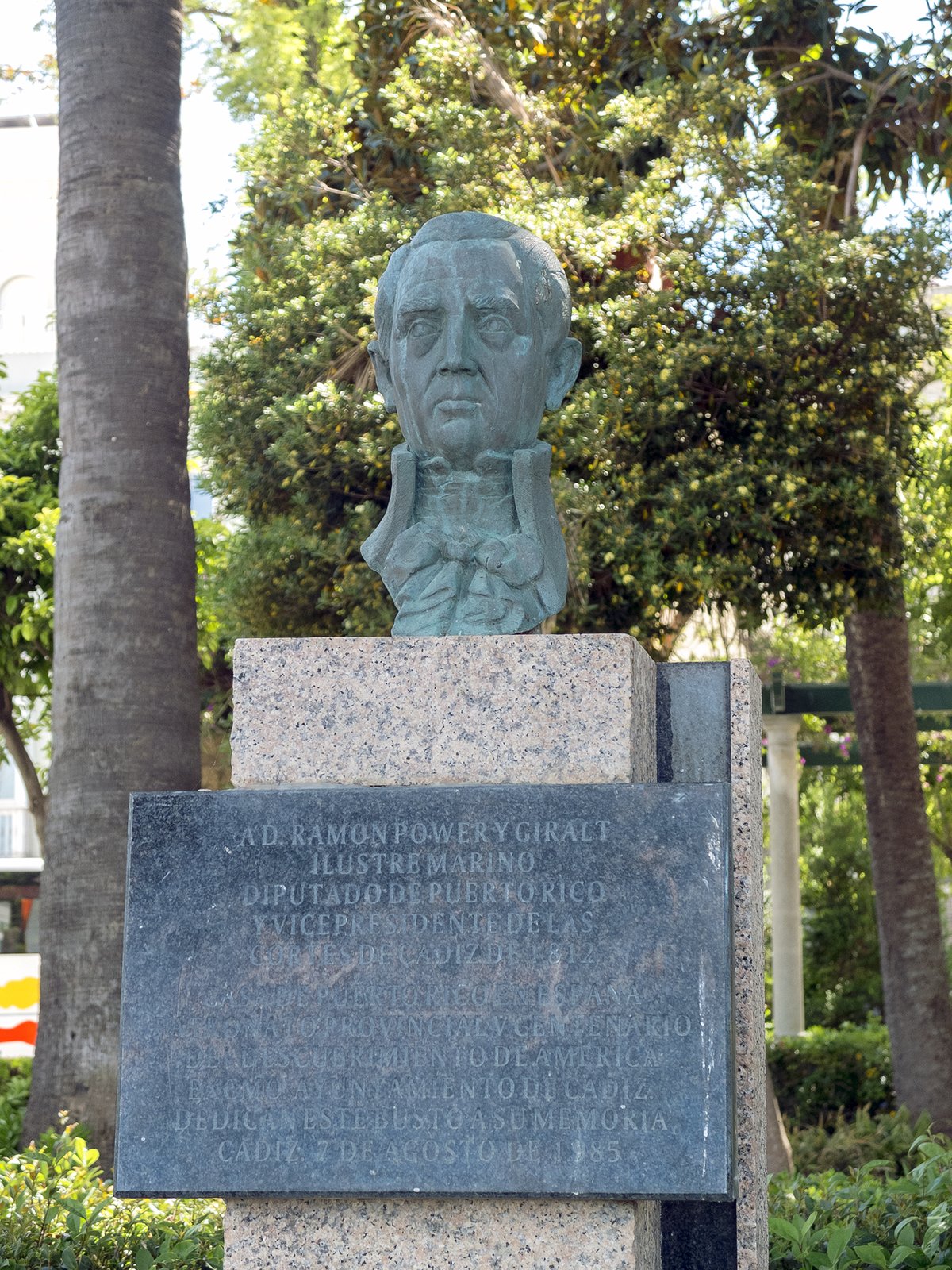
The bust of Ramón Power y Giralt stands prominently along the scenic Alameda Apodaca promenade, overlooking the Bay of Cádiz. This picturesque avenue is renowned for its Sevillian glazed ceramics, wrought iron benches, lush gardens, monumental trees, and elegant fountains—creating a harmonious blend of art, history, and nature. The promenade also features tributes to other influential figures from Spain and Latin America, underscoring Cádiz’s historical role as a crossroads of cultures and political ideas.
Historical and Cultural Significance
Who Was Ramón Power y Giralt?
Ramón Power y Giralt (1775–1813) was born in San Juan, Puerto Rico, and served as the island’s first representative to the Spanish Cortes of Cádiz during the tumultuous Napoleonic era. Power y Giralt advocated for equal rights, economic reforms, and the abolition of monopolies that hindered Puerto Rico’s development. He played a pivotal role in drafting the Spanish Constitution of 1812—a foundational document for modern constitutional government and civil liberties in the Spanish-speaking world. His efforts solidified the link between Cádiz and Puerto Rico and inspired generations of reformers across the Atlantic (Kiddle).
The Bust and Its Symbolism
Erected to honor his legacy, the bronze bust is set on a stone pedestal inscribed with his name and dates, inviting reflection on his enduring impact. The monument not only commemorates Power y Giralt’s achievements but also reinforces Cádiz’s identity as a beacon of liberalism and transatlantic dialogue. It is part of the city’s officially recognized “Legado Patrimonial de los Lugares de las Cortes y la Constitución de 1812”—a Bien de Interés Cultural (BIC) heritage site (Cadiz.es).
Location, Visiting Hours, and Admission
- Address Alameda Apodaca, near Oratorio de San Felipe Neri, Calle San José, Cádiz, Spain (Mapcarta)
- Visiting Hours Accessible 24/7. The open-air promenade is well-lit and frequented by locals and tourists alike. Daylight hours (8:00 AM – 8:00 PM) are ideal for safety, ambiance, and photography.
- Tickets/Admission Free. As an outdoor public monument, no ticket or reservation is required.
Accessibility and Visitor Amenities
- Wheelchair Access The promenade features smooth, paved walkways and ramps, making it accessible for visitors with limited mobility. Some adjacent areas may have cobblestones typical of Cádiz’s historic core.
- Seating and Rest Areas Benches and shaded spots line the Alameda Apodaca for a comfortable and relaxed visit.
- Public Restrooms Facilities are available nearby, and local cafés offer additional amenities.
- Safety The area is safe and regularly patrolled, suitable for visitors at all times.
Getting There and Travel Tips
- By Foot The bust is a short and pleasant walk from Cádiz’s city center and major hotels.
- By Public Transport Local buses and taxis serve the area. The main bus station is about a 15-minute walk away.
- By Car Parking in the historic center is limited; consider using public car parks outside the old town and walking in (Visiting Cádiz).
- Best Visiting Times Spring (April–June) and autumn (September–October) offer comfortable weather and fewer crowds. Early mornings and late afternoons provide optimal lighting for photographs.
Nearby Cádiz Historical Sites and Attractions
- Oratorio de San Felipe Neri The site where the 1812 Constitution was signed and where Power y Giralt was originally buried. Guided tours and exhibitions are available.
- Museum of Cádiz Features artifacts from Cádiz’s Napoleonic era and constitutional history (Spain.info).
- Plaza de España Home to the Monument to the Constitution of 1812.
- Baluarte de la Candelaria and Murallas de San Carlos Historic fortifications along the bay.
- Natural Sites Bahía de Cádiz Natural Park for nature walks and birdwatching.
- Nearby Towns El Puerto de Santa María and Puerto Real, offering additional cultural experiences.
Events, Guided Tours, and Visitor Etiquette
- Guided Tours Many local operators and the Cádiz tourism office offer walking tours highlighting the city’s constitutional heritage, including the bust (Visiting Cádiz).
- Commemorative Events Annually, especially around Constitution Day (March 19), ceremonies are held at the bust and related monuments.
- Visitor Etiquette Feel free to take photos—early morning and late afternoon are best for lighting. Please respect the monument by not climbing or placing objects on it, and dispose of litter responsibly.
Sustainability and Responsible Tourism
Cádiz is committed to sustainable tourism. Visitors are encouraged to walk or cycle, use public transport, and support local businesses. Please use waste bins, conserve water, and respect the local environment (Visiting Cádiz).
Frequently Asked Questions (FAQ)
Q: Is there an entry fee or ticket required to visit the Bust of Ramón Power y Giralt?
A: No, the monument is a public outdoor site with free, unrestricted access.
Q: What are the best visiting hours?
A: While the site is open 24/7, daylight hours (8:00 AM – 8:00 PM) are recommended for safety and the best experience.
Q: Is the site wheelchair accessible?
A: Yes, the promenade is accessible, with paved walkways and benches. Some nearby streets may have uneven surfaces.
Q: Are guided tours available?
A: Yes, many local tours include the bust as part of Cádiz’s historic and constitutional itinerary.
Q: Are there commemorative events at the bust?
A: Yes, especially around Constitution Day and during local festivals.