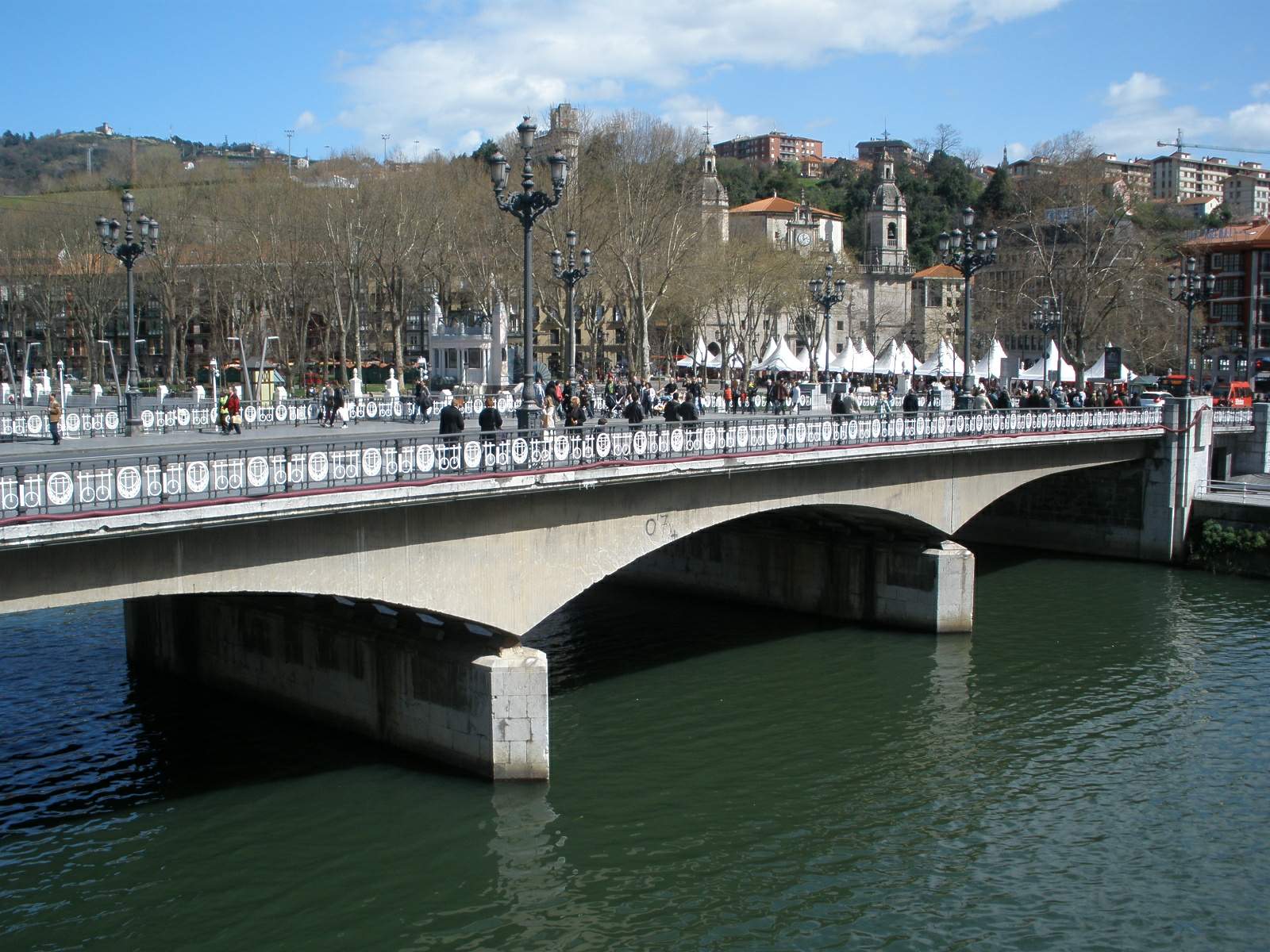
Plan and listen to Monument To Diego Lopez De Haro, Bilbao with Audiala
Audio guide in your pocket, itinerary in your browser. Built for the way you actually visit.
Introduction
Bilbao, the cosmopolitan heart of the Basque Country in northern Spain, owes its founding and much of its medieval legacy to Diego López V de Haro. In the bustling Plaza Circular, the Monument to Diego López de Haro stands as a proud reminder of the city’s origins and enduring Basque spirit. Erected in 1890 by renowned sculptor Mariano Benlliure, this striking bronze and stone statue not only commemorates the city’s founder but also serves as a focal point for civic pride and reflection on Bilbao’s rich heritage (Bilbao Turismo, Sybaris Collection).
This in-depth guide explores the monument’s historical significance, artistic features, practical visiting information, accessibility, nearby attractions, and its place within Bilbao’s cultural life. Whether you are a history enthusiast, art lover, or first-time visitor, this comprehensive overview will equip you with everything you need to make the most of your experience.
Historical Context and Significance
Bilbao’s Founding and Medieval Development
Bilbao’s strategic location at the Nervión River estuary facilitated its rise as a commercial hub in the late Middle Ages. Diego López V de Haro, a powerful nobleman and Lord of Biscay, officially established the city on June 15, 1300, under a charter ratified by King Ferdinand IV of Castile (wikipedia.org, dayhist.com). This charter granted the city crucial privileges:
- Tax exemptions (portazgo): Attracted merchants and settlers by easing trade restrictions.
- Self-governance: Encouraged civic development and autonomy.
- Market rights: Allowed the city to flourish as a trading port, especially in iron, timber, and spices (dayhist.com).
These foundations set the stage for Bilbao’s rapid economic and urban growth, which was further advanced by María Díaz de Haro, Diego’s niece, who expanded the city’s privileges and infrastructure.
Diego López de Haro and the Birth of Civic Identity
The monument’s prominent placement in Plaza Circular underscores Diego López de Haro’s enduring influence. His depiction holding the city’s founding charter and clad in medieval armor symbolizes the city’s origins, ideals of leadership, and the Basque tradition of local autonomy (Bilbao Esculturas).
Monument Features and Artistic Design
Sculptor and Inauguration
Mariano Benlliure, celebrated for his realistic civic sculptures, was commissioned to create the monument. Inaugurated in 1890, it was Bilbao’s first public statue and remains one of its most iconic landmarks (Sybaris Collection).
Dimensions and Structure
- Height: Nearly 13 meters, including the pedestal.
- Materials: Bronze statue atop an Ereño marble base.
- Statue: Diego López de Haro is portrayed in full medieval armor, holding a scroll (the founding charter) and resting his left hand on a sword, symbolizing leadership and protection (Bilbao Esculturas).
Pedestal and Bas-Reliefs
The stone pedestal features bronze bas-reliefs illustrating scenes from Bilbao’s early history and the Siege of Algeciras—where Diego López de Haro died in 1310. Heraldic shields and Gothic motifs enrich the monument’s narrative and connect it to the city’s medieval traditions.
Location, Setting, and Accessibility
Plaza Circular: The Monument’s Urban Heart
Centrally located in Plaza Circular, the monument bridges the historic Casco Viejo (Old Town) and the modern Ensanche district. The square is surrounded by notable landmarks such as the Abando railway station, La Concordia station, and Bilbao’s main commercial avenue, Gran Vía (bi-aste.com).
Getting There
- Metro Bilbao: Abando station is adjacent to Plaza Circular.
- Bus: Numerous city and regional lines stop nearby.
- Train: Abando Indalecio Prieto station is steps away.
- Tram: Bilbobus and the city tram network serve the area.
- On Foot/Bike: Wide sidewalks and bike lanes make access easy.
Accessibility
Plaza Circular is flat, paved, and fully accessible for visitors with mobility challenges. Public transportation options feature elevators and low-floor vehicles (Bilbao Turismo). Nearby underground parking garages are available for those arriving by car, though walking is often most convenient.
Visiting Hours, Tickets, and Tours
- Hours: The monument is outdoors and accessible 24/7, all year round.
- Tickets: No entry fee or ticket is required.
- Guided Tours: While the monument itself is free, city walking tours often include it as a key stop, offering historical context and stories about Bilbao’s founding (GPSmyCity).
Visitor Experience and Practical Tips
What to Expect
- Artistic Details: Walk around the monument to view the intricate bas-reliefs and heraldic elements.
- Photography: Early morning or late afternoon provides the best lighting for photos.
- Civic Events: Annual floral tributes and city celebrations on June 15th highlight the monument’s role in local life (Bilbao City Council Events).
Nearby Attractions
- Casco Viejo (Old Town): Explore traditional Basque streets, pintxos bars, and historic landmarks.
- Teatro Arriaga: Neoclassical theater hosting cultural performances.
- Gran Vía Shopping District: Ideal for shopping and dining.
- Guggenheim Museum & Fine Arts Museum: Major art institutions within walking distance.
Amenities
Public restrooms, tourist information offices, and seating areas are available nearby. The area is safe and well-patrolled; standard urban precautions should be observed.
Cultural and Civic Significance
The Monument to Diego López de Haro is not just an artwork—it is a touchstone for Bilbao’s identity. Annual ceremonies, educational activities, and its role as a meeting place for locals and visitors reinforce its significance within the city’s cultural fabric (Euskadi Basque Country Tourism). Ongoing conservation efforts and urban improvements ensure it remains a vibrant part of Bilbao’s landscape (Basque Government Cultural Heritage).
Frequently Asked Questions (FAQ)
Q: What are the visiting hours of the Monument to Diego López de Haro?
A: The monument is accessible 24/7 as it is outdoors in Plaza Circular.
Q: Is there an entry fee?
A: No, the monument is free to visit.
Q: Are guided tours available?
A: Yes, many walking tours of Bilbao’s historical sites include the monument (GPSmyCity).
Q: Is the monument accessible for people with disabilities?
A: Yes, the plaza and surrounding area are designed for accessibility.
Q: How do I get there by public transport?
A: Metro (Abando station), buses, trams, and the main train station are all nearby.
Listen to the full story in the app
Researched and written by the Audiala editorial team from historical records, architectural archives, and local expertise.
Last reviewed