Introduction
IES Emilio Campuzano, situated in Bilbao’s historic Atxuri district, is a landmark seamlessly blending the city’s industrial heritage, educational evolution, and neoclassical architecture. Originally constructed between 1818 and 1835 by Gabriel Benito Orbegozo as a civil hospital, it later became the Escuela de Artes y Oficios in 1879, marking the beginning of its enduring role in technical and vocational education. Today, the institution stands as a testament to adaptive reuse and is a centerpiece in Bilbao’s ongoing urban regeneration (Tknika, Wikipedia).
This guide provides essential information on visiting hours, admission, accessibility, transport options, and insights into the building’s architectural and cultural significance. Whether you are an architecture enthusiast, history lover, or a prospective student, this article will help you make the most of your visit.
For up-to-date information, refer to the IES Emilio Campuzano website, Bilbao Turismo, Wikipedia, and Bilbao Visita Virtual.
Photo Gallery
Explore Ies Emilio Campuzano in Pictures
Quick Visitor Information
- Address: Plaza Santos Juanes, 7, Atxuri, Bilbao
- Hours: Monday–Friday, 9:00 AM–6:00 PM (closed weekends and public holidays)
- Admission: Free (interior access may require prior arrangement)
- Guided Tours: Available for groups upon request; contact the administration in advance
- Accessibility: Wheelchair accessible (ramps and elevators)
- Public Transport: Close to Atxuri railway station, tram stops, and several bus routes
For the latest details, visit the official website or the Atxuri neighborhood portal.
Origins and Early Uses
The present building dates to 1835, designed as Bilbao’s main civil hospital by Gabriel Benito Orbegozo. In 1879, it was repurposed as the Escuela de Artes y Oficios, spearheaded by Mayor Pablo de Alzola, marking the start of its educational mission (Wikipedia, Tknika).
Twentieth-Century Developments
The school evolved with the times: it became the Escuela de Trabajo y de Artes y Oficios in 1932, reflecting the era’s focus on technical skills. The 1955 Vocational Training Law transformed it into the Escuela de Maestría Industrial, aligning its programs with Bilbao’s industrial sector. In 1959, the center was renamed for Emilio Campuzano, a distinguished engineer and director (Wikipedia).
Architectural and Urban Significance
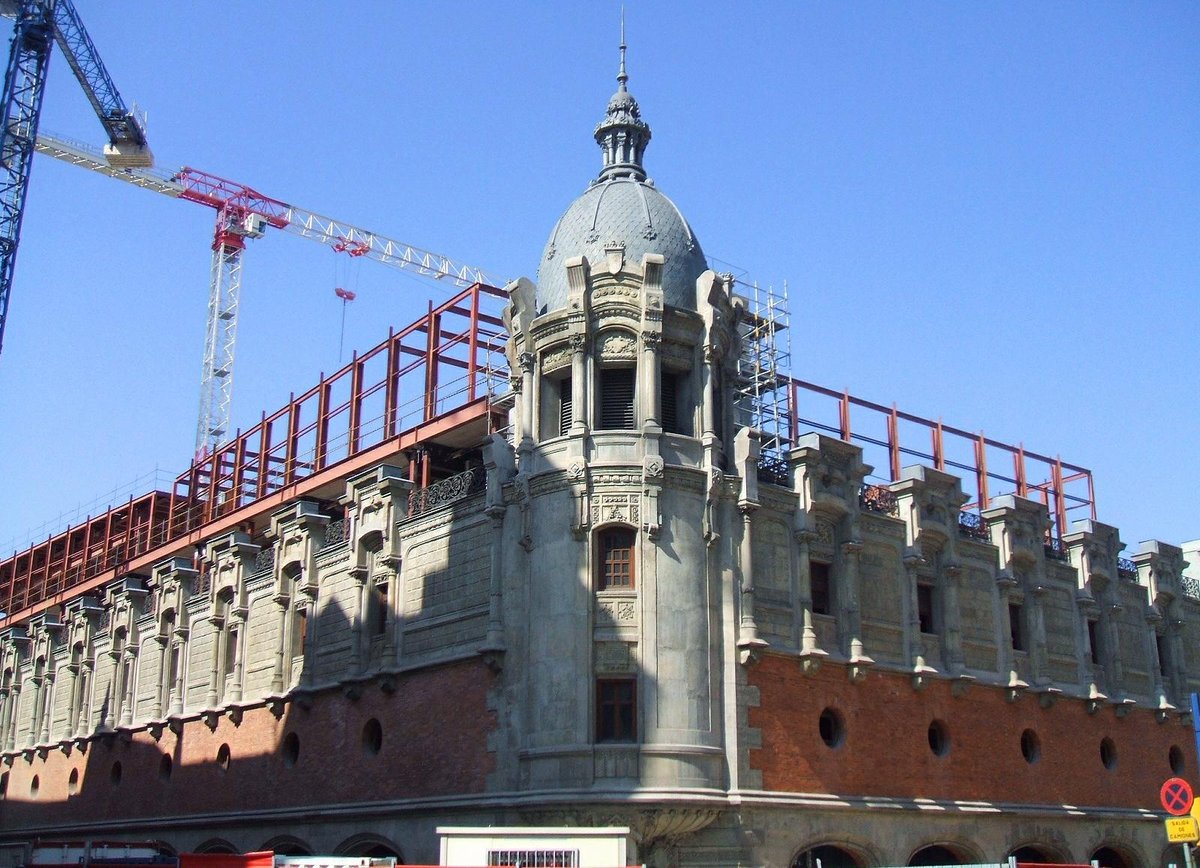
The building’s neoclassical character, trident-shaped plan, and Tuscan portico distinguish it in the Atxuri landscape. Its adaptive reuse exemplifies Bilbao’s approach to urban heritage and renewal (Bilbao Visita Virtual).
Planning Your Visit
Getting There
- Train: Atxuri station is a short walk away.
- Bus: Served by several city lines.
- Car: Limited street parking; public transport is recommended.
Accessibility
The building features ramps and elevators for visitors with mobility needs.
Nearby Attractions
- San Antón Bridge: Historic bridge with city views.
- Casco Viejo: Bilbao’s old town, rich in history and culture.
- Mercado de la Ribera: Iconic riverside market.
Photography Tips
Photograph the neoclassical façade and open courtyards during daylight, or capture the building with the lively Atxuri backdrop.
Neoclassical Architecture and Design
Built between 1818 and 1835, the building’s neoclassical design—by Gabriel Benito Orbegozo—was inspired by English and French hospital architecture (Bilbao Turismo). Notable features include:
- Trident-shaped Floor Plan: An “E” shape maximizes sunlight and ventilation.
- Tuscan Portico: Four columns mark the monumental entrance.
- Elevated Staircase: Adds grandeur to the façade.
- Large Windows and Courtyards: Promote natural light and air circulation.
These elements contrast with the medieval and modernist buildings of Atxuri.
Layers of History and Adaptive Reuse
- 1469–1835: Hospital de los Santos Juanes (medieval hospital)
- 1835–1903: Hospital Civil
- 1903–1953: Escuela de Artes y Oficios
- 1907–1923: Housed Bilbao’s first Museum of Fine Arts
- 1953–1984: Escuela de Maestría Industrial
- 1984–Present: IES Emilio Campuzano, specializing in vocational training (Bizkaia.eus)
The site’s resilience and adaptability reflect Bilbao’s changing needs.
Cultural and Educational Role
IES Emilio Campuzano is a key player in Bilbao’s urban fabric, offering vocational programs in fields like graphic arts, electronics, mechanical design, and civil engineering. The institution supports the city’s industrial legacy and adapts to modern economic demands (Bizkaia.eus).
Visitor Information
Visiting Hours
- Monday–Friday: 9:00 AM–6:00 PM
- Closed: Weekends and public holidays
Tickets and Entry
- Exterior/Courtyard Access: Free
- Interior Visits: By prior arrangement only (contact the school administration)
- Guided Tours: Available for groups; arrange in advance via school or Bilbao Turismo
Accessibility
- Mobility: Ramps and elevators throughout
- Public Transport: Tram, bus, and train all serve the area
Practical Tips
- Advance Arrangements: Required for interior visits or guided tours
- Best Times: Weekdays during academic hours or special public events
- Language: Spanish and Basque are spoken; staff are used to multilingual visitors
- Nearby Sites: Mercado de la Ribera, Santiago Cathedral, Plaza Nueva
Community Engagement and Events
The school hosts exhibitions, workshops, and cultural events, often open to the public. Check the website or social media for schedules. Photography is encouraged in public spaces, but always confirm any restrictions during special events.
Visitor Reviews
IES Emilio Campuzano enjoys positive feedback for its professional staff, quality facilities, and community spirit. It scores a 4.0/5 from 79 reviewers on Micole.net.
Cost and Admission
- Educational Programs: Tuition is generally free or low-cost (under €100/month for most programs)
- Visitor Entry: Free, but advance arrangement is required for access beyond public areas
Frequently Asked Questions (FAQ)
Q: What are the general visiting hours?
A: Monday–Friday, 9:00 AM–6:00 PM. Visits on weekends require special arrangement.
Q: Is there an entry fee?
A: No, entry is free. Guided tours must be arranged in advance.
Q: Are tours available?
A: Yes, for groups or during open days; prior booking is necessary.
Q: Is the site accessible for people with disabilities?
A: Yes, ramps and elevators are available. For specific needs, contact the administration.
Q: How can I contact the school?
A: Phone: +34 944 333 305 / +34 944 331 893
Email: [email protected]
Namesake: Emilio Campuzano
Emilio Campuzano (1850–1938) was a pioneering engineer and educator. As director, he integrated practical engineering into the curriculum, shaping Bilbao’s technical workforce. The school’s name honors his enduring legacy (Wikipedia).
Summary Table: Key Features
| Feature | Details |
|---|---|
| Year Founded | 1879 (as Escuela de Artes y Oficios) |
| Architectural Style | Neoclassical |
| Programs Offered | 19 vocational cycles (7 professional families) |
| Admission | Free; interior visits by arrangement |
| Accessibility | Wheelchair accessible |
| Community Events | Regular workshops, exhibitions, open days |
| Location | Plaza Santos Juanes, 7, Atxuri, Bilbao |
Contact and Further Information
- Address: Plaza Santos Juanes, 7, 48006 Bilbao
- Phone: +34 944 333 305 / +34 944 331 893
- Email: [email protected]
- Official Website: Visit IES Emilio Campuzano
- Additional Resources: Micole.net, Bilbao Turismo, Bilbao Visita Virtual
Listen to the full story in the app
Your Personal Curator, in Your Pocket.
Audio guides for 1,100+ cities across 96 countries. History, stories, and local insight — offline ready.
Audiala App
Available on iOS & Android
Join 50k+ Curators
Sources
- verified
- verified
- verified
- verified
- verified
- verified
- verified
- verified
- verified
- verified
Last reviewed: