Plan and listen to Deusto Bridge with Audiala
Audio guide in your pocket, itinerary in your browser. Built for the way you actually visit.
Introduction to Deusto Bridge and Its Significance in Bilbao
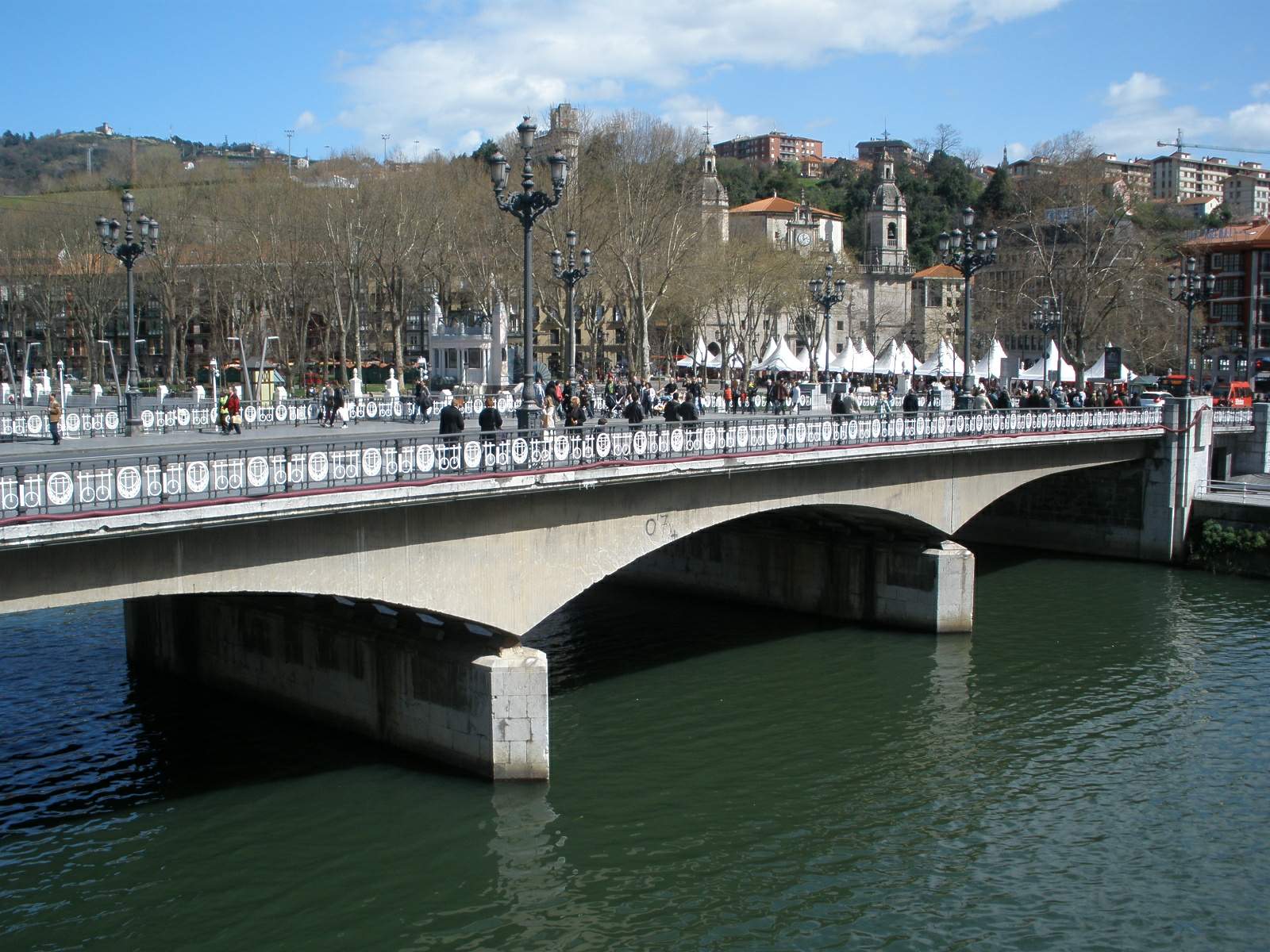
Spanning the Nervión River, the Deusto Bridge (Puente de Deusto) is one of Bilbao’s most emblematic landmarks and an enduring symbol of the city’s transformation. Since its inauguration in 1936, this bascule drawbridge has played a pivotal role in connecting the neighborhoods of Deusto, Begoña, and Abando, fostering Bilbao’s growth from a medieval town into a thriving industrial and cultural hub. Designed by engineers Ignacio de Rotaeche and José Ortiz de Artiñano, and inspired by American bascule bridges such as Chicago’s Michigan Avenue Bridge, the Deusto Bridge reflects both technical innovation and cosmopolitan ambition (Wikipedia; Bilbao Turismo).
Despite suffering destruction during the Spanish Civil War and subsequent reconstruction, the bridge remains a technical marvel and cultural icon. Its movable decks once facilitated river traffic vital to the region’s maritime economy—a function now reserved for special events and celebrations (Structurae; Los Puentes de Bilbao). Today, Deusto Bridge is accessible 24/7 to pedestrians, cyclists, and vehicles, serving as a scenic and practical route in the heart of the city. Its proximity to major attractions such as the University of Deusto and the Guggenheim Museum, along with its historical and architectural allure, make it a must-visit for anyone exploring Bilbao (Bilbao Turismo; Visit Biscay).
Early Planning and Construction
The need for the Deusto Bridge emerged in the early 20th century as Bilbao expanded beyond its historical center. In 1931, the city commissioned engineers Ignacio de Rotaeche and José Ortiz de Artiñano to create a structure that would connect the growing districts across the Nervión estuary (Wikipedia; Kids Kiddle). Drawing inspiration from innovative bascule (drawbridge) designs in the United States, particularly those in Chicago, the bridge was conceived to allow large ships to continue accessing the city’s vital port. Construction began in 1932, and the bridge was officially inaugurated on December 7, 1936 (Kids Kiddle).
The Spanish Civil War and Reconstruction
Shortly after its opening, the Deusto Bridge was destroyed on June 18, 1937, during the Spanish Civil War as part of strategic infrastructure sabotage (Structurae). Reconstruction began almost immediately, and the bridge was reopened in October 1939. During the Franco era, it was temporarily renamed the Generalissimo Bridge, but its original name was restored in 1979 following Spain’s return to democracy (Kids Kiddle).
Engineering Features and Urban Significance
Deusto Bridge is a rare example of a bascule bridge in Spain, with two independently lifting decks that once accommodated heavy river traffic (Turismo Vasco; Visit Biscay). The bridge’s design mirrors the technological advances of early 20th-century engineering, featuring robust steel frameworks, concrete piers, and elegant stone towers. With a total length of approximately 500 meters and a central span that could be lifted to a height of 45 meters, Deusto Bridge was instrumental in integrating Bilbao’s expanding districts while maintaining vital river traffic (MESIC 2025).
Role in Bilbao’s Maritime and Industrial History
For decades, Deusto Bridge played a crucial role in Bilbao’s maritime economy, regularly opening to allow ships carrying minerals and goods to pass. Its last commercial opening occurred in 1995, after which the function was largely supplanted by the construction of the nearby Euskalduna Bridge and the downstream relocation of Bilbao’s port (Wikipedia; Visit Biscay). Today, while the bascule mechanism is preserved, openings are rare and reserved for special occasions such as regattas or city celebrations (Wikipedia).
Preservation, Restoration, and Contemporary Use
A major restoration in 2008 upgraded the bridge’s structure and aesthetics, including repairs to the lifting mechanism, improved pedestrian paths, and installation of LED lighting. Original green railings were replaced by silver stainless steel replicas, enhancing durability and visual appeal (Wikipedia; Kids Kiddle). The bridge now serves as a fully accessible crossing for vehicles, cyclists, and pedestrians, retaining its historical charm while meeting modern safety and accessibility standards.
Visiting the Deusto Bridge: Hours, Tickets, and Accessibility
- Visiting Hours: The bridge is open 24/7 to pedestrians, cyclists, and vehicles. There are no restrictions on access.
- Tickets: No tickets or entrance fees are required to visit or cross the bridge.
- Accessibility: Wide sidewalks, gentle ramps, and dedicated cycling lanes make the bridge accessible for wheelchairs, strollers, and bikes.
- Best Times to Visit: Early mornings and late afternoons offer the best natural light for photography, while evenings feature striking LED illumination.
- Safety: The bridge is well-lit and equipped with safety railings, ensuring a secure experience at any hour.
Guided Tours and Visitor Tips
Several local tour companies include the Deusto Bridge on their walking or cycling tours of Bilbao’s industrial and architectural heritage. These tours offer deeper insights into the bridge’s construction, history, and role in urban development (Bilbao Turismo). For self-guided visits, consider exploring both ends of the bridge for panoramic river views and photo opportunities, especially at sunset.
Nearby Attractions
- University of Deusto: An architecturally impressive campus adjacent to the bridge, home to cultural events and lush gardens (Fascinating Spain).
- Guggenheim Museum Bilbao: The city’s renowned art museum is a short riverside walk from the bridge.
- Zubizuri Bridge: Santiago Calatrava’s futuristic white arch bridge is nearby, offering a striking architectural contrast.
- Abandoibarra Promenade: A scenic route connecting the bridge to other city highlights.
- Pedro Arrupe Bridge: A modern pedestrian crossing further down the river.
- Zubiarte Shopping Mall: Convenient for shopping, dining, and parking.
Practical Visitor Tips
- Transportation: Easily accessible by metro (Deusto or Moyúa stations), tram (Guggenheim or Abandoibarra stops), bus, on foot, or by bike.
- Facilities: Restrooms, cafés, and restaurants are available at nearby sites such as the Guggenheim Museum and Zubiarte Mall.
- Events: The bridge is a focal point during city festivals like Aste Nagusia and the annual Bilbao-Bilbao cycling race (bilbaobilbao.com).
- Weather: Bring rain gear in autumn and winter; summer visits are ideal for riverside walks.
Cultural and Symbolic Importance
Deusto Bridge is not only a functional crossing but also a symbol of Bilbao’s resilience and progress. It is closely tied to the identity of the Deusto neighborhood and University, and serves as a gathering place during community events. Its occasional openings for ceremonial river traffic highlight the city’s maritime heritage (Visit Biscay; Turismo Vasco). For photographers and visitors alike, the bridge offers captivating views of the river, skyline, and the interplay of historical and modern architecture.
Frequently Asked Questions (FAQ)
Q: Can I visit the Deusto Bridge at any time?
A: Yes, the bridge is open to the public 24 hours a day, 7 days a week.
Q: Do I need a ticket to cross the bridge?
A: No tickets or entrance fees are required.
Q: Is the bridge accessible for people with disabilities?
A: Yes, the bridge features ramps and wide walkways for wheelchair and stroller access.
Q: Does the bridge still open for river traffic?
A: The bascule mechanism is operational but only used on special occasions.
Q: Are guided tours available?
A: Yes, many local walking and cycling tours include the Deusto Bridge in their itineraries.
Q: What are the best spots for photography?
A: Both ends of the bridge and the central span, especially at sunrise, sunset, or nighttime when illuminated.
Q: Are facilities like restrooms and cafés nearby?
A: Yes, amenities are available at nearby attractions and shopping centers.
Q: What’s the best way to get there?
A: The bridge is easily reached via metro, tram, bus, on foot, or by bike.
Summary Table: Key Facts
| Feature | Details |
|---|---|
| Type | Bascule (drawbridge) |
| Year Completed | 1936 |
| Total Length | ~500 meters |
| Width | 25 meters (fixed), 20 meters (movable) |
| Pedestrian Access | Yes, wide sidewalks on both sides |
| Cycling Access | Yes, dedicated lanes; part of city cycling routes |
| Nearby Metro Stations | Deusto (Line 1), Moyúa (Lines 1 & 2) |
| Parking | Zubiarte Shopping Mall |
| Accessibility | Wheelchair and stroller accessible |
| Nearby Attractions | Guggenheim Museum, University of Deusto, Abandoibarra Promenade |
| Special Events | Bilbao-Bilbao Cycling Race (March), Aste Nagusia Festival |
Visuals and Media
To enhance your visit, explore interactive maps and virtual tours of Bilbao highlighting Deusto Bridge’s location and surrounding landmarks. High-quality images—especially those at sunset or during a drawbridge opening—showcase its architectural beauty. For virtual exploration, many travel sites and Bilbao’s official tourism pages offer galleries and media resources.
Internal Links
Explore more of Bilbao with our guides to the Guggenheim Museum Bilbao, Bilbao Riverside Promenade, and Bilbao Cycling Routes.
Listen to the full story in the app
Researched and written by the Audiala editorial team from historical records, architectural archives, and local expertise.
Last reviewed