Introduction
Café Iruña is more than an acclaimed dining spot in Bilbao—it is a vibrant testament to the city’s rich cultural and architectural legacy. Founded in 1903, this iconic café welcomes visitors to experience a harmonious blend of Belle Époque grandeur, Moorish Revival artistry, and genuine Basque gastronomy. Located opposite the scenic Jardines de Albia, Café Iruña is both a living monument and a beloved social hub, bridging Bilbao’s storied past with its dynamic present. Whether you are drawn by its history, stunning interiors, or signature dishes, Café Iruña stands as a must-visit destination for locals and travelers alike (Café Iruña official website, Tourist Secrets, Very Bilbao, Traveling Cook).
Photo Gallery
Explore Café Iruña in Pictures

A panoramic aerial photograph of Bilbao showcasing its modern urban architecture, river, and surrounding landscape.

Aerial photograph of Bilbao city showcasing buildings along a river, highlighting urban landscape and architecture

Scenic aerial photograph of Bilbao showcasing the Nervion River flowing through the city with a mixture of modern and historic buildings under a clear sky.

Photograph of the iconic Café Iruña in Bilbao showing its historic exterior facade with customers enjoying outdoor seating.

The ornate exterior facade of Café Iruña in Bilbao, Spain, showcasing its historic architecture and outdoor seating area

Café Iruña in Bilbao showcasing its traditional architecture, lively outdoor seating area, and cultural ambiance

Photograph of the exterior of Café Iruña in Bilbao showing its traditional architecture and outdoor seating area with patrons.

Exterior view of the historical Café Iruña in Bilbao showcasing its traditional architectural style

Café Iruña in Bilbao showcasing its traditional architecture and inviting outdoor seating area

Photograph of the exterior of Café Iruña in Bilbao showcasing its traditional architecture and inviting outdoor seating area.

Photograph showing the exterior of Café Iruña, a popular café in Bilbao, Spain, with outdoor tables and patrons enjoying their meals.

Historic exterior view of Café Iruña, a classic architectural landmark and popular café in Bilbao, Spain
History and Origins
Café Iruña opened its doors in 1903, coinciding with a period of urban expansion as Bilbao moved from its medieval roots towards modernity. Its name, “Iruña” (the Basque word for Pamplona), reflects its founders’ Navarrese heritage and their cosmopolitan vision for the café. From the outset, Café Iruña distinguished itself as a gathering place for intellectuals, artists, and local elites—a European-style establishment introducing new standards of sophistication to the city’s hospitality scene (Tourist Secrets).
Over the decades, it became intertwined with Bilbao’s social and political life, hosting literary gatherings, celebrations, and even serving as a discreet meeting point during turbulent periods such as the Spanish Civil War and the Franco era (Bilbao City Council PDF).
Architectural and Artistic Highlights
Café Iruña is celebrated for its remarkable Moorish Revival (Mudéjar) architecture—a rarity in Bilbao. The interiors, designed by Joaquín Rucoba, showcase:
- Intricate tilework and horseshoe arches reminiscent of the Alhambra.
- Polychrome ceilings adorned with vibrant geometric and floral motifs.
- Original murals and frescoes depicting allegorical and local scenes, recently restored to their early 20th-century splendor.
- Carved wooden pillars and brass chandeliers that blend Islamic and Art Nouveau elements.
- A horseshoe-shaped bar—the social heart of the café.
These elements combine to create an immersive experience that transports visitors to the elegance of the Belle Époque while reflecting the multicultural influences at the core of Bilbao’s identity (oneandahalfminutes.wordpress.com, Very Bilbao, Traveling Cook).
The café’s architectural and artistic value led to its designation as a “Monumento Singular” in 1980, and it received the Special Award for Best Café in Spain from the “Café Crème Guide to the Cafés of Europe” in 2000.
Cultural Role and Social Impact
Throughout its history, Café Iruña has remained a dynamic cultural and social nucleus for Bilbao. It was a central meeting point for Navarrese immigrants, hosted athletic competitions, and provided a venue for open-air dances and community events. Its salons have been filled with tertulias (literary discussions), and it has been a silent witness to the city’s defining moments—war, dictatorship, and cultural renaissance (Bilbao City Council PDF).
The café’s adaptability is evident in its enduring popularity, welcoming both locals and visitors for over a century. Its role as a community anchor continues today through cultural events, literary readings, and collaborations with local organizations.
Gastronomic Experience
Café Iruña is synonymous with Bilbao’s culinary tradition, offering a menu that celebrates Basque flavors and innovation. Its most iconic dishes include:
- Pinchos morunos: Spiced pork or lamb skewers grilled to perfection, echoing the café’s Moorish décor.
- Morcilla: Traditional blood sausage, a staple of Basque gastronomy.
- Serranito sandwich: Iberian bacon and grilled ham.
- Txuleta (bone-in steak), stewed veal cheeks, and vegetarian pintxos.
The café is also known for its breakfast offerings—tostadas, churros, and pastries—ideal for early visitors. Seasonal and contemporary dishes ensure there is something for every palate (Very Bilbao, Woke Waves).
Visiting Hours and Ticket Information
- Opening Hours: Daily, typically 8:00/8:30 AM to midnight (check the official website for seasonal variations).
- Tickets: No entry fee or ticket required. Reservations are recommended for dining, especially during weekends and peak hours.
- Capacity: 200 guests with 30 tables; terrace available February–December.
Accessibility and How to Get There
- Address: Calle Colón de Larreátegui, 13, Bilbao, opposite Jardines de Albia.
- Public Transport: Moyúa metro station is a short walk away; several bus lines serve the area.
- Parking: Available nearby.
- Accessibility: Wheelchair-accessible entrance, ramps, and spacious interiors.
- WiFi and Photography: Free WiFi; photography is encouraged for personal use.
Nearby Attractions and Guided Tours
Combine your visit with these nearby highlights:
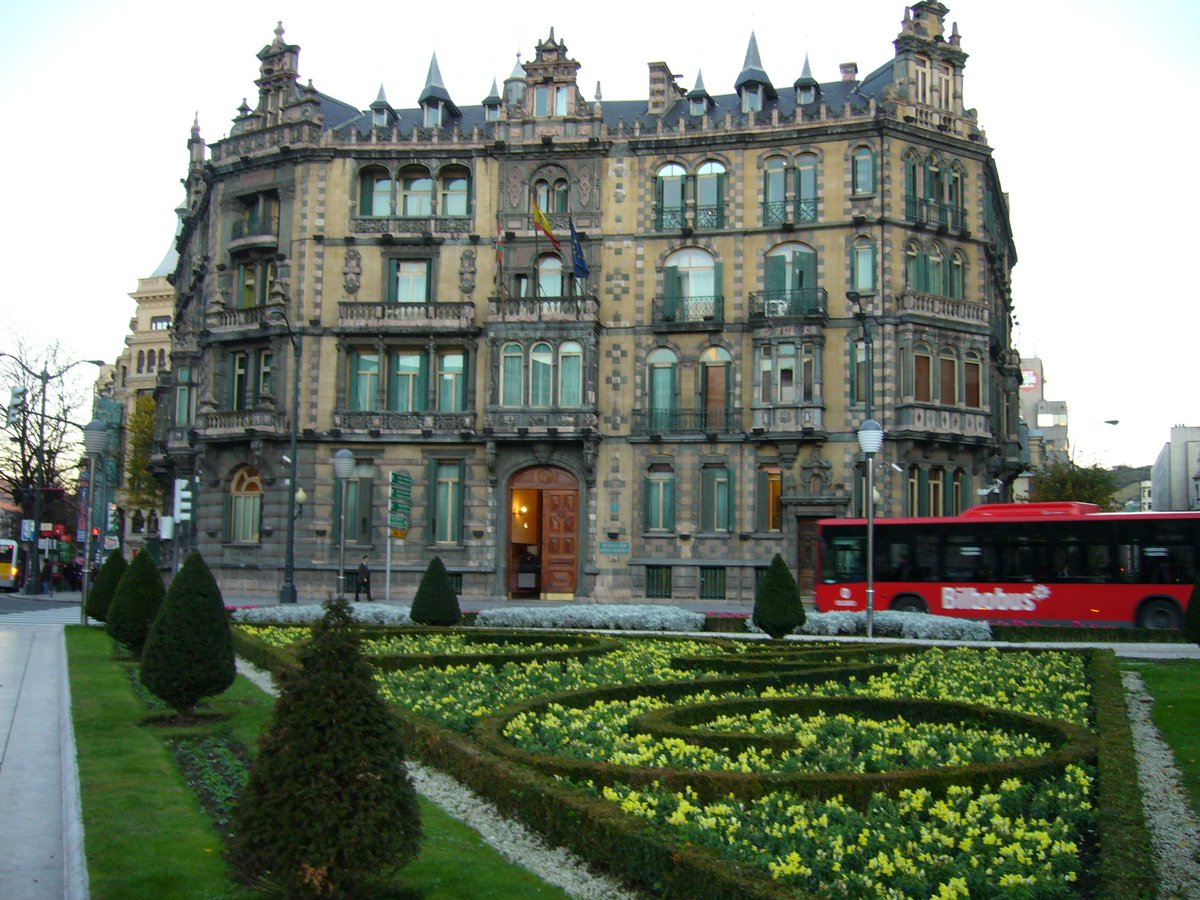
- Jardines de Albia: Urban park directly opposite the café.
- Museo de Bellas Artes de Bilbao: Fine Arts Museum with local and international collections.
- Guggenheim Museum Bilbao: Renowned contemporary art museum, 15 minutes on foot.
- Casco Viejo and Gran Vía: Explore Bilbao’s historic district and main shopping avenue.
Guided walking tours often include Café Iruña as a key stop, offering insights into its architecture and place in Bilbao’s social fabric. The café occasionally hosts cultural events—check the website or local tourism portals for updates.
Travel Tips and Recommendations
- Arrive early or visit on weekdays for a quieter atmosphere.
- Try the signature dishes for a true taste of Basque cuisine.
- Bring your camera—the interiors are a photographer’s dream.
- Pair your meal with local wines like txakoli.
- Book in advance for groups or special occasions.
Frequently Asked Questions (FAQ)
Q: What are Café Iruña’s opening hours?
A: Open daily, generally from 8:00/8:30 AM to midnight.
Q: Is there an entrance fee or ticket?
A: No, the café is free to enter; reservations are suggested for dining.
Q: Is the café accessible for disabled visitors?
A: Yes, with ramps and accessible interiors.
Q: Are there guided tours?
A: Tours are occasionally available and the café features in many city walking tours.
Q: What dishes are must-try?
A: Pinchos morunos, morcilla, and the serranito sandwich.
Q: Can I take photos inside?
A: Yes, photography is welcomed.
Listen to the full story in the app
Your Personal Curator, in Your Pocket.
Audio guides for 1,100+ cities across 96 countries. History, stories, and local insight — offline ready.
Audiala App
Available on iOS & Android
Join 50k+ Curators
Sources
- verified
- verified
- verified
- verified
- verified
- verified
- verified
- verified
Last reviewed: