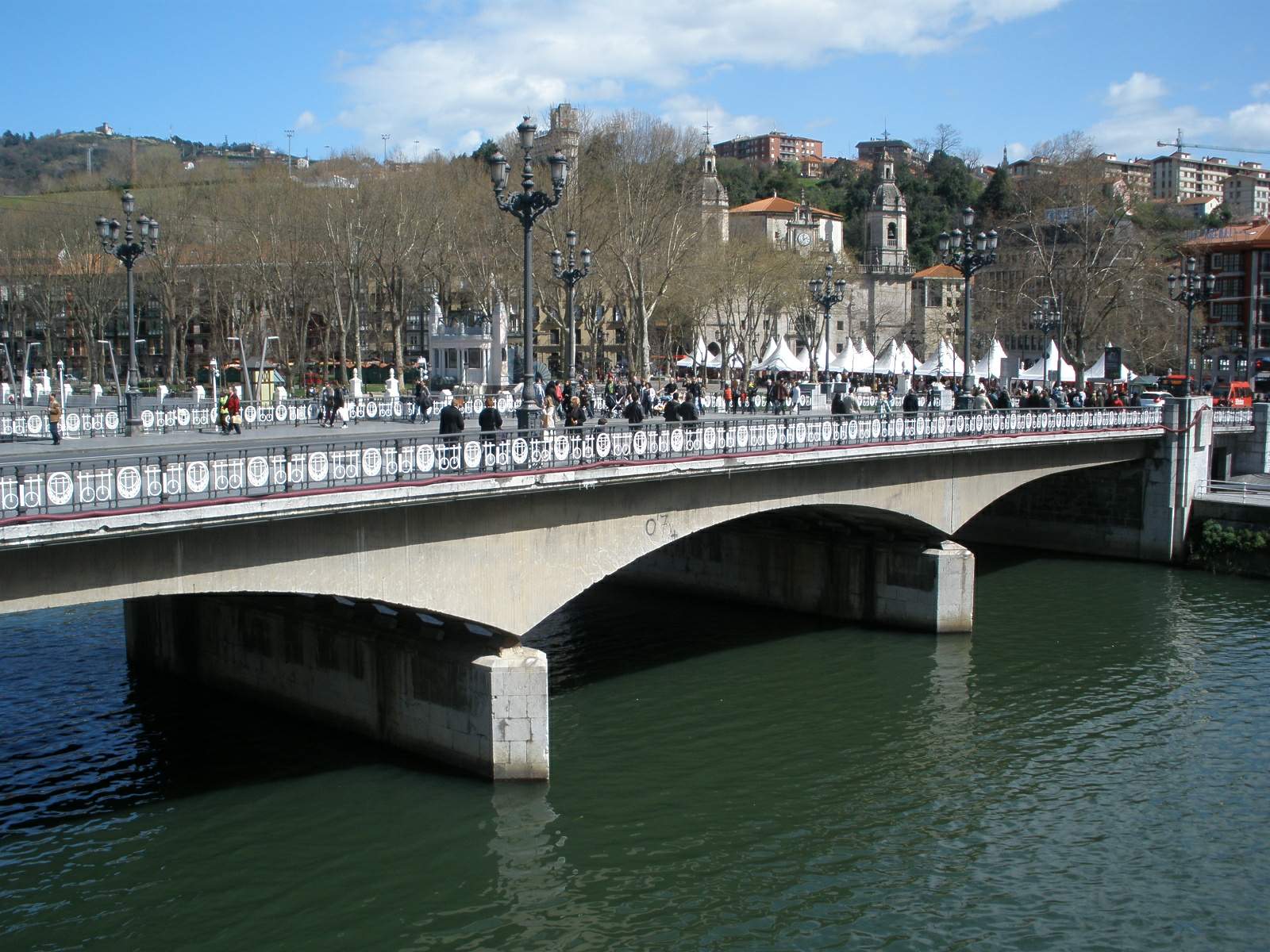
Plan and listen to Basilica Of Santa María, Portugalete with Audiala
Audio guide in your pocket, itinerary in your browser. Built for the way you actually visit.
Introduction
The Basílica de Santa María in Bilbao, Spain, is a historical and cultural landmark that stands as a testament to the city's rich heritage. Nestled in the heart of Bilbao's Casco Viejo (Old Town), this iconic basilica not only serves as a place of worship but also as a beacon of architectural grandeur, attracting countless visitors each year. Originally constructed in the 14th and 15th centuries, the site of the basilica was previously occupied by an older temple, hinting at its deep historical roots (Wikipedia). The basilica's blend of Gothic and Renaissance architectural styles, coupled with its significant historical milestones, makes it a must-visit destination for history enthusiasts, art lovers, and pilgrims alike. This comprehensive guide aims to provide you with detailed information on the basilica's history, architectural evolution, artistic highlights, cultural significance, and practical tips for visiting. Whether you're planning a pilgrimage along the Camino de Santiago or simply exploring Bilbao's historical sites, the Basílica de Santa María offers a profound and enriching experience.
History of Basílica de Santa María
Origins and Early Construction
The Basílica de Santa María in Bilbao, Spain, is a historical gem with roots tracing back to the 14th and 15th centuries. Originally constructed as the city's main parish church, it stands as one of the oldest extant buildings in Bilbao. The site of the basilica was previously occupied by an older temple, which likely dates back to a period well before the official foundation of Bilbao in 1300 when the area was a small enclave of fishermen (Wikipedia).
Architectural Evolution
The architectural style of the Basílica de Santa María is a fascinating blend of Gothic and Renaissance elements. The initial construction phase, which began in the late 15th century, predominantly featured Gothic design. This is evident in the basilica's floor plan, which includes three naves and an octagonal apse. The exterior is adorned with medieval gargoyles depicting fantastical beasts, positioned over the buttresses (Euskadi).
Significant Modifications and Additions
In 1691, the construction of the basilica's tower commenced. However, this structure had to be rebuilt after being destroyed during the last Carlist War in 1874. The tower, along with the west portico, was designed by the local architect Severino de Achúcarro and completed in 1887. These additions introduced a mixture of Gothic and Renaissance styles, contributing to the basilica's unique architectural identity (Wikipedia).
Elevation to Cathedral Status
The Basílica de Santa María was declared a minor basilica in 1819. It wasn't until December 30, 1955, that it was elevated to cathedral status following the official creation of the Roman Catholic Diocese of Bilbao. This elevation marked a significant milestone in the basilica's history, recognizing its importance not only as a place of worship but also as a cultural and historical monument (Wikipedia).
Restoration and Preservation Efforts
Throughout its history, the Basílica de Santa María has undergone several restoration and preservation efforts to maintain its structural integrity and historical significance. The most notable restoration occurred in the 17th century, which included the addition of a spectacular wooden portico. This portico, the largest in Euskadi, features a wooden roof structure supported by eleven pillars, nine pilasters, and the temple's walls (Euskadi).
Artistic Highlights
Inside the basilica, visitors can admire the ribbed vaulting that rests on fasciculated pillars. The high altarpiece, an outstanding example of Basque Renaissance work, was created in the 16th century by the brothers Beaugrant and Juan de Ayala. This altarpiece is a testament to the artistic and cultural heritage of the region, showcasing intricate carvings and religious iconography (Euskadi).
Cultural and Religious Significance
The Basílica de Santa María holds immense cultural and religious significance for the people of Bilbao and the broader Basque region. It serves as a focal point for various religious ceremonies and cultural events, including the prestigious Orfeón Donostiarra choir's traditional Salve performance every August 14. This event attracts visitors from all over, adding to the basilica's reputation as a cultural landmark (Tourism Euskadi).
UNESCO World Heritage Site
In 2015, the Basílica de Santa María was declared a UNESCO World Heritage Site, along with several other buildings along the Camino de Santiago route. This recognition underscores the basilica's historical and cultural importance, highlighting its role as a point of transit for pilgrims following the Northern Way of the Camino de Santiago (Wikipedia).
Visitor Information
Visiting Hours and Tickets
For those planning to visit the Basílica de Santa María, it is open every day of the year from Monday to Sunday, with visiting hours in the morning from 10:00 AM to 1:00 PM and in the afternoon from 4:00 PM to 7:00 PM. Tickets can be purchased at the entrance, with prices usually around €3 for adults and free for children under 12. For the most current information, visit the official tourism websites (Tourism Euskadi).
Accessibility and Guided Tours
The basilica is wheelchair accessible, ensuring that all visitors can enjoy its historical and cultural richness. Guided tours are available in multiple languages and can be booked in advance. These tours offer detailed insights into the basilica’s history, architecture, and art.
Nearby Attractions and Travel Tips
While visiting the Basílica de Santa María, consider exploring nearby attractions such as the Guggenheim Museum Bilbao, the historic Casco Viejo (Old Town), and the scenic Bilbao Estuary. For photography enthusiasts, the basilica and its surroundings offer numerous picturesque spots. Don’t forget to check out local cafes and restaurants to experience authentic Basque cuisine.
FAQ
Q: What are the visiting hours for Basílica de Santa María?
A: The basilica is open every day from 10:00 AM to 1:00 PM and from 4:00 PM to 7:00 PM.
Q: How much are tickets to Basílica de Santa María?
A: Tickets are typically around €3 for adults and free for children under 12.
Q: Is the basilica wheelchair accessible?
A: Yes, the Basílica de Santa María is wheelchair accessible.
Q: Are guided tours available?
A: Yes, guided tours are available in multiple languages and can be booked in advance.
Listen to the full story in the app
Researched and written by the Audiala editorial team from historical records, architectural archives, and local expertise.
Bilbao Cathedral. Retrieved July 24, 2024, from
Basilica of Santa Maria de Uribarri. Retrieved July 24, 2024, from
The Basilica of Santa Maria del Coro. Retrieved July 24, 2024, from
Last reviewed