
History and Significance
Origins and Development
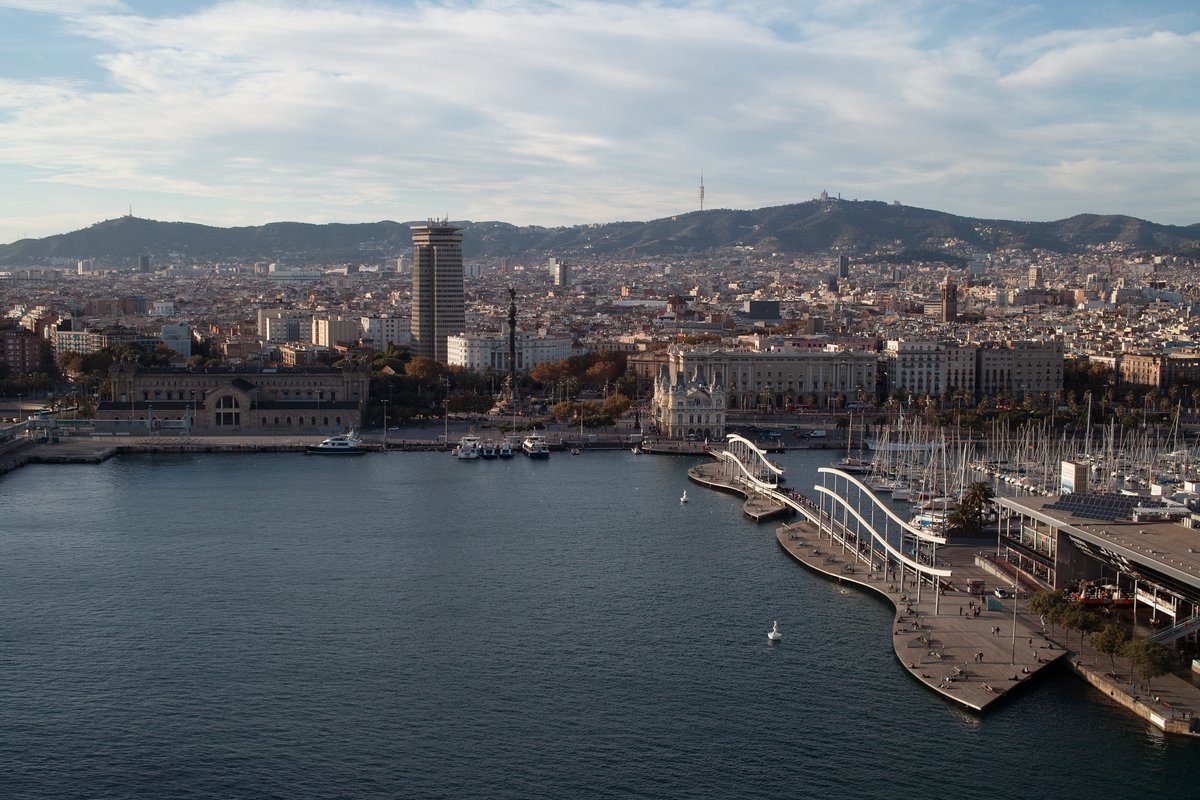
Rambla de Mar was inaugurated in 1994 as part of Barcelona’s urban renewal project leading up to the 1992 Summer Olympics. Designed by architects Helio Piñón and Albert Viaplana, it connected the city center to Port Vell and symbolized the city’s renewed embrace of its maritime heritage and waterfront (Barcelona Tourism).
Architectural Significance
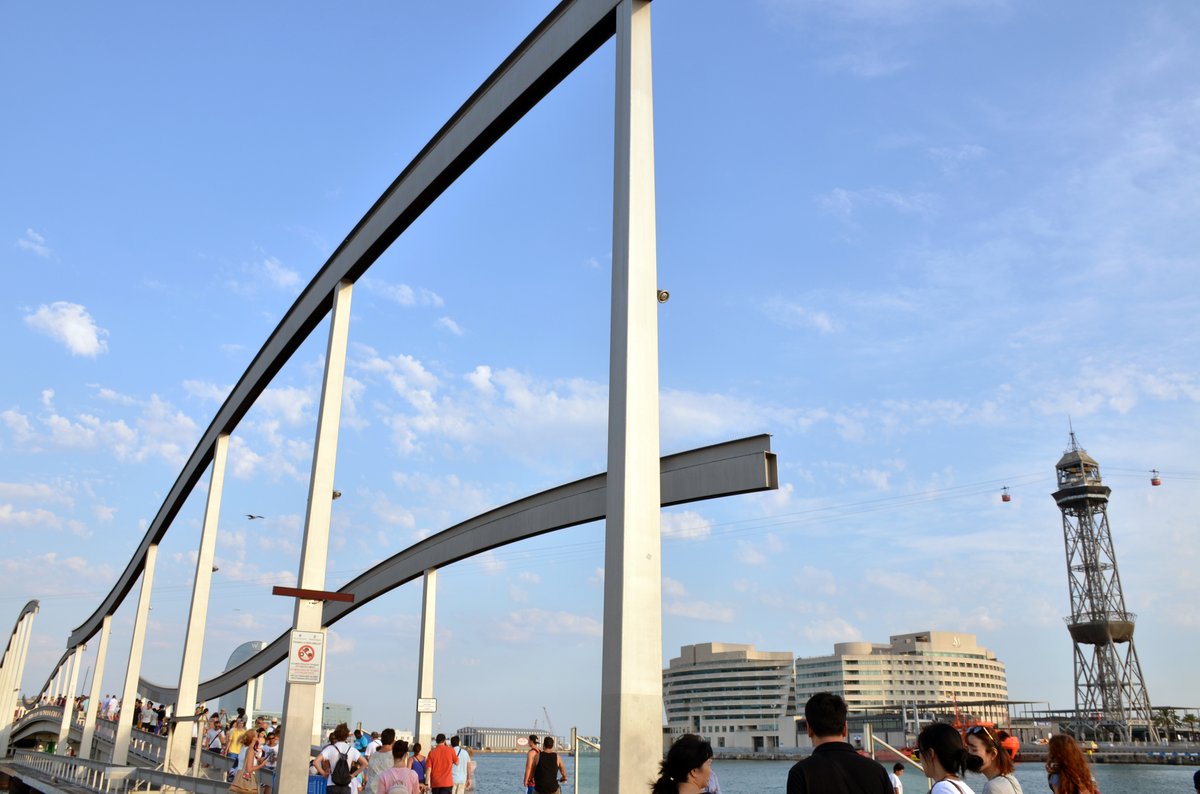
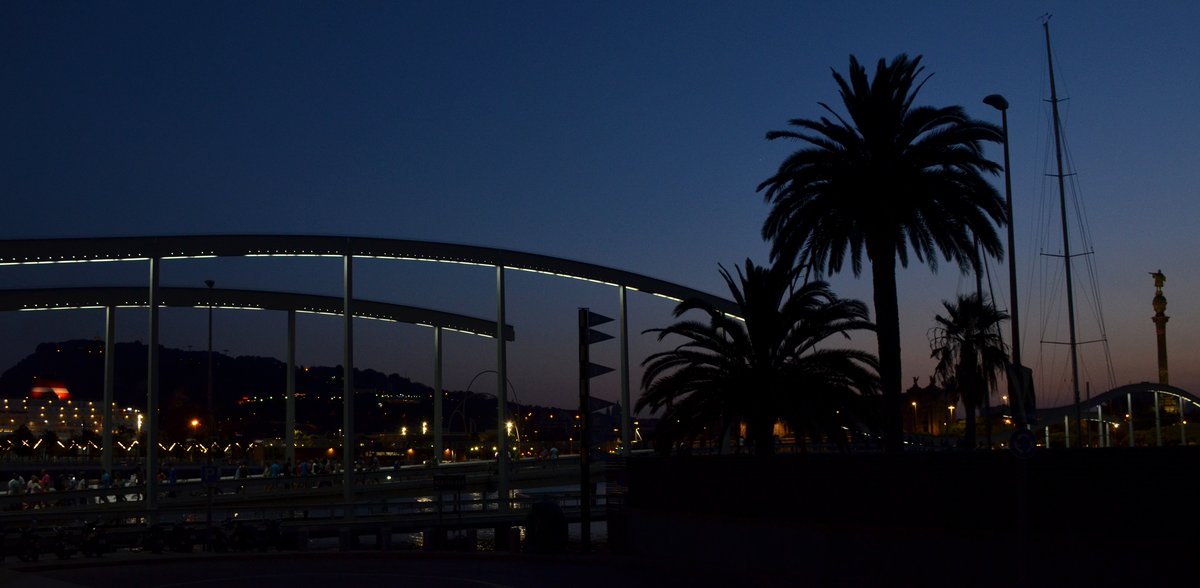
The bridge’s distinctive undulating form evokes Mediterranean waves and allows it to open and close for marine traffic. Its steel and wood construction blends modernity and tradition, making it an example of contemporary Catalan architecture (ArchDaily).
What to See and Its Significance
Cultural Impact
Rambla de Mar helped transform the previously neglected Port Vell area into a public space for locals and visitors. It provides access to attractions including Maremagnum, the Barcelona Aquarium and IMAX Port Vell, bringing leisure, commerce and culture together (Barcelona City Council).
Economic Significance
By improving access to Port Vell, the bridge has supported tourism and commerce in the area. The Maremagnum shopping center at its end is a major retail hub that attracts millions of visitors annually. Increased foot traffic also benefits nearby restaurants, cafés and entertainment venues, contributing to the waterfront district’s economy (Port Vell).
Social and Recreational Importance
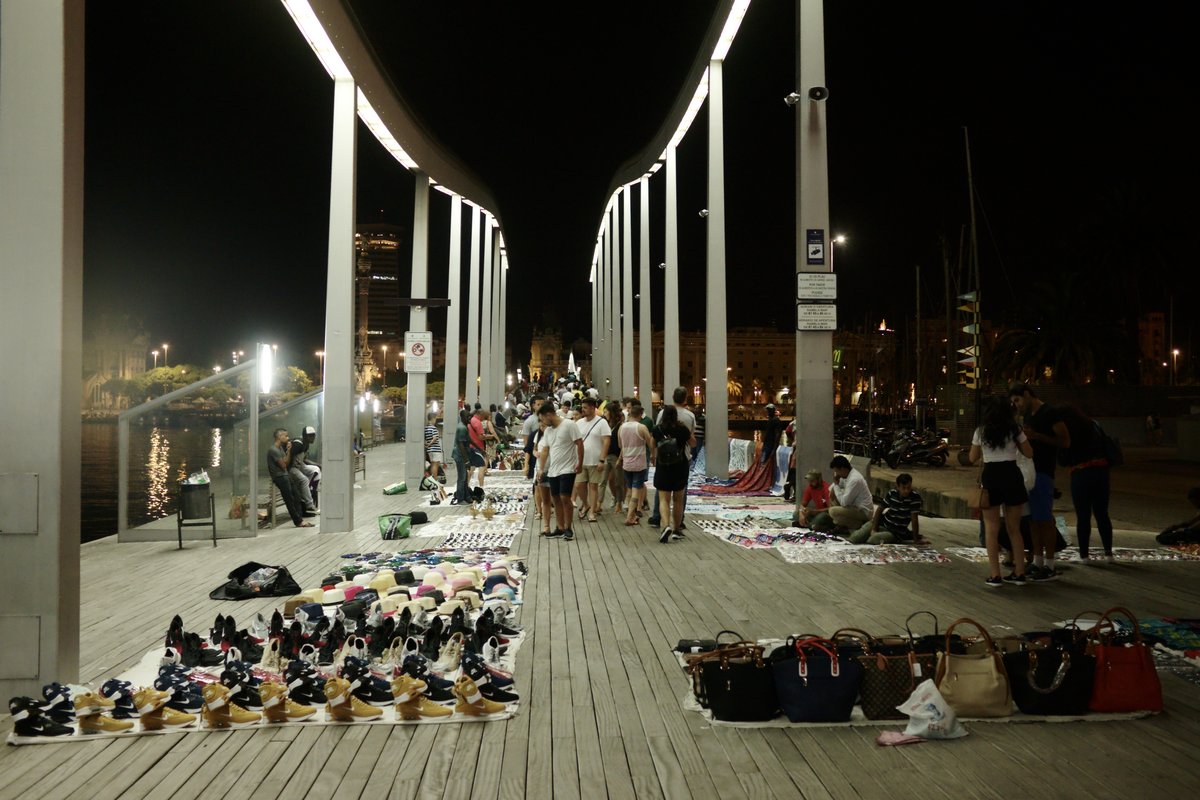
The wide pedestrian walkway has benches and shaded areas where visitors can stroll, sit and enjoy harbor views. The bridge’s ability to open and close adds to the experience, drawing people to watch boats pass (Time Out Barcelona).
Special Events and Guided Tours
Cultural events, performances and festivals take place at Rambla de Mar throughout the year. Guided tours cover the bridge’s history and architecture and often include nearby attractions in the Port Vell area.
Photographic Spots
The bridge’s design, harbor views and activity around it offer photography opportunities.
Environmental Considerations
Durable materials and engineering techniques have been used to minimize the bridge’s environmental impact. Its design also encourages pedestrian traffic, reducing reliance on motorized transportation and supporting sustainable urban mobility (Sustainable Barcelona).
Future Prospects
Plans for further development and enhancement of Port Vell include new cultural and recreational facilities, which are expected to increase the bridge’s significance as a connector and social space (Barcelona Urban Planning).
Visiting Hours and Tickets
Rambla de Mar is open to the public 24 hours a day, seven days a week, and there is no entrance fee. For ticket prices and opening hours at nearby attractions, check their respective websites.
Travel Tips and Accessibility
- Getting there The closest metro station is Drassanes (Line 3). Buses and taxis are also convenient options.
- When to visit The bridge can be crowded during peak tourist seasons. For a more relaxed visit, go early in the morning or on a weekday.
- Accessibility Rambla de Mar is wheelchair accessible, with ramps and smooth pathways.
Nearby Attractions
- Maremagnum Shopping Center A shopping destination with stores, restaurants and entertainment options (Maremagnum).
- Barcelona Aquarium One of Europe’s largest aquariums, featuring a wide array of marine life (L’Aquàrium de Barcelona).
- IMAX Port Vell An IMAX cinema offering an immersive movie-watching experience (IMAX Port Vell).
- Golondrinas Boat Tours Short cruises around the harbor and along the coastline, offering a view of Barcelona from the sea (Las Golondrinas).
- Maritime Museum of Barcelona Located in the historic Drassanes Reials, the museum showcases the maritime history of Barcelona and the Mediterranean (Maritime Museum of Barcelona).
FAQ
What are the visiting hours for Rambla de Mar?
Rambla de Mar is open 24 hours a day, seven days a week.
Do I need tickets to visit Rambla de Mar?
No. There is no entrance fee to access the bridge.
How can I get to Rambla de Mar?
The closest metro station is Drassanes (Line 3). Buses and taxis are also convenient options.
Is Rambla de Mar wheelchair accessible?
Yes. The bridge has ramps and smooth pathways.