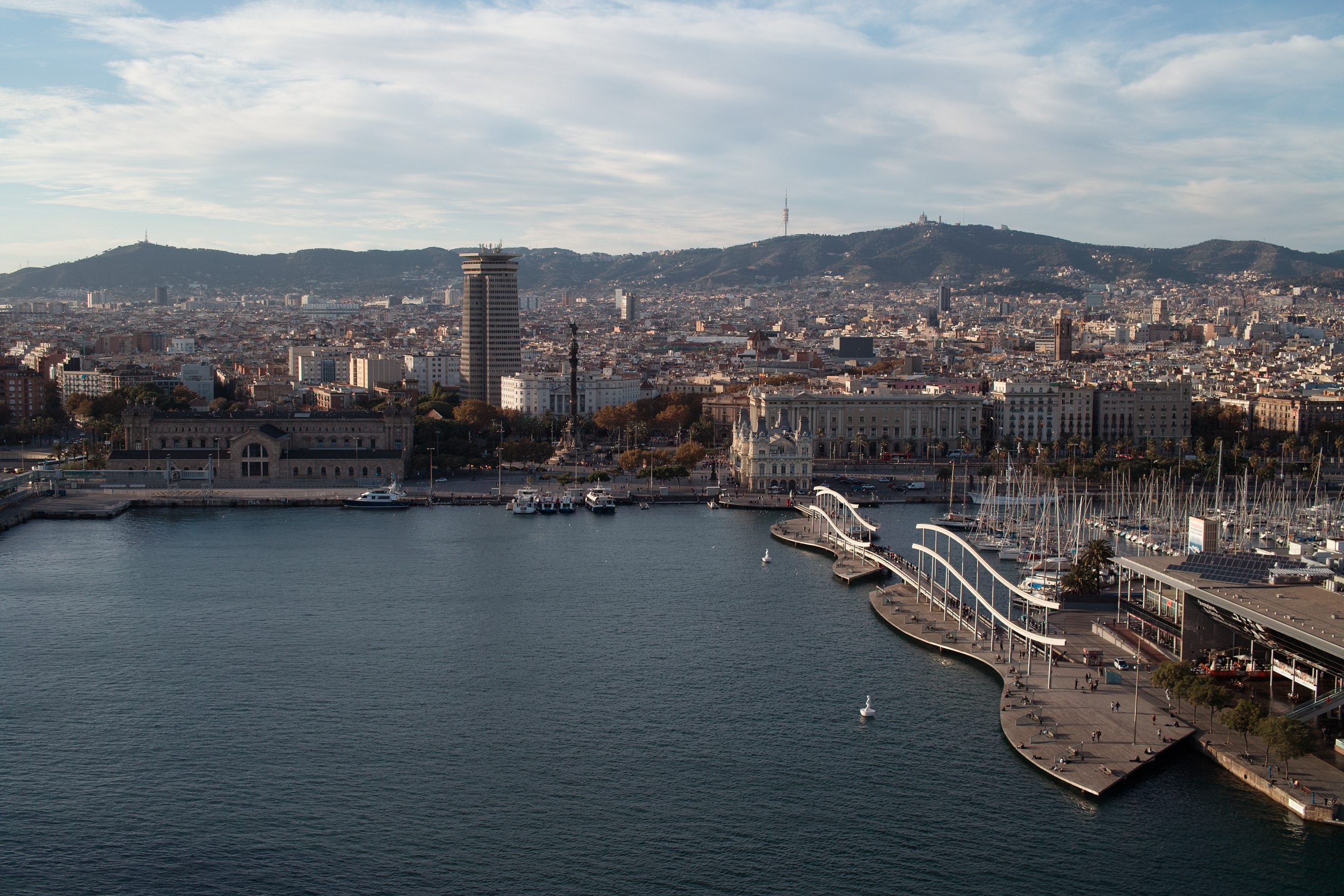
Introduction to Port Vell De Barcelona
Port Vell, meaning “Old Harbor” in Catalan, is a vibrant testament to Barcelona’s enduring maritime legacy and urban renewal. With a history stretching back over 2,000 years—from the days of the Laietani tribe and Roman Barcino to its transformation for the 1992 Olympic Games—Port Vell has continually shaped the city’s economic and cultural identity (Wikipedia; Barcelona Turisme).
Modern-day Port Vell is a bustling waterfront that seamlessly blends historical landmarks, such as the Columbus Monument and the Royal Shipyards, with contemporary attractions like L’Aquàrium de Barcelona (the largest in Europe), the Maremagnum shopping complex, and the dynamic Rambla de Mar pedestrian bridge. Seasonal festivals, harbor cruises, and panoramic viewpoints offer something for every visitor, making Port Vell an essential destination for anyone exploring Barcelona (Port de Barcelona; barcelona.de; See The Big World).
Ancient and Early History
Port Vell’s origins trace back to the 4th century BCE, when the Laietani tribe established settlements along the coast near Montjuïc. The Romans later founded Barcino on Mount Tàber, developing the area into a key port. The construction of city walls after the 3rd-century Barbarian invasions further cemented Barcelona’s status as a significant Mediterranean harbor (Wikipedia).
Medieval and Early Modern Development
A true sheltered harbor emerged in the 15th century, allowing the city to expand its maritime trade and integrate more deeply into Mediterranean commerce. Over time, continual expansions and technological advancements required repeated modifications to the port’s facilities (barcelona.de; Wikipedia).
Industrialization and Urban Expansion
The late 19th century saw Port Vell transformed by new docks, warehouses, and infrastructure. Industrial growth pushed the port’s boundaries and led to the construction of the Torre Jaume I cable car tower for the 1929 International Exposition. By the late 20th century, the original port area had fallen into decline, overshadowed by newer industrial developments (Wikipedia).
Late 20th Century: Decline and Renewal
By the 1980s, much of Port Vell was derelict. The 1992 Olympic Games prompted a sweeping urban renewal, clearing obsolete factories and restoring the waterfront as a public space featuring promenades, leisure facilities, and cultural venues (barcelona.de; Wikipedia).
Port Vell Today: Main Attractions
Port Vell is now a dynamic hub drawing millions annually. Highlights include:
Maremagnum
A modern shopping and entertainment complex offering retail, cinemas, restaurants, and panoramic terraces. Open daily, including Sundays and holidays. (Maremagnum)
L’Aquàrium de Barcelona
Europe’s largest aquarium, home to 11,000 marine animals across 450 species and an 80-meter underwater tunnel. Especially popular with families. (Aquarium Barcelona)
IMAX Port Vell
A state-of-the-art cinema hosting immersive films and events (check official schedules for showtimes).
Rambla de Mar
A signature wooden pedestrian bridge connecting La Rambla with Maremagnum, featuring a swing mechanism that opens for passing boats—a unique spectacle for visitors.
Other distinctive features include public artworks like Roy Lichtenstein’s “Barcelona Face” and Javier Mariscal’s “Gamba” sculpture, as well as the historic schooner Santa Eulàlia, moored at the Maritime Museum (barcelona.de).
Visiting Hours and Ticket Information
- L’Aquàrium de Barcelona: Open daily from 10:00 AM to 8:00 PM (last admission at 7:00 PM). Adult tickets approx. €21; discounted rates for children and seniors. Book online for savings and to skip queues.
- IMAX Port Vell: Typically open 12:00 PM–10:00 PM. Tickets €8–€12, depending on screening.
- Harbor Cruises (Golondrinas): Operate 10:00 AM–8:00 PM with departures every 30–60 minutes. Adult fare approx. €14.
- Rambla de Mar: Open 24/7; no ticket required.
- Maritime Museum: Tuesday–Sunday, 10:00 AM–7:00 PM; closed Mondays. Adults €8; free on first Sunday of each month (Museu Marítim de Barcelona).
- Columbus Monument: Open daily 10:00 AM–8:00 PM. Entry approx. €6; discounts available (Columbus Monument).
Guided Tours and Events
Guided tours—both walking and boat-based—explore Port Vell’s historic sites, architecture, and maritime legacy. Seasonal events include open-air concerts, markets, and holiday celebrations. Many operators offer combination tickets for multiple attractions (See The Big World).
Photo Opportunities
Notable spots for photography:
- Roy Lichtenstein’s colorful “Barcelona Face”
- Javier Mariscal’s “Gamba” sculpture
- Santa Eulàlia schooner
- Panoramic views from the Columbus Monument and Rambla de Mar
High-quality images with descriptive alt text, such as "Port Vell Rambla de Mar Swing Bridge," help capture the spirit of the area for online guides.
Visitor Information
Access and Transportation
- Metro: Drassanes station (L3) is closest to the port.
- Bus: Multiple city lines and the Bus Turístic stop nearby.
- Cruise ship passengers: Shuttle buses connect Moll Adossat to the World Trade Centre; it’s a 15-minute walk to the Columbus Monument (barcelona-tourist-guide.com).
Nearby Attractions
Port Vell’s central location puts you minutes from:
- La Rambla
- Gothic Quarter
- La Boqueria Market
- Plaça Reial
- Santa Maria del Mar
- Parc de la Ciutadella
- Barceloneta Beach
Unique Experiences
- Harbor Cruises: Enjoy Barcelona’s skyline from the water (barcelona.de).
- Swing Bridge in Motion: Watch Rambla de Mar open for boats.
- Columbus Monument Viewpoint: 360-degree views of city and sea.
Practical Tips
- Safety: Watch out for pickpockets in crowded areas.
- Facilities: Lockers, parking, and public restrooms available.
- Accessibility: Most promenades and attractions are wheelchair accessible.
Frequently Asked Questions (FAQ)
What are the visiting hours for Port Vell attractions?
Hours vary by venue; see above for details.
Is there an entry fee to Port Vell?
Public spaces are free; tickets are needed for specific attractions.
Are guided tours available?
Yes, including walking, boat, and combination tours.
Is Port Vell accessible?
Yes, with ramps, accessible restrooms, and services for visitors with reduced mobility.
Where can I buy tickets?
Online or at each attraction’s entrance.
Is Port Vell family-friendly?
Absolutely; the aquarium, open spaces, and boat tours are ideal for all ages.
Top Attractions: Columbus Monument & More
Columbus Monument (Mirador de Colom)
- Location: Base of La Rambla
- Hours: 10:00 AM–8:00 PM (last entry 7:30 PM)
- Tickets: ~€6; reduced rates for children, seniors, and groups
- Highlights: Elevator to a panoramic viewing platform; guided tours available
Rambla de Mar and Moll de la Fusta
- Wooden bridge with swing mechanism; palm-lined promenade with contemporary art, markets, and events
Maremagnum
- Shopping, dining, and events with waterfront views; open daily
L’Aquàrium de Barcelona
- Immersive marine life exhibits; open daily
Golondrinas Boat Tours
- 40-minute cruises from behind the Columbus Monument; tickets from €7.70
Museums and Cable Car
- Maritime Museum (Drassanes Reials)
- Museum of the History of Catalonia (Palau de Mar)
- Montjuïc Cable Car for city and harbor vistas
Dining and Gastronomy
- Fresh seafood and Catalan cuisine at harborfront restaurants
Family-Friendly Attractions
- Playground areas, IMAX cinema, seasonal events
Events and Festivals
- Annual Boat Show, Christmas markets, open-air concerts, and America’s Cup events (America’s Cup Barcelona 2024)
Listen to the full story in the app
Your Personal Curator, in Your Pocket.
Audio guides for 1,100+ cities across 96 countries. History, stories, and local insight — offline ready.
Audiala App
Available on iOS & Android
Join 50k+ Curators
Sources
- verified
- verified
- verified
- verified
- verified
- verified
- verified
Last reviewed:


