Plan and listen to Plaza De Ramon Berenguer The Great with Audiala.
Audio guide in your pocket, itinerary in your browser. Built for the way you actually visit.
Introduction
Plaça de Ramon Berenguer el Gran is a vibrant historical square in the heart of Barcelona’s Gothic Quarter. It seamlessly blends remnants of ancient Roman walls, medieval Gothic architecture, and modern urban development, offering visitors a unique journey through the city’s layered past. Named after the influential 12th-century Count of Barcelona, Ramon Berenguer III, the square is not only a window into Catalonia’s heritage but also a lively space for both residents and tourists. This guide provides detailed insights into the plaza’s history, cultural significance, visiting hours, ticketing, accessibility, nearby attractions, and expert travel tips for a memorable visit.
Authoritative resources such as Barcelona Turisme, the Museu d’Història de Barcelona (MUHBA), and curated travel guides offer further information for planning your visit.
Historical Background
Roman Foundations
Plaça de Ramon Berenguer el Gran is built atop the ancient Roman city of Barcino, making it an essential site for understanding Barcelona’s origins. The square features some of the city’s best-preserved Roman walls, constructed in the 3rd and 4th centuries AD. These defensive structures originally surrounded Barcino and are visible today as a striking backdrop to the square (barcelonaturisme.com). The Roman walls, with their semicircular towers and varied stonework, serve as a tangible reminder of the city’s ancient past and engineering prowess (shbarcelona.com).
Medieval Evolution
As Barcelona flourished in the Middle Ages, the Roman walls were incorporated into new Gothic structures. The 14th-century Chapel of Santa Àgata, built atop the ancient fortifications, exemplifies Catalan Gothic architecture and features a renowned altarpiece by Jaume Huguet. The square’s setting at the edge of the Gothic Quarter reflects the city’s historical evolution, where Roman, medieval, and modern elements coexist (bcn-guide.com).
Ramon Berenguer III and the Equestrian Monument
The square honors Ramon Berenguer III (“the Great”), Count of Barcelona from 1097 to 1131. He was instrumental in expanding Catalan influence, consolidating power, and setting the stage for the later Crown of Aragon. The focal point of the plaza is the bronze equestrian statue of Ramon Berenguer III, sculpted by Frederic Marès and installed in 1954. The statue, mounted on a robust pedestal, symbolizes the count’s leadership and the enduring spirit of Catalonia (barcelonalowdown.com).
Architectural and Artistic Highlights
The plaza is framed by significant landmarks:
- Roman Walls: Among the best-preserved in Barcelona, reaching up to 8 meters high and punctuated by towers (barcelonaturisme.com).
- Palau Reial Major: The former residence of the Counts of Barcelona, with Gothic and Romanesque elements (Barcelona Turisme).
- Chapel of Santa Àgata: Renowned Gothic chapel with a 15th-century altarpiece (Barcelona Walking Tours Gòtic).
- Equestrian Statue of Ramon Berenguer III: A striking late-19th-century public artwork (barcelonalowdown.com).
The open layout and careful urban planning of the square provide unobstructed views, making it a focal point for understanding the city’s historical layering and artistic narrative (shbarcelona.com).
Practical Information
Visiting Hours
- Square: Open 24/7 as a public space.
- Museu d’Història de Barcelona (MUHBA): Typically Tuesday to Sunday, 10:00 AM – 7:00 PM; closed Mondays.
- Santa Àgata Chapel: Access via the Palau Reial Major, usually 10:00 AM – 6:30 PM. Check official MUHBA site for up-to-date schedules.
Tickets and Entrance Fees
- Plaza: Free to enter.
- Museu d’Història de Barcelona (MUHBA) and Palau Reial Major: General admission around €7; discounts for seniors, students, and children. Combined tickets and family passes are available. Online pre-booking is recommended.
Accessibility
- The square is fully accessible, with ramps and smooth paving.
- Some historic sites (e.g., underground Roman ruins) may have limited accessibility.
- Multilingual panels and information enhance the experience for all visitors (Barcelona Accessibility Guide).
How to Get There
- Metro: Jaume I (L4) and Urquinaona (L1/L4) stations are both under 10 minutes away on foot.
- Bus: Several lines stop nearby.
- Walking: Easily reached from the Barcelona Cathedral, Plaça del Rei, and other Gothic Quarter landmarks (Lonely Planet).
Travel Tips
- Best Times: Early mornings and late afternoons are quieter and offer optimal lighting for photography.
- Footwear: Wear comfortable shoes for cobblestone and uneven streets.
- Guided Tours: Many walking tours include the square; booking ahead is advised.
- Safety: The area is generally safe but remain vigilant for pickpockets.
- Facilities: No public restrooms in the square; cafés and restaurants nearby offer facilities for customers.
Nearby Attractions and Suggested Itineraries
Plaça de Ramon Berenguer el Gran is perfectly positioned for exploring Barcelona’s historic core. Notable nearby sites include:
- Plaça del Rei: The medieval royal square.
- Museu d’Història de Barcelona (MUHBA): Offers underground tours of Roman Barcino.
- Palau del Lloctinent: A Renaissance palace.
- Museu Frederic Marès: Art and sculpture collections.
- Temple d’August: Four Roman columns hidden in a medieval courtyard.
- Museu Picasso: One of the world’s largest Picasso collections.
Suggested itinerary: Start at Plaça de Ramon Berenguer el Gran, continue to Plaça del Rei and the MUHBA, and finish at the Museu Picasso. All are within easy walking distance (Lonely Planet).
Cultural Events and Everyday Life
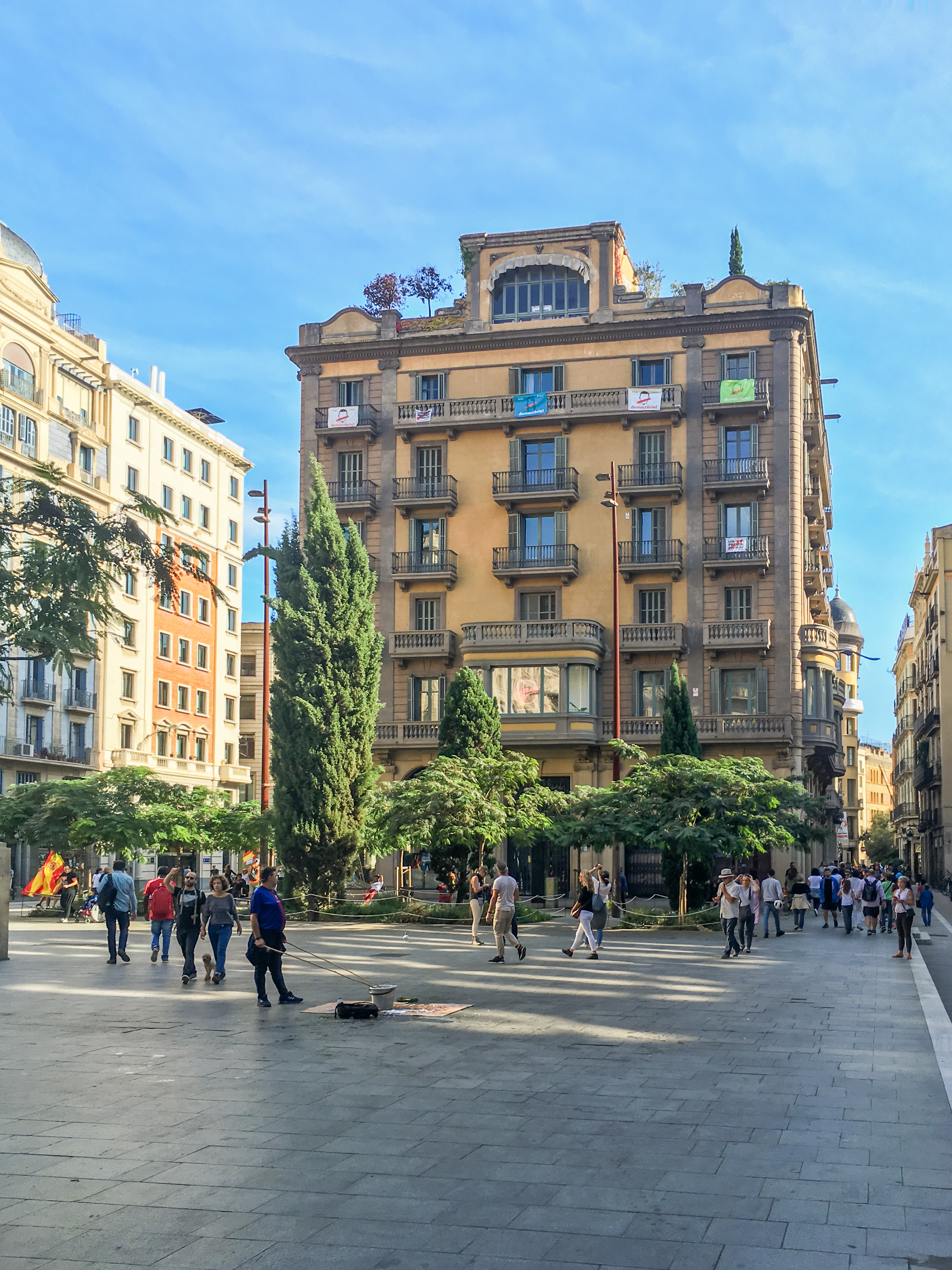
The square often serves as a venue for cultural events, especially during city festivals like La Mercè and Sant Jordi (La Mercè Festival). Street musicians, artists, and community gatherings add to the vibrant atmosphere, making it a living part of daily city life. Street performances are common, and visitors are encouraged to offer tips if they enjoy a performance. During festivities, expect larger crowds and dynamic street scenes.
Visitor Experience: Atmosphere and Photography
Plaça de Ramon Berenguer el Gran offers a peaceful yet lively setting, ideal for relaxation, reflection, and photography. Highlights include:
- Equestrian Statue: A favorite photo spot, especially with the Roman walls as a backdrop.
- Roman Walls: Capture the texture and scale of these ancient fortifications.
- Gothic Architecture: The surrounding buildings, including the chapel and palaces, offer striking visual contrasts.
For the best photos, visit during the golden hour (early morning or late afternoon). The interplay of ancient and modern elements, combined with the square’s open vistas, make it a favorite among photographers and artists.
Visual Aids: Use interactive maps and virtual tours available on official tourism sites.
FAQs
Q: Is there an entrance fee for Plaça de Ramon Berenguer el Gran?
A: No, the square is a public space and free to enter at any time.
Q: What are the best times to visit?
A: Early mornings and late afternoons, for fewer crowds and better lighting.
Q: Are guided tours available?
A: Yes, many walking tours of the Gothic Quarter include the square.
Q: Is the square accessible for visitors with mobility issues?
A: Yes, the square is flat and paved; however, some adjacent streets are cobbled.
Q: Are there public restrooms?
A: No, but nearby cafés and restaurants offer facilities for customers.
Q: What other attractions are nearby?
A: Plaça del Rei, MUHBA, Palau del Lloctinent, Museu Frederic Marès, Temple d’August, and Museu Picasso—all within walking distance.
Listen to the full story in the app
The whole Plaza De Ramon Berenguer The Great,
told well.
Audio guides for 1,100+ cities across 96 countries. History, stories, and local insight — offline ready.

Verified, and shown.
Researched and written by the Audiala editorial team from historical records, architectural archives, and local expertise.
Last reviewed
Researched from Wikidata, Wikipedia & official sources · fact-checked · How we make our guides →