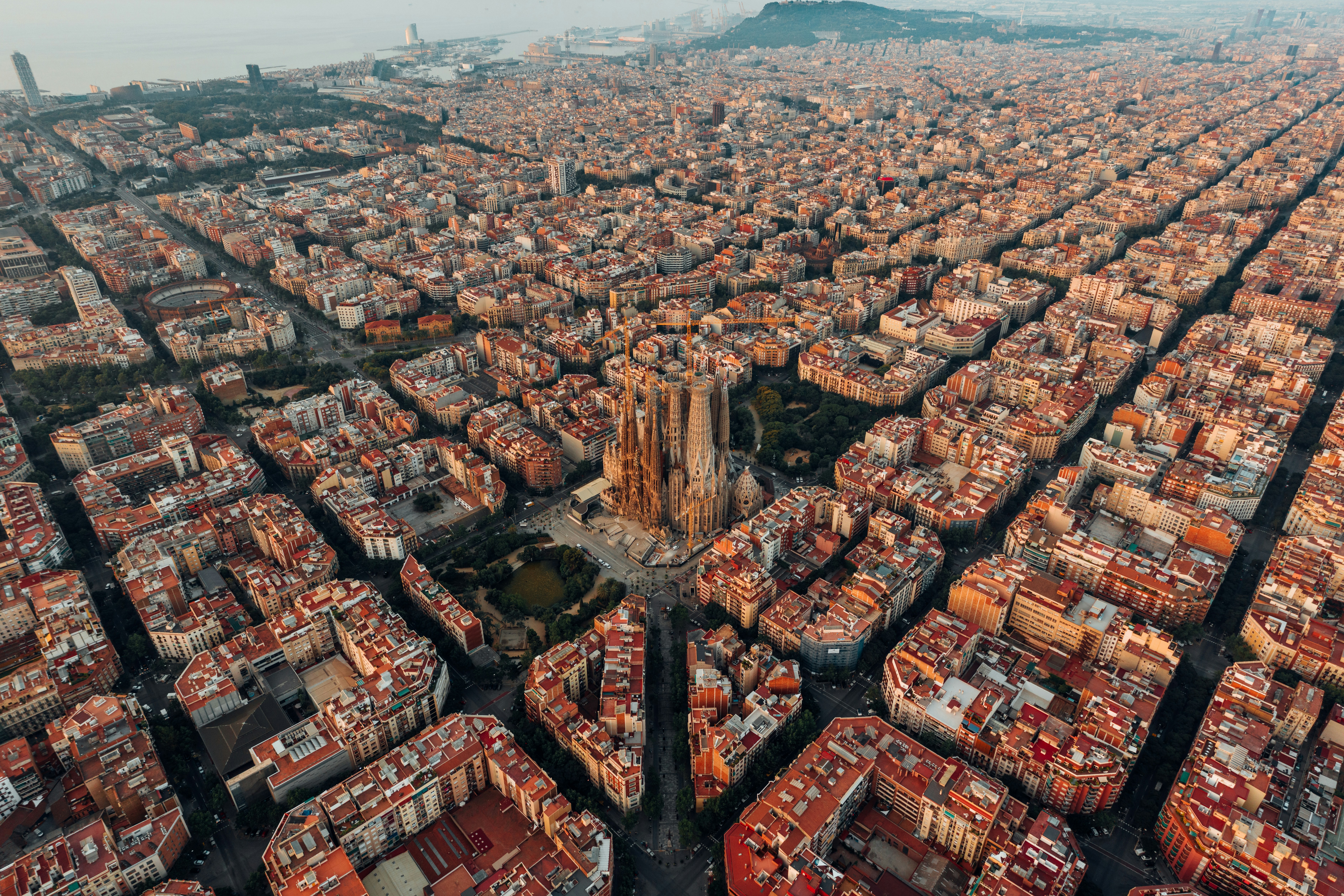
Plan and listen to Plaça De Pedralbes with Audiala.
Audio guide in your pocket, itinerary in your browser. Built for the way you actually visit.
Introduction to Plaça de Pedralbes
Plaça de Pedralbes, nestled in Barcelona’s prestigious Pedralbes district, is a tranquil square that seamlessly blends centuries-old heritage, architectural splendor, and a vibrant cultural scene. At its heart stands the Royal Monastery of Santa Maria de Pedralbes, a remarkable example of Catalan Gothic architecture founded in 1327 by Queen Elisenda de Montcada. The monastery houses the world’s largest Gothic cloister, exquisite medieval murals, and the tomb of Queen Elisenda, making it a focal point for history and architecture enthusiasts. Surrounded by elegant mansions, embassies, and lush gardens, Plaça de Pedralbes reflects Barcelona’s social evolution and the exclusive character of its surroundings (meet.barcelona).
The square’s serene ambiance offers a welcome contrast to the city center, providing a unique blend of historical exploration and peaceful retreat. Adjacent to the square, the Palau de Pedralbes, an early 20th-century palace with neoclassical and noucentista influences, is set within the Jardins del Palau de Pedralbes. These gardens feature prominent sculptures—including Gaudí’s Font d’Hèrcules—and serve as the backdrop for major cultural events like the Alma Festival (barcelona.cat).
This guide presents essential information on visiting hours, tickets, accessibility, nearby attractions, and seasonal highlights—ensuring a comprehensive experience at one of Barcelona’s most distinguished landmarks (barcelonaturisme.com).
- Historical Foundations of Plaça de Pedralbes
- Architectural Heritage
- Cultural and Social Significance
- Palau de Pedralbes & Gardens
- Seasonal Highlights and Annual Events
- Visiting Guide: Hours, Tickets, and Tips
- Frequently Asked Questions
- Visuals and Interactive Resources
- Conclusion and Next Steps
Historical Foundations of Plaça de Pedralbes
Origins and Royal Patronage
The origins of Plaça de Pedralbes are deeply intertwined with the foundation of the Royal Monastery of Santa Maria de Pedralbes by Queen Elisenda de Montcada in 1327. Intended as a sanctuary for the Clarissa nuns, the monastery symbolized both royal authority and religious devotion. Queen Elisenda’s tomb, located within the church, stands as a testament to her dual role as queen and religious patron (meet.barcelona).
Medieval Splendor and Rural Character
During the Middle Ages, Pedralbes remained largely rural, serving as a retreat from city life. The monastery was declared a site of national historical interest and became a center for religious, educational, and artistic activities. The Clarissa nuns cultivated medicinal gardens and fostered a self-sufficient community—elements preserved in the cloisters and gardens that visitors can enjoy today.
Architectural Heritage
Royal Monastery of Santa Maria de Pedralbes
The monastery is a masterpiece of Catalan Gothic architecture, comprising a single-nave church, cloister, chapter house, dormitory, refectory, and service buildings.
- The Cloister: The largest Gothic cloister in the world, with three levels of arcades supported by slender columns, surrounding a tranquil garden once used for medicinal herbs (meet.barcelona).
- The Church and Tomb of Queen Elisenda: The church houses Elisenda’s dual-faced tomb—queen on one side, nun on the other—symbolizing her complex legacy.
- Murals and Artistic Heritage: The Chapel of Saint Michael features 14th-century frescoes by Ferrer Bassa, inspired by Giotto, and the monastery collection includes liturgical objects and manuscripts (barcelonaturisme.com).
Integration with Modern Barcelona
Urban planning has preserved the monastery’s historical footprint, blending heritage with modern amenities. Since opening as a museum in 1983, the site has welcomed visitors to its cloisters, gardens, and historic rooms.
Cultural and Social Significance
Urban Identity and Social Role
Plaça de Pedralbes is notable for its early 20th-century architecture, including the Conventet by Enric Sagnier, the Torre Cortés, and Casa Soler (ca.wikipedia.org). The square’s shaded, open design reflects the district’s reputation for exclusivity and tranquility, serving as a discreet gathering point for residents and visitors (barcelonawithmarta.com).
Cultural Events and Community Life
While the square itself is calm, its proximity to the Monastery and Palau Reial positions it at the center of local cultural life. The annual Alma Festival and Les Nits de Barcelona concerts transform the area into a summer cultural hub (spaininspired.com). The Monastery regularly offers guided tours, exhibitions, and community events (setyourtourguide.com).
Green Spaces and Wellbeing
The square and nearby gardens, including Parc de Cervantes and the Jardins del Palau de Pedralbes, promote relaxation and urban wellbeing (spain.info).
Palau de Pedralbes and Gardens
The Palau de Pedralbes, originally the Can Feliu estate, was transformed into a royal residence in the early 20th century. Its neoclassical and noucentista architecture is complemented by decorative arts collections and historical significance as a former royal abode (barcelona.com).
Jardins del Palau de Pedralbes
Designed in 1924, the gardens combine French and English landscaping. Highlights include:
- The “Mediterrània” sculpture by Eulàlia Fàbregas de Sentmenat
- Works by Catalan sculptors such as Enric Casanovas and Joan Borrell i Nicolau
- The Font d’Hèrcules by Antoni Gaudí, a dragon-spouted fountain rediscovered in 1984 (barcelona.cat)
Events and Activities
The gardens host concerts and events, especially during the summer Alma Festival, enhancing the area’s cultural vibrancy.
Seasonal Highlights and Annual Events
Spring
Enjoy blossoming magnolias and tranquil garden walks. Temporary art exhibitions and guided tours at the Monastery make spring an ideal time for contemplative visits (barcelona.cat).
Summer
The Alma Festival Jardins de Pedralbes (June–July) brings world-class concerts and gourmet food to the gardens (barcelonaturisme.com).
Autumn
La Mercè, Barcelona's citywide festival, features free entry days at the Monastery and special local events. Autumn’s mild temperatures and foliage make for a relaxed visit (mana75.es).
Winter
The square remains peaceful, with fewer visitors and subtle festive décor. Guided tours are still available at the Monastery.
Visiting Guide: Hours, Tickets, and Tips
Plaça de Pedralbes
- Open: Year-round, 24/7. Daylight hours (8 AM–8 PM) recommended for visits.
- Admission: Free
Jardins del Palau de Pedralbes
- Hours: 10 AM–8 PM (March–October); 10 AM–6 PM (November–February)
- Admission: Free
Monestir de Pedralbes
- Hours: Tuesday–Saturday 10 AM–6 PM; Sundays and holidays 10 AM–2 PM; closed Mondays
- Tickets: Adults €5; reduced €3; free for children under 16, Barcelona residents, and on first Sundays and open days
- Guided Tours: Available regularly (barcelona.cat)
Palau de Pedralbes
- The palace is not regularly open to the public except for special events; check official resources for updates (barcelona.cat).
Getting There
- Metro: Palau Reial (Line 3)
- Bus: 63, 68, H6
- Tram: T1, T2, T3
- Accessibility: Wheelchair accessible routes in the square, gardens, and Monastery
Practical Tips
- Visit during golden hours for photography
- Bring sun protection and water in summer
- Public restrooms and benches available; cafés nearby on Avinguda Diagonal
Frequently Asked Questions
Q: Is there an entrance fee for Plaça de Pedralbes?
A: The square and gardens are free to enter. The Monastery charges €5 for adults, with discounts and free days.
Q: Are guided tours offered?
A: Yes, guided tours are available at the Monastery and occasionally for the gardens.
Q: Is the area accessible by public transport?
A: Yes—metro, bus, and tram serve the area.
Q: Are there special events or festivals?
A: The Alma Festival (summer) and La Mercè (autumn) are major annual highlights.
Q: Is the Palau de Pedralbes open to the public?
A: Gardens are open daily; the palace itself is open only for special events.
Listen to the full story in the app
The whole Plaça De Pedralbes,
told well.
Audio guides for 1,100+ cities across 96 countries. History, stories, and local insight — offline ready.

Verified, and shown.
Researched and written by the Audiala editorial team from historical records, architectural archives, and local expertise.
Last reviewed
Researched from Wikidata, Wikipedia & official sources · fact-checked · How we make our guides →